Tonbridge Juddians
On the banks of the River Medway, a location so prized the Normans were quick to fortify it and the Germans wanted to bomb it, Tonbridge fights to be noticed in the heart of rural Kent. Its weapon of choice? Rugby.
The Normans, with their brand of strategic ruthlessness, brought the concept of castles to England in the wake of their 1066 conquest. These formidable structures, like the one that still stands in the Kent town of Tonbridge, were originally built for security, intended to anchor their control in an unsettled land.
Tonbridge, with its vantage point over the winding River Medway, was an obvious choice for Norman fortification. Strategically placed to command the road from Hastings to London, it was not merely a defensive structure, but a crucial point in the military and political landscape. From the outset, Tonbridge was a coveted prize, its tactical value ensuring it would always be a target, a focal point for conflict; and this was proved again during the Second World War. “Tonbridge is a [railway] junction to all of southern England,” explains Eddie Prescott, a Second World War historian and the man colloquially known as ‘Mr Tonbridge’. “That’s the reason why the Luftwaffe tried to bomb the living daylights out of Tonbridge station during the war.
“It was a Dornier Do 17 [a twin-engined light bomber designed and produced by the German aircraft manufacturer Dornier Flugzeugwerke] which flew low over the station in July 1944, dropping bombs as it went. They missed, dropping the bombs on the houses adjacent to the station and killing a number of people. The junction itself remained, so Tonbridge is still a gateway to these different parts of southern England.”
“On this very sports ground,” Eddie outstretches his hands to the field before us, home to Tonbridge Juddians Rugby Club, “we had two doodlebugs [nickname for the German V-1 flying bombs used in WW2] land and it devastated the surrounding area, damaging shops and houses.”
Historically, the route from Hastings to London has been a familiar path for invading forces from Europe, passing Tonbridge as they marched on the capital.
Today, for the people of Tonbridge, a town of 36,000 or so souls, half an hour’s drive south-east of London, a different kind of challenge arrives from the south coast. Havant, a mid-table side from just outside Portsmouth, are here to do what only one other team has managed this season: defeat Tonbridge Juddians [TJs] in a game of rugby. After seventeen games in the league so far, the only team to have succeeded in this task was Bury St Edmunds in November.
This game matters also, not just for Tonbridge, but for Kent. The county, with a population larger than Lancashire, Merseyside, Devon and Surrey, is not typically seen as a rugby stronghold. In fact, it’s not a football hotbed either, with Gillingham FC, the county’s highest-ranked team, struggling in League Two. Even in cricket, a sport which is synonymous with Kent’s own brand of verdant summers and pastoral England vibe, things are tough. Kent County Cricket Club hasn’t won the County Championship since 1978, and since then, twelve of the eighteen counties have won the title.
TJs are trying to buck the trend as they lead the National 2 East table with one eye firmly set on promotion to National 1, level three of the rugby pyramid.
While TJs work hard to put Kent on the rugby map, their name often leads people to believe they hail from a neighbouring town, a mix-up that club stalwart Eddie knows all too well. “But the amazing thing is, if you meet someone for the first time and they say, ‘Where do you come from?’ You say, ‘Tonbridge’, they immediately say, ‘oh, Tunbridge Wells!’.
“You have to say, ‘No! Tonbridge!’” exclaims an animated Eddie, “Tonbridge has the history, Tunbridge Wells doesn’t.
“Tunbridge Wells doesn’t have a Norman castle, Tonbridge does. There are Saxon parts to the parish church in Tonbridge, that’s how old this place is. Tunbridge Wells’ history basically goes back to taking the waters in Georgian times.”
The people from Tonbridge and nearby Sevenoaks (where a market was established back in the thirteenth century) like to recount their history with a knowing nod and a touch of pride, as if to suggest that while Royal Tunbridge Wells might have its trendy spas and cultural buzz, it certainly doesn’t have the deep roots of time and tradition.
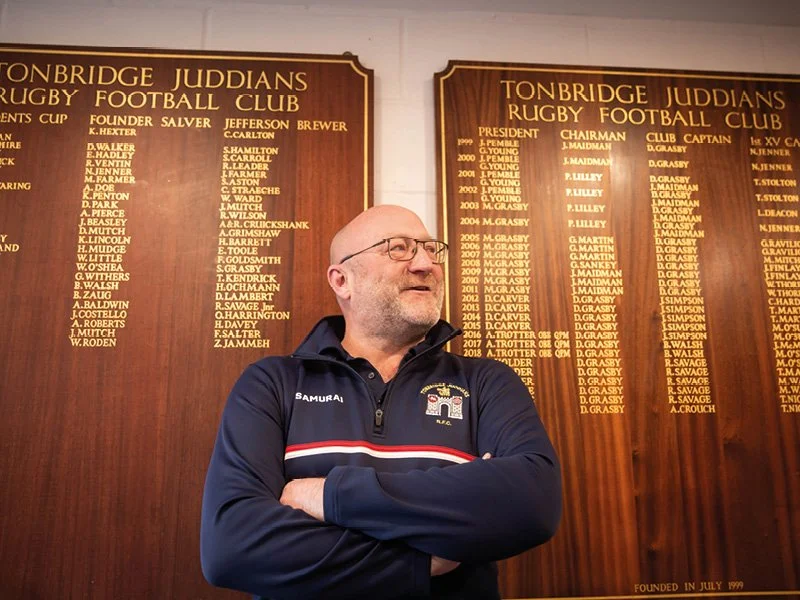
Unsurprisingly, these strange geographical afflictions bleed into rugby. This is all the more inevitable when you consider the legacy of the local schools who ensure that rugby is a matter of pride, and something that has been going strong since the days when Eddie himself was out there playing. “It’s a rugby town really. Yes, there’s the Tonbridge Angels Football Club and they’ve been around for a long time. They used to play down at the south end of the town, on what was formerly the Kent County cricket ground.
“I played with Old Juddians way back in the day,” continues Eddie. “The training and dedication and effort that’s put in all round by players these days is incredible. They’re much fitter, they’re much bigger, they’re much faster.
“When I played a million years ago I was a full-back, I mean look at me,” Eddie gesticulates downwards, indicating his slight frame, “I mean look at full-backs now, it’s an entirely different game. “We thoroughly enjoyed our rugby, I played till I was 56 and we used to get about a dozen people on the touch line.

“The rugby I played was old boys’ club rugby. Once you came off the pitch, you forgot the game and got into the opposition’s bar where the beer really went round. We started singing – oh it’s a shame that we don’t sing anymore.
“We used to sit around singing rugby songs for a couple of hours. We could out-sing any club out of the county. Today, I think it’s more a case of the game is never forgotten after the game, there’s so much analysis afterwards.”
While there is certainly less singing and more analysis today, TJs are a club who have quite a storied history. For a while, Tonbridge was a town that had two rugby clubs, Tonbridge RFC, who were formed in 1904, and Old Juddians, who were formed in 1928 and comprised of former pupils of the Judd School in Tonbridge. The two clubs merged to form Tonbridge Juddians in 1999.
Before this afternoon’s game against Havant, the social pulse of TJs is unmistakable as the clubhouse hums with a pre-match buzz. It offers a cosy contrast to the punishing February cold and the sharp, biting wind swirling around the playing fields just a stone’s throw from the River Medway.
With around 150 supporters enjoying a pre-match meal, the atmosphere grows increasingly boisterous. The servers, in an almost comical frenzy, glide between tables, plates of mains and desserts in hand, while the bar queue grows ever longer. The drinks flow and the chatter crescendos, creating a scene that, in all its unrefined, chaotic warmth, seems well-practised and well-loved.
Club captain and assistant treasurer Ady Crouch was an Old Juddian and was part of the committee when the two clubs merged. “I wouldn’t necessarily say the merger was a totally smooth process,” Ady admits diplomatically. “Rugby has changed a lot since then, in terms of playing numbers and both clubs were struggling to get two teams out.
“Old Juddians had an ageing first team, but a higher league position, Tonbridge was a younger first team with a lower league position, but needed to find somewhere else to play because their clubhouse had been condemned and was sold for building land. A merger made sense, Tonbridge was never really big enough to support two ambitious clubs anyway.

“There was a fair amount of resistance from members of both clubs, but in the end, it got voted through and we rejoined the league pyramid, meaning 1999/00 was our first season. There’s still inevitably banter about it all, but the majority of those dissenters have now been won over.”
What has swayed the sceptics is a sustained period of success. After challenging years in London 2 South in the 2000s, TJs dropped to London 4 South East, but then claimed three league titles in four years between 2010 and 2014.
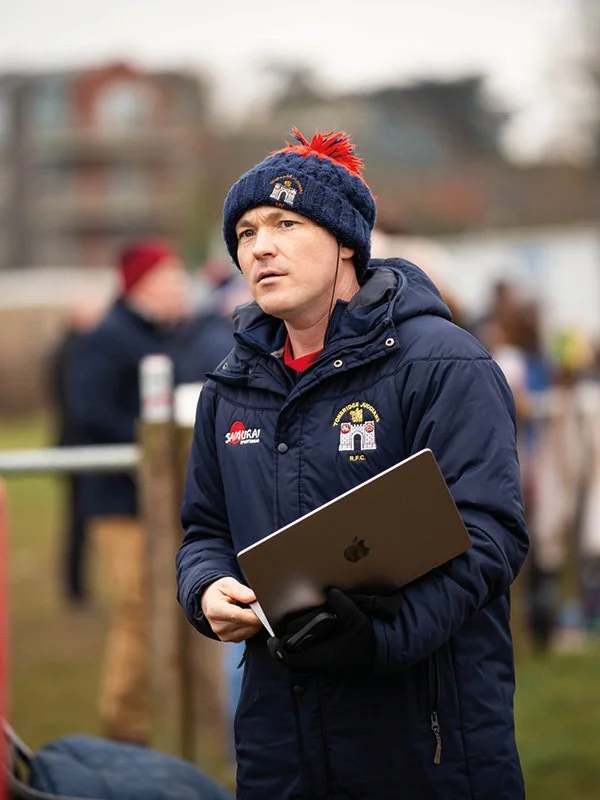
Their progress continued in 2018 when they won the National 3 London & South East title, followed by a promotion to National 1 in 2020 as National 2 runners-up with the best record. Though relegated back to National 2 East the following season, one of only two clubs to be demoted across the entire RFU league structure due to the impact of Covid-19, TJs have rebounded strongly. “Halfway through last season, Jordan Turner-Hall came in as director of rugby,” explains Ady. “He streamlined the playbook a little bit and gave the players a greater clarity of thinking.
“I think the last couple of seasons we had huge quality in the backs, but now we’re really getting the most out of them. The forwards have also become a bit more robust; we had George Merrick, who was player/coach for a while, and I think he brought a lot of strength to the forward pack which has carried on since he’s gone.
“We’ve managed to stay in games that perhaps previously, we would have tailed off towards the end, we’re just more confident in our patterns and abilities now. One of the observations we made last season was that we weren’t quite fit enough to compete at the top of National 2, and they’ve worked hard on that in preseason.”
The hard work is clearly paying off for TJs this season, with the team not just winning, but dominating, and often claiming victories by huge margins. At the heart of their success lies a remarkable ability to launch relentless, destructive attacks, meaning it has become rare for them to score fewer than thirty points in a match.
Given Tonbridge’s rich rugby heritage, you’d expect the local community to be buzzing with excitement, desperate to watch their team in action. However, as Ady concedes, there are still some hurdles to overcome in getting that full support on match day. “Rugby looms large in Tonbridge, but only for those who are in this world, and a lot of that comes from the private schools in the area,” he says. “There are an awful lot of people in Tonbridge who probably have no idea that the rugby club even exists, and certainly don’t have any idea of the high level we play at. There’s also the constant challenge of increasing our crowd numbers, getting more members in and more kids playing rugby here, but obviously the reputation of the academy does a lot of work in that regard.”
The pride and heart of this Kent club lies in its academy, which has been led from the front by Gareth Withers since its inception in 2013. “I’m director of sport at Hilden Grange prep school in Tonbridge, which feeds Tonbridge School,” says Gareth. “It’s one of the bigger public schools; they play Millfield, Whitgift, Wellington School and Eton at rugby.
“The TJs academy is the sixteen to eighteen-years-old section at the club, which we think of as being the leading grassroots academy in the country. Obviously, there are Premiership academies and licenced England Rugby academies, which are based around the Premiership clubs. But then below that you’ve just got grassroots rugby, and that is from Championship down.
“We’ve won the National Cup three times since we set up the academy twelve years ago, and no other club in the country has won it more than once in that time. We’ve also lost a final, a semi-final and a quarter-final.”
With around 150 players in the TJs academy, they not only have numbers but they’re also giving the kind of feedback you’d expect from a professional club. “We use video analysis with broadcast news-style cameras that we can use with proper mics which allow us to get a great insight into the games,” says Gareth. “Genuinely, I’d love you to find another academy in the country who could argue any of that, or at least half of that.
“The last time we won the National Cup a year and a half ago, we had Bury St Edmunds away in the semi-final, and we took five fifty-seater coaches of supporters to the game and I would estimate that just as many people drove as well. So we took five hundred people away to watch an under-18 game of rugby, that’s how special the club is.”
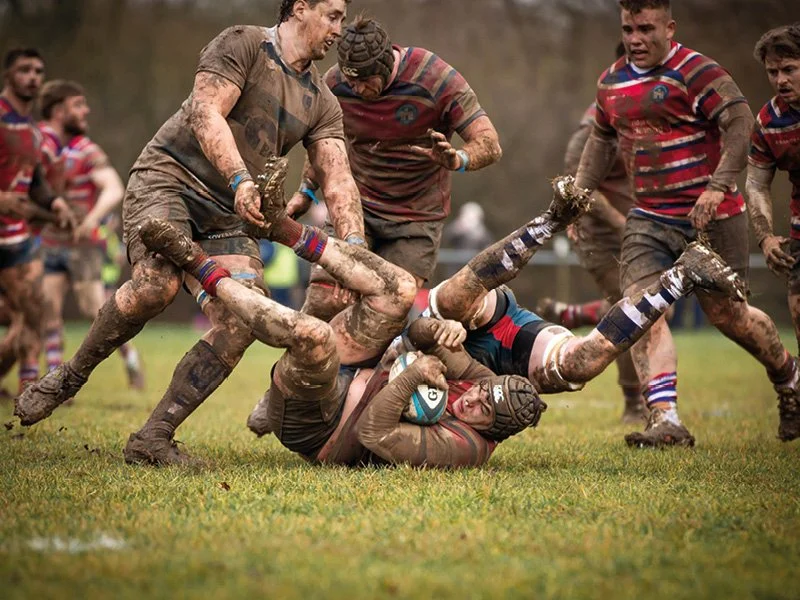
Should they reach National League 1 level, it’s almost a given that TJ’s will need to look beyond their current roster for new recruits, but the goal is to ensure the club not only has the depth to compete when they get there, but also that a strong pipeline exists from the academy to the first team. This isn’t just wishful thinking: since the academy’s inception just over a decade ago, nearly 450 first-team appearances have been made by academy graduates.
A handful of those youngsters feature for TJs today as the game kicks off and Havant make a strong start.
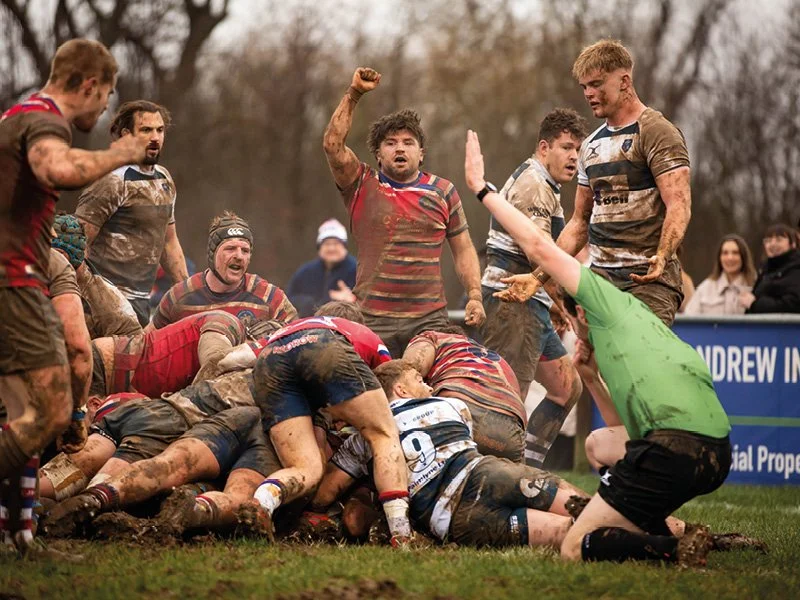
Despite the early pressure, TJs’ defence holds firm, restricting Havant to just three penalties in the first half, but TJs’ superior strength begins to tell and they score two quick tries before the break for a 17-9 lead. In the second half, TJs play with growing confidence and flair, running from deep and entertaining the crowd as they comfortably pull away from Havant.
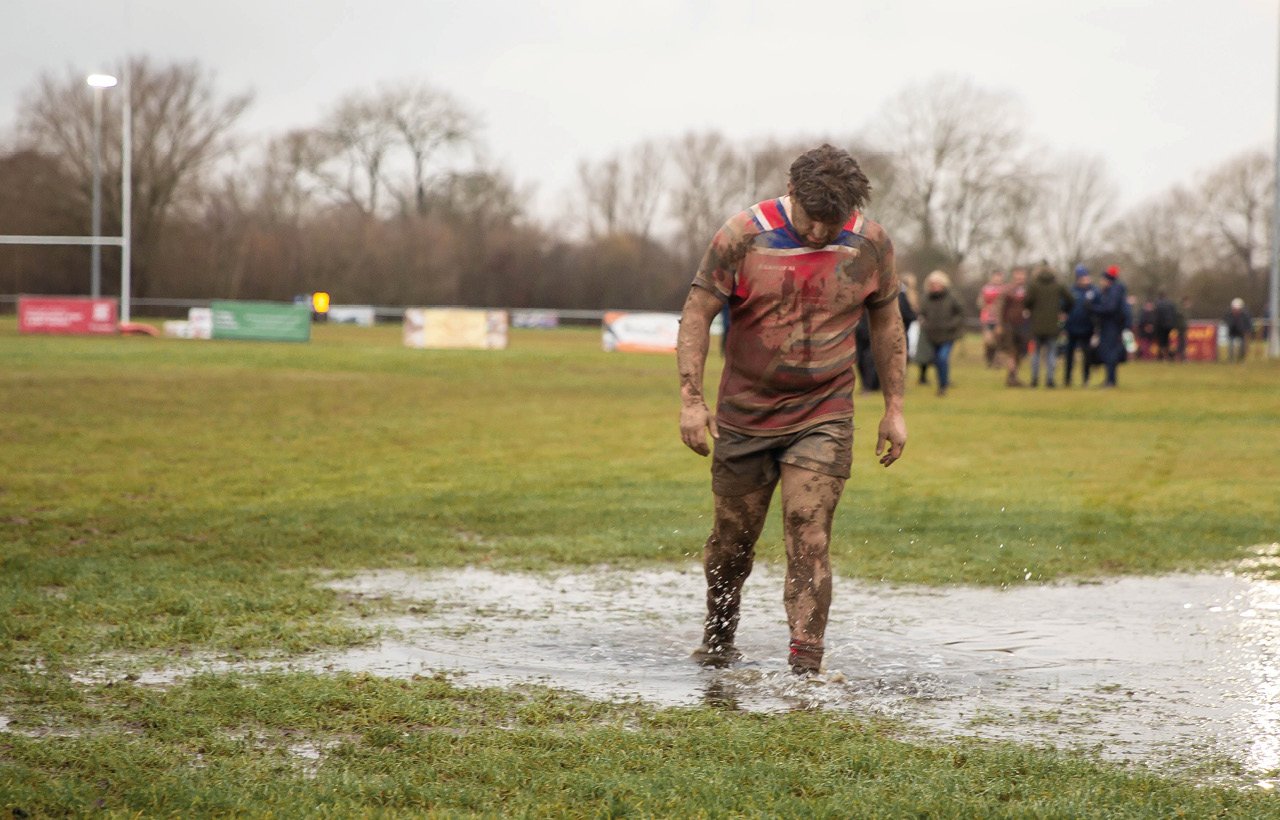
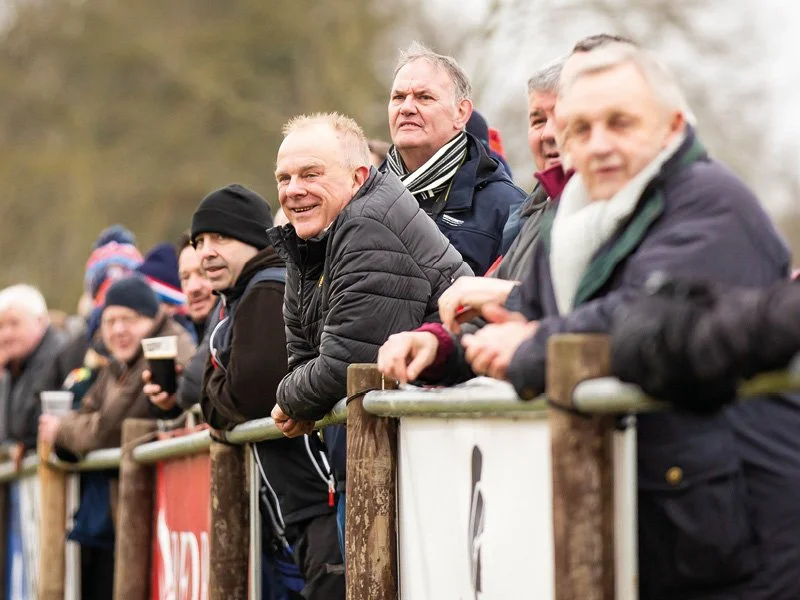
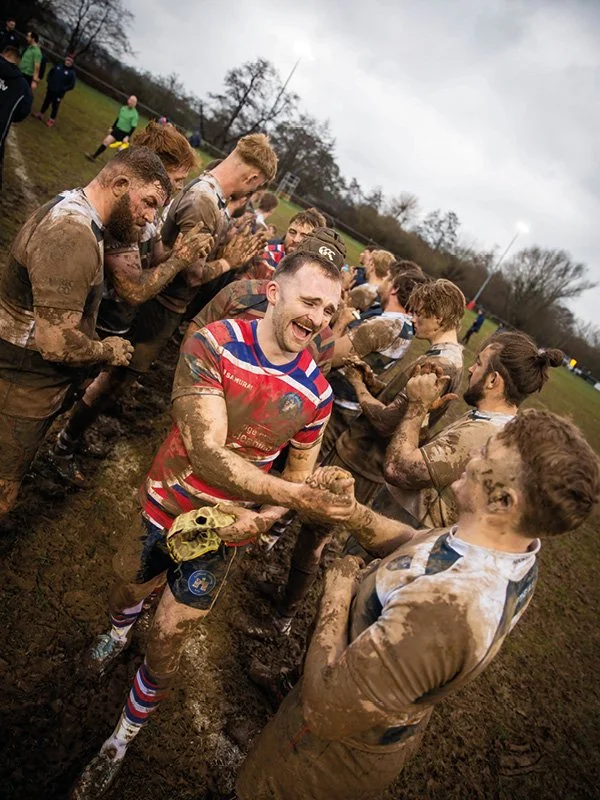
A 39-16 victory sees TJs secure their sixteenth win of the season and their fifteenth try bonus point, putting them six points clear of second-placed Barnes with a game in hand. The home crowd lingers to applaud the team, before gradually making their way back across the muddy fields to the clubhouse.

Expertly operating in the frenzied post-match atmosphere is William ‘Bill’ Little, in his third and final year as president of Tonbridge Juddians. He flits from table to table, wearing a big smile and speaking enthusiastically to everyone as he gears up for his post-match speech. “The president’s role on a day like today,” the quick-talking Bill explains after stopping to wish a happy birthday to an elderly fan, “is to represent the club in a social capacity. Often I feel like I’m organising the biggest Sunday lunch ever where I have to invite everyone I know, but I do love welcoming our guests and making them feel welcome.”
“I also like my wife being involved so that I’m not disappearing to rugby every week alone. She comes with me to all the away games and we have date nights; it really is a team effort between me and her.”
Bill perfectly embodies the role of a rugby club president, but for him, this path has been anything but inevitable. “The strangest thing is, I’m traditionally not even that much of a rugby man.
“I played semi-professional football quite seriously for Dorking Wanderers and others. Honestly, I loved playing the game but got sick to death of the cheating, the language, the fans.
“The social side of football doesn’t even come close to rugby. I’ve been to events up and down the country where I have put this tie on,” Bill proudly shows us his blue, white, and red striped Tonbridge tie, “people recognise it and I end up having an hour-long conversation all about rugby. It’s amazing.”
As fans file out of the clubhouse and into the cold Kent night, they are surely warmed by the fact that TJs continue their seemingly effortless glide on towards an inevitable promotion. Can Bill share any potential plans being made for next season and the prospect of National 1 rugby returning to Tonbridge? “Plans…I am aware of plans, but with all due respect it’s far too soon…,” Bill says before laughing heartily. “I mean, we have played in the National 1 league before, and obviously we came straight back down again. I don’t really know whether we were totally prepared last time, but we’re better aware of it this season. There won’t be drastic changes, but we desperately want to have a side that can compete at that level.
“For me as president, this season I’ve been at every first-team game on a Saturday to represent the club, I’ve watched all the academy cup games and I’ve pretty much watched all of the women’s first-team games this season as well. I will miss it, of course I will, but I’ll still be watching on, don’t you worry about that.”
Story by Scott Duke-Giles
Pictures by Danté Kim
This extract was taken from issue 29 of Rugby.
To order the print journal, click here.