After ending an eight-year wait for a world crown, and then proving their mettle with England A, the country’s golden generation is finally ready for the game’s biggest stage.
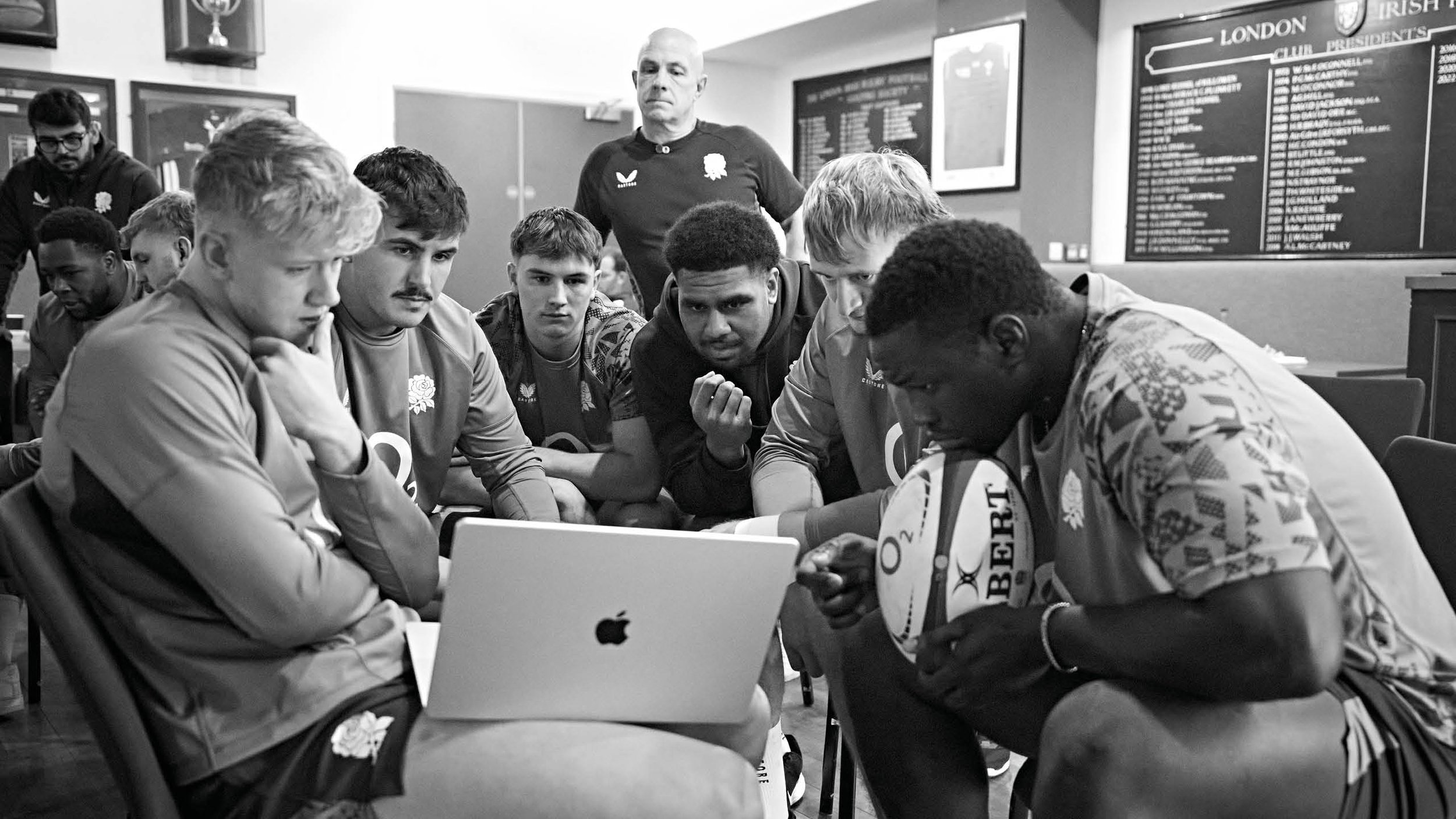
Hazelwood, the former training base of London Irish, tucked away on the outskirts of London in the tranquil suburb of Sunbury-on-Thames, is a place that every young England rugby hopeful knows well. For many years it’s played host to national pathway sessions, where bright young prospects from academies, schools and clubs across the country are invited to get their first taste of the national system, under the watchful eye of coaches looking for prospects with England potential. Some have it, most don’t.
Today, those that ‘do’ have one final rung to climb on the England pathway: England A, effectively the national second XV. Having operated under various guises over the years – England B, Emerging England and England Saxons – the England A set-up was revived in 2024, ending an eight-year hiatus after financial and structural considerations had left the programme without a defined place in the pathway or the calendar. A first attempt at a return in 2021 was thwarted by Covid, and while the old Churchill Cup in which England, Scotland and Ireland’s second teams competed against the Maori All Blacks, Canada, and the USA, was disbanded in 2011, England A is now back with the same objective, helping to nurture those next cabs off the rank.

Its return comes at a time when the pathway system is once again riding high, with England claiming the 2024 under-20 World Championship crown, their first in the best part of a decade. Root-and-branch cutbacks inflicted on the pathways between 2016 and 2019 had consigned them to a period of soul searching, but with Conor O’Shea’s appointment as director of performance rugby in 2019, their importance was once again back on the agenda. Success soon followed, a squad featuring the likes of Henry Pollock, Asher Opoku-Fordjour, Afolabi Fasogbon, Junior Kpoku and Lucas Friday beating France 21-13 in the 2024 final. With Pollock and Opoku-Fordjour already winning caps for England, and in Pollock’s case being called up for the Lions, it’s fair to say England are currently sitting on a generational, potentially golden crop of young talent – not to mention senior squad members including Ollie Chessum, Tommy Freeman, George Martin and Freddie Steward, all of whom are still 25 and under at the time of writing.
Unsurprisingly then, the squad gathered at Hazelwood in November has a heavy contingent of recent under-20s graduates. There’s some older heads too, Ethan Roots, Jamie Blamire, Ollie Hassell-Collins and Max Ojomoh among them, but the fresher faces including Vilikesa Sela, Greg Fisilau, Rekeiti Ma’asi-White, Nathan Jibulu and Noah Caluori make up the bulk of the squad. After a 14-31 defeat to an experienced New Zealand A side the week before, Rugby Journal is in camp as they prepared to jet off to face Spain in Valladolid.
Heading up the operation, the man charged with ensuring this potentially golden generation fulfils its potential is Mark Mapletoft. The former Gloucester, Harlequins and London Irish fly-half who coached the under-20s to glory in 2024, Mark has now moved into an overarching role as head of men’s pathways, while also acting as head coach for England A. “My remit now is the whole of the men’s player pathway,” Mark tells Rugby Journal. “A young player usually comes into us at sixteen, in lower sixth, and depending on when their birthday is, they get a certain amount of time in the pathway. If they’re born between 1 September and 31 December in their school year, they have less amount of time in the pathway than somebody who was born 1 January onwards. “But theoretically, a player could join in, let’s say September 2025 just gone, and their last involvement could be July 2029, at a junior World Championship. That’s a long time, close to 46 months. “We’ve already had a couple of lads in over the last twelve months who’ve been in northwards of fifty days in camp with us – so we have an awful lot of contact time with young players, and having a really clear purpose to what we’re doing underpins all of that. What does that identification of talent look like? What does the development of that talent look like? What experiences do they get along the way? That can’t be done in isolation. So, my job, now, is to make sure that there’s a clear strategy in place for those players.
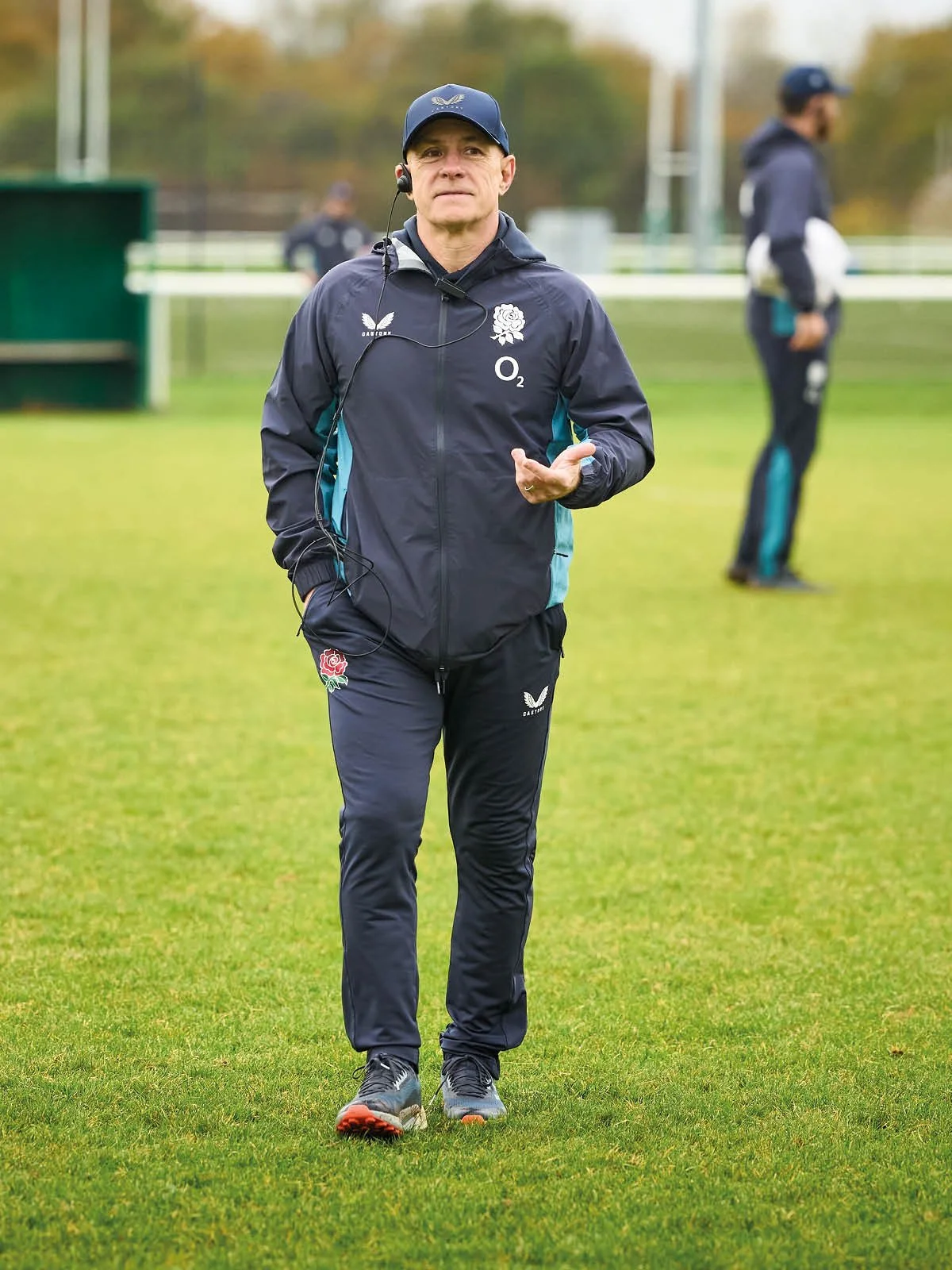
“But it doesn’t just end when they graduate from the under-20s,” he qualifies. “It’s looking at how we can keep the pathway moving forward trying to get a better connection into the next level. Just because you graduate from the 20s doesn’t mean you’re not at the forefront of our minds.”
England A sits in a critical point in a player’s growth where, according to England’s development framework, players are transitioning from one development purpose, ‘adapting to win’, to the final purpose, ‘win’. “Most of the A players are in that ‘win’ space, but equally, some of them are much younger,” says Mark. “If you look at the age profile of our side, compared to New Zealand A on Saturday, it was a much younger profile – David Havili and Sevu Reece probably had double the number of caps themselves than our entire squad.
“So how we pitch this camp, it’s got to be appropriate – we’re always in a rush to push players forward, but that’s really hard to gauge, because youth development isn’t linear. The player will demonstrate whether he’s capable of playing in the next level – your job as a coach is to give him that opportunity, his job is to take it.”
And for this crop of players, who after their success in the under-20s are being tipped as the finest generation since Owen Farrell, George Ford, Elliot Daly and Mako Vunipola’s class of 2011, the chances are certain to come, if they are willing to take them. “There’s so much talent, it’s a very exciting time,” continues Mark. “I think the challenge, which I’m often laying down to the players is, if you look at the age profile of the senior England team, it’s quite young. There are some players moving towards the end of their careers, so there will be opportunities that get opened up, but these players are going to have to work incredibly hard, I think, to get into that group and be better than what’s already there.”
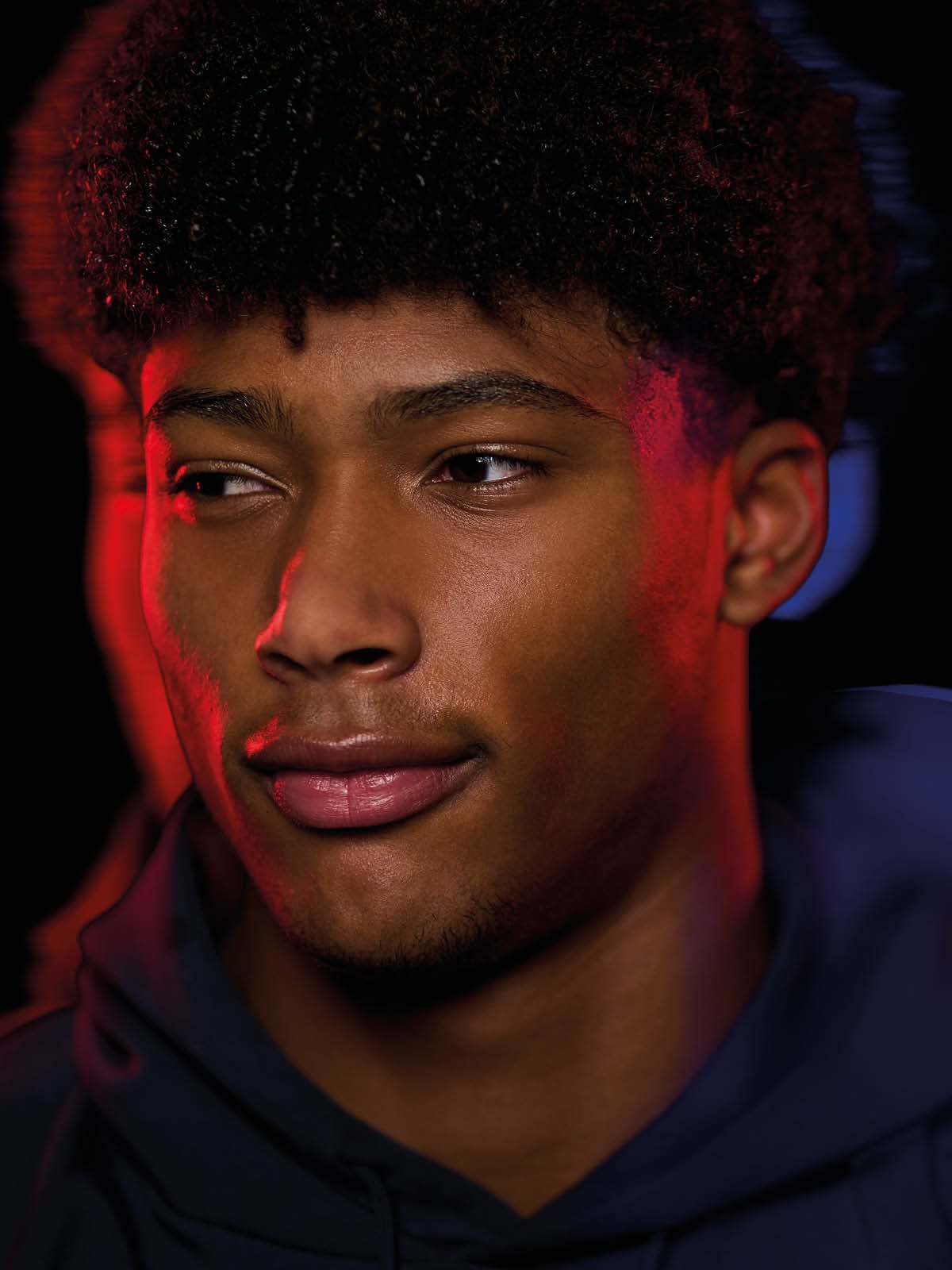
Noah Caluori
If you were tasked with dreaming up a player perfectly suited to starring in the next decade of English rugby, then you might just come up with Noah Caluori. The hyperbole might seem unjustified, after all, at the time of writing he’s only started two games in the Prem, but the catch is, in that first-ever start against Sale, Noah crossed the line for five tries, displayed an aerial ability unmatched not just in England, but globally, and showed the swagger and the confidence that any player hoping to rise to stardom in the modern game needs.
He may only be nineteen years old, and literally only just, but the young man from Forest Hill, south London, born to a Swiss-Italian father and Nigerian mother, is now the standout name in this England A squad, catapulted from relative anonymity to being called into training with the senior men’s squad earlier in November. “I just didn’t want to let the opportunity go to waste,” says Noah of his call-up to Steve Borthwick’s squad. “I treat every single opportunity the same. Two weeks before I was called up to my first senior camp, I was playing for Ampthill in the Champ, and I feel like I treated that opportunity the same way I treated the senior men’s opportunity. It allows my mental side of the game to just keep consistent, even if the level I’m at changes, so I don’t drop my performance.
“I don’t drop my training attitudes,” he adds. “I think that’s probably why I was back into the Prem the next week, and then off the back of that, done pretty well.”
We’re only one answer into the interview and Noah’s self-confidence is tangible – who can blame him after the month he’s had – and it’s clear this is a quality he would have regardless, five tries in a single game or not. “My best rugby is when I’m the most confident person on the pitch, and I just have full, full belief in my ability, and I know I’m gonna go do what I’m gonna do,” he says. “But I wouldn’t say, like, overconfident, cocky, just self-belief.
“Certain aspects of the game are changing, we do need characters in the sport. That’s what brings interest, grabs people who’ve never watched rugby before to be like, ‘oh, this guy seems cool, I like what you’re saying here’. If you want to be the best, be the best and go do it, say you want to be the best, it’s words of affirmation. There’s a certain line between being confident and then being cocky and arrogant – you’ve gotta have a hint of arrogance to be a successful athlete, in my opinion, but there’s a line where it becomes disrespectful.”
With that approach, he’s already walking in the footsteps of the athletes he always looked up to. “Kobe [Bryant], that Mamba mentality, if he’s on the court, if there’s one game-winning shot, he’s taking that shot, he backs himself every time to do it. I also looked up to Ronaldo, he came from nothing but built himself up. He set out to achieve what he’s achieved, and goes after it every time with one hundred per cent every single time, and that’s what made him great. I’d say I take certain parts of those mentalities and try and implement that into mine.”
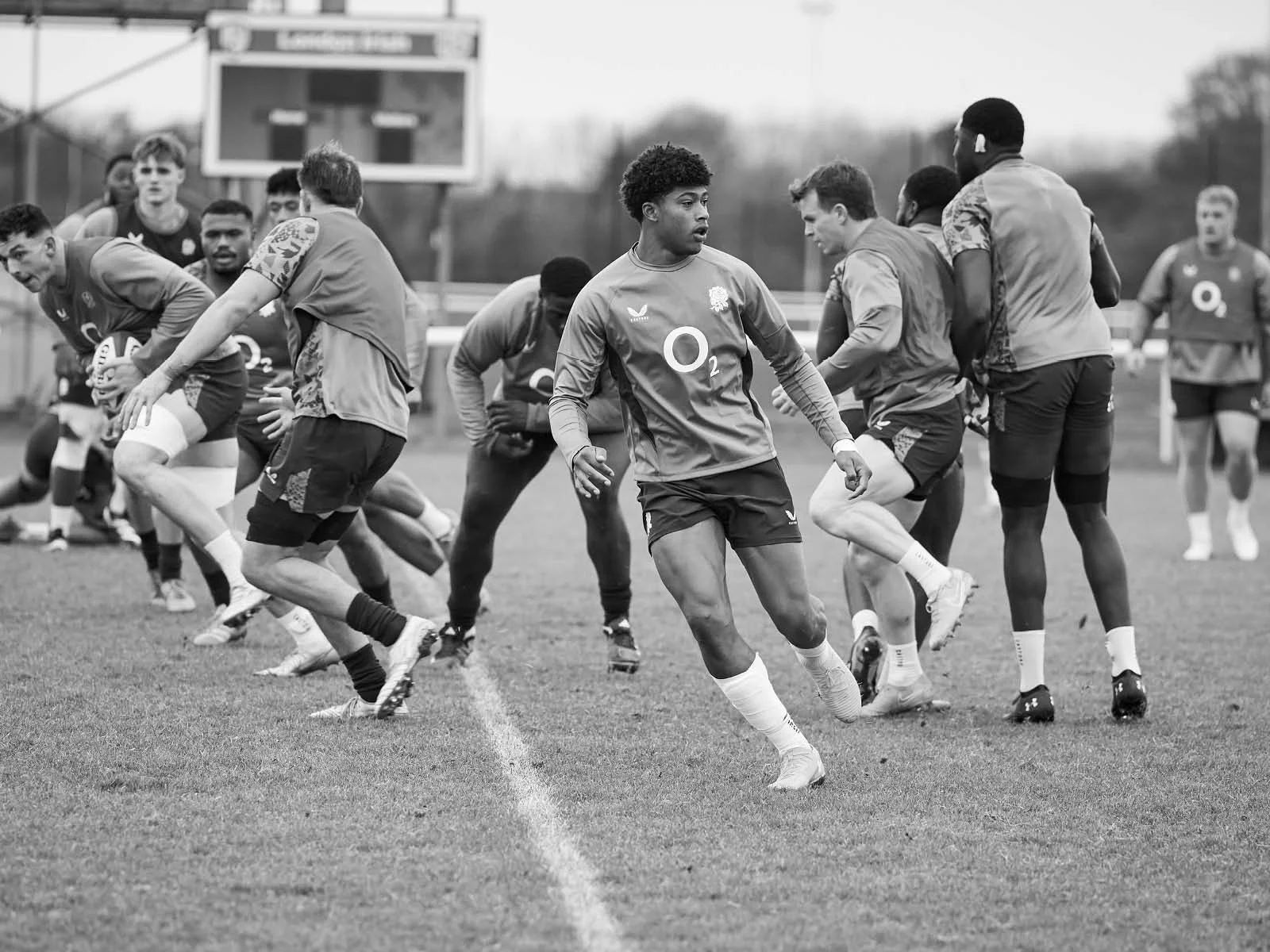
It’s been barely a month since that game against Sale, a month in which the spotlight has been firmly and intensely on him, but it’s something he’s relishing. “[I’ve found it] quite good,” says Noah. “I don’t read too much into people’s opinions and comments, because everyone’s entitled to their opinion. It’s been quite enjoyable on the pitch, speaking to the fans, making time for them has been a real nice touch, because I feel you can never be too big-time to just appreciate the people that support you. And then social media has blown up – I was on like ten thousand, now I’m on 38,000 [up to 42,000 by the time of writing], so that’s been great, just a little flex to my mates back home.
“I just don’t want to let it get to my head,” he assures. “I don’t want to become that player that has that one game, lets everything get to his head, and then he never has a performance like that again. I’m using that Sale game, the spotlight being on me, to motivate me to do even more.
“When I go home, [my mates] see me, the same old Noah, they will mock me the same and keep me grounded. They’re the first ones to congratulate me, but also the first ones to tell me to sort myself out if I’m getting too cocky.
“I’m loving my rugby. I’m loving every minute of it. I wouldn’t trade it for the world. It’s my dream to be doing what I’m doing right now.”
Starting at ten years old, there was no rugby background in Noah’s family, so it took a teacher at school noticing his natural talents before he properly got involved. “One of my teachers told my mum, ‘You’ve got to get this guy into a club like this, this is for him’, so I joined Blackheath rugby club, because a couple of my friends were already there from the school.”
By fifteen it was clear he had something, he just needed that extra kick of motivation. “I just remember having that competitive edge. I was like, I’m pretty good at this, I’m gonna see where I can go, but I was a bit half on, half off until I got into the Saracens academy.
“My coach, Jack Pattinson, he said to me he thinks I have the talent to go far, but he wants to know if I really want to go pro. There was a quote he said to me, something like if I don’t get a professional contract, he will still sleep the same at night, but I’ll be staying up wondering what if I actually put my all into this. And then after that moment in my under-16 season, I was all in every day, all in striving to go pro. That’s when I properly flicked the switch.”
He already had the physical attributes and the talent to excel – he stands at six foot four, and hit 21.7mph on the way to his debut Prem try – but his aerial skills, the part of his game that has got people most excited, is something he’s worked hard on. “It wasn’t until year twelve that it became a super strength for me,” he reveals. “I was playing thirteen at school [Mill Hill], and I would always be thirteen, that was my position – I only switched to wing at the end of year twelve. But after the South Africa tour with the England under-18s, the coach Will Parkin came to watch me at my school and grabbed me after, and said he thought I was one of the best schoolboys he’d seen at high ball, and how we can make this into a real weapon.
“After that with him, my Saracens coaches, coaches at school, I went after it and just tried to perfect my craft, actually gain a bit of technique. I had the raw spring, but I didn’t really have any clue what I was doing, so I actually sat down and tried to work out how I can catch the ball at the highest point.
Because of him, that has now become second nature.”
Already training with the senior squad, Noah has had to grow up fast. “I feel like it’s helped me mature, as a person, as well as a rugby player, but then I still have the young side of me, I’m still quite jokey, quite happy-go-lucky. Around my mates and around the training centre, everyone always says to me, you’re actually like a child. I mean, I was born in 2006.”
With the cohort of players also breaking through alongside Noah, it’s an exciting time to be involved in English rugby. “The amount of talent that’s coming through, and then how tight all the groups are, is going to help so much in the future, like we were going to have that chemistry between us from such a young age,” he says. “I’m just thinking about all the things that we can achieve together over the next couple of years. I feel like we’re just going to dominate world rugby for years to come. English rugby is going to become a powerhouse, I just know it.”
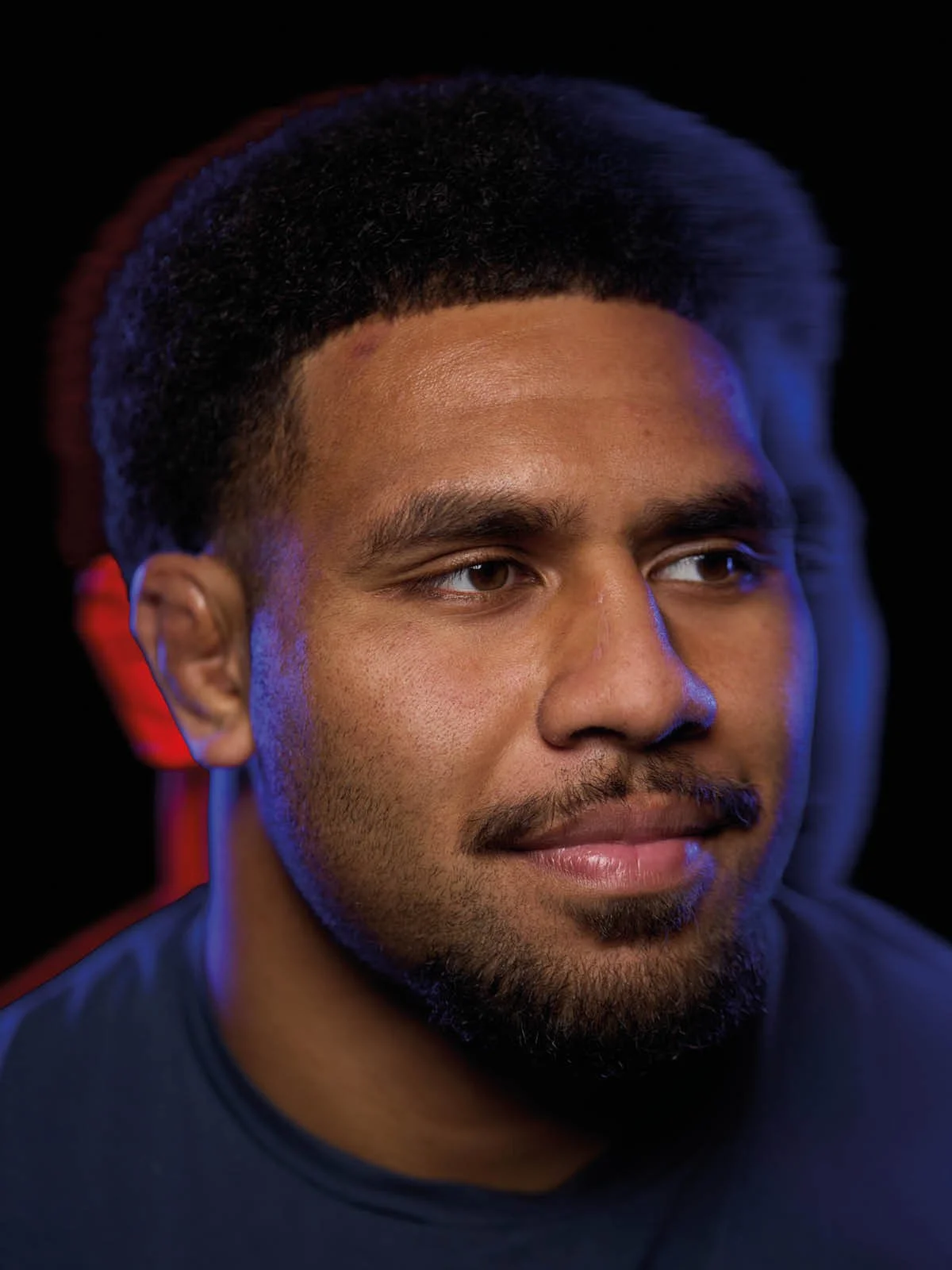
Vilikesa Sela
Standing at six foot four, and with a fighting weight around 125 kilos, you wouldn’t expect Bath tighthead Vilikesa ‘Billy’ Sela to also possess the dynamism and handling ability of a centre. But then, the twenty-year-old is of Fijian stock, so it all makes sense. Welcome to the new age of the front rower. “I grew up with a rugby ball, it’s the Fijian in me, everyone grows up around rugby,” says Vilikesa. “When you’re born in a Fijian household, you learn about all the Fijian legends, like Serevi and Jerry Tuwai. Especially sevens, growing up that’s the main thing you’d watch. But then with the 2015 World Cup happening in London we kind of went off more into fifteens.”
Born in Hounslow, his father Ilaitia was in the British Army, which meant an early childhood that moved across the length and breadth of England. “I had my childhood in Colchester, and then we moved to Aldershot. I grew up there for a bit, and then we went to Lyneham, and that’s how I got picked up by Bath.
“It was always weird going to school, because you’re always the new kid,” he continues. “And it’s like, you have to make friends every now and again. I remember going to the school in Lyneham, that’s where I got into rugby, because the rugby boys picked me up, and they’re like, ‘oh, you’re big, you can play’.
“They told me to come down to the club for the whole of year seven, and I couldn’t go because me and my family are really religious and Sunday is always a church day. But then, my mum thought it’d be good to just let me go, and when I tried it, I really enjoyed it.”
As one of the biggest in his year group, you’d drink the the physical side drew Vilikesa in, but as a Fijian, it was about the skills. “I really love the skill side of the game, the offloading, which is what Fijians are normally known for, that’s the thing that really caught my attention. I always had a problem with the physical side, because growing up, I didn’t want to hit anyone, I hated inflicting pain. My mum had to give me a chat and say, ‘this is how the game’s supposed to be’.”
Playing for the joy of the game, it took him some time to adjust to all the necessities of academy rugby. “I hated going to the gym,” he admits. “Sometimes I would just skip, but then our scrum coach here Catty [Nathan Catt], he was at my school [Beechen Cliff], he kind of noticed that I wasn’t really taking it serious, and then they started making me do one-to-ones with him.”
It clearly made a difference – during the forwards’ gym session, we watch as he chest presses 64kg dumbbells for reps. “I’m just blessed with the Fijians genetics,” he says, “but I’ve still got my own spot in Farleigh [House, Bath’s training ground] where I just chill, just to hide away from everyone.”
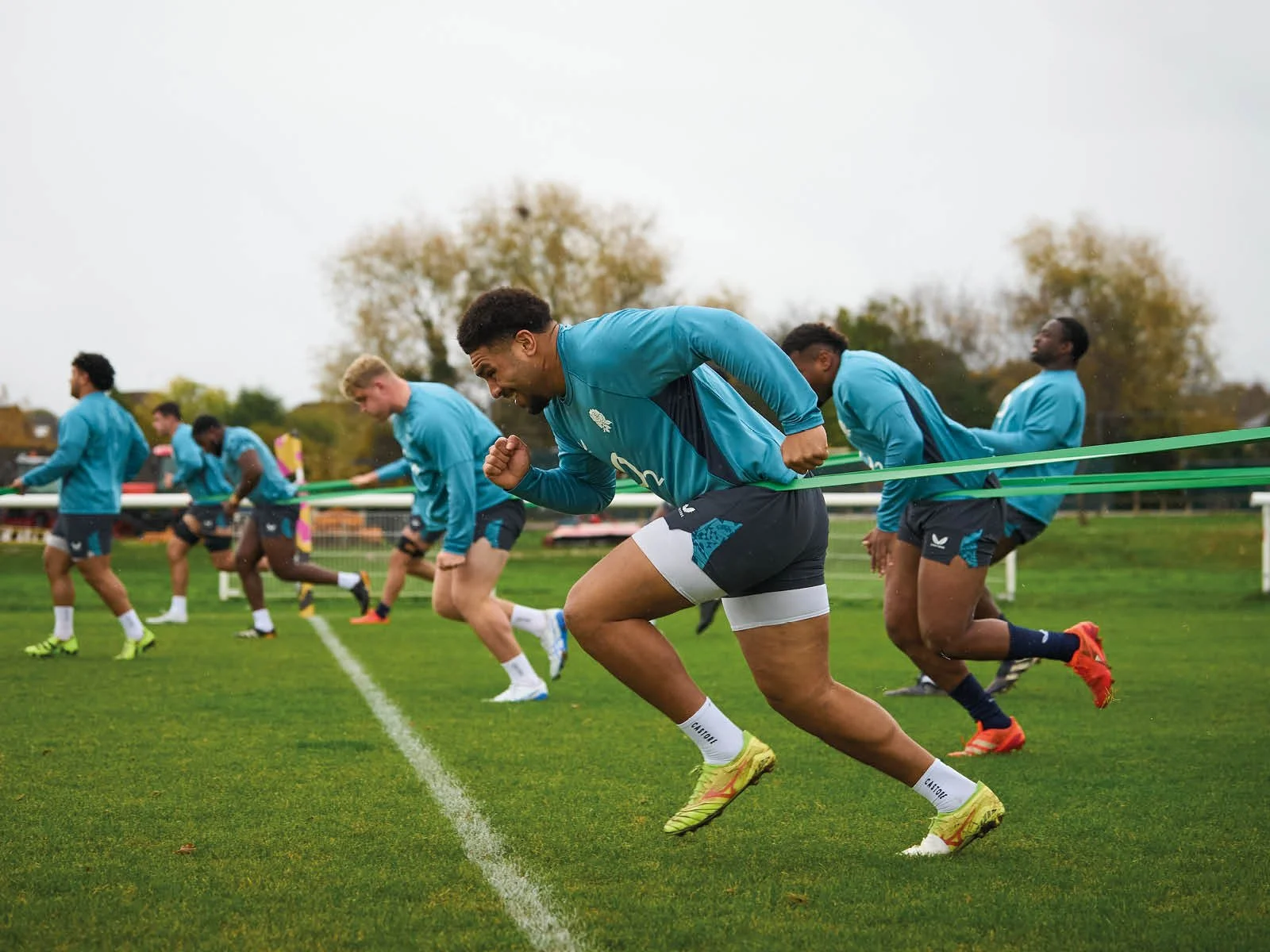
Tracking Vilikesa’s development from schoolboy to England A, the most significant period was undoubtedly when, at sixteen, he almost quit rugby altogether after he was released from the Bath academy. “That was probably one of the toughest moments for me in my career,” he says. “When I first got accepted into the academy, I was like, ‘oh, I’ve made it, this is my place now’. And then I think I got too complacent.
“At the time [I was dropped], I was just pissed, and I generally just wanted to throw rugby out the window. That’s how bad it was. My brother was still at the academy, so he would be going off training, but then my mum would force me to come to watch.
“Watching him play at Farleigh kind of motivated me to go further with rugby. I ended up picking it back up at my local club, and then from there, I got put into the last DPP [developing player programme] session to get into the academy, and that’s when I got picked up again [at seventeen]. From there, it kind of skyrocketed – now I have no idea what I’d be doing without rugby.
It was at this point that a switch from backrow to the front row was almost inevitable. “I was playing number eight, we had a scrum session at academy training. Catty was like, ‘all the props over here and all the rest of the boys over here’, I went with the others and he’s like, ‘Billy, get over there’.”
It was a difficult transition, but slowly he’s learned to love it. “Thomas du Toit and Will Stewart, they’re actually legends, honestly,” he says. “When Thomas came to Bath, he actually took me under his wing. Like even mid-session, he would tell me to stand there and just watch him do his setup and everything, and pick up techniques from him.”
And, with their free-flowing style, he still gets to flex his natural Fijian muscles. “I’d say my superstrength is my mobility. I feel like, for a prop, I’m pretty agile, I can move around well, and I’m decently fast, but yeah, I feel like that’s the point of difference I’m trying to bring. I think that’s where the new generation of props is going, everyone’s more mobile, you see Asher [Opoku-Fordjour], he’s not that heavy, but he gets around the park well. You’ve got to move well, but scrum well too.”
Given the quality ahead of him at club level – Thomas Du Toit, Will Stuart and Archie Griffin are all senior internationals – finding a way into the Bath line-up has been difficult, leaving Vilikesa to appreciate all the more his experiences with England under-20s, where he was part of the 2024 world champion side.
“It was just a very good platform to test my ability,” he says. “You get to play with the best players in your age group across the country, and it definitely challenged me seeing where I was with my scrums and my game. Everywhere you looked the competition was just so heavy. Every scrum session was always a challenge. Like, you couldn’t step off the accelerator because someone would just get you. But I believe that’s why we won the under-20s World Cup.
“After leaving the 20s stage, there wasn’t really a platform, I only had the senior team at Bath to play. I find it pretty hard to break into the senior team, so getting this chance now with England A is a very good platform for me to be with other boys that are in the similar positions and keep competing and improving.”
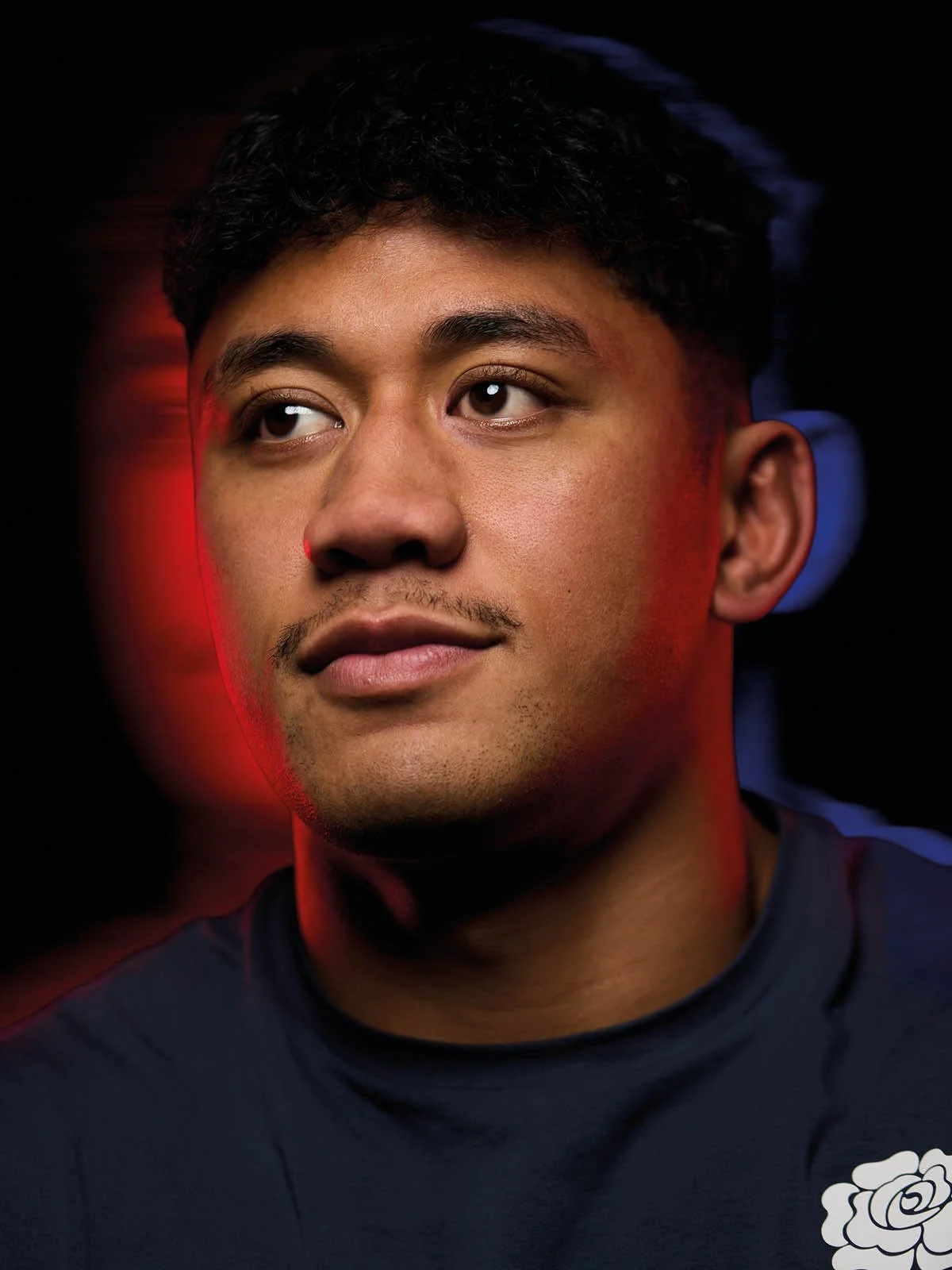
Greg Fisilau
If fortune had favoured Exeter’s Greg Fisilau, the 22-year-old could now be England’s number eight. Having been called into the senior camp ahead of the autumn campaign of 2024, Greg had been touted as all but certain to join England on their tour to Argentina in the summer with the British & Irish Lions away in Australia. However, injury robbed him of that chance.
During Exeter’s record 79-17 loss to Gloucester last season, the misery was compounded as Greg suffered a season-ending shoulder injury, leading to a long summer of rehab and surgery on both his shoulders. It brought an early end to his season in which he had been one of the few bright sparks for the Chiefs as they finished ninth in the league, with just four wins all season. “It was my first long-term injury, first operation,” says Greg. “It was all pretty scary after the first one, but I knew what was coming for the second one, so it wasn’t as bad I guess. The rehab was a bit dark, it was over the summer whilst everyone’s on holiday, so you struggle to find motivation to come in and get through everything.
“[The Argentina tour] was in the back of my mind that season, there were a lot of discussions, going through operations and rehab and stuff, but I think most important is getting your body right to give yourself the best chance to perform.”
Born in Plymouth, Greg is the son of former Tonga international and Plymouth Albion stalwart Keni Fisilau, and grew up in a busy household of five siblings. “It was a fun childhood, when we were getting along, but I think that happened very rarely, there was always something to complain about or argue about in the house,” he says. “But we’ve all moved out now apart from my youngest brother, so I think my parents, they’re still struggling to cope with the empty house.”
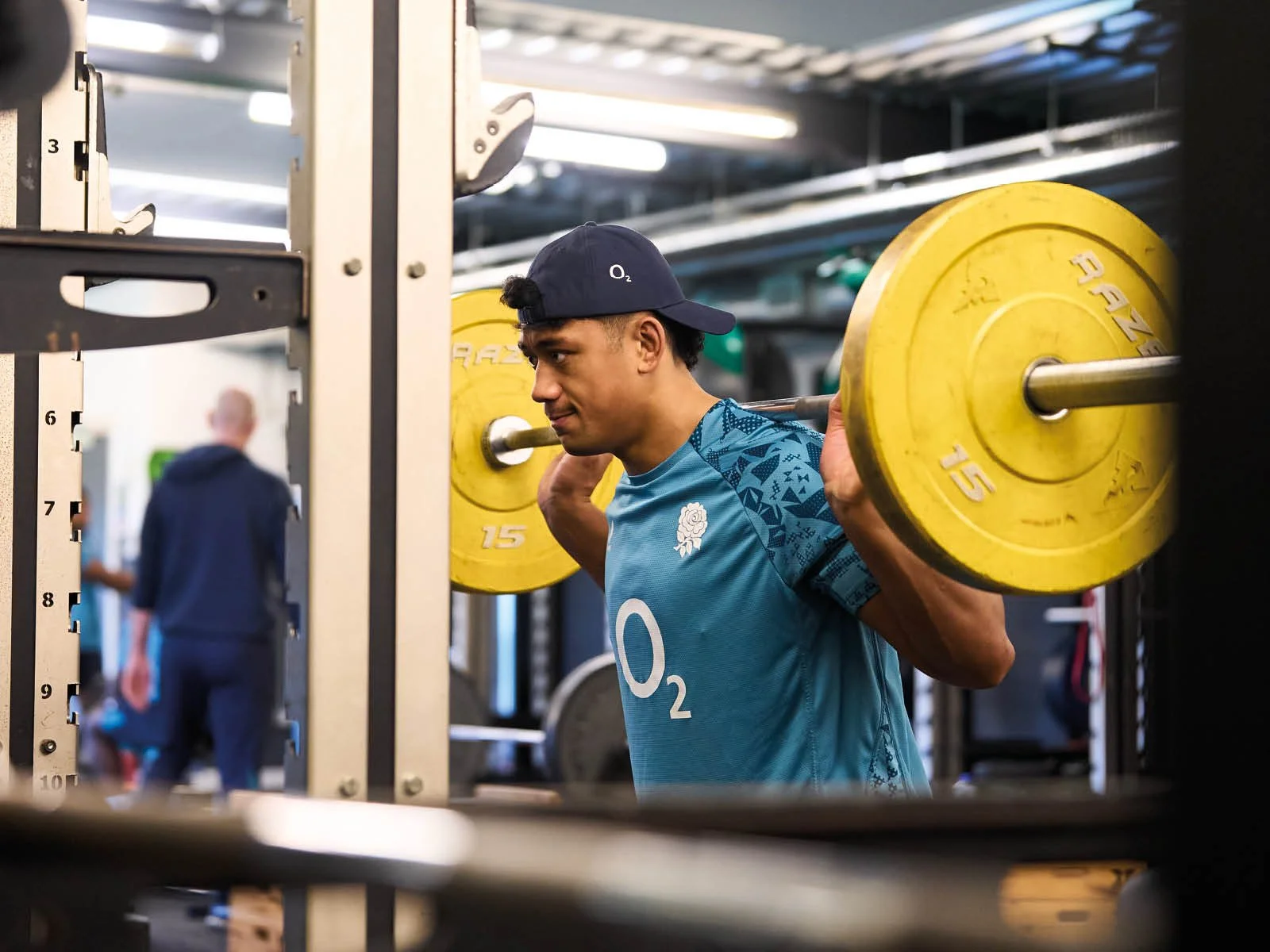
Greg has rugby running through his veins. “My dad being the rugby player he was, he definitely wanted me to follow in his footsteps and try and go further than he did,” he says. “As soon as I could walk he had me trying to pass a rugby ball.
“He’s a hard man to impress, but he always wanted the best for me. He’s always wanted me to do as well as I can, and he’s always been there supporting me.”
Weekends in Plymouth were spent watching his old man play for Plymouth Albion on the Saturday, who were in the Championship at the time, before turning out for Devonport Services on a Sunday morning. Aged ten they moved north to Kidlington, a village just north of Oxford. “I was playing club rugby for Oxford Harlequins, and I got invited to the DPP sessions for Wasps academy, which are like the development stages. Eventually I got into the academy and did under-17s, under-19s and it went from there.”
Greg managed to make a couple of appearances in the Prem Cup for Wasps before the club fell into administration, but it was after his moved to Devon that things started to take off. “Wasps going down was pretty tough for me, coming through the academy and all that, emotionally, it was quite hard to have to say goodbye to the club and move on,” he says. “I don’t think I had a breakthrough moment, but I got lucky with the timing of my move to Exeter,” he says. “I think a lot of players at Exeter were out of contract and were looking to move clubs, a lot of the back row especially moved on the year after I joined. So after that I had a few decent games in Prem Cup and made my Prem debut [against Saracens].”
Since that debut back in 2022 he’s demonstrated his physicality time and again, and with fourteen caps for the England under-20s also under his belt, Greg is sure to be one of the names on the tip of Steve Borthwick’s tongue as he looks for a replacement for number eight Tom Willis, who is joining Bordeaux at the end of the season. “I like to think my super strengths are being physical and as dominant as I can be on both sides of the ball, in terms of ball carrying and in the tackle,” says Greg. “In the next five years I hope to see myself in the England set-up, as an experienced Premiership rugby player, and fingers crossed we can win some trophies with Exeter.”
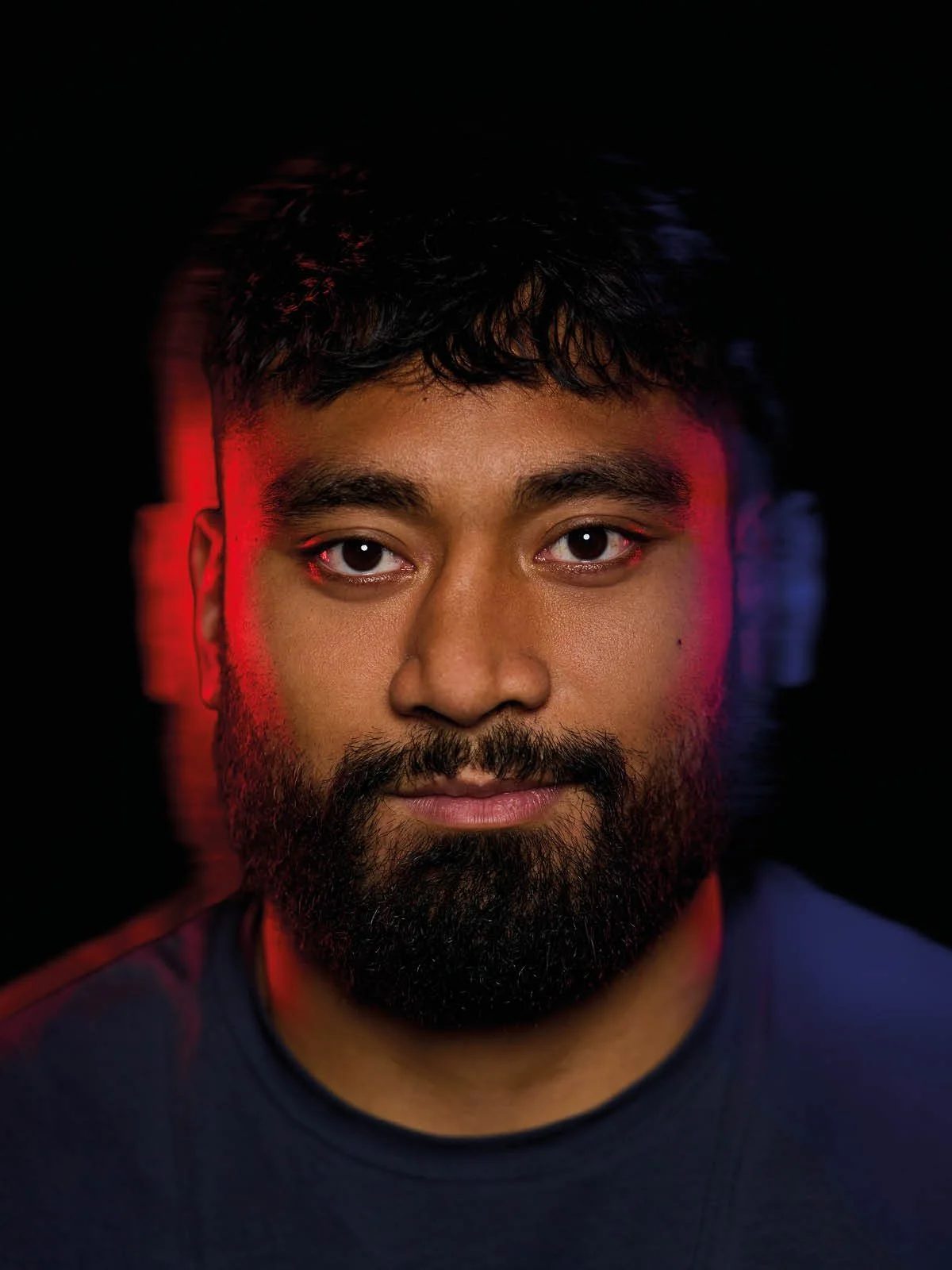
RekeIti Ma’asi White
Born in Cornwall, playing his rugby in the north with Sale and the son of a Tongan legend, Rekeiti Ma’asi-White has all the ingredients for the hardiest of centres. His father, Vili Ma’asi, played 36 times for Tonga, including at the 2003 World Cup, while his two brothers have also played professionally: Suva for Coventry and Sonny for Northampton.
Last season it became hard to ignore the exploits of the player many see as the new Manu Tuilagi. After starting the season on loan at Championship side Caldy, Rekeiti finally made his first start of the season for Sale in January at home to Bath. While that one went 23-32 in favour of the visitors, the 22-year-old’s thumping carries in victory against Toulon in the Champions Cup showed what he was capable of, and starts in wins against Newcastle and Harlequins cemented his place. He scored his first Premiership try in a 25-7 win over Saracens, and from then, he couldn’t stop scoring, with four tries in four consecutive games as Sale advanced to the playoffs.
With Vili still playing for Cornish Pirates while he was a young boy, rugby was part and parcel of life. “It wasn’t really a choice, pretty much every Sunday you go throw a ball around,” he says. “I’ve got two younger sisters who play, and they seem to enjoy it. And then my two older brothers, they play as well.
What is dad like? “Psycho,” he laughs. “When it comes to like training he loves it, even now. Especially the rowing machine, we used to have a rowing machine a couple of years back and most mornings will do some horrendous circuit training sessions.
“He was tough on us but that’s why I got here. Every little thing we would do wrong he would correct us, but it turned out well I think.”
Growing up Tongan was important. “Rugby in Tonga is very popular, and that’s how we got here, into the UK. But I’m not only half Tongan, my mum’s also from Kiribati, so there’s a lot of different cultures in my family. A lot of cousins, lot of siblings to do things with, you’ll always be busy, which I liked when I was younger. I don’t think you’d see that in a typical English family.”
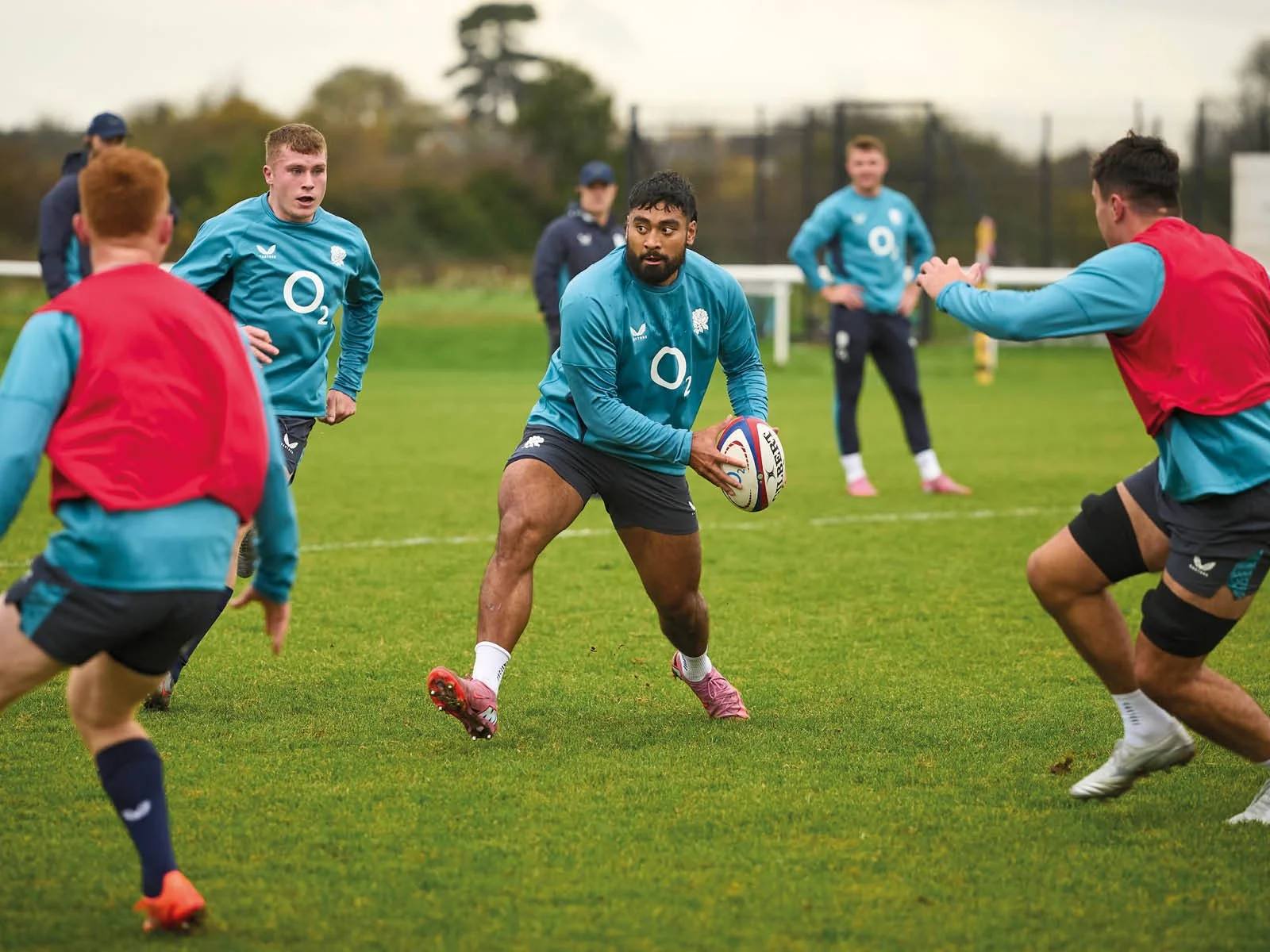
Rugby started properly for Rekeiti at eight years old, but not in union. “I played a bit of rugby league to start off with. My dad played for Leeds Carnegie up there, and obviously there’s a lot of league going on up north. When we moved down to London that’s when I first did union.”
Joining Caldicott School just outside of Slough, the same school as Greg Fisilau, he was similarly picked up by Wasps and was making a name for himself in the academy when the club went under midway through his second season. “I was still kind of like maybe fourth or fifth choice at the time at Wasps, and I was obviously still young – if we stayed on, it might have been a different outcome. We had Manny Feyi-Waboso, Greg, Charlie Atkinson, Ollie Hartley, there was a lot of young boys.”
Fortunately for Rekeiti, with a handful of Prem Cup appearances plus some experience on loan at Moseley in National One, Sale had seen enough to snap him up. Fortunately, again, there were some familiar faces at Carrington. “Manu [Tuilagi] used to know my dad quite a bit,” he says, “when we lived in Leeds he used to come over for a couple drinks down the basement. We had a pool table, darts, they would just come down and chill. I was a little kid at the time, so I didn’t know who he was, I was just this little kid running around everywhere.”
With Manu and Sam James in the starting centre berths, Rekeiti managed just four Premierships appearances that season including one start. He had to wait until the following January for his next opportunity in the twelve shirt, but it’s one he took and never looked back. “When my opportunity came I just had to take it. When I knew I was put on that team sheet the coaches were very helpful, especially Byron [McGuigan]. He was basically saying that I had licence to do what I do best. So, for me, that was just physicality in attack and defence. He was like, ‘just go for it, carry hard and bang hard, and then the rest will come after a couple games when you’re comfortable’. I think that helped in terms of my confidence.”
After his impressive run of scoring, a first call up to the senior [England] squad came at the end of the year. “It was obviously very cool to be in with the big boys, but obviously [I was] nervous, I didn’t want to get things wrong. It was tough, the standard there is even higher than you think when you come in there, just the pace, the speed of everything. But now I know where I need to be. I want to bring that back to Sale and just try and not to lose my momentum.”
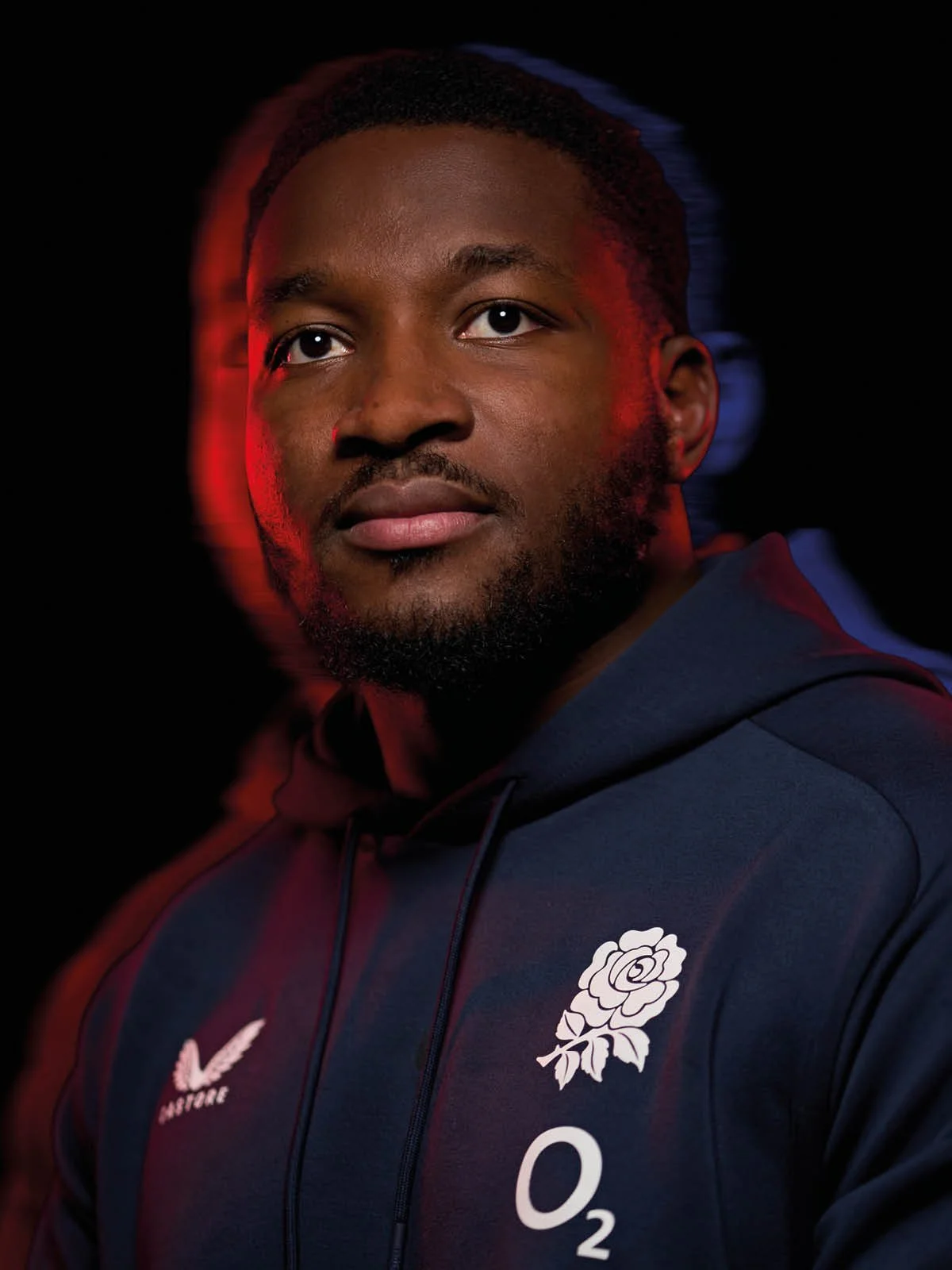
Nathan Jibulu
When it was announced that one of Harlequins’ brightest young stars was upping sticks and heading north to Sale Sharks, few doubted that this was something the south London club would live to regret. At the age off 22, hooker Nathan Jibulu looks to the manner born an international front row; boasting plenty of power and a ball-carrying ability reminiscent of prime Billy Vunipola, he demonstrated just that in a try-scoring Prem debut for Sale against Gloucester, hitting all fifteen of his lineouts, fronting a dominant scrum, and showing why he might just be England’s next hooker.
“The way Sale want to play the game is how I want to play,” says Croydon-born Nathan, “and from a selfish point of view, that’s shown through my performances and the impacts I’m getting around the pitch now. And that’s not to say I wasn’t getting that at Harlequins, it’s probably just enjoying the brand of rugby more.
“It’s definitely more set piece orientated itself, which helps as a hooker. Having Dickie [Luke Cowan-Dickie] as well, it’s a real privilege to be able to learn off him.”
Rugby started relatively late for Nathan, aged twelve, when he joined Wimbledon College, converting from football. “I loved the physical side of the game, north-south carrying, yeah it was nice when I was bigger than everyone else. It’s a bit different now everyone’s the same size.
“I started off as a second rower because I was quite tall, and then I moved to number eight when I stopped growing, and then finally moved to hooker when I stopped growing even more. I moved to hooker at sixteen, seventeen, so quite late on, but it’s probably the best thing I could have done. Obviously, there’s a closed skill with it, with throwing lineouts, but I enjoy it now.”
Now into his fourth professional season, Nathan is finding that confidence is key to performance. “When I was at Quins when I was eighteen, the first thing I did was ask Marcus [Smith] how he is so confident and comfortable. He’s like, you take confidence from your process and the stuff you do throughout the week – with a game, it’s fear of the unknown you’re going into, you don’t know the opposition and what it’s going to feel like on game day, so it’s about going in there knowing I’ve done everything I can.”

It’s a mantra he’s stuck to and one that’s served him well, especially when it comes to lineout throwing, a skill that has its ups and downs. “Recently I’ve kind of gone through the yips with my throw, and I’ve been talking to a sports psychologist about that, and that does help,” he says. “Confidence, and what you’re feeling going into a throw, is huge, because you are going to mess up a throw. I’m going to mess up a throw from now to the end of my career, that’s bound to happen, but it’s my reaction and what I’m thinking mentally after that, which I probably wasn’t getting right a few months ago.
“I reckon every hooker goes through this, where you missed your first one or two throws, and your next one you’re just like making eyes with the caller saying, ‘please give me one at the front’. It’s weird, because you’ve got to say to yourself in those moments, ‘I’ve thrown this a million times’.
“I talk to Fordy [George Ford] quite a lot at the club; he’ll say, if you miss a kick, you’re not going to then start changing what you’re doing mid game. If you have a process and a technique that you’re working on for years or months, you got to go back to that and feel confident going back to that. Whether I’m at my best or worst, that always will stay the same, and I’ll never try and change that, because that’s when you start getting inconsistent. And that’s probably a scarier place to be than someone who’s missed one or two in a game.”
Not only does Nathan spend plenty of time thinking deeply about his own game, but he’s got the physical attributes to put it into practice. “My point of difference is, I’d like to think, contact work and carrying, tackling, breakdown stuff,” he says. “It’s something I love doing, it is why I started playing rugby, and something I think I will always do throughout my career.”
After a year in the England under-20s in 2023, this is Nathan’s second time in England A camp, and while he knows he’s in the right place, he’s also aware of how far he’s got to go. “I want to use this as a stepping stone into hopefully a senior cap in the future, God willing, but I definitely don’t look too far ahead,” he says. “I’ve just got to be where my feet are each week as it comes.
Story by James Price
Pictures by Ben McDade
This feature was extracted from the new issue of Rugby Journal, also featuring Len Ikitau, Peter Winterbottom, Sophe de Goede, Tom Shanklin, England head chef Tom Kirby, and a 7,000-word deep dive into English cup rugby.
Order your print copy now here.