Joe Cokanasiga
One game, two tries, but Joe Cokanasiga’s World Cup ended there. In truth, it ended the moment he got off the plane. His biggest challenge would then begin: surgery, rehab, piling on the pounds, playing, then injured again. At this point, he was done with rugby.
The Gurkhas have long been the most famous foreign nationals in the British Army, with the military prowess of the Nepalese catching generals’ eyes as far back as the 1800s. But, the army’s connection with Fijians is almost as old, with the islanders being recruited in the late nineteenth century and as many as 1,600 fighting for Blighty and the Allied Forces in the First World War, a number that swelled to 8,000 for the Second World War.
Even in the post-1970 independence world, Fijians continue to serve, remaining the second largest group of foreign nationals in the forces, around 1,600, compared to the 4,270 Nepalese. Considering it’s one of the smallest Commonwealth countries, with a population of around the 924,000 mark, Fiji is punching, almost literally, well above its weight.
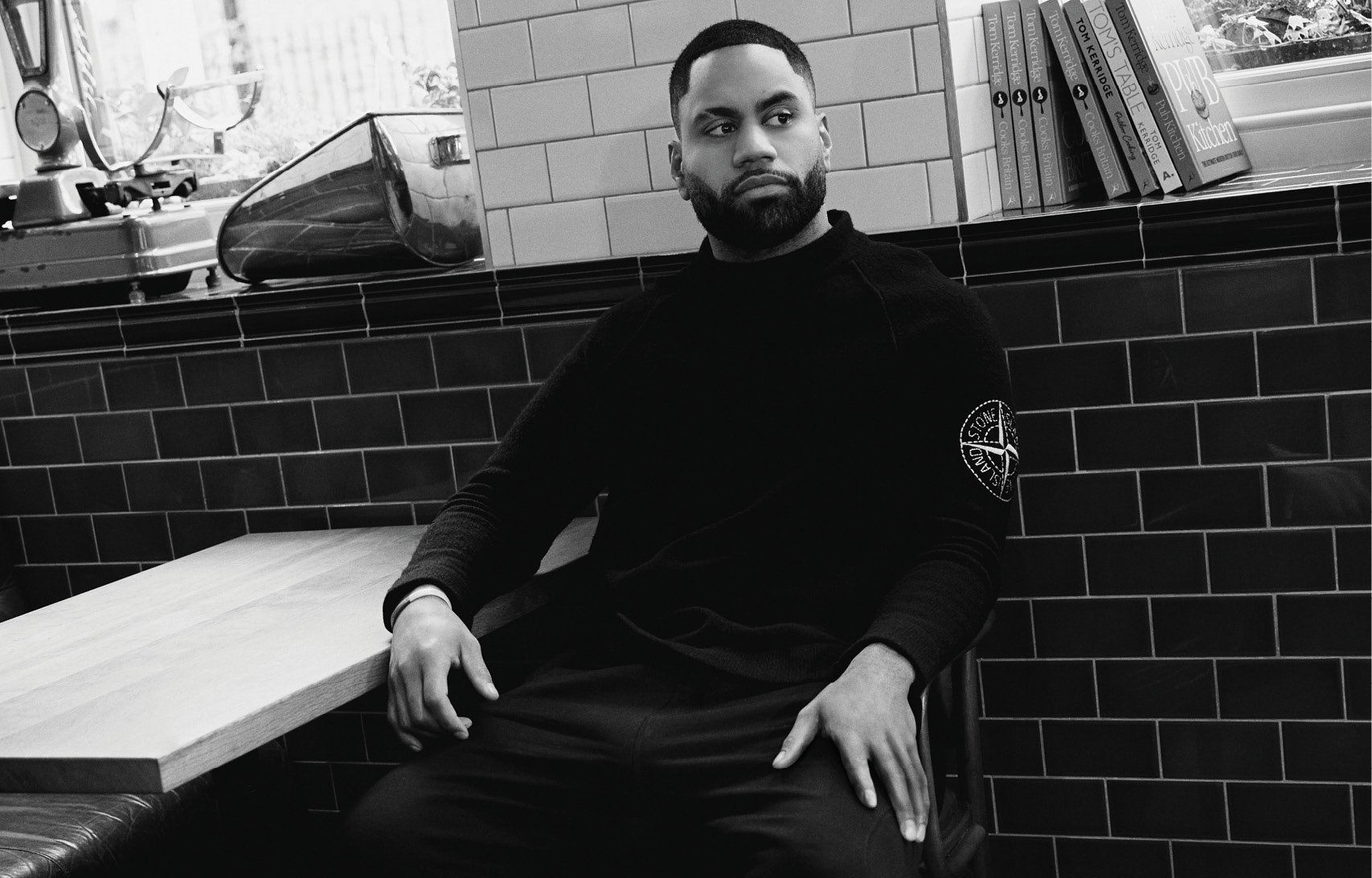
Understandably, being the most naturally gifted rugby nation on earth, many Fijians in the British Army, have found their way to Twickenham for the inter-services matches, and others have found a different way to serve Britain. In the case of Ilaitia Cokanasiga, a sergeant in the Royal Logistics Corps, he delivered two sons to the game of rugby: Joe and Phil Cokanasiga. “We were called pad brats, kids of soldiers,” says Joe when we meet him in south-west London, at a suitably rugby-player friendly pub, The Butchers Tap & Grill. “We were in this little base in Mönchengladbach, we moved twice in Germany and then went to Brunei. We never played rugby at first [in Germany], because rugby was on Sundays, but we had church, so I’d always missed that, so it was always football.”
Joe’s route to Germany, had started in Fiji where he was born. “I just remember being carried all the time,” he says of his earliest memories in Suva. “By aunties, uncles, I didn’t like to walk! That’s pretty much all I remember.
“Then we landed in North London, where my brother was born, then to Abingdon, and then all of a sudden we were in Germany for five years.”
The army gave him friends for life. “Wherever you moved, you’d have the same kids, because they were in the same battalion, so you always knew people.”
His friends were a mix of British and Fijian. “The Fijians would always meet together,” he says, “I was always surrounded by Fijian boys, it was such a close community wherever we went. We’d always go to church together, always do the Fijian celebrations, that’s where I felt most Fijian. Although these days, when I go back to Fiji they just take the piss of my accent and call me a plastic Fijian!”
Getty Images
While he didn’t follow in his father’s footsteps, it was certainly an option. “I just loved it as a kid, I’d always watch army films,” he says. “The army was my main dream, I loved it, I was always around it, I wanted to join the army. Even now I’ve still got a massive interest in the army, I try and do stuff with them as much as I can.
“My dad was in the Royal Logistics Corps and they used to deliver supplies, he did two tours to Afghanistan, and one to Iraq.
“I just remember waking up early in the morning to say goodbye to him,” he says of his dad’s tours. “But it was nice because all the other kids would have to say goodbye to theirs too, so we were all in the same boat.”
Then, a move to Brunei, a tiny nation in south-east Asia on the island of Borneo. “We lived ten minutes from the beach and the jungle, but my family’s got a massive fear of snakes, my sister will literally start crying if she saw snake, and snakes are the biggest thing there, so we stayed out of the jungle pretty much.
“Although we did go to one army camp, it was right in the wild, and it was just bunk beds out in the open, and it turned out the SAS used it for jungle training.”
Would SAS life suit him? “I’ve still got my friends from the army, and one of them said I could be in the SAS, but I don’t think I could handle the training when they’ve got you hooked up to the sound of babies crying for hours on end.”
Luckily, he found rugby in Brunei, mainly because there was a higher proportion of Aussies and Kiwis there. “If you think of Brunei, you wouldn’t think of rugby. But even the Bruneians loved rugby. There was only three or four clubs though.”
Getty Images
The move was good timing for several reasons. “I had a growth spurt when I got to Brunei,” he says. “And my dad knew a coach, he was a Kiwi Samoan, and he just said, ‘I can definitely use you’.”
How tall had he got? “It wasn’t how tall,” he laughs, “it was how heavy I was!”
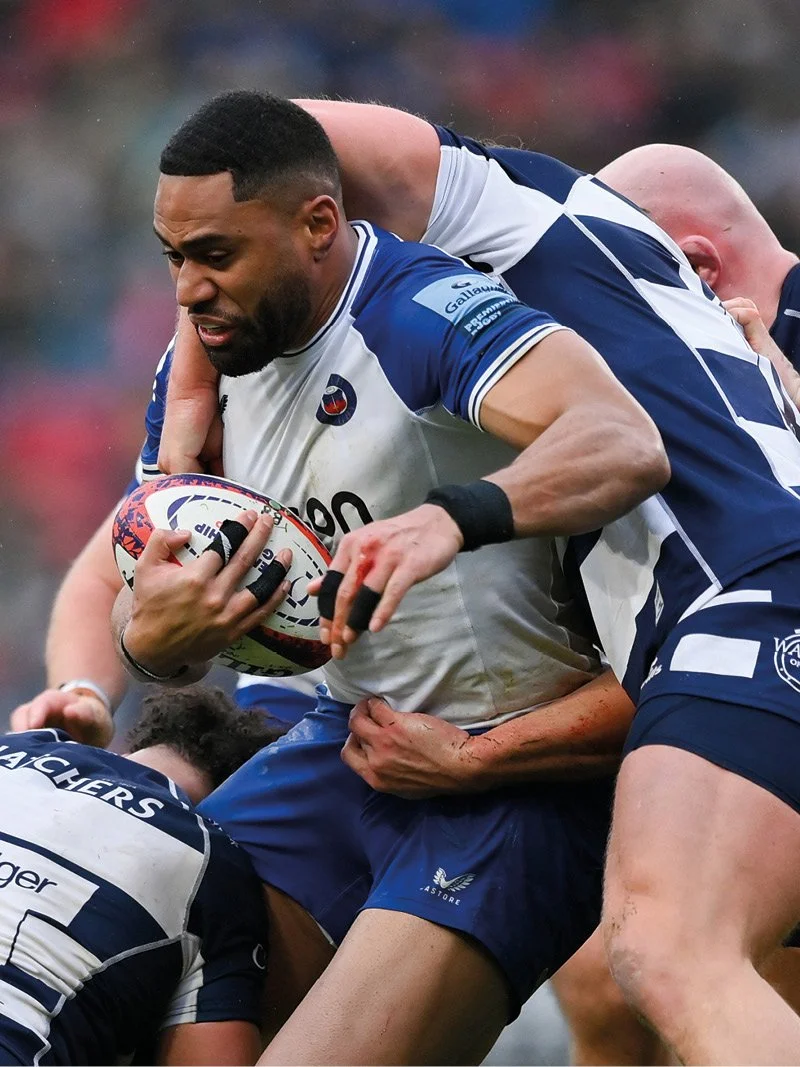
At sixteen he found himself playing men’s rugby and also had his first rugby heroes. “I loved watching Manu [Tuilagi], yeah, he was my idol,” admits Joe. “And then it’s funny, because I first met him at my first [England] camp in 2018, just before we played Australia for my second cap, Manu was going through his Facebook messages, and found one from me, saying he was my idol, please be my friend … it’s funny how the world works.”
To England as a teenager, and what was the Bushey Academy, near Watford. “I joined halfway through the GCSEs, and they said, ‘oh we can’t take you in unless we hold you back a year’.
“I hated the idea, but they said, ‘this is the only school we can take you in’… and so my parents took me to Twickenham, to the shop, and said, ‘buy whatever you want’. And it was weird, because we saw one of the regiment rugby tops from Brunei there. Anyway I got that and other stuff, then when I was back in the car with all my new things, they said, ‘you’re going to have to do the school thing’.
“I hated it because I just didn’t feel comfortable because I was with younger kids, I felt like I should have been with my age.”
His rugby had stopped too, until his dad met with an old friend, ex-Gloucester backrower Akapusi Qera, and he put him onto another contact, who was a friend of the London Irish academy manager. He got in, and would balance playing with the academy, and turning out for a men’s senior side, Old Merchant Taylors’. “The head coach [of Old Merchant Taylors’] was ex-army and knew a couple of Fijians, and somehow I got picked up by them. I would train on a Thursday with London Irish, then play on Saturday for them. “It was funny,” he says of his introduction to senior rugby at grassroots level, “I was there, seventeen, in my prime, and these guys would be rocking up to games hungover.”
Getty Images
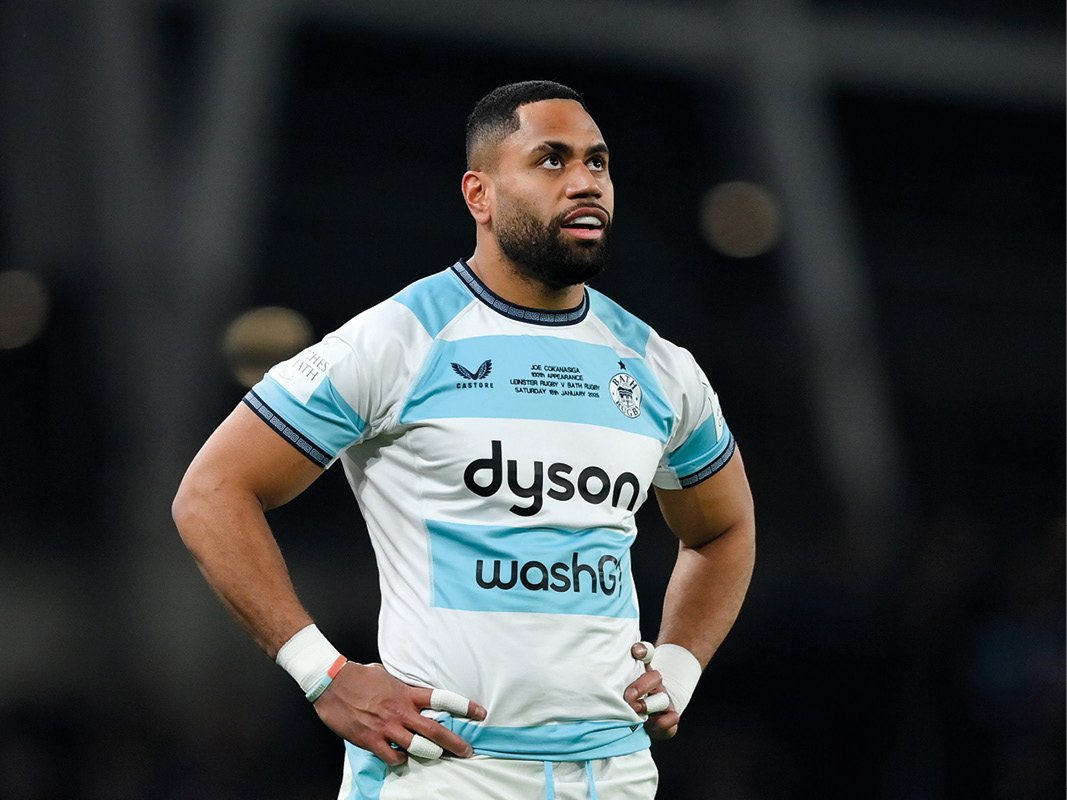
Of all the mainstream sports out there, a passion for eating is probably more likely in rugby than most, and Joe was no exception. So much so, that when he starting earning a crust for his rugby skills, he’d then spend it on crusts too – often cheese-filled. “I just kept having Dominos, Super Tuesdays [two for one day], I loved it,” he says. “We’d also go to Costco and you could buy a tray of pastries – about twelve of them – and they were massive, like this [Joe spreads his considerable hands] and eat all of them in one go. Dominos, pastries – I’d have days where I’d eat twelve pastries and eat nothing else. Man, I got so fat.”
Perhaps, luckily for Joe, less lucky for Dominos and Costco, London Irish fell from the Premiership. “We got relegated, I was about eighteen, and for me that was a blessing in disguise, because that’s when I started playing,” he says. “I somehow stripped all those pastries and I don’t know what game it was, I think it was the British & Irish Cup, and I played one game against Connacht and it went well.
“Nick Kennedy [then director of rugby] had been my head of academy, and he took me in, and was like, ‘I’ll start you the next game to see how you go’.”
A televised Championship clash – something it feels like we’ll never see again – at the Richmond Athletic Ground, an exiles derby against London Scottish, was the setting for Joe to make his entrance. In a game that was nip and tuck to begin with, Joe received the ball in his own 22 from London Irish full-back Tommy Bell. Gathering pace, he ran into a cluster of Scots, dummied, sending three players awry, stepped inside another then turned on the gas from the ten-metre line to go in under the posts. “Look at this young man go,” said the commentators, “to have the confidence to do that at eighteen years of age…”
The following summer, he found himself on the England tour to Argentina in 2017. “I was getting my hair cut with all the other academy boys and I got this email saying ‘confidential’, it started, ‘You’re being, selected…’ and I ran outside, to call my sister, shouting, ‘Oh my God, what is going on…’.
“Dylan Hartley, was captain at the time, and he called me – he called all the younger boys – to say, ‘this is how we do things, if you have any questions…’.
“We won the Champ, I tore my hammy, came back, and then tore it again, but Eddie [Jones] still wanted to take me, to ‘be around the environment’.”
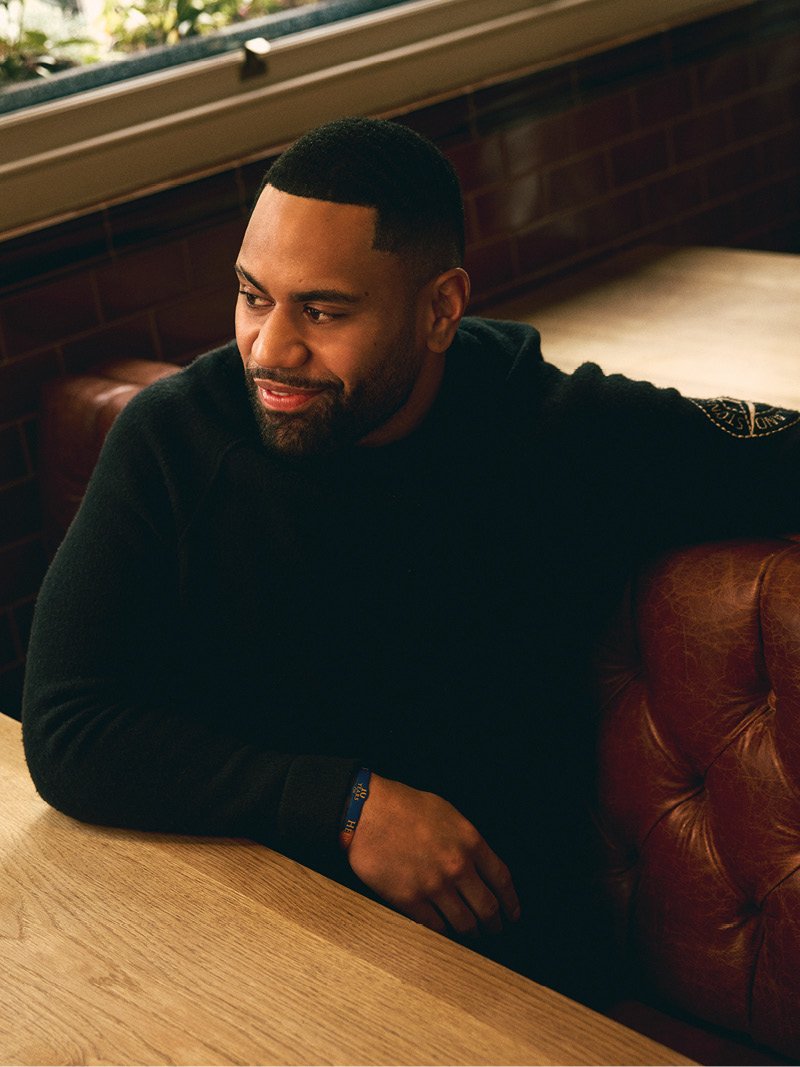
While the British & Irish Lions took some of England’s number to New Zealand, the remaining squad had plenty of talent, including the experienced James Haskell, Mike Brown, Chris Robshaw, George Ford and future prospects Tom and Ben Curry, Sam Underhill and Ellis Genge. “My nickname then was ‘Keith the thief’,” laughs Joe, “because I was basically there for a rehab holiday and taking the tour money, I didn’t really train with the boys.”
While he was in and out of England’s camp the following season, when London Irish were relegated again, he moved to Bath. “I’d already agreed with Bath that I’d go if we got relegated,” he explains. “Then once we got relegated, because I loved Irish so much, it was my boyhood club, it was the people – most of the boys that were from academy were now playing first team with me – I didn’t want to go.
“I was a bit scared of the change, I went back to my agent, and was like, ‘look, I don’t want to go’, but then I spoke to Anthony Watson, someone gave me his number, he’d been in the same position, and he gave me a bit of advice. I felt at that time, if I wanted to play for England, that was the time to go.
“Although before Irish went down [into administration], it was always in the back of my head, that I’d like to come back here at some point.”
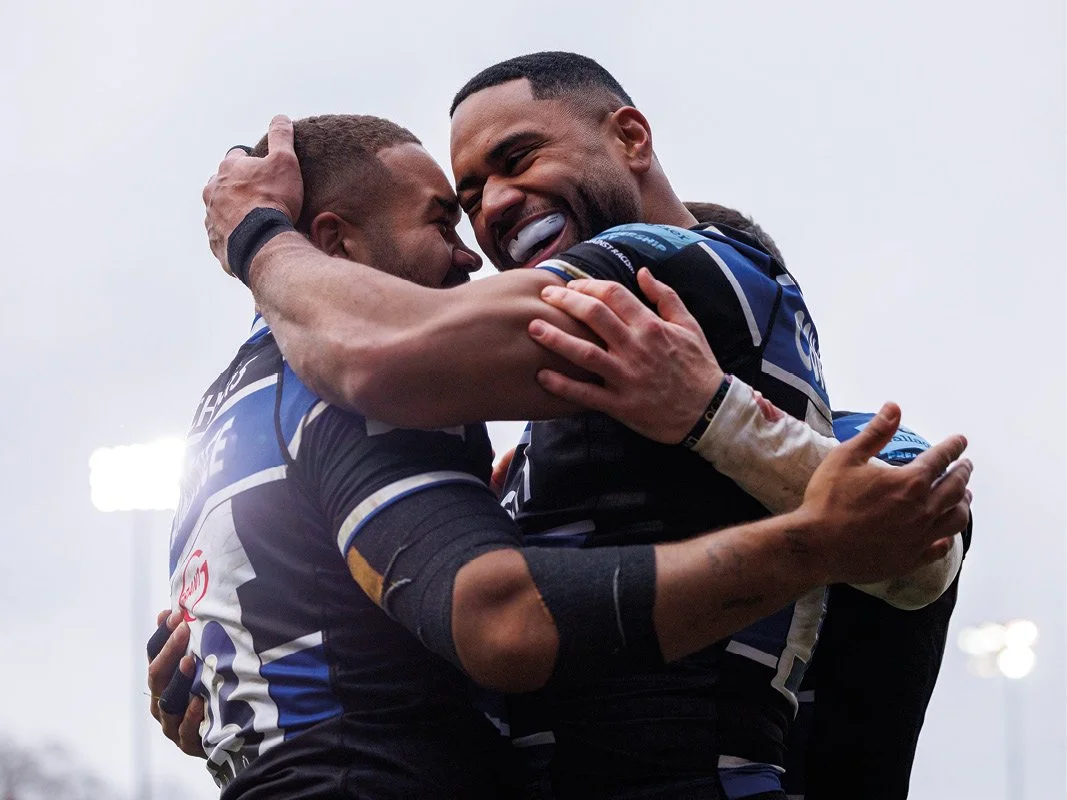
The England cap duly followed, against Japan in the 2018 autumn series, a 35-15 win and a debut try. Eddie had kept faith with Joe. “I loved him,” he says of the ex-England coach. “I think the fact that he still took me on that tour when I was injured, meant I kind of knew he saw something in me, and then after that, he just gave me my opportunity.
“I think he knew what I needed, he knew that I was still young and immature rugby-wise and knew that all I needed was hard work.
“Whereas in Argentina I was just happy to be there, in that camp going up to the 2018 autumn, he wanted to see me work hard, and everything fell into place.
Getty Images
“I’d get a bollocking from him sometimes, he knew how different players worked, and I think with islanders, he knew what they’d react to, but I think he always had good faith in me, he helped me a lot.”
That said, his second cap against Australia, a 37-18 win, and another try for Joe, hadn’t been part of Eddie’s plan. “I don’t think I was supposed to play that game – I remember after the Japan game, Eddie was like, ‘I’m going to rest your body [at training] because it’s your first game – so I was watching the boys train, and then Jack Nowell gets injured, and I’m like, ‘there’s no other wingers there’.
“The whole build-up of that game was my favourite part,” continues Joe. “The week in Pennyhill, where you train and then the boys all get to the spa, you can feel the vibes, it was the last game of the autumn series and you’re playing against Australia – the bus through Twickenham was the best thing.”
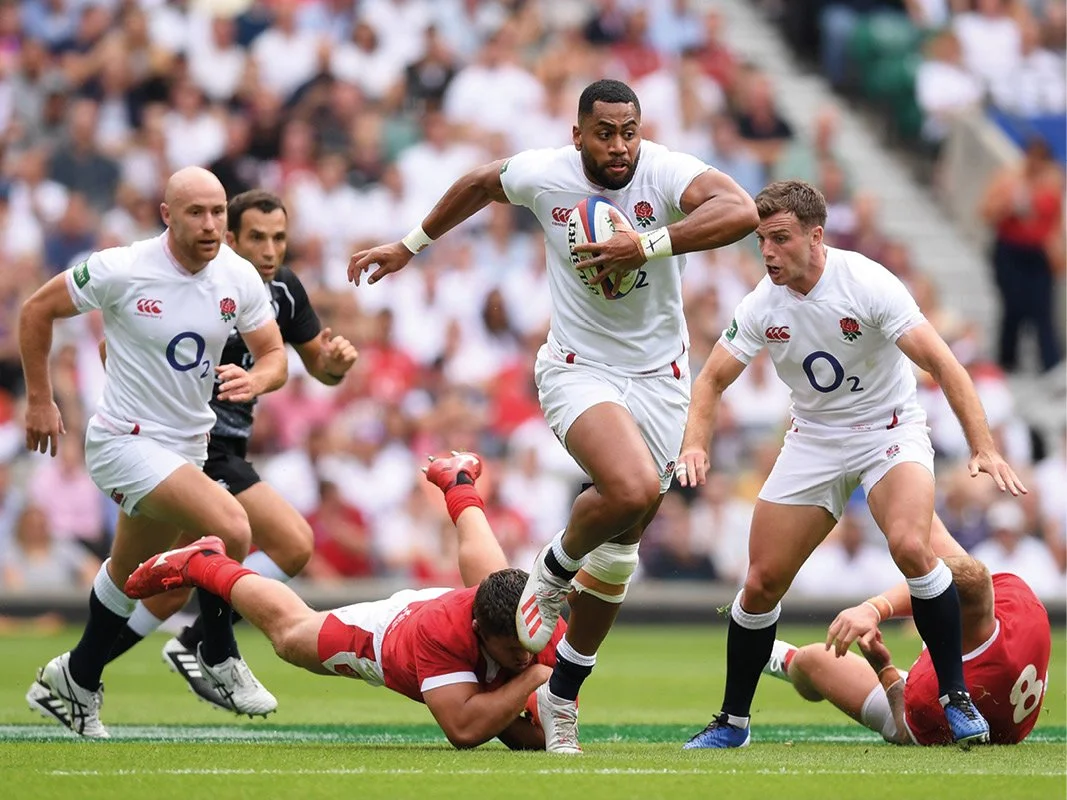
Many expected Joe to tear it up. Given the way he started, by now, he should be past the half-century mark, in tries as well as appearances given his cap-to-try ratio is 16:13. But injuries have taken their toll. “I think the 2019 World Cup one was one of the hardest,” he says. “I tore a piece of my tendon on my patella, underneath my knee, before we got into the World Cup. I rehabbed back, played summer warm-up games, played really well. I was on good form, healthy, and then I got off the plane in Japan and it felt completely different.
“Literally, I remember walking off the plane, thinking ‘this is weird’. I did that first training session, and it held me back a lot, so I was rehabbing/training.
“I could still train and I told him [Eddie], ‘I’m not getting sent back home’. Then, when it was my first game in that World Cup against USA, on the bus on the way there, it was starting to get really sore again, and in my head, that just messed me up mentally, which is shame, because I felt like if I was fairly fit, maybe I would have played a couple more games.”
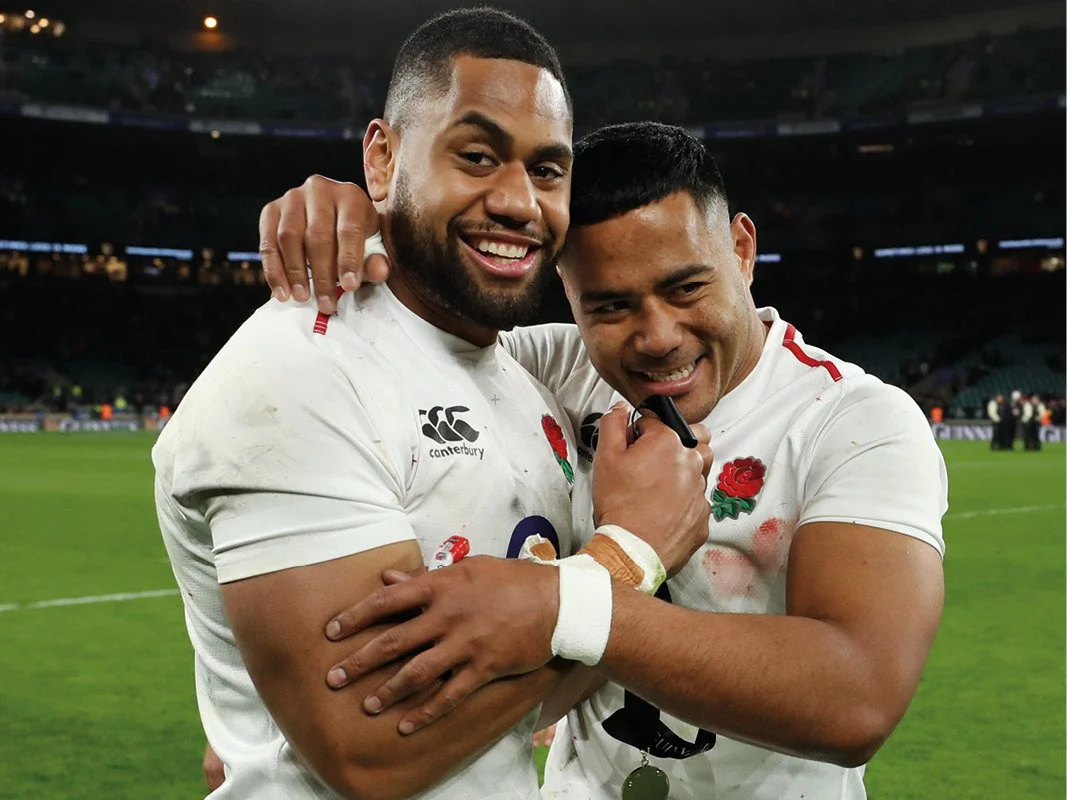
While he scored two tries in a 45-7 win, it was his only game. “I roomed with Manu a lot, the whole of that World Cup, and he was someone that I could always speak to, because he had a lot of injuries, he gave me a lot of advice.
Getty Images
“I had the operation afterwards, and was out for a year. But when I think about that, my mum always reminds me, ‘everything happens for a reason, everything’s always a blessing in disguise’. So that kind of taught me how to deal with injuries.”
Which is lucky, because they would strike again. “During Covid when I just came back after surgery, I didn’t have to go into the club, I wasn’t running, I got back to myself when I was eighteen again– just eating, drinking every weekend.
“I left the club at 115kg and when I came back to get weighed, they said, ‘what’s your weight?’, I said, ‘Oh, 118kg’. ‘You sure?’. My face gets proper puffy, so they could tell, but I weighed and I was 127kg, I was like, ‘oh my God, this is really bad’.”
But again, he came back, and did his PCL (posterior cruciate ligament). “It was against Cardiff, and after that. I was just like, ‘it’s over’, I was in the brace.”
Joe didn’t just mean the game was over, but his rugby career. “I messaged Ant [Watson], and he asked me how my knee was, and I was like, ‘I give up, I’m done with rugby’, and he was like, ‘what are you going to do then, be a baker?’”
Much as Joe clearly had a soft spot for pastries, Watson’s pep talk helped. “He kind of gave me a kick up the arse,” says Joe. “That was a really hard one for me to get back; I got back playing, but I wasn’t finding my form.
“I think it was Sale and I got dropped from Bath completely, not even on the bench, I went up as a travelling reserve, I just couldn’t get into the team.”
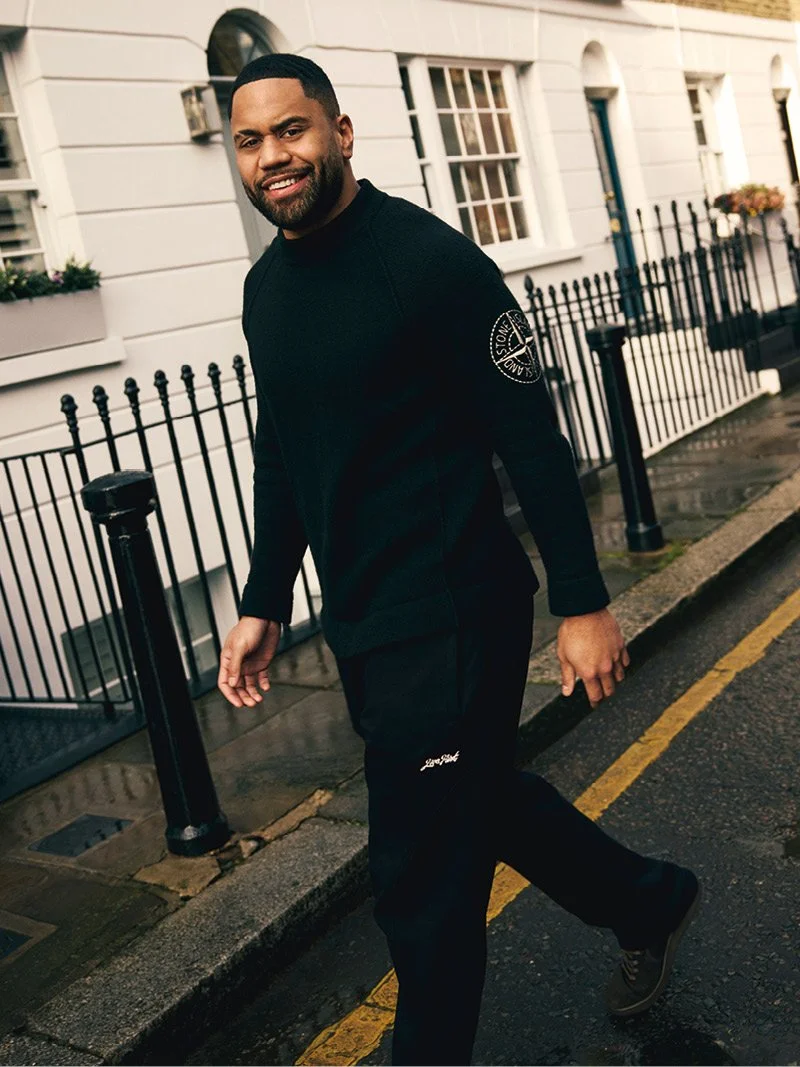
Aware that Joe’s problem went beyond the physical, the club put him in touch with a psychologist. “I still work with her now [Katie Warriner], and I was trying to rediscover my ‘why’, because I was just playing for the sake of playing. I told her my whole life story, and it was the best thing for me, because I started to find my form again.”
And the ‘why’ was? “My family,” he says. “Pretty much to make them proud, to see my mum and dad or my sister and brother watch me running out in a Bath jersey – that was the thing we always spoke about doing as a kid.
“It’s kind of changed now,” he adds. “I still play for my family, but now I play for myself too, I also play for the little Joe.”
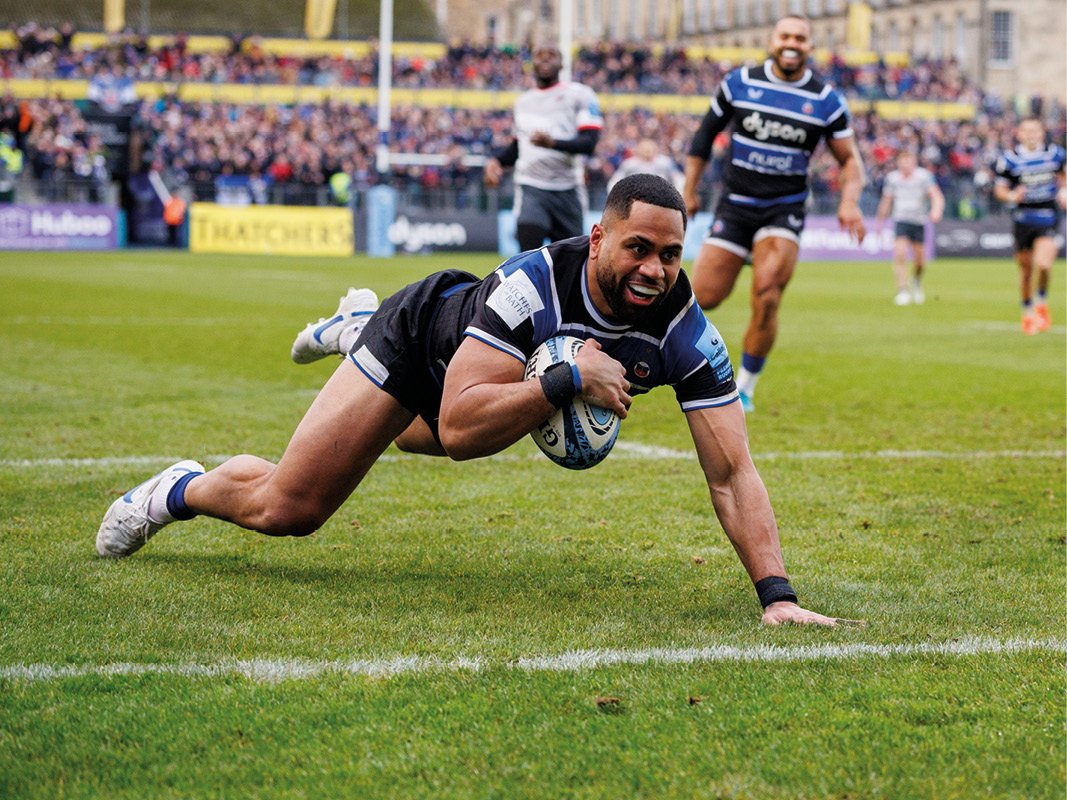
Bath have changed too. Given they finished bottom of the table as recently as 2022, a time when the Premiership was flush with clubs, numbering thirteen members, Joe is now part of a side that not only finished on the same points as eventual winners Northampton Saints last season, but are the favourites to go one step further this year. “The club completely changed when Johan [van Graan] came in,” says Joe. “Hats [Neal Hatley] is one of my favourite coaches, and he was our head coach but I think us players just didn’t know where we wanted to go as a team, we weren’t all aligned.
“Whereas now with Johan, he wanted to make this club like a family club, and there’s one rule ‘treat others the way you want to be treated’, that’s it.
“There’s a sense of belonging,” continues Joe. “Every Monday meeting, he always puts this chart up, like a pyramid, and at the top, it’s a happy team. And he always goes back to this, whether we win or lose, we go back to zero and start again. Whether you’re the kit man or physio, everyone’s going in the same direction.”
Does this season feel different? “It feels, and we spoke about this in the changing room last night after we won, it feels like a proper special team, we feel something special is coming.”
Getty Images
One big change has been to the training ground, often mentioned in the past for, ironically, being too plush. “He came in and made Farleigh [House] into an actual rugby club, we’ve had a lot of stuff redone,” he says. “Farleigh was kind of like a hotel before, whereas now it’s like a rugby facility.”
The impact of Finn Russell can’t be overstated either. “We were all really excited, when he signed,” explains Joe. “Everyone’s wondering, ‘what will he be like’. And then he came in and you think someone being paid that much money is going to be arrogant, but he’s completely the opposite, he’s a proper team man.
“Everyone thinks, on the pitch, he just does his own thing, but now playing with him, he’s a lot more calculated than that. I am very close to him now, and he’s good guy always willing to help people, which is a good thing. He’s always got time for the younger tens, like Orlando Bailey and Ciaran Donoghue, and other backs like Max Ojomoh, who’s always asking questions. I think he’s just a good person. If you met him, you think, ‘oh, he’s completely opposite of what people think he’d be like, he’s a lot more relaxed’.”
Marriage is also on the cards for Joe, as he prepares to tie the knot with his partner of six years, Rosie, whom he met during his London Irish days. “I met her in a pub called The Ship after we’d beaten Worcester, Lovejoy Chawatama was my wing-man, and I told him when I popped out to ‘leave that seat empty so I can sit there when I get back’. And I took her to McDonald’s next to the pub for the first date and the rest is history.”
He jokes, but Rosie has been key to Joe’s return to form. He talks of his old habits of keeping his thoughts to himself after he had a bad game, and how Rosie helped him. “Now we have rules where we have to speak to each other,” he says. “Because after games, if it’s a bad game, I’d just sit down, I’d say, ‘yeah, I think it’s fine’, but, in my head, it wasn’t.
“She bought me this book last year,” he continues, “it’s a manifesting book: you write down your thoughts, how you want to be, who you want to be; she gave me that just after the World Cup, after I got dropped. I just felt like that helped me massively and my form last season was the best I’ve ever played for Bath.”
Food continues to be a challenge for Joe. “Sweets, I love sweets,” he says. “And when I’m injured, I must be more careful of what I’m eating, but when I’m playing I don’t eat much. In the mornings, I probably won’t eat till like 12 o’clock because if I fast the whole day, then I can have a big dinner.
Getty Images
“Rosie is always there to be, ‘right, we’re eating healthy today’, it’s like she’s got this little kid and trying to coax him to have a sprout.”
Joe’s in a good place. England is still there. “It’s tough because, I still feel I’ve got a lot more to achieve in the England jersey, I just need that opportunity and it’s frustrating, because I’m playing well, my form’s good, but I’m not in the squad.
“But,” he adds, “I’ve got to a point where, if I’m playing well at the club, then I’m happy, and now we want to win a trophy.
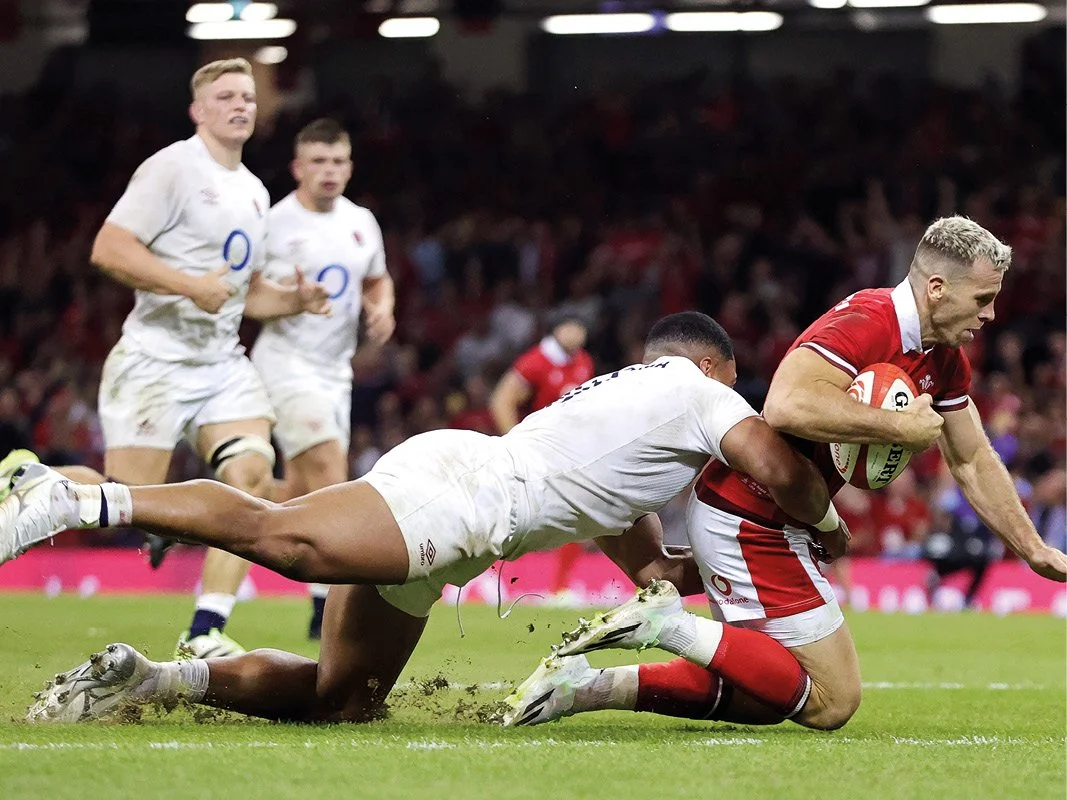
“I’m also just grateful that I’m healthy and playing well,” he adds. “There was a time when I didn’t want to play for England anymore. I think after getting dropped for the [2023] World Cup I was devastated. I played the [warm-up] game against Wales, and if you got a message the next day, you knew you weren’t going. I got a message, I met up with Steve, and I was just devastated,” he repeats. “I went back up to the room, Rosie was staying with me, and I was just, ‘let’s get out of here’.”
Again, Rosie has helped his comeback in another way. He didn’t, for instance, question enough why he wasn’t picked. “Now Rosie has told me that I need to fight for myself a bit more, I need to ask these questions because it won’t hurt anyone. I think when he kind of told me, and told me the reason, I just dropped everything and wanted to get out of there.”
He does know one reason for his omission. “One thing that let me down was the high balls,” he admits. “I was just dropping loads, and with international rugby that’s one thing that’s so important to get teams into the game.
“But, as I said earlier, that was such a big blessing in disguise for me, because I went back to the club and then worked on it so much, and it kind of affected my confidence. I was so low, but Johan is very good at knowing what I need as a person, and I had a bit of time off, and I remember the first game back, and I just started playing really well again, and hit top form.”
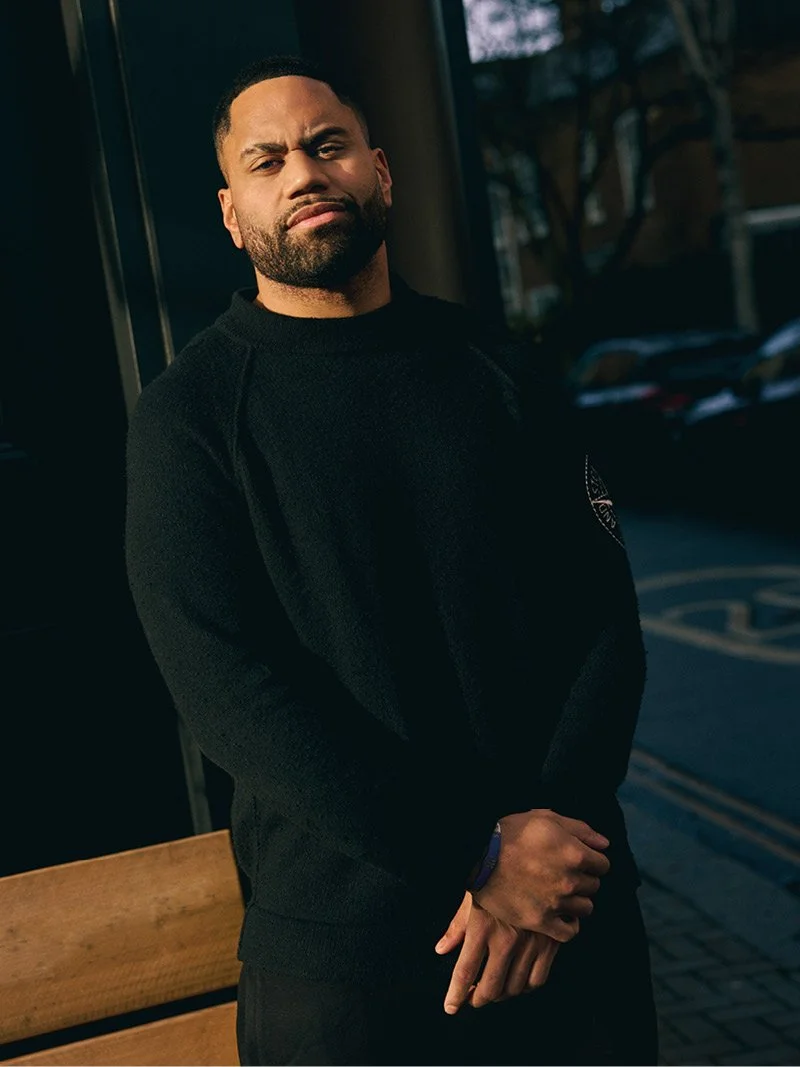
Joe knows England’s back three is full of competition and he also knows consistency is key, but he’s more relaxed about what happens next. “In the summer I had meetings with the coaches, I feel like my time will come, and if it doesn’t, it’s fine, I’m happy where I am.”
And there’s always Fiji. “The boys keep taking the piss out of me, because every time I don’t get into an England squad, they’re saying, ‘how many more years do you have left to be eligible to play for Fiji?’. That said, I don’t think I’m good enough to get in that team, either!
“But I do love Fiji,” he says, finishing on his first love, “I love it every time they play, I love watching them, I love supporting them, my cousin is their captain, Wais [Waisea Nayacalevu] too, so, yeah, I’ve always got big love for them.”
Story by Alex Mead
Pictures by Oli Hillyer-Riley
This extract was taken from issue 29 of Rugby.
To order the print journal, click here.