In 1990, Debs, Sue, Mary and Alice decided that women should have their own Rugby World Cup. Against impossible odds, they delivered it in ten months. Netflix will tell you that dramatising rugby isn’t easy. Turns out they just chose the wrong story.
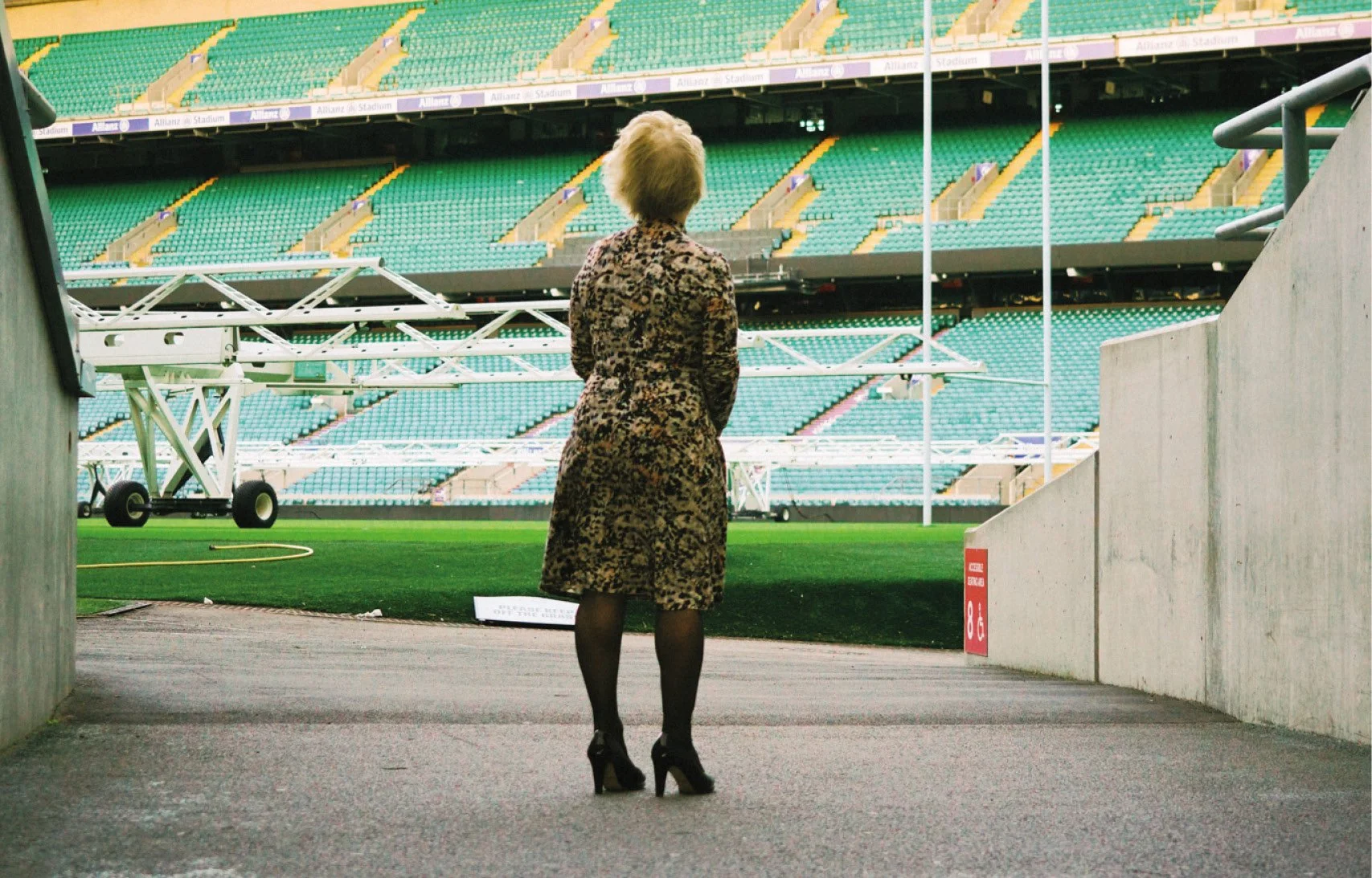
It’s not possible for the BAFTA award-winning filmmaker Robert Young to pin-down the exact moment he realised he had come across a rugby story so rich in the improbable, the impossible and the outlandish that he decided he had to turn it into a film. All he can say for certain is that it happened over the course of a few hours while sat at the Sun Inn pub in Richmond, listening to Sue Dorrington, Mary Forsyth, Deborah Griffin, and Alice Cooper recount the story behind the first-ever women’s Rugby World Cup in Wales in 1991.
Perhaps the penny dropped when he heard about the impoverished USSR team trying to peddle cheap vodka, caviar, souvenirs and £50 watches to pay for food. Or when he was told about the Japanese team bowing to their opponents every time they conceded a try. Which happened a lot. Or maybe it was the one about the England team being turfed out of their rooms a few nights before the World Cup final because the hotel was double booked, forcing them to sleep on the floor of a conference room.
Likely, it was a heady cocktail of them all, combined with a growing realisation that the four women sat opposite him in the pub that day were just as remarkable as the stories they were telling. “It’s hard for me to describe the exact quality they had,” Robert tells Rugby Journal, ten years on from their meeting. “The best I can say is that it was a quality I had never come across before in any sport, and that it was an extremely attractive quality. There was something indomitable about them.”
The leader of the gang, who were all team-mates at Richmond RFC, was Deborah Griffin, the chair of the organising committee. Known as Debs, she was 31 at the time of organising the first women’s Rugby World Cup, seven months pregnant and still going at it hard in her job as an accountant in the City of London. Mary Forsyth, an American from Pennsylvania, was also an accountant, who went on to represent her adopted nation. Alice Cooper, the youngest of the four, and the newest to the sport, was a copywriter in advertising at the time, and also wrote about the women’s game for Rugby World & Post magazine, as it was known at the time. Then, there was Sue Dorrington, an American from Minnesota who had traded up life at home to experience rugby in the UK, and never went back. Her rugby talent flourished in England where she became a Great Britain and England international alongside her career in events and fundraising.
Not long after their meeting, Robert pitched the idea back to them to make a film about how they organised a World Cup for twelve nations in just eight months, with no funding, with no support from the game’s governing body, beyond a few kind words here and there. And yet they achieved it, survived it (just about), and laid the groundworks for the rapid progress of the women’s game thereafter. Progress which will almost certainly lead to a women’s Rugby World Cup final in England this September that sells every one of the 82,000 seats at Twickenham. The attendance for the World Cup final they organised in 1991, by the way, was 3,000 – a staggering number at the time.
Robert’s film proposal gathered pace. A draft script was written in 2016, with Sue, Debs and Mary offering input on all subsequent drafts. By 2019, a female director had been lined up and casting had even begun. But then: Covid. And the project went to the wall. Offers of funding evaporated and potential crew and actors had to move on. Now, after three years of stagnation, the film is alive again.
Sue is leading the charge to raise the money required to bring it to the big screen, just as she led the charge to get sponsorship for the 1991 women’s Rugby World Cup. And the comparisons between now and then are all too ready. “We’re fighting money, it’s that story again,” Sue explains to Rugby Journal. “We’ve got this genre of film that is quintessentially British, about the underdog making good, like Bend it like Beckham, or Calendar Girls. It’s a really lovely story to tell and we can’t get our heads around why the final finance isn’t landing.”
Sue’s fundraising target for the film is £4million, with half already committed if she can raise the first £2million. “We’re feeling energetic about it,” Sue adds. “I think we had gone a bit flat after Covid. We’ve just started talking to a really important person in Wales, who might unlock some funding, so we’re enthused.”
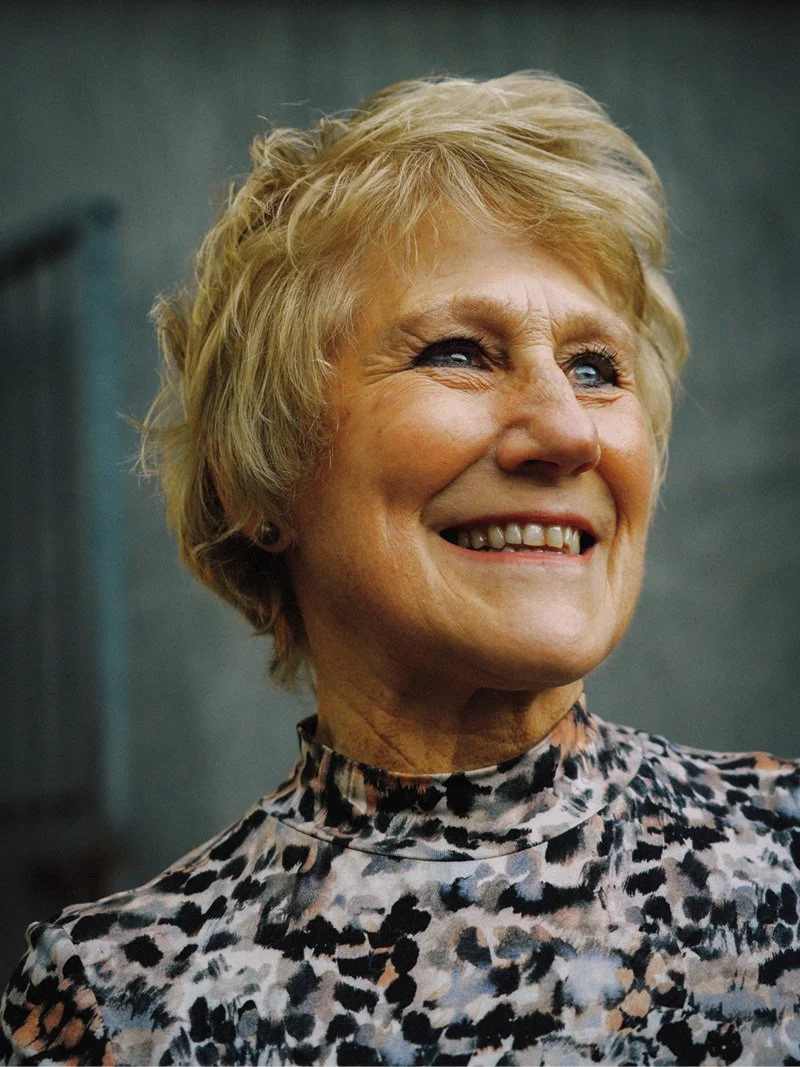
There is certainly a mounting interest in the rich story behind 1991. In 2022, the journalist Martyn Thomas wrote a superbly detailed book about it called World in Their Hands. It’s a forensic look at how the World Cup was organised, and the personal toll it took on the four women who delivered it.
So, what’s it all about? Well, if you haven’t heard the story before, here’s an attempt at an abridged version. You’re probably going to need a seat.
It starts at Richmond Rugby Club in south-west London in 1990, where all four women played their club rugby. Debs was one of the founding members of the Women’s Rugby Football Union (WRFU), a totally separate organisation at the time to the Rugby Football Union (RFU) that ran the men’s game. With England due to host the men’s World Cup in 1991, Debs believed that the women’s game should have its own World Cup too. Her initial plans were met with such positivity by her WRFU board members that she was encouraged to take the gargantuan next step of trying to put her idea into practice.
She recruited Richmond team-mates Sue, Mary and Alice to help her pull it off. And the thing was on.
So how do you begin organising a World Cup with no budget whatsoever? “We literally just started one morning,” Sue cackles at the absurdity of it. “Firstly, you decide what teams you want to invite, and to where. That comes at the same time. We thought about England, and about Leicester. But then we thought ‘oh gosh, we’re going to get lost in these big stadiums, we’re going to get lost in the mayhem of [people] not being remotely interested in women’s rugby’.
“Instead, we decided to take it to Wales because we had written letters to the Welsh Rugby Union and the Sports Council for Wales, and they all said, ‘yeah, come down, we’ll help you’. And they helped us with venues, with referees, they helped us with everything. And then we started inviting the teams.
“Everything was done through letter, phone and fax, and we came up with twelve teams. There was no qualification other than ‘do you play international rugby? Great, come on over’.”
By November 1990, the organising committee were ready to officially launch the tournament and announced the following teams to compete at the inaugural World Cup the following April: Wales, England, New Zealand, Japan, Sweden, Canada, the Netherlands, Spain, Italy, the USA and the USSR. “I remember that [journalist] Barry Newcombe was at the launch, and he said ‘Sue, that’s only eleven teams. And I said, ‘yes, we’re hoping France will come in’, so we launched the tournament with eleven teams, and the French did eventually come in.”
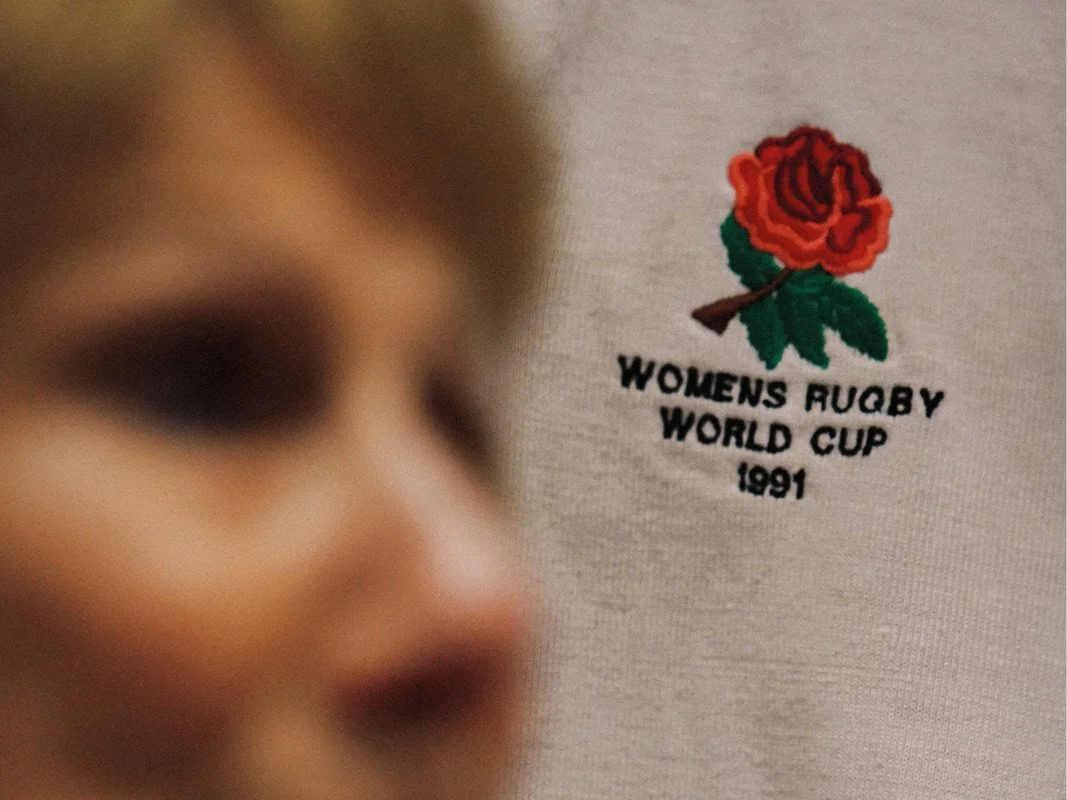
With a date, a host nation, almost twelve teams, five host clubs – Pontypool, Swansea, Aberavon, Llanharan and Glamorgan Wanderers – and Cardiff Arms Park for the knock-out stages, the tournament looked on track.
And that made money an even more necessary requirement. However, there wasn’t any of it to be found. “I was the one responsible for trying to find money to pay for the tournament,” says Sue. “I was on the market looking for £35,000 of sponsorship. You can imagine that 35 years ago there was no money in women’s sport, particularly women’s contact sport. So I also went out to look for gifts-in-kind instead because I thought, if I’m not going to get money, I need to start offsetting costs for balls, kit, accommodation, that type of thing.”
In these value-in-kind negotiations, Sue was remarkably successful, while the organising committee had the clever idea of hosting the tournament during the Easter holiday week when student accommodation in Cardiff and the surrounding area was more likely to be available, and going cheap.
Despite this, their hopes of covering the costs of the nations competing fell way short, meaning they had to send memos out to every team saying they would need to be self-funding in every regard. “We thought this might actually be the end of it,” says Sue. “But it wasn’t. Every team came back and said ‘yeah, we’re in’. So thankfully they all paid for themselves.”
Because Sue was encountering closed doors at every commercial turn she sought help from a sponsorship consultancy – with payment based on commission after a deal was struck – but they had no luck either.
The organising committee’s lack of funds was no secret. One journalist asked Alice Cooper what they would do if they couldn’t pay for this tournament. Her reply: ‘Oh, we’re going to re-mortgage our homes’. “That was not true, she made it up,” says Sue. “But that went everywhere, because the story was the four of us were going to re-mortgage our homes. The point is, we were committed that this was going to happen with or without anybody.”
One of the helping hands the foursome were understandably hoping to rely on was that of the International Rugby Football Board (IRFB) – now World Rugby.
Sue and Debs, with Debs’ newborn baby Victoria, even travelled down to IRFB’s offices in Bristol to try and persuade them in person. “We thought that if we had their sanction, their approval, it would help us get money. But I mean they gave us about ten minutes and then wanted us out the door.
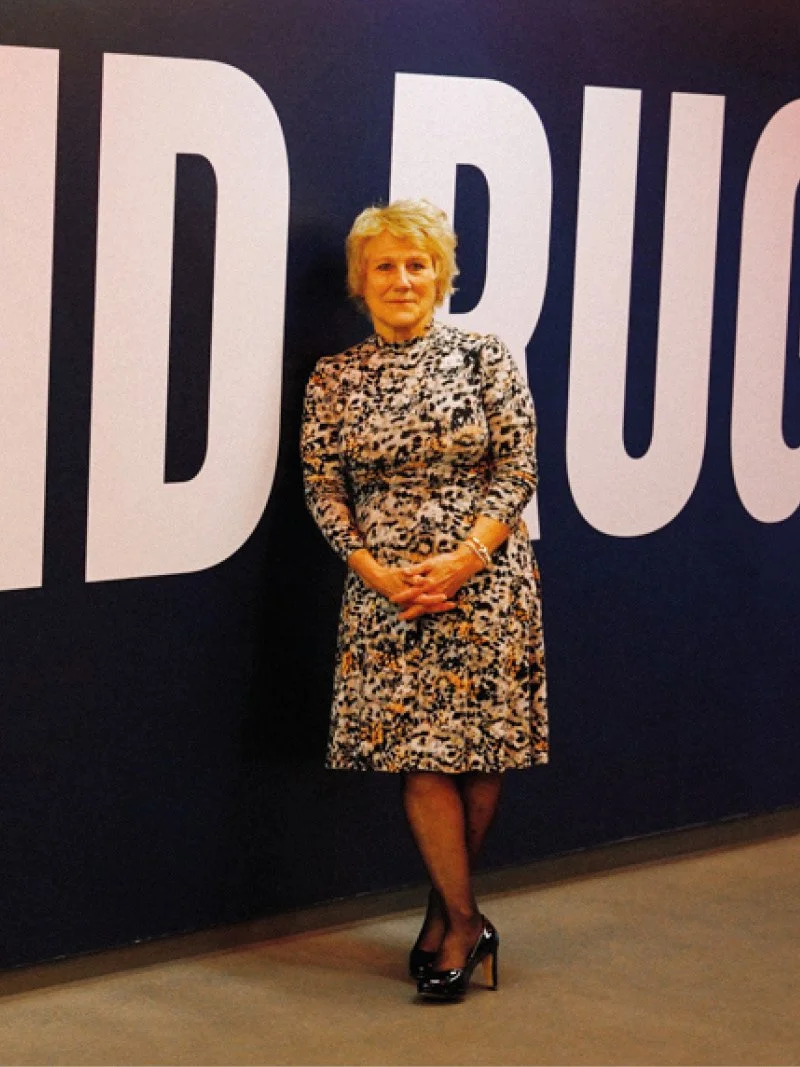
“These guys didn’t want us playing rugby and what they certainly didn’t want was a World Cup in any shape or form because they were having a World Cup that year, and [they thought] we would be going for the same funds as them. Well, we wouldn’t be. We might ask the same people, but they’ve got the weight and everything they need to go and get that money and deliver the commercial benefits.”
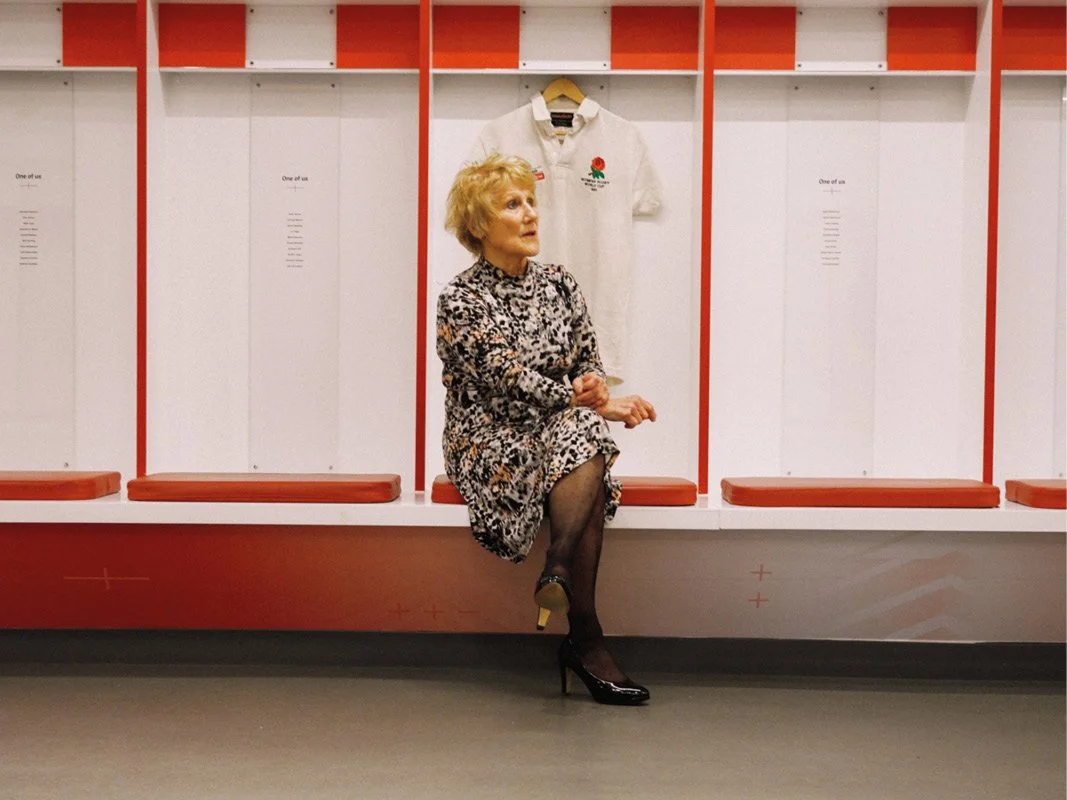
World Rugby’s stance towards women’s rugby in 1990 is of course at opposites to today. Evidence that the dial has shifted so significantly is all around Sue as she is speaking to us from the library of the World Rugby Museum at Allianz Stadium, where Martyn Thomas’s book sits on a shelf less than three metres from her chair. Written on the wall of the museum itself is a quote by Sue: “We didn’t need approval to play the game we loved.”
In 1990, that was a tenet she was keeping close to her heart as the commercial knock-backs kept on coming. By one estimate, Sue and the sponsorship agency collectively received around six hundred ‘nos’ to sponsorship requests, over the course of just ten months.
Less financially pertinent, but no less frustrating, was the tone of the broader media coverage the tournament was starting to gather. “We were covered in a very different way,” explains Sue. “The press, bless them, were like, ‘oh my word, have you seen this!?! Women play rugby! And they’re holding a World Cup!!’ They were aghast. And there were some dailies that got the [England] team together and made them put on dresses, took them to make-up and did shoots like that. They didn’t cover us as an aspirational team who wanted to win a World Cup. No, we were just girls playing at rugby.”
Did it annoy her? “No,” Sue says decisively. “We’d had that shit all our lives. Particularly in England. I started playing in the USA, when both men and women started playing at the same time, so it was genderless. Then I came over here and I discovered the gender thing and the class thing. It was just amazing, so I had a lot of learnings very quickly. But none of it surprised us. And none of it deterred us. We just shut it out. It was noise.”
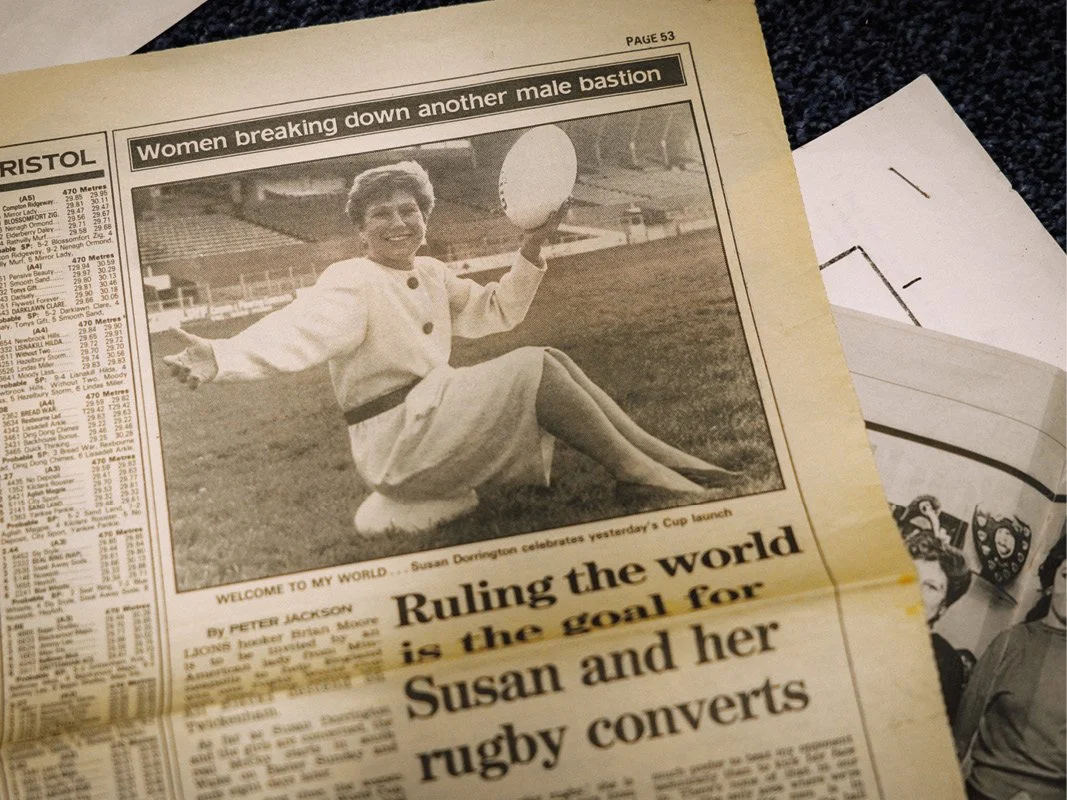
Despite the tone of the broader media coverage, Sue singles out a number of contemporary rugby journalists who understood their passion for the game, and respected it: Peter Jackson, the late Barry Newcombe, and above all, Stephen Jones. “He was with us from day one and he really championed our cause,” says Sue.
While Sue was working tirelessly on all possible commercial avenues to make the World Cup a reality, she was also training tirelessly in an attempt shore up her place as England’s starting hooker for when it came around.
And in this regard she was leaving nothing to chance either. “When I was leading up to the World Cup as a player, on top of my job, husband and World Cup, I decided that I was going to be the first woman [in rugby] to bring in a fitness coach, so I was working out twice a day outside of work. I reduced my body fat to eleven per cent. I hired a sports psychologist. I hired a nutritionist.”
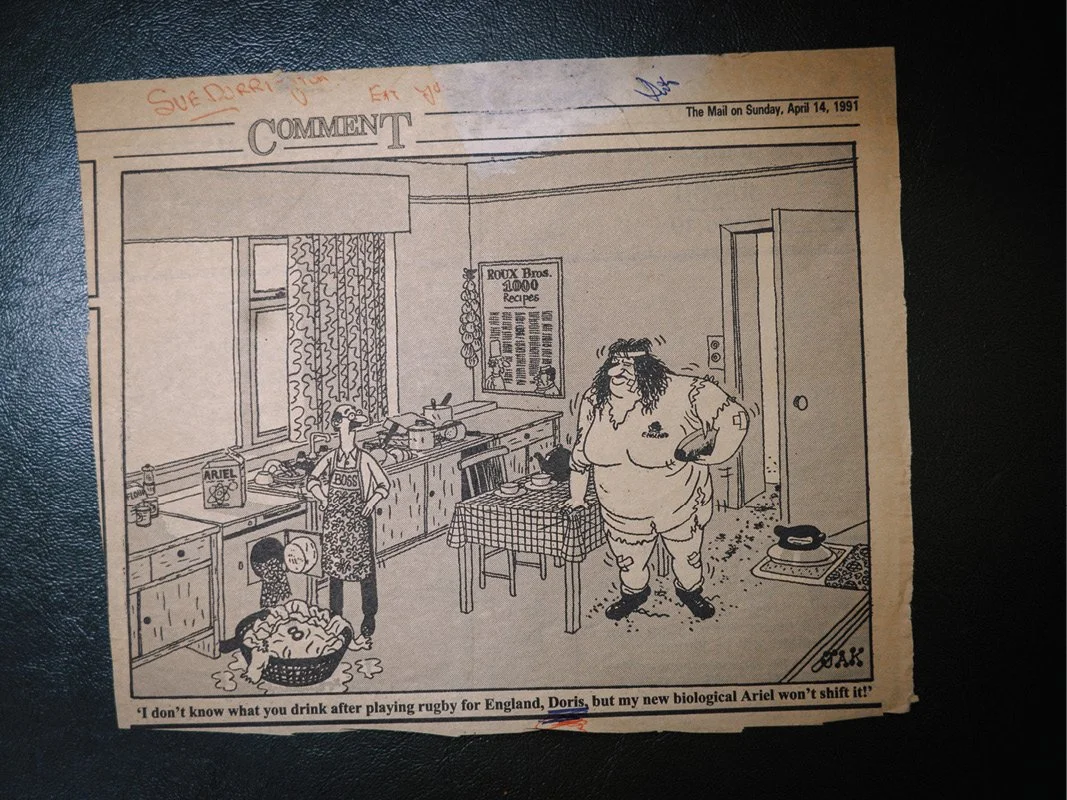
Sue didn’t stop there, seeking the advice of the England men’s team coach, Dick Best, and England hooker Brian Moore. “I wrote to him and I said, ‘Dear Mr Best, my name is…’, and I said, ‘can you please come to Richmond and watch my game because I want some strategy from you’. And Dick Best just showed up at a game once. And we’re still friends today.
“And then Brian Moore, because I wanted him to help me with my lineout. He was a little trickier to pin down, but I would turn up to Harlequins training, which was opposite my gym, and I would come in my England kit and he probably thought ‘what is this mad woman doing?’. One day he said, ‘what do you want?’, and I said, ‘Oh Mr Moore, would you please help me with my lineout?’. And we’ve been friends ever since.”
Sue’s only rival for the England number two shirt was Nicky Ponsonby, who Sue describes as a ‘much better player than I was’. But Sue’s intense training regime paid off and she went on to play the whole tournament at hooker, with Nicky playing in other positions. “I had to work my butt off,” says Sue. “But I was ready, mentally and physically for that tournament.”
As the new year arrived in 1991, the organising committee quartet could now see their World Cup – beginning on 6 April 1991 – rapidly appearing on the horizon.
But fires were still needing to be put out. One of them was about the tournament logo, which the IRFB felt was too similar to the men’s Rugby World Cup logo because of the angle of the rugby ball, the ‘speed stripes’ on the ball, and because the ball was enclosed in a box. While at the smaller end of their issues – they still had no money – this conflict threatened to cause financial issues as the committee had spent significant money on letterheads, labels, press packs and other promotional material featuring the logo.
Like many of their obstacles, some smart brinkmanship would resolve it as the organising committee told the IRFB that they would be happy to change the logo again (they had already revised it once) if the IRFB covered the cost. There were no further complaints from the IRFB after that.
Sue, meanwhile, was tasked with procuring a trophy, which she did, from Hatton Garden, for a price tag of more than £1,000, which raised a few eyebrows from the committee, especially from Debs. But Sue’s taste for ornate trophies was a marketing boon with the trophy standing proud and prestigious at the tournament launch next to England players Karen Almond and Carol Isherwood, giving the tournament added legitimacy.
One month out from the tournament – with unpaid invoices accruing – a cheque to the organising committee did arrive. It wasn’t from a commercial source – still no luck there – it was from the Sports Council, a precursor to UK Sport.
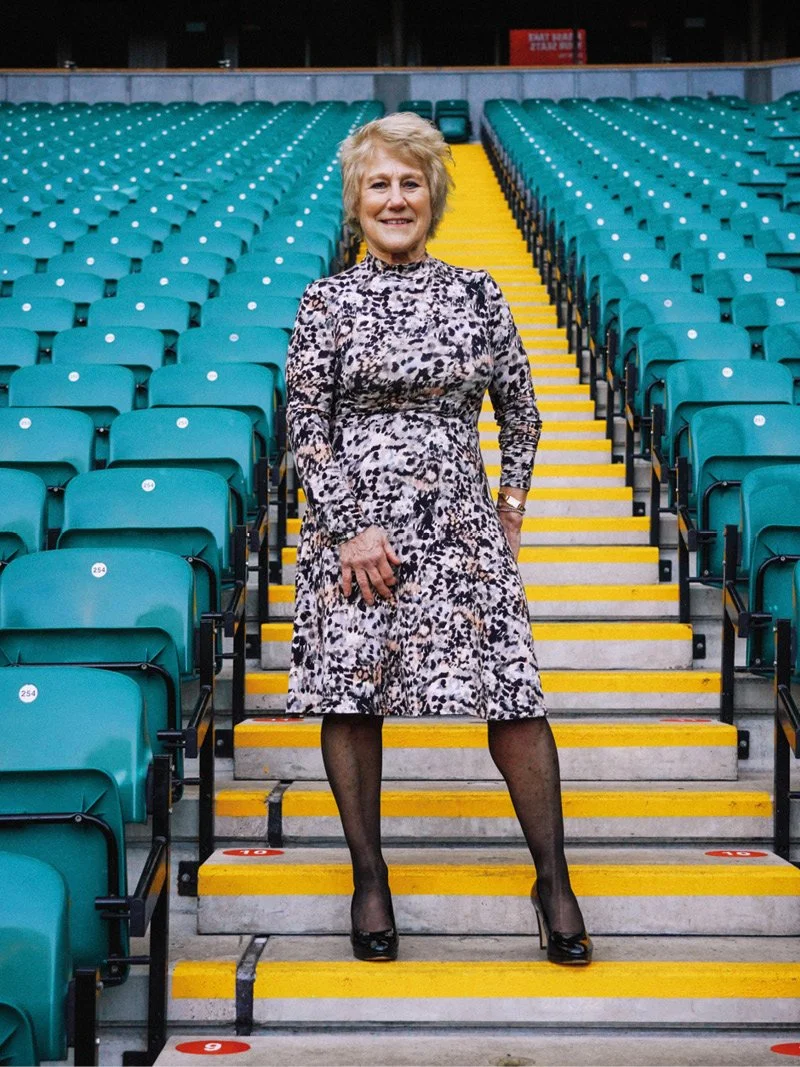
It was for £5,000, £4,000 of which immediately went to pay off debts, leaving a float of just £1,000 to see the organising committee through the final month of preparations ahead of the World Cup.
Two weeks later, programmes went to the printers complete with the approved logo and information, including statistics about all twelve teams competing.
With no TV deal, a press pack that couldn’t be relied upon to report the tournament without resorting to ‘Women play rugby!’ histrionics, and digital and social media yet to be invented, creating that programme was an important milestone, and an impressive journalistic achievement from Alice and Mary.
One week out, Mary Forsyth gave birth to daughter Kathryn, so was naturally ruled out of operations from that point on (in fact there are faxes showing that she still corresponded with the USSR about their funding plight two days after giving birth). With Sue also excused from administrative duties to focus on playing for England, the total sum of the organising committee was now Debs and Alice.
But with teams from the twelve nations beginning to arrive in Wales, the project they had been striving for so over the course of the past ten months was becoming a reality. The Women’s Rugby World Cup 1991 was really happening.
Yet storm clouds were gathering. Firstly, in the form of the weather, and secondly in the form of the USSR.
With matches scheduled to begin on 6 April across four venues, south Wales was being lashed with rain. No surprise, perhaps, but April 1991 was proving to be one of the wettest Aprils on record. It was bitterly cold as well. The combination saw sports matches all across the country either not played, or called off halfway through. Any cancellations of matches in Swansea, Pontypool, Aberavon or Glamorgan Wanderers, however, and the World Cup – which was spread over just eight days – would have been sent into a tailspin. Thankfully all the World Cup matches on that first weekend went ahead.
England played Spain in Swansea, and the memories of how cold Sue felt stick firmly in the mind. “It was horrific, it was the coldest I have ever been in my life,” she recalls. “I had no body fat and I was freezing, we all stood in the shower for an hour after that.”
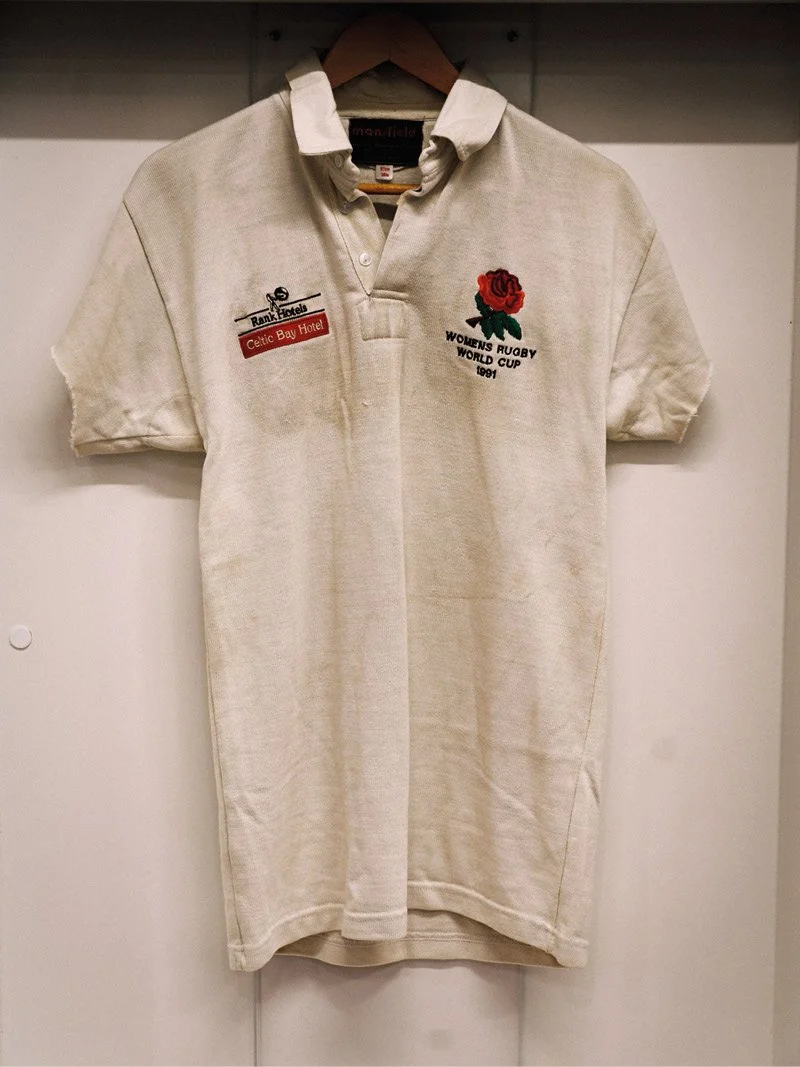
Sue’s England jersey from that match is on display at the World Rugby Museum, complete with a darker patch of ‘Swansea mud’ in the very centre.
Seeing the back of that first round of completed games was a big relief for everyone, but no sooner was it behind them than a story broke that the USSR team had run out of the salami and cucumbers they had brought from Moscow to eat and were now planning to barter Russian produce such as vodka, Soviet champagne, caviar and watches with Welsh locals in order to feed themselves. ‘Booze is one of the few things still plentiful and cheap in Russia,’ one of the Soviet coaches told the media to explain their plan to feed themselves.
The local media reports of the Soviet team’s intentions were not only picked up by Alice and Debs, but also by Her Majesty’s Customs and Excise, who sent a couple of officers down to the USSR’s digs to investigate.
Matters were soon cleared up with the customs officials reportedly satisfied that the Soviet team was not going to try to sell their produce to locals, despite their previously stated intentions. This ‘friendly chat’, as the media reported it, was aided by both HMRC and the Soviets struggling to converse. “The only reason why it all went away,” says Sue, “was because no one could find a Russian translator, so HMRC gave up.”
The story of the Russians’ plight had two major impacts. Firstly, the local community in south Wales rallied around them. Despite the Soviet Union still being the west’s major political and military threat, no one seemed to hold that against their rugby players, as local companies tripped over themselves to help.
As Martyn Thomas recounts in his book: ‘The following day, the squad was treated to a three-course lunch of leek and potato soup, chili con carne and cheesecake at The Bank café bar on St Mary Street. Clothes vouchers worth £1,800 were also provided by Cardiff Marketing Ltd, while Industrial Cladding Systems Ltd paid for the hire of a minibus for the party. There were offers of pizzas, food and accommodation from elsewhere too. An unnamed male Welsh international was reported to have donated £1,200 to their cause, and the mother of Bess Evans, a hooker in the Wales women’s World Cup squad, pledged £100.’
The second impact was that the story generated national press interest, and suddenly the tournament found itself gaining coverage from corners it never expected to before.
Meanwhile, on the pitch the skies were clearing up and the rugby was finally taking centre stage, impressing journalists watching the women’s game for the first time. The Sunday Times’ Paul Nelson reported: ‘Once the purist has stopped tut-tutting over the kicks to touch that fall short, he is impressed by the amount of running this produces once hoofing the ball into touch is no longer an option.’
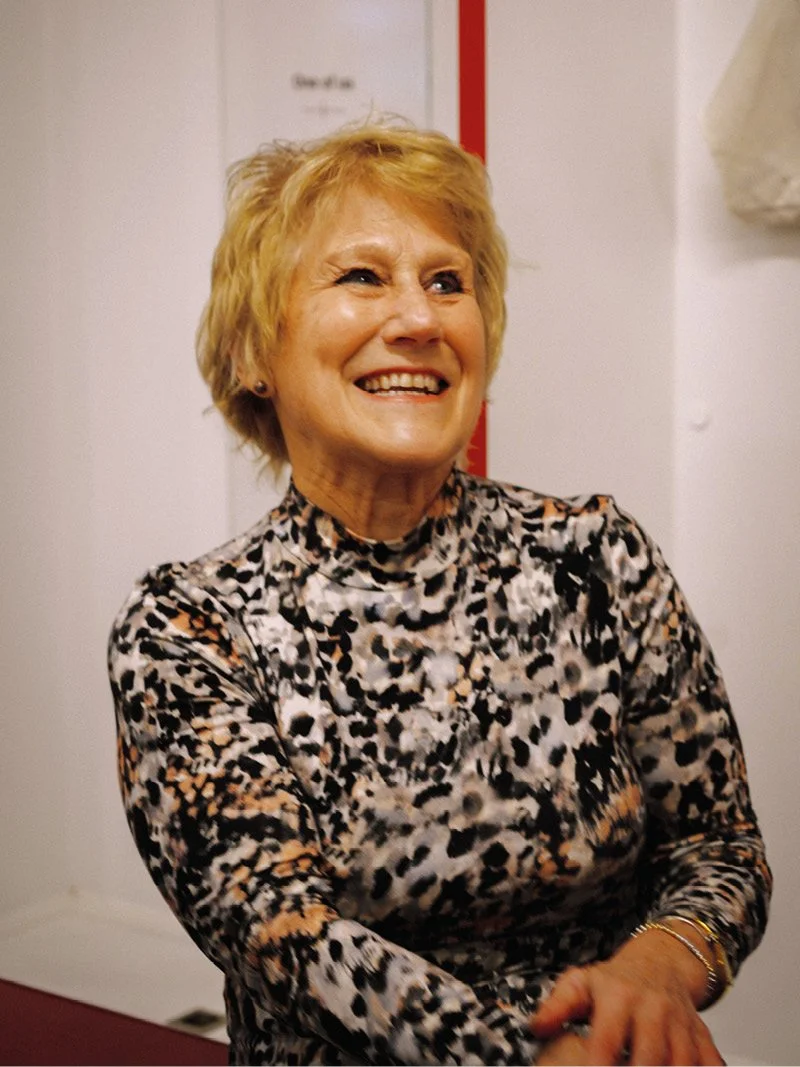
The nations doing most of the impressing were England, France, New Zealand and the USA, all making it to the semi-finals. Japan charmed everybody with a mixture of their enthusiasm and sportsmanship, bowing to their opponents every time they conceded a try in each of their three quite heavy losses, and presenting their opponents with gifts such as origami at the final whistle as well.
Off the field, the camaraderie was legendary with every contemporary account from players hailing the collective thrill of being involved in something bigger than they had ever before experienced. Most teams were staying in student accommodation, although England were staying in the Celtic Bay Hotel, where they whiled away plenty of hours playing the game ‘murder’ around the hotel. The USA went uptown, stumping up the cost to stay at one of the city’s smartest hotels, the Grand Hotel on Westgate Street. The Netherlands, meanwhile, were in a youth hostel.
With the matches coming thick and fast (some teams played five games in eight days), most players were living off a cocktail of adrenaline and excitement, and very little sleep. No one was getting less sleep than Alice and Debs however, especially Debs, who was juggling looking after her newborn World Cup and her six-month old baby Victoria.
By Friday, 12 April – just six days after the opening match of the tournament – it was semi-finals time. England had drawn France and New Zealand were facing the USA, with both matches being played at the Arms Park.
For Sue and her England team-mates, it was time to stand up and be counted, even if it meant cracking a few French eggs in the process. “I know this isn’t very nice,” Sue whispers apologetically, “but I made the French hooker cry.
“I was given some advice by a Scotland international at London Scottish. He said to me, ‘Sue, you know what I’d do? Just get in her face and disrupt her’. So, every time it came to the lineout I would be right in her face and she ended up breaking down and then the front row got up tight, the back row got up tight and it had this ripple effect. It wasn’t very nice of me but we beat them, I don’t care.”
England beat France 13-0 to set up a final with USA, who had beaten New Zealand 7-0 in their semi-final. For Sue – born and raised in Minnesota – it was the match-up she was hoping for. “I knew that America would be there [in the final] because their backs were amazing,” she says. “And I just had to meet them in the final.”
While the Star-Spangled Banner tugged at her heartstrings before-kick off, thereafter Sue had her fellow countrywomen in her sights. “When you’ve got an England shirt on that’s it,” she said. “They [the USA] didn’t matter to me. I just wanted to beat them.”
England started the final well with a tighter and more disciplined approach than the Americans. They went 6-0 ahead thanks to two penalties from Gill Burns, however once points started to come for the Americans, they didn’t stop, going on to score three tries, two from Claire Goodwin and one from Patty Connell, to win the inaugural final 19-6. “It was shit, it was devastating,” says Sue. “I wanted the first ever World Cup to be ours, but it didn’t happen.”
Three years later when England beat USA in the final of the 1994 World Cup, Sue didn’t play. She had captained the team against Scotland earlier in the competition but lost out to Nicky Ponsford as the team’s first choice hooker for the knock-out stages. “Yeah, I still feel it” she softly blurts. “Sorry … I’m one of those middle-aged women who cry a lot … and I’m not proud of this but I went home after that final [in 1994]. I got on an overnight train and I left because I couldn’t be around it. The thing is I loved those women. I played with them, and we grew up together. But I had to pack my bags and leave.”
Back in 1991, Sue’s disappointment was more than tempered by the fact that the final whistle also meant that she, Debs, Mary and Alice had reached their organising committee’s finish line.
At the tournament-ending dinner that night, no one was in any doubt about where the credit lay for making the tournament happen and the awesome foursome received a standing ovation from players, teams and dignitaries.
While Sue was able to break with her strict diet for the first time in a year and unwind somewhat with her England team-mates, Alice’s plan to ‘get shitfaced’ failed as the venue had run out of booze by the time she had wrapped up her media duties. Mary was busy looking after her two-week-old baby, who she had brought to the final that day. Debs found just enough time to breathe a sigh of relief, before realising the true extent of her exhaustion and collapsing into her bed.
And the next day? “We just packed up and went home and never talked about it again. We saw each other a lot of course. But we never talked about it again.”
If the film of this story were to end now, the reveal of what happened next to the central characters – as is common for dramatised versions of real events – would leave people wailing in the aisles on their way out.
In short, new mother Debs had a breakdown and withdrew from her usual self for six months. Sue’s marriage fell apart over the course of the next year. And Alice lost her job, after taking a holiday at the end of that year – her first break since organising the World Cup in April. The reason cited was that she had taken too much time off work over the previous twelve months. Mary, ensconced in the early throes of new motherhood, mercifully avoided any such World Cup retribution.
In 2025 however, we can take a longer-term view, and the picture is much rosier. Once the new rugby season came round in September 1991, Debs started playing again and rugby soon put her back on her feet. She would go on to be a trailblazing rugby administrator for the RFU and World Rugby, winning an OBE in 2011 for services to women’s rugby.
She kept playing at the top level for England and for Richmond for another decade, while continuing to climb her career ladder, organising scores of royal events over the years and relentlessly fundraising for charities, good causes and good people, such as former England coach Gary Street. She also married again.
The youngest of the quartet, Alice continued to play rugby for Richmond and might have earned an international cap for Scotland had injury not struck at the wrong time. She went to the next World Cup in 1994 as a freelance journalist before later pivoting into scriptwriting.
Mary Forsyth continued in her role as Richmond’s treasurer, staying closely connected to the club, and gave birth to five more children.
And fittingly, eventually, in 2022, all four of the organising committee were enrolled into the World Rugby Hall of Fame.
That would be a better ending point for the film. Better yet would be the Rugby World Cup final later this year at Allianz Stadium. All four women will be there as guests of honour, amongst 82,000 others. And if the Red Roses do as they are expected to do and win the tournament? “Oh, I’ll be crying,” says Sue. “That’s for sure. In fact, I’ll be crying before kick-off.”
Story by Jack Zorab
Pictures by Jamie Chung
This extract was taken from issue 29 of Rugby.
To order the print journal, click here.