Sadia Kabeya
The birthplace of colour television, Sid Vicious, and Gary Oldman, the London borough of Lewisham isn’t short of claims to fame, but even in a crowded arena, World Cup winner Sadia Kabeya stands out as one of their very best.
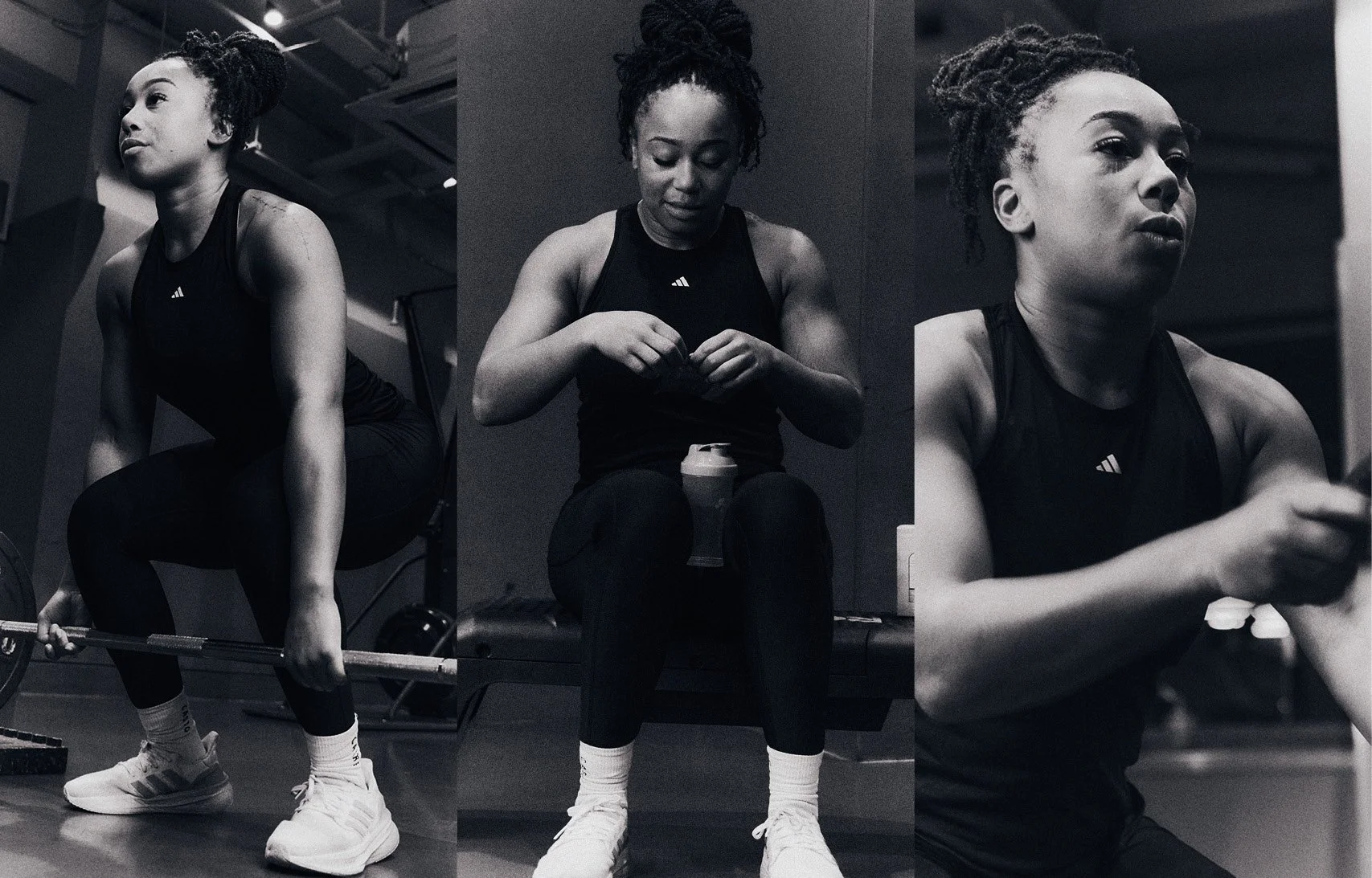
When Sadia Kabeya and Ellie Kildunne decided to take a holiday at the beginning of March, they did what one would expect of a modern sports star. They went to Dubai.
What nobody expected was that Dubai would suddenly be under attack following the outbreak of war in the Middle East. “We could hear the sound of missiles being intercepted,” says Sadia very matter-of-factly. “The day we were meant to come back they shut down the airport.”
Back home, news of their extended holiday made headlines as the pair missed playing for their respective club sides, but Sadia took it all in her stride. “We had to stay for an extra week,” she says, “but in the scheme of things, it went by quickly.”
It’s fair to say it takes a lot to faze the 24-year-old back row, who was named as player of the match when England beat Canada 33-13 to win the women’s Rugby World Cup final at Twickenham’s Allianz Stadium back in September. While other England players may be struggling to adjust to their new-found fame since becoming world champions, she is embracing the moment. “Yeah, it has been interesting coming off the World Cup and it has been so weird to have people recognising you in the street,” she admits. “I was at a petrol station, I went to the toilet, came out with my hands dripping wet, then somebody saw me and went… gasp,” she says, mimicking the kind of star-struck look reserved for pop stars.
“It’s something we always wanted, for the sport to be in the limelight,” adds Sadia. “It has taken time, but when it’s happening you can’t complain about it. You’ve got to enjoy it, you’ve got to revel in it and you’ve got to feel grateful for it.”
In any World Cup-winning side there will be players who emerge as stars, with brands lining up to sign them and youngsters desperate to emulate them. In this particular Red Roses team it’s Ellie and Sadia that are riding the crest of the World Cup wave, both named in the Telegraph’s fifty most influential women in sport 2025, although the flanker acknowledges her team-mate, the runner-up in the 2025 BBC Sport’s Personality of the Year, is perhaps a step or two ahead. “I’m really good friends with Ellie and sometimes I think to myself, ‘I’m really busy today and there’s lots to do’,” she explains. “Then I’m with her for a day and I go, ‘oh, no, no, no, my life is not busy’.”
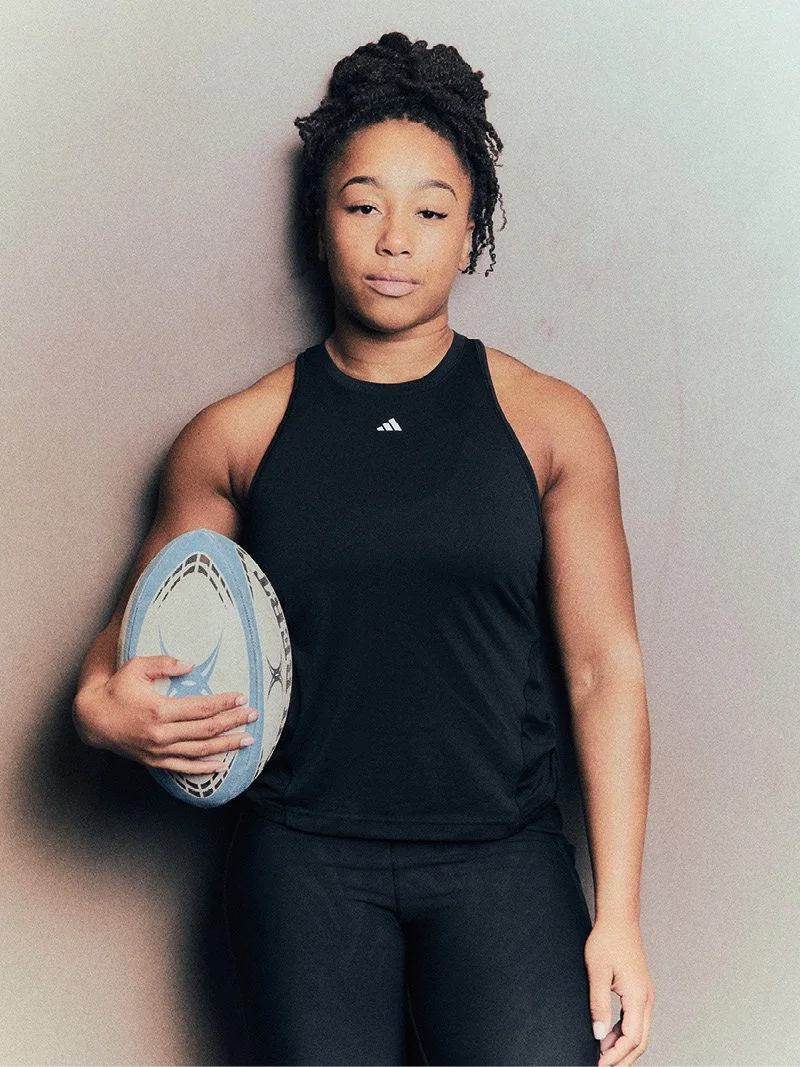
Ellie may have stolen a march on Sadia on the brand side, but it’s as a role model that the flanker is making her own unique impact – as a black female professional rugby player from Lewisham with the muscular physique to match it.
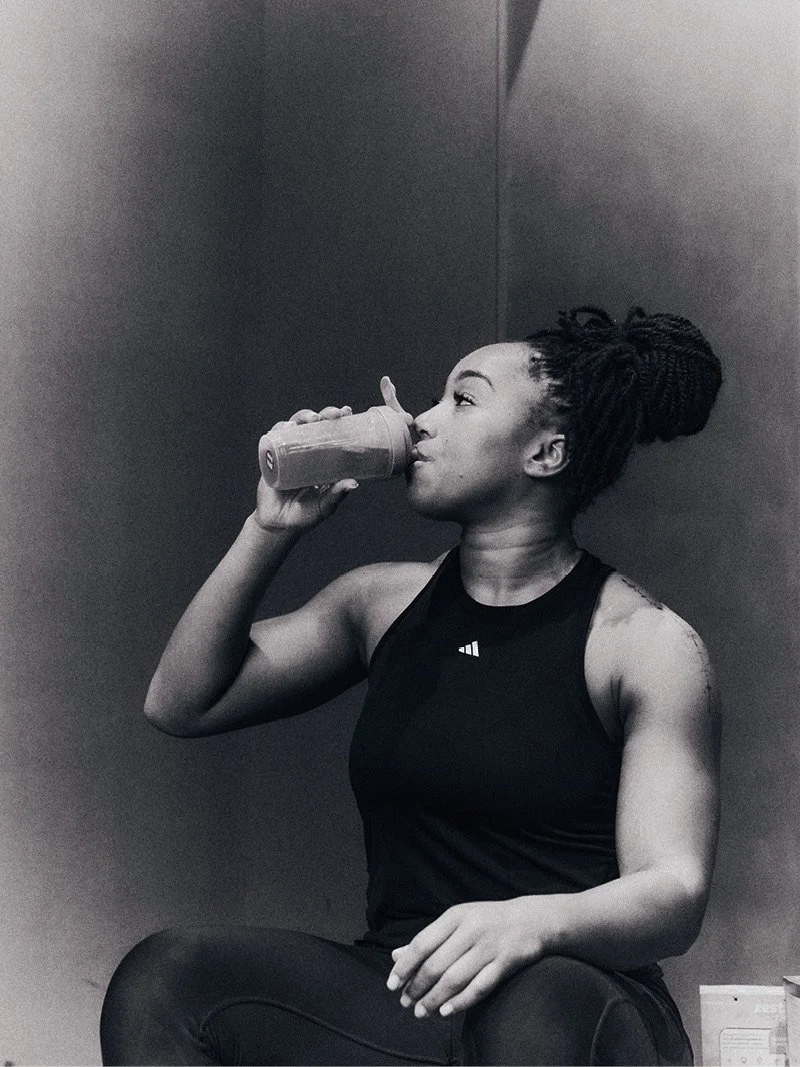
We’re meeting Sadia at Gymbox, a swanky gym in Holborn, where she’s hosting a series of one-to-one training sessions with Revive Active, a health supplement brand. Amid the boxes of sachets around the gym, Sadia navigates each exercise with ease, a natural athlete in her element. “I’ve always naturally had more of a built physique, just genetically,” she explains. “When you’re in school, all you’re worried about is how good you’re going to look. What are the boys going to say? And I remember being in a transition period when I was wanting to take rugby seriously, but I was still in school, and I would get comments because people could see my muscles in my blazer.
“Being able to be strong, I think it’s empowering. I love going out on a summer’s day, showing off my arms and not feeling self-conscious, because I also know what these shoulders do, and what my body does for me.
“I found you can also be feminine and strong and muscular all at the same time,” she continues. “Also, a reason why I take a lot of pride in it is because if someone saw me shying away and trying to be the smallest character in the room, maybe they would do the same. So yeah, I’ve definitely come to love how I look.”
Born to a Congolese father and a Jamaican mother, both cultures were prevalent in the south London home she grew up in. “My dad’s Congolese, he was born in Congo. I would describe him as a very African man, he’s very traditional, he brings lots of the values his parents taught him which were prevalent in my house. My mum was born and raised here, she’s English and Jamaican. The thing I would say I felt most from her culture was the food more than anything, we’d be eating curry goat, rice and peas, stew with pounded yam.
“All my dad’s family is in Congo, so I would love to go and visit one day and meet my grandparents. I’d love to go to Jamaica, I just haven’t found the time yet.”
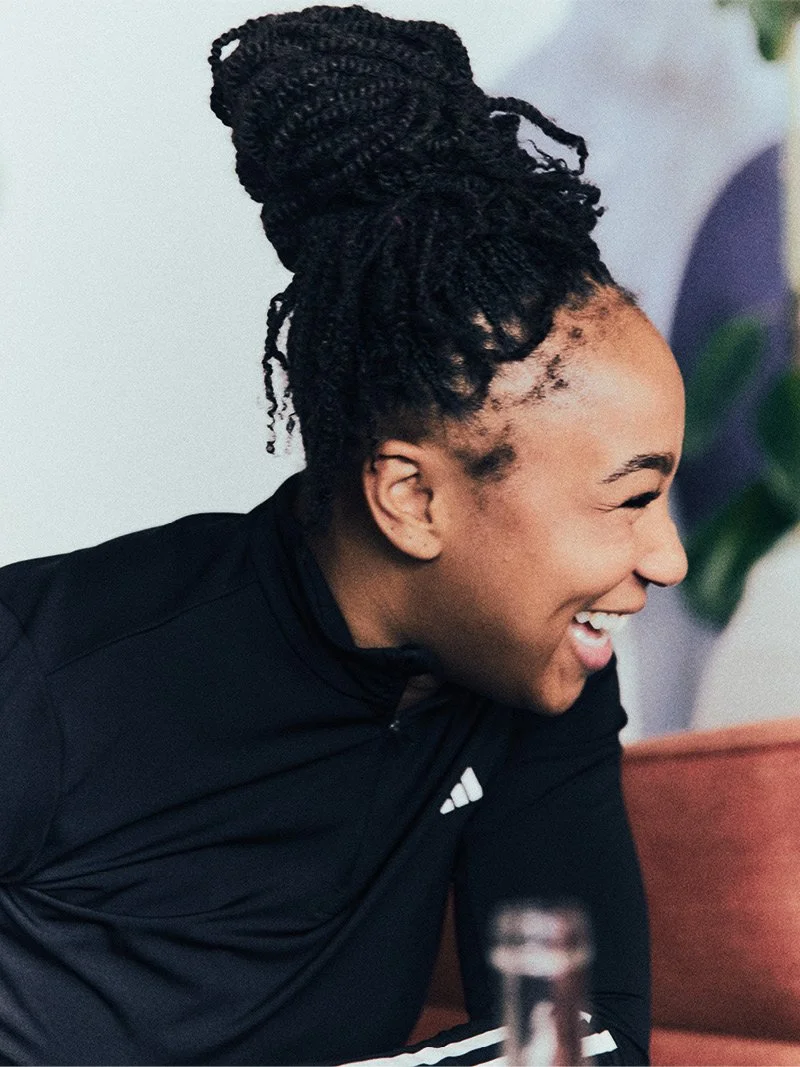
Sadia grew up with two brothers, both of whom have loomed large in her life. “I’m very much a middle child,” she says with a little smile, “I really looked up to my older brother. Anything he did I wanted to beat him, but also I was a younger sister, following him around all the time…I think he found me very annoying.
“We used to fight, but he’s four years older than me and he quickly became bigger and a lot stronger very quickly, so fighting was off the cards. Then my younger brother came along, and I thought ‘yes, someone else!’.”
It was following around her older brother that introduced her to playing sport, with the athletics track igniting Sadia’s passion. “I used to love cross country when I was younger, which seems crazy now because I hate running with a passion,” she explains. “I then did 1500m, 800m, and then I went down to the 300m and the 200m. I joined an athletics club, and they said ‘you need to go into field events’. So I focused mostly on shot put and hammer and realised I was probably the best at those events. I should have been doing them all along instead of running!
“I obviously liked the power aspect of field events. But I think I was naturally gifted in the power side even if I say so myself,” she laughs.
Joking aside, she was technically good at both shot and hammer. “But I think quickly I realised I didn’t like the individual side of it. I’m not externally driven to want to get a medal or whatever, and I got bored of it. Then I found rugby, which was much more my style.
“I was very much an aggressive child, so being able to just run around, hit things legally, was the big appeal. Which seems funny because I’m not like that anymore, I’m not aggressive. But at the time I thought ‘this is amazing’.”
Sadia first played rugby at Harris City Academy in Croydon, which led her to joining Streatham-Croydon rugby club as a fourteen-year-old, turning up at a club that could barely rustle up enough players to field a women’s XV. “Streatham is a classic grassroots club, and has a strong family feel to it. When I first joined, they had a women’s team, but it was like a mix of all ages, because there wasn’t enough players to be adults-only.
“I didn’t actually end up playing any competitive matches while I was there,” she says. “It was a year of training, but it didn’t bother me. I was buzzing with simply turning up to training every week.
“My parents were definitely taken a bit aback, my dad more so, rugby was never a thing growing up in my family. Even though we grew up in London, around lots of sport, rugby never came into the picture.”
That was ten years ago. When Sadia returned home last year as a World Cup winner and a local hero, Streatham-Croydon not only had a women’s 1st XV but also a 2nd XV, plus three girls’ teams and a mixed tag rugby team. In its own way, that is some small indication of how the sport has grown over the past decade. “I came into rugby not knowing anything about it. I never watched it, and all I knew was playing with my friends. We’d rock up to games with plastic bags on our heads to protect our hair and not think anything of it. Like it was just a normal thing to do. I was playing with people who all looked like me, sounded like me, and all had the same upbringing as me.”
After her induction at Streatham-Croydon, Sadia later headed west to Richmond to join a club that is pivotal to the history of women’s rugby and whose members founded the Women’s World Cup.
Going to Richmond was a culture shock in every possible way. “I was a small fish in a big pond,” she recalls. “When I first went there I was around seventeen or eighteen years old and they had a squad of forty players. I think I was one of maybe four who was a woman of colour.”
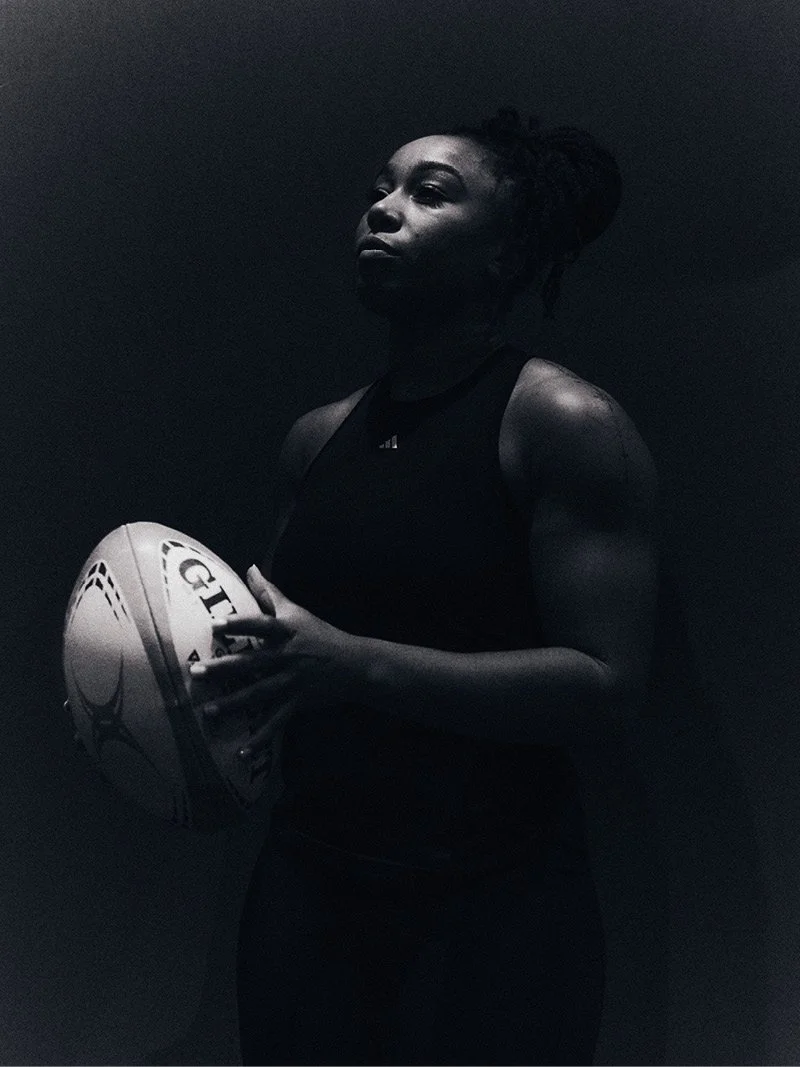
She was still a teenager trying to navigate her way through the sport, but also in life, trying to adjust to fit in rather than simply be herself. It still turned out to be an important stepping stone. “I actually had a really good season, even though we were getting battered week in, week out. I was loving it, I was getting good experience there, competing with senior players.
“But from there, joining Wasps was where everything changed for me,” she continues. “I felt like I’d found my people in rugby. It was a club that was very welcoming for anybody.”
Even wider issues of race would be discussed, or least given the airtime if needed. “When I joined it was also at the height of the Black Lives Matter movement,” says Sadia. “I remember the coach saying, ‘Oh, we’re on a Zoom call [with the full squad and coaching staff], let’s just talk about this [Black Lives Matter] because it’s happening, and if you want to say anything feel free’. And I was like, ‘no way is eighteen-year-old me, coming into this new Premiership club and immediately jumping on the Zoom and saying ‘Hey guys, by the way…’.”
Nonetheless, just the thinking of the coach made her feel welcome. “That was huge for me, just feeling included. I was like, ‘wow, this is new, but it’s a good new.’ And then, once the rugby started, everything just clicked as a team.”
While she’s passionate about her south London roots, she’s now very much attached to her Midlands home of Loughborough, moving there after just a year at Wasps. “I’m quite an independent person, so I was excited to live by myself,” she says. “I was a bit worried about the move from big London to a small town, because I love London. Now I feel like I’m never moving back, I can’t do the big cities anymore.”
It was also during that transition from Wasps to Loughborough Lightning that she got her first call-up into the England squad. “Somebody got injured in pre-season. So I thought, ‘I’m here as a placeholder and I’ll just do my best. I will be in and out. But I wasn’t.”
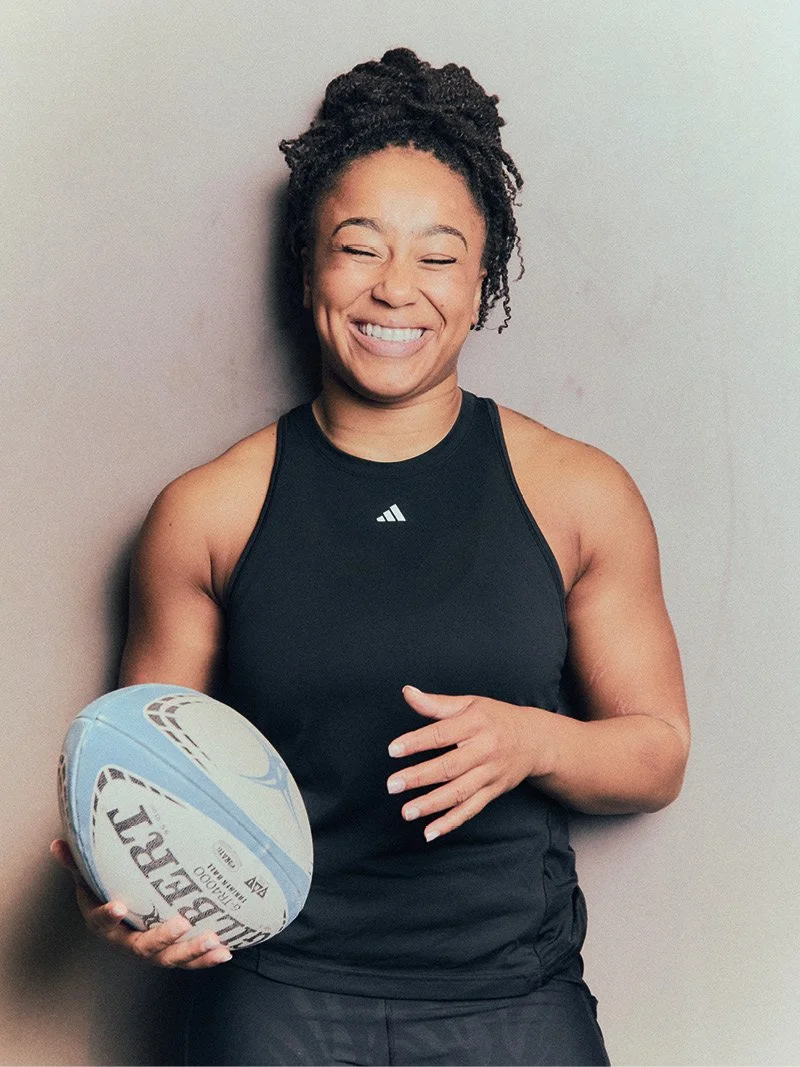
Sadia soon made her England debut, aged nineteen, against Canada, in 2021. “I was riding the wave,” she says. “Obviously I was working very hard but also trying to take in whatever came along. When I got my first England cap I was like, ‘wow, this is kind of cool’. And also there was the coaching setup. They were the most chill coaches ever.
“I don’t think I even spoke to the head coach before my first cap. I think the team sheet came out on the WhatsApp group, I looked at it and went, ‘Oh, that’s my name … and I’m starting!’.
“England didn’t make a huge deal out of it,” she adds, “which was good for me, because you don’t want to get nervous. Obviously, I was proud to play for England but I think I was more proud that my family was proud, if you see what I mean, and for them to say ‘you’re now an England international’.”
Coming into a team packed with experienced internationals as a teenager was inevitably daunting. “I was very quiet when I first went in,” she admits. “I didn’t want to tread on anyone’s toes. It was interesting because Marlie Packer is a huge name in the game, and I think at the time was known for being rough and ready on the pitch, and being quite an abrasive character. When I came into camp she immediately took me under her wing.
“There was already a mutual respect because we’re competing for a shirt,but we’re here to make each other better at the end of the day. So no, everyone was very supportive. The whole journey to that point was just a whirlwind.
“Then getting selected for the [2022] World Cup, I was competing with Vicki Fleetwood, who’d been around for years and years and was an integral part of that squad, and I knew it was going to come down to me or her for that position. So, I didn’t have any expectations, to be honest. But then I found out I was playing in our opening game at the World Cup, but then I got Covid that week.
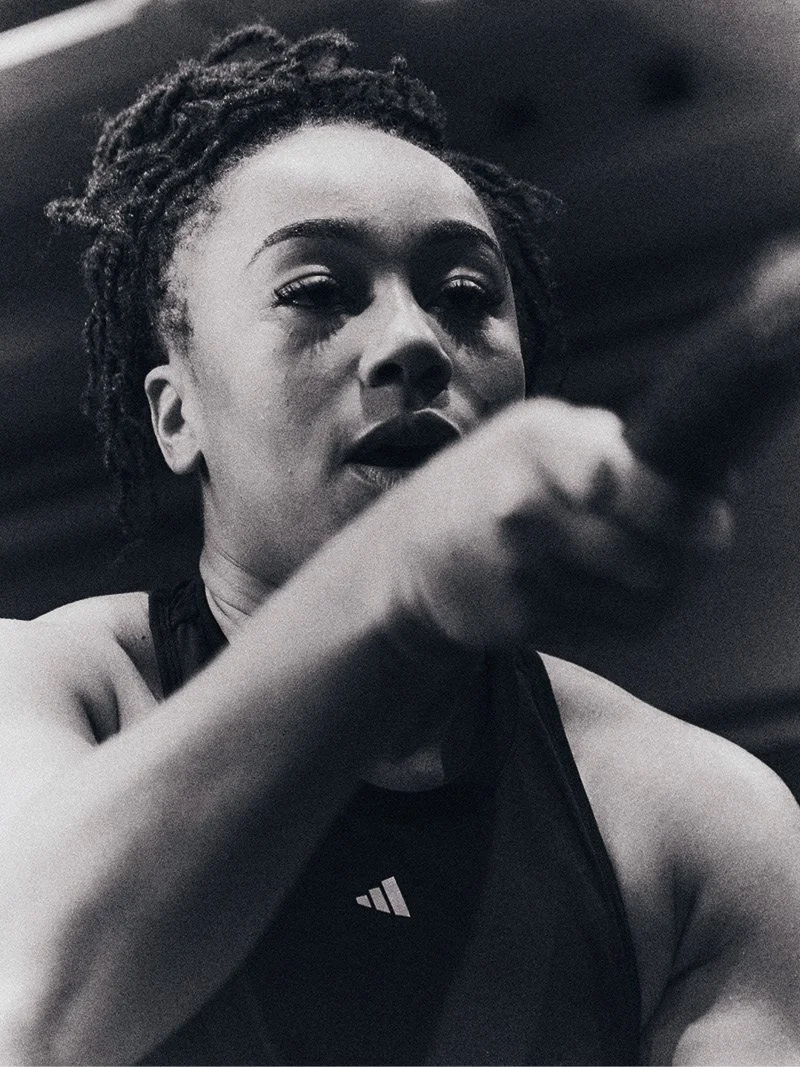
“When we landed in New Zealand I was a little bit tired. We were still doing testing every day. So, I did my test, went to sleep, I woke up around 3am, checked it and I went ‘Oh. My. God’.
“I had a Zoom call with Mids [then coach Simon Middleton] who said, ‘we’re still going to play you, we’re going to send a bike to your room and you need to do your workouts in the room until you get a negative result’.”
The tribulations were worth it, considering the end result. “Then playing the opening game against Fiji and to get player of the match,” she explains, “I couldn’t take it all in, which I think was probably good so I didn’t get overwhelmed.”
Sadia played in three of England’s five games as they advanced to the World Cup final, and played thirty minutes off the bench as they fell to a heartbreaking 31-34 defeat against hosts New Zealand. Now three years on, and as a World Cup winner, Sadia believes there was one key change from 2022 to 2025 that got them over the line. “In New Zealand, it was all about wanting to make the other person fail in your position, whereas this time around, I think it was all about building each other up. Because if the person you’re competing with is doing well, you’re going to want to do better.”
The other significant change was the arrival of John Mitchell as coach in 2023. “He was huge on being bonded as a team,” says Sadia. “I think that the last England team in 2022 were very, very talented, but we might not have been quite so bonded off the pitch, and I think the bond you have off-pitch directly correlates to how well you work with each other on-pitch.
“Being able to know each other’s triggers, being able to know how to speak to each other, and also just wanting to work really hard for each other is key. And Mitch was basically like, ‘you guys are going to love each other, and I’m going to make you love each other’.”
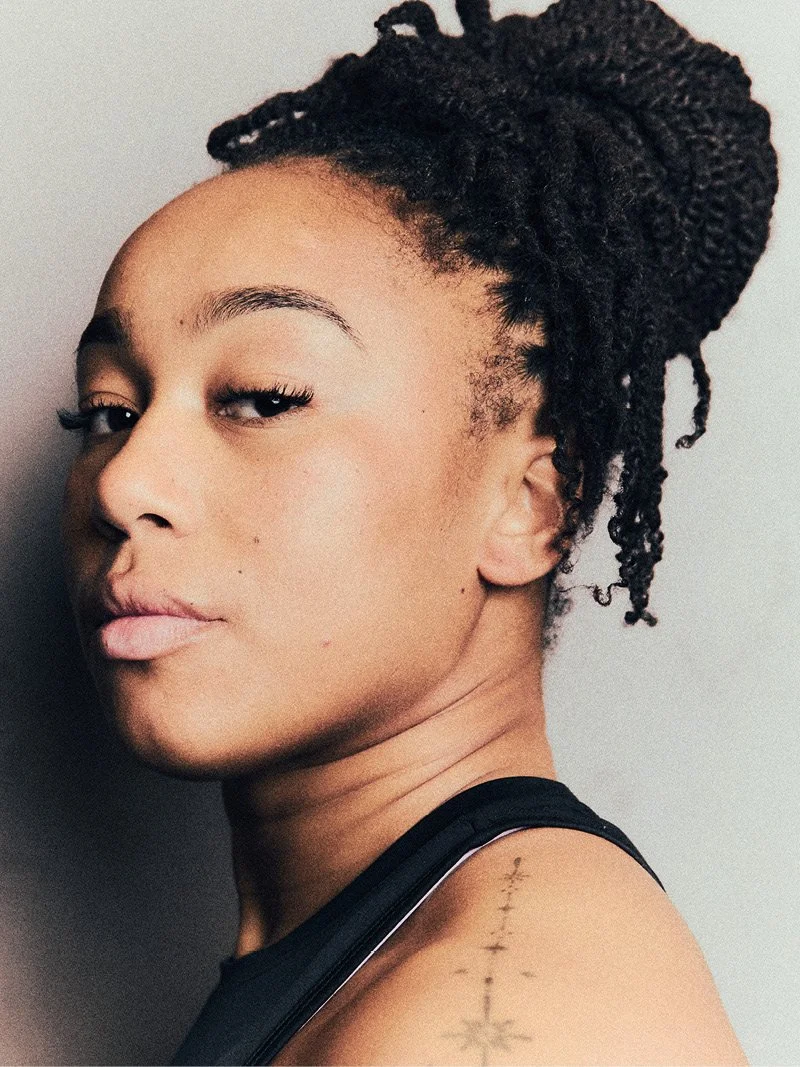
Things could have very easily gone in another direction for Sadia. Ahead of the 2025 World Cup, having been forced to miss two WXV tournaments along with the 2024 Six Nations due to injury, it got to a point where Sadia admits she ‘hated’ the sport. “In terms of rugby that was the lowest headspace I’ve been in,” she says. “But in the lead-up to the World Cup, we didn’t shy away from things. We wanted to go and win it. I think previously, we’d been very ‘English’ about it.
“You don’t want to speak about it, or you don’t want to say, ‘oh, we’re going to win this!’. But we felt like it was actually really important this time around to actually say it, to believe it.
“Then, on the day of the final I felt very calm. We’d always said all the work that we’d done would get us that win. So, you have to trust in that work, whereas in 2022 there was a lot more nervous energy and a feeling that we needed to go out and put in this amazing performance on the pitch.
“The experience of playing in the 2025 final was better than I could ever have imagined,” says Sadia. “Arriving on the bus and seeing everyone waiting for us to get there and then walking out onto the pitch, the national anthems, it was a sell-out crowd ... I mean, we never would have imagined three years ago, when we were coming back from New Zealand, that we’d be playing in front of eighty thousand people.”
A team at any level will usually be a melting pot of personalities, and what comes through so strongly when speaking to Sadia is how tight this England squad is both on and off the pitch. “After the final there were days of partying,” she says. “Me and a couple of the other girls went away together, which was nice, because obviously you spend three months together, training, doing pre-season and then going through the World Cup. You’d think you’d be sick of each other, but everyone was trying to stay together before we went back to our clubs.”
Given everything she has achieved so far, it is easy to forget she is still only 24 and there is still so much to do and achieve. “I want to cement myself as one of the best players in the world at what I do,” she asserts. “Someone might say, ‘I want to get World Player of the Year’, but that’s hanging a hat on one award, that’s down to different people’s opinions. Whereas I want to be the best at my tackling, I want to be the best at my dominant carries, and that’s something I can track. If in turn that comes with more awards and accolades, that’s just a bonus.”
Story by Ryan Herman & Scott Duke-Giles
Pictures by Holly Frampton
This extract was taken from issue 33 of Rugby Journal.
To order the print journal, click here.