The president needed the shirt to be in South Africa for the final, and it had to be the same number as the captain, it was important. It was more than a shirt, it was a symbol, for a country, for its future. Fran Cotton has done many things in rugby, but getting a shirt shipped to the Rainbow Nation for the 1995 World Cup final, might just top the lot.
When a rugby career spans quite as long as Fran Cotton’s it can be tricky to know where to begin. The time he beat the All Blacks, while playing for the North at Otley? When he was part of the first England side to win a Grand Slam in 23 years? How about the Lions, as a player on the victorious 1974 tour of South Africa? Or as a manager, same place, same result (a series win) in 1997? There’s the picture too, the Mud Man, which we have to get on to, but first, it’s fashion. Rugby fashion, and at a time when some social media types are asking ‘where are the rugby fashion brands?’, it’s fitting to salute the first, the one that bears Fran’s name, Cotton Traders. “Smithy always says it’s lucky I wasn’t called Fran Polyester,” laughs the former England prop, when we visit his farm, just outside Macclesfield.
For those of a certain vintage, Cotton Traders were the brand that made the rugby shirt a fashion staple, and it was started by Fran and his club and country team-mate Steve Smith. “I say to people, I’ve been married twice, once to Pat [his actual wife] and once to Smithy,” laughs Fran. “I always remember when I met him, because it was when I was introduced to Loughborough rugby, who were famous for fitness, and it was a pretty tough session, and I was absolutely knackered in the shower. I had this little redhead scrum-half next to me who never stopped talking. I couldn’t stand him, and it’s amazing that, when I got to know him, we became lifelong friends. But at the beginning I just wished he’d shut up.”
Smith brought Fran into the fashion world, first with Bukta, a vintage sportswear brand, and then to a division of French Connection, who had bought the English brand. After two years of running it, they decided they could go it alone, and in 1987, they gave us Cotton Traders. “One of the first things that were launched were [replica] international rugby shirts because, in those days, it was a totally unlicensed market, so none of the shirts were actually registered,” he explains. “Anybody could have done what we did, but nobody realised that it was a fashionable thing. It wasn’t something to play in, it was something to wear down the pub, that’s where we were ahead of the game a little bit.”
The replica shirts went down a storm, so much so that the unions started to slowly wise up, realising they may have missed a trick. “We decided then we needed to work with the unions and have licensing agreements,” says Fran, “and the first one we did was England, which was totally unexpected. I mean, this being England, you never thought they would change.”
And yet, they did. “We thought they’d never change the England shirt, the all-white England shirt, but the World Cup was coming up in 1991 and they decided they’d have a special England shirt.
“It had three bands, two red and one blue, and the fact that you had that design with the rose, determined that together you could actually register that, and protect it, which we did. The fact that we’d done that, then had the committee suddenly, saying, ‘well, what have we done this for, we’ve changed the white England shirt, we need to get out of this contract’.
“And they did everything to try and get out of the contract,” continues Fran. “But we had a contract here for the next seven years, and they tried everything, took us to court, failed, we won, and then, as compensation, they had to add another two years on to the end of the contract.”
Technically, Cotton Traders had the England deal until 1997, but knowing when the timing was right, they sold the last two years to Nike. “We also did Wales, and South Africa too; have you seen Invictus?” Of course. “In that you see them all running around in Cotton Traders shirts, there was really big branding over there in the training kits, but what people never knew was that the shirt Nelson Mandela wore for the final, was a Cotton Traders shirt.”
As shirt stories go, this is the pinnacle. “The president’s office phoned Cotton Traders to say ‘the President would like to wear a Springbok shirt for the game’,” explains Fran. “But they said it must be the captain’s shirt, it had to have the captain’s number on it, so we had to fly him out a Springbok shirt that he could wear for the final. So that was a pretty iconic.”
Where is that shirt now? “Oh, fuck, no idea, I wish I had it. Unbelievable, it was just such an iconic World Cup wasn’t it? Even now I can still see the big jumbo jet coming over the stadium, it’s incredible, an iconic moment in rugby history, that.
“We moved on from rugby shirts, in some ways we were too associated with it,” admits Fran, who is now a non-executive director, with the company owned by Simon Orange’s CorpAcq. “But slowly we’re changing the perception of the brand, but rugby is where it started.
“I do bugger all these days,” he adds. “Unless they ask me to do something.”
Fran Cotton shouldn’t have had such an impact on the union game, it should’ve been league. “I grew up in what was a small mining village just outside of Wigan called Golborne,” he explains. “It’s right in the heart of rugby league country, between Wigan, Warrington and St Helens. My father played professional league for St Helens and Warrington and my brother played professional league for Leigh and Warrington, it was very much a rugby league background.
“I always get asked why I didn’t play league, and the only reason is that I went to a grammar school that played rugby union. Before, I’d never played union at all.”
He was clearly adept at it, and while he may have gone against the grain with his choice of code, his career choice was as expected. “When I left school, I did a mining degree, I was employed by the National Coal Board, I was doing my manager’s ticket,” he says. “I went to Wigan mining college and I joined Liverpool, who in those days were regarded as a first-class club with excellent fixtures.”
Three years of Liverpool and three years of studying mining, while the former proved a fruitful use of his time, the latter less so. “While I was at mining college, the number of mines that closed in the Wigan area made me realise maybe this is not a great profession to be in for the long term. That’s when I decided to go to Loughborough and do a teaching course.”
As well as meeting his ‘wife’ Smithy, and benefitting from Loughborough’s famed sporting education, he also played for Coventry, before returning north and playing for Sale. His debut for England came in 1971 against Scotland, when he caught the eye of Bill McLaren even before he took to the field. “Scotland had never beaten England at Twickenham for 33 years and I always tell this story because myself and Dick Cowman, who was also at Loughborough, a fly-half, were selected together for the first cap.
“Anyway, Bill McLaren, who is still the greatest rugby commentator ever, he was the ultimate professional, and he always used to come and watch the training on Thursday. Now, in those days,” explains Fran, “you weren’t allowed to meet until 48 hours before kick-off, so we’d meet at three o’clock on Thursday afternoon, at The Stoop, to avoid ‘professionalism’.
“When we arrived, Bill would be on the touch line, and he came over and introduced himself, and then he used to come back to the team hotel and have dinner with the players and the selectors. He really did his homework.
“I always remember watching his kind of preview programme on Saturday morning. And he said, ‘England, they’ve got two new caps, a tricky fly-half called Dick Cowman and a big lad called Fran Cotton, I’ve never seen him play, but I’ve seen him eat a meal, and that was impressive.”
The fact Scotland hadn’t won in 33 years naturally meant Fran tasted defeat… and it wasn’t the first, as England struggled during the 1970s, with a five-way tie in the Five Nations in 1973 their best result, largely finishing bottom, until the Grand Slam in 1980. “It was just the lack of consistency on selection,” reckons Fran. “I mean, I talked to Smithy about this, and I think he had 29 caps for England, and he had twelve different fly-halves in that time, massive inconsistency.
“It only really rectified itself when Mike Davies took over in the late 70s, and he selected the team with Billy [Beaumont, the captain], that’s the only time you got consistent selection. Before that, the number of times you’d turn up into the England dressing room, look around and say, ‘what is he doing here? How have they picked this guy?’. It was frustrating, because we did have a lot of good players, but they never picked them on the same day.
“[David] Duckham, Smithy, [Tony] Neary, [Roger] Uttley, [Peter] Dixon, we had a lot of great players there but they never picked them on the same day. The best back row that I ever played with, Dixon, Uttley, Neary, they played for the North of England and on two occasions they beat the All Blacks when they were in the back row, yet they never once played for England together.”
Fran does highlight a few good wins. “In 1972 we went to South Africa and beat South Africa, and had an unbeaten tour, then we went to New Zealand and Fiji, beat Fiji –thrashed them 13-12! – and then we didn’t win a provincial game [in New Zealand], but beat the All Blacks at Eden Park. We beat Australia regularly, so we had some decent results, but there was no consistency to it.
“I never played in a winning side at Cardiff,” he adds. “In fact, we only beat the Welsh once when I was playing, and that was in the Grand Slam year of 1980.
“The worst defeat ever,” continues Fran, “was 1975 when we played France in Paris, where they annihilated us. They had a great pack of forwards. I can name them now: Armand Vaquerin, Alain Paco, Gerard Cholley, Alain Esteve, Alain Guilbert, Jean-Pierre Rives, Jean-Claude Skrela, Claude Spanghero, that was the pack. By God, it was the best pack of forwards I’ve ever played. They were superb. And of course, they’ve always got some decent backs. So yeah, we got beaten up.
“France,” he adds, “I would say, by some distance, were the dirtiest team that I ever played against. I always remember the first time playing against France, and going into the dressing room, dropping my bag, picking up the programme, having a flick, and reading about Gerard Cholley. And of course, the first sentence was that he was a former heavyweight boxing champion of the French armed forces. I thought, ‘God, I wonder why they picked this bloke!’. And he was lethal.”
“I remember him playing against Scotland, and he actually laid out two people at one maul. How the referee didn’t see it, I don’t know, he hit both of them over the top of the maul, and as the maul broke up, they’re both out on the floor.
“Well, I mean that level of violence today and you’d be banned for life. People ask if it was a far dirtier game when I played than it is now, and yes it’s very physical today, of course, but by and large, it’s within the laws of the game. In those days,
it was little bit like the Wild West.
“I loved playing then,” he adds, “but I’d like to have played in the current era and under the current laws. One of the big issues when I played was really that contact skills weren’t good enough, so the continuity of the game was stop start, stop start, but you get a lot more continuity in the current game.
“And of course, as a prop forward, I was quite mobile and a good handler of the ball, and that was a bit frowned upon. They thought, well, he can’t be doing his work in the tight, this guy is out there running with the ball, stuff like that.
“Now, of course, you’re encouraged as a ball-carrier, so you’re a lot more involved, which I think I would have enjoyed more. But listen, I loved every second of when I played, so I wouldn’t change that.”
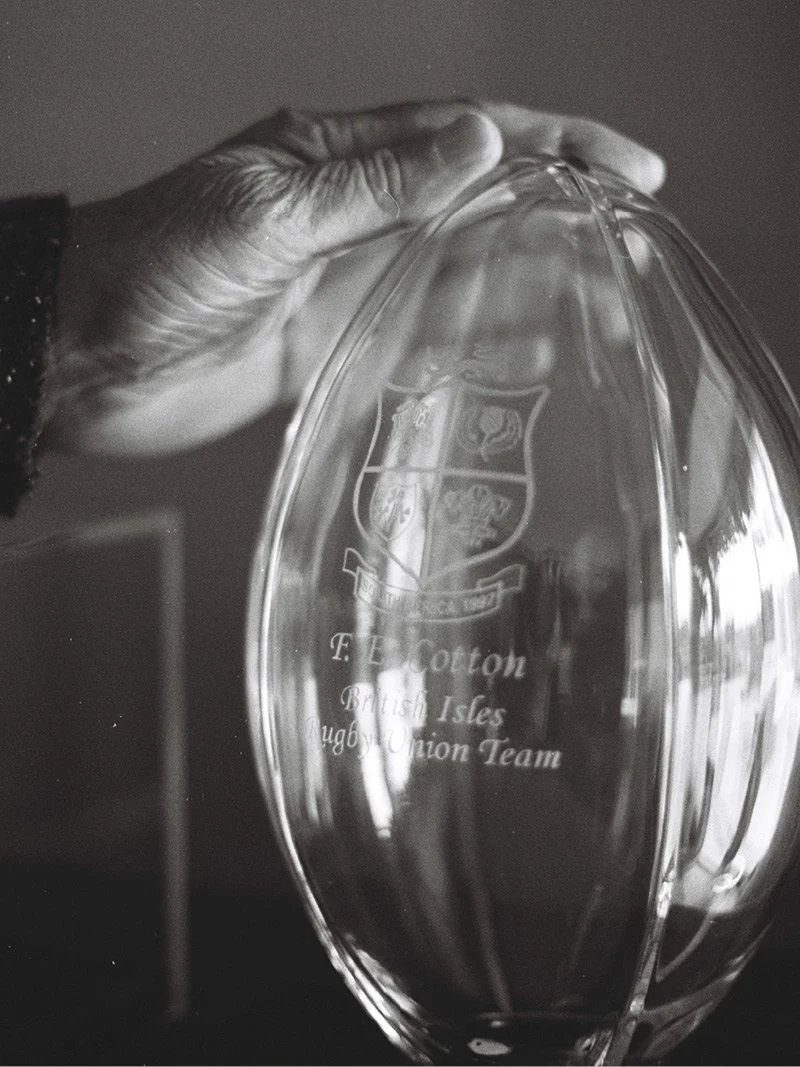
Inspired by a TV show on the 1968 Lions tour to South Africa, Lions on Safari, Fran always wanted to play for the tourists, and although picked as a reserve in 1971, he didn’t make it that year, and had to wait until 1974 for his debut. On the pitch, it was incredibly successful, 22 games, 21 wins and one draw, in the last of the four Tests. Off the pitch, other issues came to the fore. “I felt that the politics was nothing to do with me,” he says. “It’s a far bigger issue than playing rugby, so I had no qualms at all about going.
“I mean in 1974, there was a lot of Peter Hain [famed anti-apartheid protester] and the guys who were protesting, they were even outside the team hotel, where we gathered in in London. I always remember Willie John McBride pulling us all together and saying, ‘Look, you know the protests outside, you know we’ve been told that we haven’t got any access to the embassies in South Africa, or consulates – that’s all been taken away. So, if any of you have got any doubts about going, you need to leave the room now, because, you’re no good to me.’ Nobody moved. So, I thought, that’s it, we’re going.”
He points out, having also toured with England in 1972, that the tours did create some change. “In 1972, we were the first white team, the England team, to play against the coloured African team, and we did the same with the Lions, so we’re breaking ground there. So you were slowly breaking it down in terms of the attitude to apartheid and racial equality.”
Although the results seemed to be straightforward, the Lions were being brutally pushed, so much so Fran came to blows with fellow Lion Sandy Carmichael. “I did, yeah,” he admits, “in Pretoria, just before the second Test. I don’t think anybody really understands the amount of scrummaging we actually did [in training]. We were doing live scrummaging and we’d be doing 25-30 live scrums every day, it was fierce stuff because we had two packs of forwards, and there wasn’t very much between the two.
“Anyway, I’d been picked in the Test team, and we’re scrummaging, and it’s not going quite right, and we’re not pushing them back. And Willie John turns around to us, and says, ‘Come on, we’re supposed to be the Test team’, and it all breaks up, and there’s a little bit of a fracas. It wasn’t anything, but it was picked up by the South African press, who tried to build it up as discontent, fighting among themselves, this kind of stuff. But it was never, never more than that. It was trivial.”
Although South Africa, ‘picked all the big nasties from Free State and Northern Transvaal’, they couldn’t turn the tide of the series, and the second Test went the same way as the first, the Lions winning 28-9. The third was won, 26-9, with the fourth finishing 13-13. The Lions never took a step back. “The most brutal thing I saw was when a dust-up happened about ten yards from our line, and suddenly JPR ran in from about fifteen yards behind and planted one on Moaner van Heerden, the South African second row. He put him on the floor and stood over him like a boxer, as if saying ‘come on, get up, I’m ready for you’. I thought, ‘God, and this is our full-back’.
“Moaner must have been 6ft 6in, nineteen stone, but JPR… I always remember Willie John saying he is an example to everybody, his attitude, his competitiveness. It was wonderful to turn around and see him at full-back, it was just so reassuring, thinking, if he’s the full-back, they’re never going to go past him.”
Fran toured again in 1977, to New Zealand. The Lions went into the final Test 2-1 down, but found themselves 9-6 up with minutes to go and a drawn series on the cards. “Benny [Phil Bennett] missed a touch-finder, which ended up just on the ten-yard line. I think it was Bill Osborne, the centre, who put up a big up and under which was caught by one of our players, but Graham Mourie hit him with a good tackle, the ball just flew out of his arms straight to Lawrie Knight, who scored [giving New Zealand a 10-9 lead].
“Even then we should have won it, because we had a five-yard scrum and we’d been so dominant in the scrum, we were confident of a pushover try, but Willie Duggan made the mistake of picking up too early, and they held him up…
“I still haven’t recovered from it,” he admits. “I still think about it now. I was so… depressed is the wrong word… I was so deflated at the end of the game, having played so well, dominated the game, we should have won it easily.
“We ended up losing it in the last minute,” he continues, repeating, “I never recovered from it; it’s just one of those defeats you just can’t get over. Not many have drawn over there, so to have it taken away in the last minute, and still to have a five-yard scrum after that. Yeah, we still cocked it up, I don’t know. As I say, I still think of it to this day.”
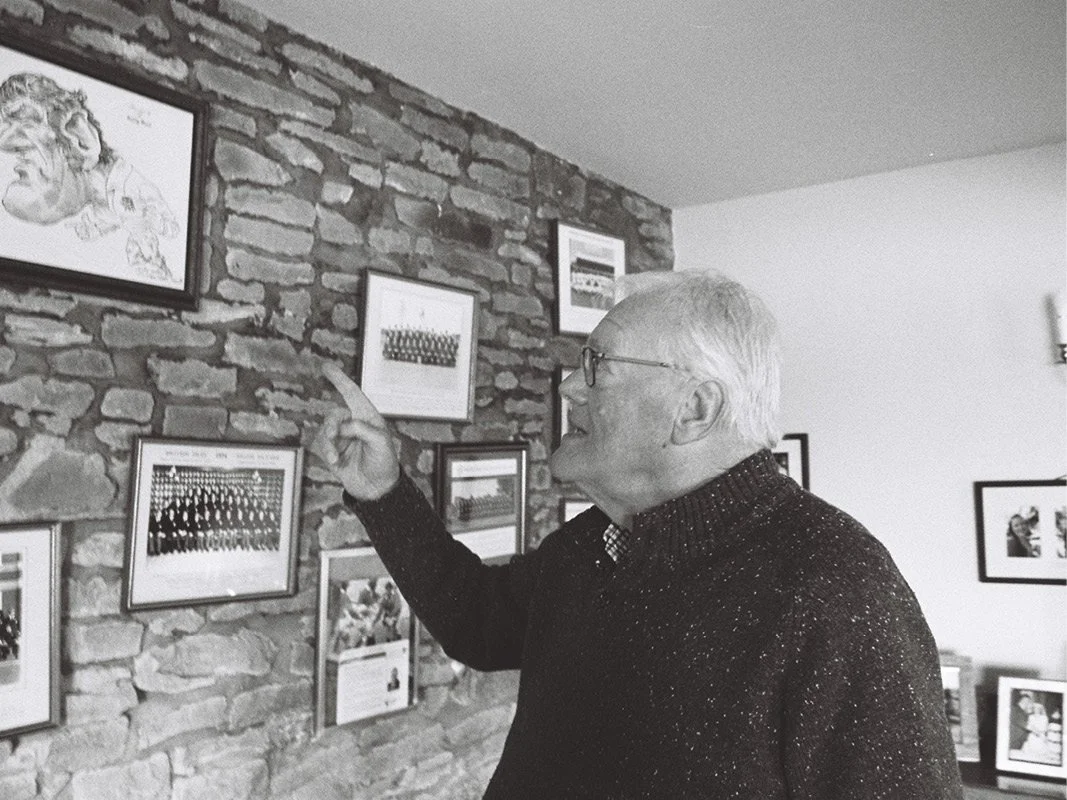
On the wall behind Fran, sits an array of pictures, mostly from his Lions days, with one more familiar than most: the Mud Man. The image is of Fran at the front of a lineout with pretty much only the whites of his eyes breaking up a picture that’s almost entirely filled with mud. It was taken by the late Colin Elsey on that Lions tour of 1977, against the Junior All Blacks. “That kind of typified the tour because it was a very, very wet tour,” he says. “That photograph was taken at the old Athletic Park in Wellington. It had been raining for days and days and they played three warm-up games on the pitch before the main Lions game, so you can imagine the state of the pitch.
“I always remember the photograph being taken because it was in the last minute of the game, right in front of the main stands, and all the replacements bench for the Lions were on the front row of the stand. I’m at the front of the lineout with my hands on my knees looking up at them and, of course, they’re all rolling over with laughter because they’ve realised they can’t get on – nobody wanted to come on – and they’re laughing because all thirty players look like me.
“I had no idea the significance of it until they were putting on a special game for the Queen’s Silver Jubilee at Twickenham, between the Barbarians and the returning Lions. When the team coach arrived in the West car park at Twickenham, the whole crowd were waving the programme. And I mean, everybody, is waving the programme, and on the back of the programme was that Mud Man photograph – it just showed the impact that it had. It stuck with me for the rest of my life…”
There’s so much to the Fran Cotton story. There’s the time he got banned from the game, after he’d retired. “I wrote an autobiography and Bob Weighill, the secretary of the Rugby Football Union, said, ‘what are you doing with the royalties?’. I said, ‘Well, they’re in my bank account’. He said, I couldn’t do that otherwise you’re professional, so I said, ‘unfortunately I’m going to have to be a professional then’. Because it was £20,000 which doesn’t sound a lot, but in those days, it was a lot, particularly, if you’d just got married.”
There’s the somewhat calm celebration after finally winning a Grand Slam. “Four or five of us from the north went into one of the bars at the North British Hotel, as it was in those days, and sat there and had a couple of beers, and just kind of reflected on twelve years of agony. We just thought, ‘it’s over, we’ve done it’.”
There’s the time he had a ‘heart attack’ on the 1980 Lions tour to South Africa. “I got an infection in my leg, cellulitis, so I was in bed for a week with antibiotics and so forth and then the following Wednesday, we played an invitation team in Stellenbosch, and about twenty minutes into this game, I just became disorientated and had the chest pains.”
The doctors told him he’d had a heart attack. “‘Heart attack?’, I said, ‘I’ve been stomping around rugby fields for fifteen seasons’, but if that’s what the medics say,” recalls Fran. “The following day, still wearing the Lions track suit, I was transferred to Groote Schurr Hospital in Cape Town, which is very famous for Professor Christiaan Barnard, who did the first heart transplant ever.
“People think I made this up, but it’s absolutely true. When I’m being wheeled in, coming down the corridor is Professor Christiaan Barnard, who recognises the tracksuit. I told him about the heart attack and he says, ‘well, if you need a new one, just pop up to the surgical ward upstairs’.”
As it turned out, it wasn’t a heart attack, but an infection, meaning Fran didn’t need to visit Barnard for a replacement after all.
And there’s the enormous amount of work he did as chair of Club England, a subgroup of the RFU that drove England on the international stage, pushing them to get involved in the age-grade World Cup (which they hadn’t previously been involved in), and supporting Clive Woodward’s side on to World Cup glory. “Unfortunately it didn’t end well,” he says of Club England. “The clubs disengaged from it, which was silly, and that did cause some problems. I mean, it really caused the departure of Clive Woodward, because when we came back having won the World Cup, the first thing the clubs said – and the man running it was a complete and utter bloody idiot, who knew nothing about rugby – was that they’d decided that Clive was now getting less access.
“How crazy is that after winning the World Cup? You know you should be saying, ‘what more can we do? How can we make sure we’re ready for the next World Cup?’. So, things like that really have affected rugby in a big way.
“I always say, if you look at the current structure they put in place – considering what the RFU have funded and the losses of the Premiership clubs – it must have cost a billion quid. And what have we got? England, fifth in the world, and we’ve got clubs that are financially unstable, it’s not a great picture for a billion quid.”
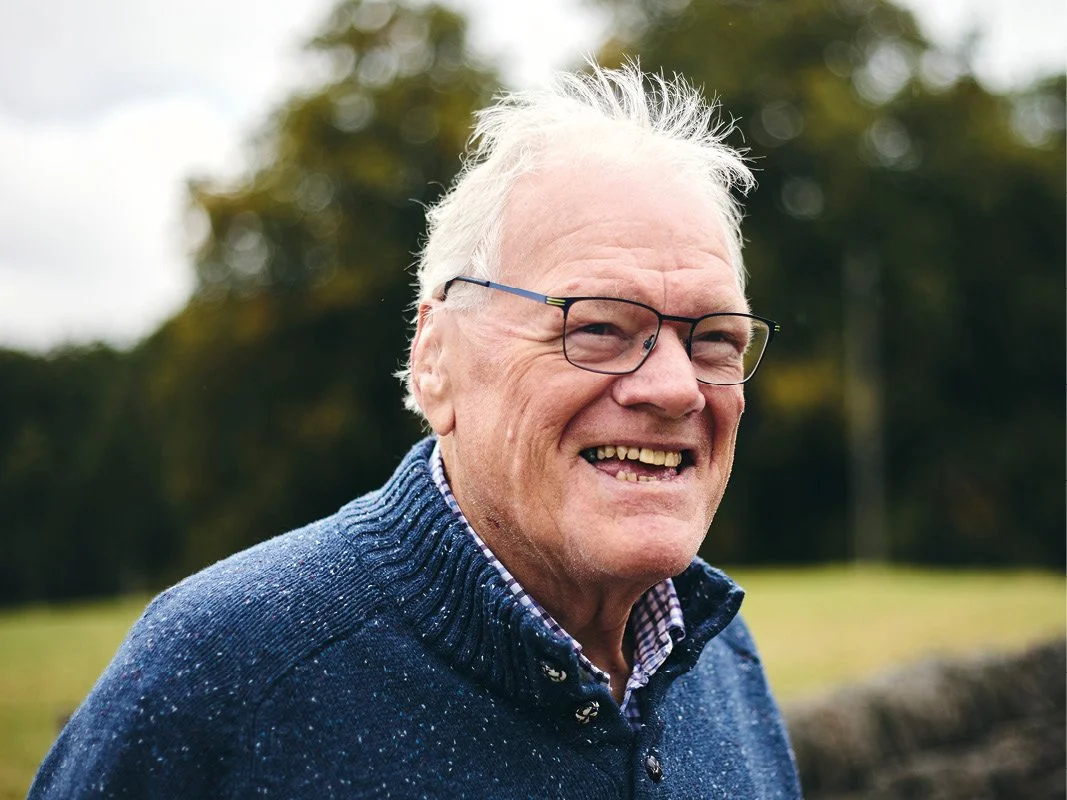
Fran’s impact and influence has been immense, from Grand Slams and Lions wins to making rugby fashionable and a picture that transcended the game, and we’ve not even got into how he drove the 1997 Lions as manager, how he helped shape rugby on the RFU Council, or his thinking as part of the Andrews Plan, at the dawn of professionalism. He’s got views on everything, not only the current state of the club game, franchising (he’s for it, it just needs to be club-based with proper structure and purpose), the England pathway and the game today, but ultimately he still just loves rugby. “I love watching England play and I’m a passionate England fan, and want them to do well,” he says. “I love rugby because my best friends in life are still the guys I played rugby with. Even during the period where I was kind of exiled from being involved in rugby, I never lost touch with them, and that’s what calls you back to the game, your mates.
“I always go to the old players’ lunch at Sale FC,” he concludes, “I was there in February and over one hundred players turned up, so yeah, that’s what brings you back, the friendships, the people, you know, rugby people, good people.”
Story by Alex Mead
Pictures by Russ Williams
This extract was taken from issue 31 of Rugby Journal.
To order the print journal, click here.