
Bryn Meredith
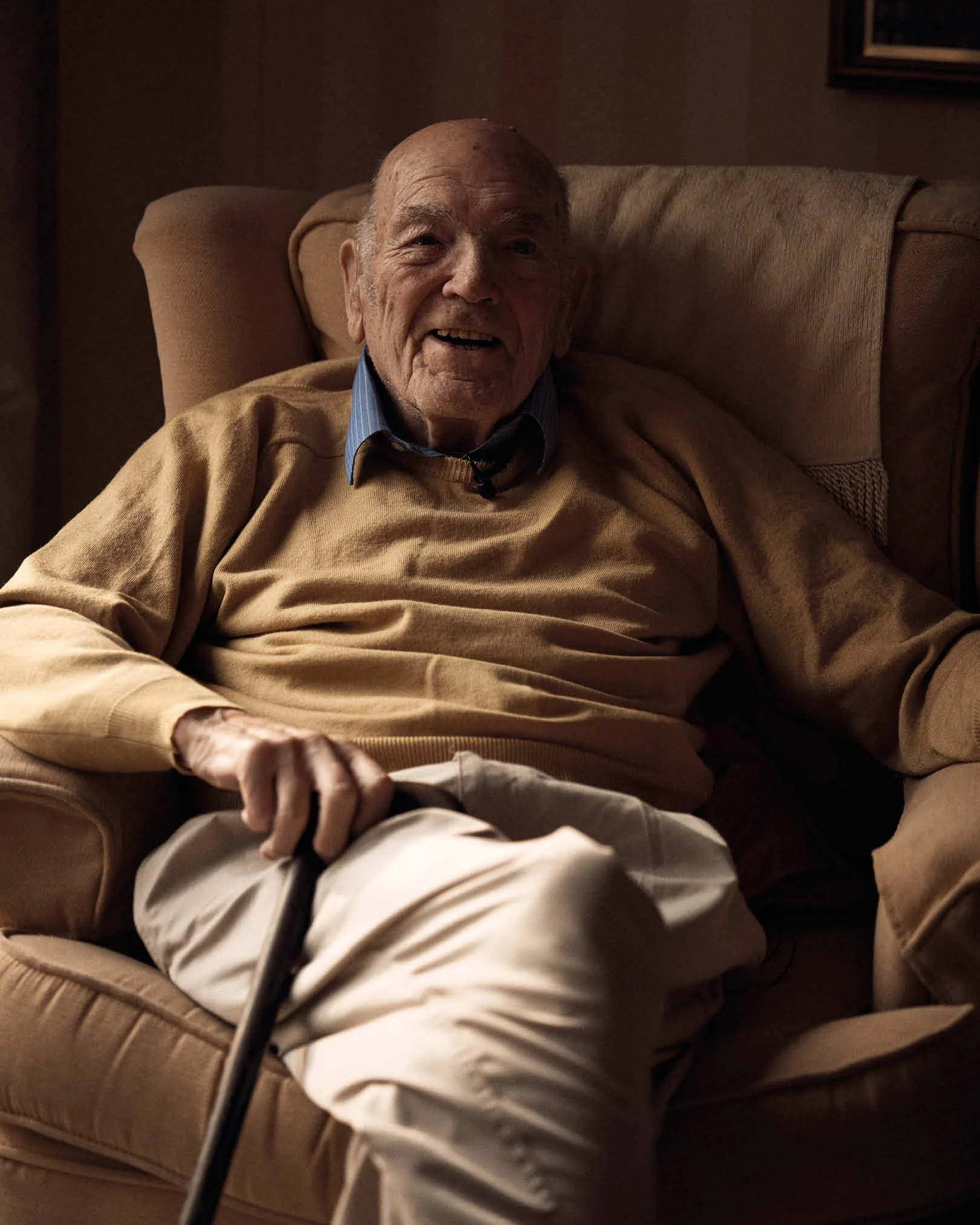
Bryn Meredith was a hooker unlike any other. He could dummy, jink, sidestep, and score breathtaking tries, he was among the best ever seen. Never quite retired. Even now, aged 94, the oldest living Lion would still, if asked, lace up his boots one more time.
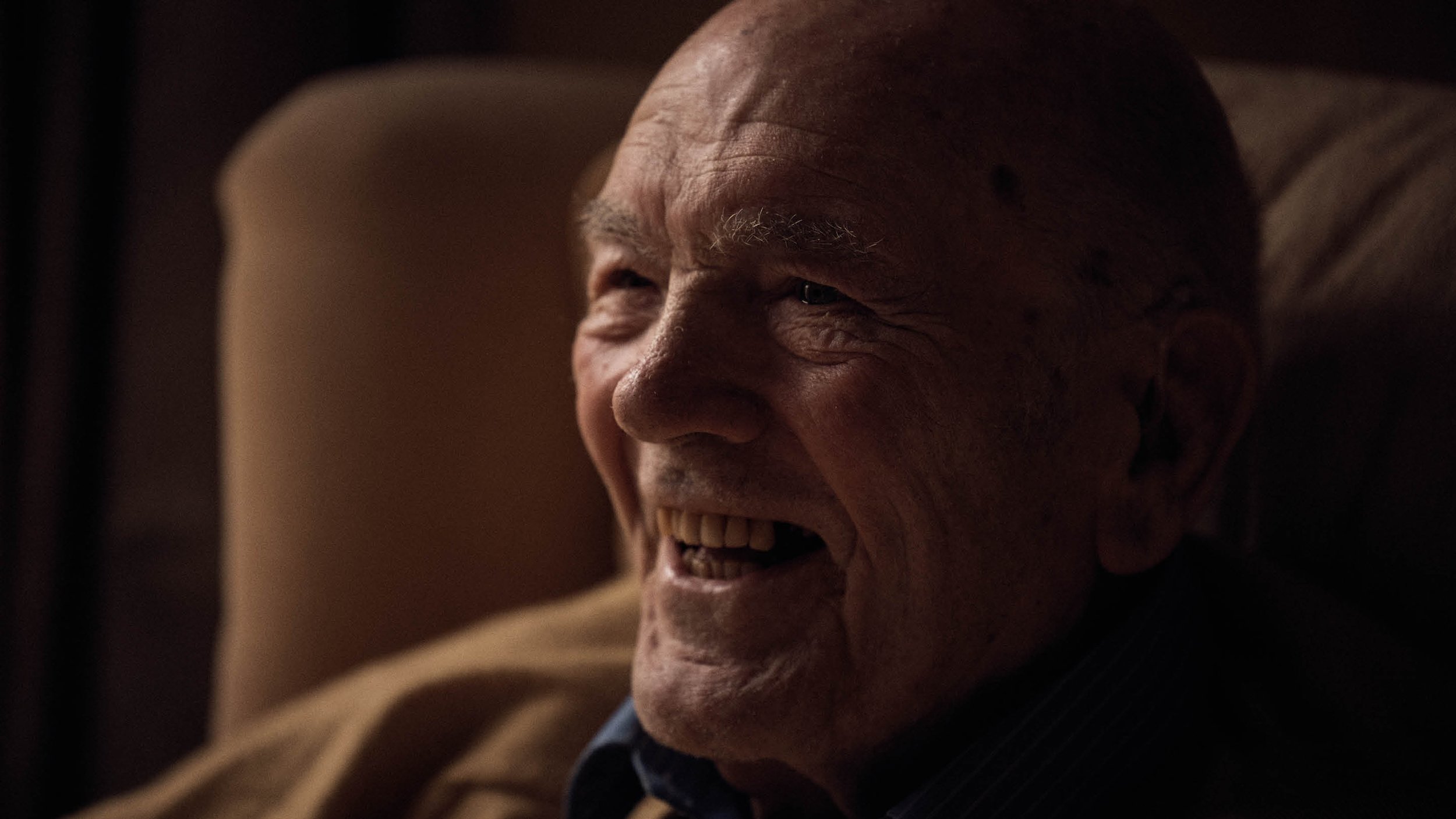
There’s not even a Grogg on the mantelpiece, let alone suggestions that the house in Usk, a town ten or so miles north of Newport, is home to a man once considered the greatest hooker on the planet and who is now the oldest-living British & Irish Lion.
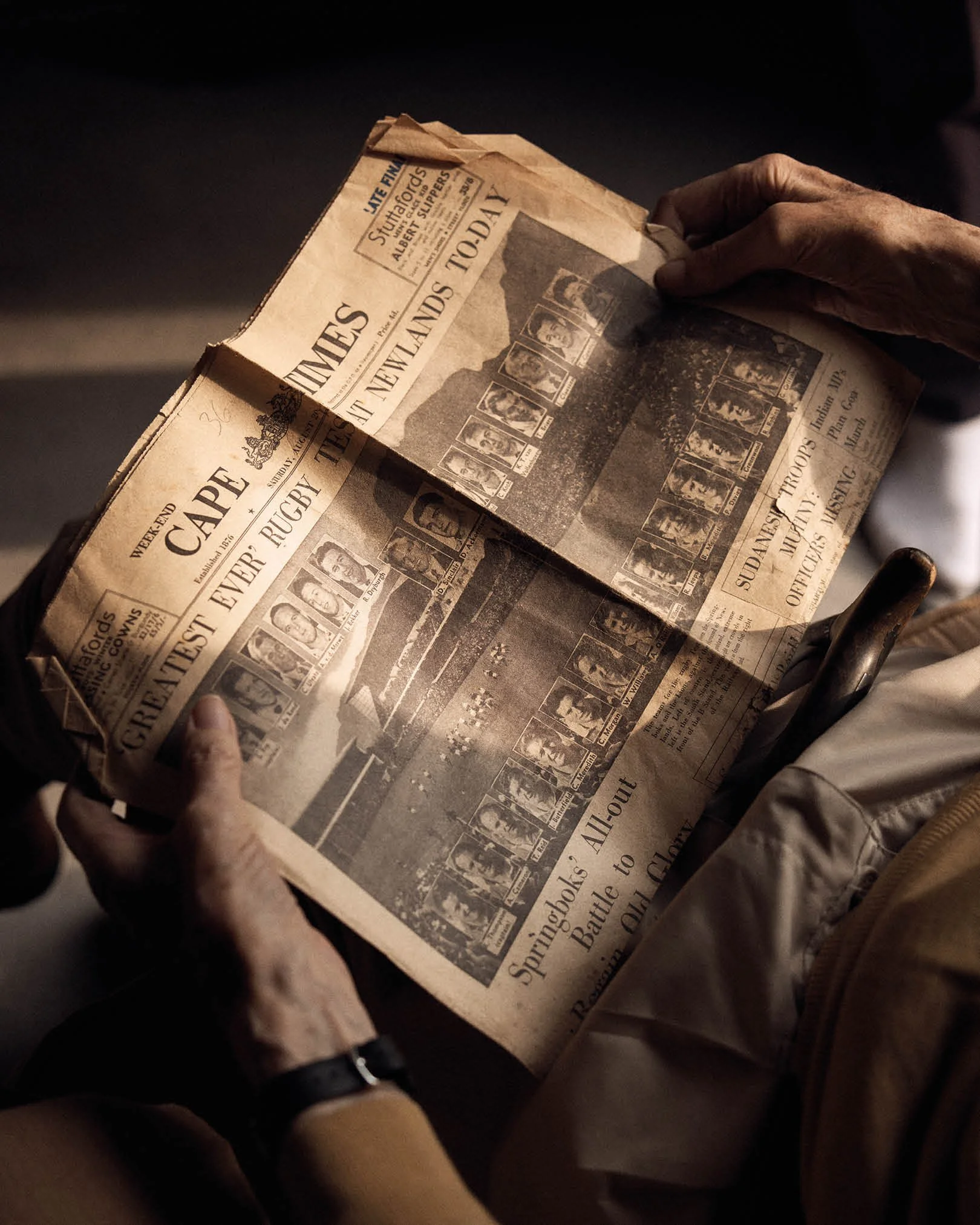
Ex-Wales hooker Bryn Meredith wears his former greatness so lightly, it’s barely visible. Instead, it’s left to daughter Sarah – who looks after him every day, only returning to her Kent home once a month – to dig out the memories and mementos. And, Sarah – one of three, Lucy and Simon are the others – has handed us a treasure trove. Specifically, a red-covered scrapbook – itself something of a relic – and it’s bursting with cuttings, roughly cut out, sepia, yellowing articles telling the story of a well-lived rugby life.
It’s not a book Bryn’s even looked at; the haphazard arrangement suggests they’ve been put in for safe-keeping and not read, perhaps not even at the time, such is the modesty of this 94-year-old Lion. “I only keep those because someone else wrote them,” he explains.
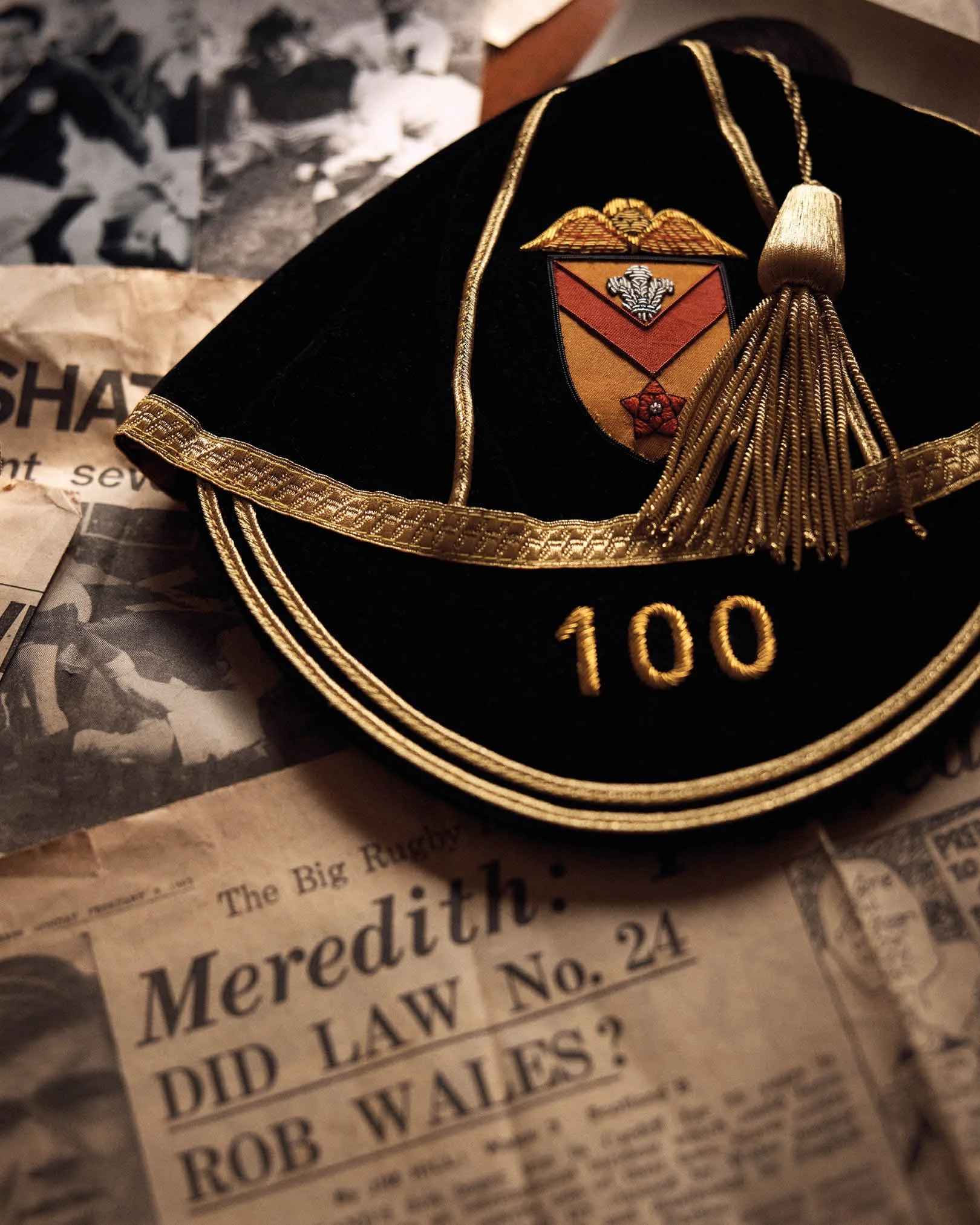
The headlines scream of his greatness: ‘Prince of hookers’, ‘Master-mind Meredith’, ‘Master hooker’, ‘Ace Bryn’, ‘Meredith is the man’, and the body copy lives up to the hyperbole. ‘When the era of Dai Davies came to an end in 1954, into the Welsh team stepped the prince of all hookers to begin his long reign’, reads one. Another, from a New Zealand newspaper no less, is incredulous at the Lions’ decision to drop the ‘magnificent’ Meredith.
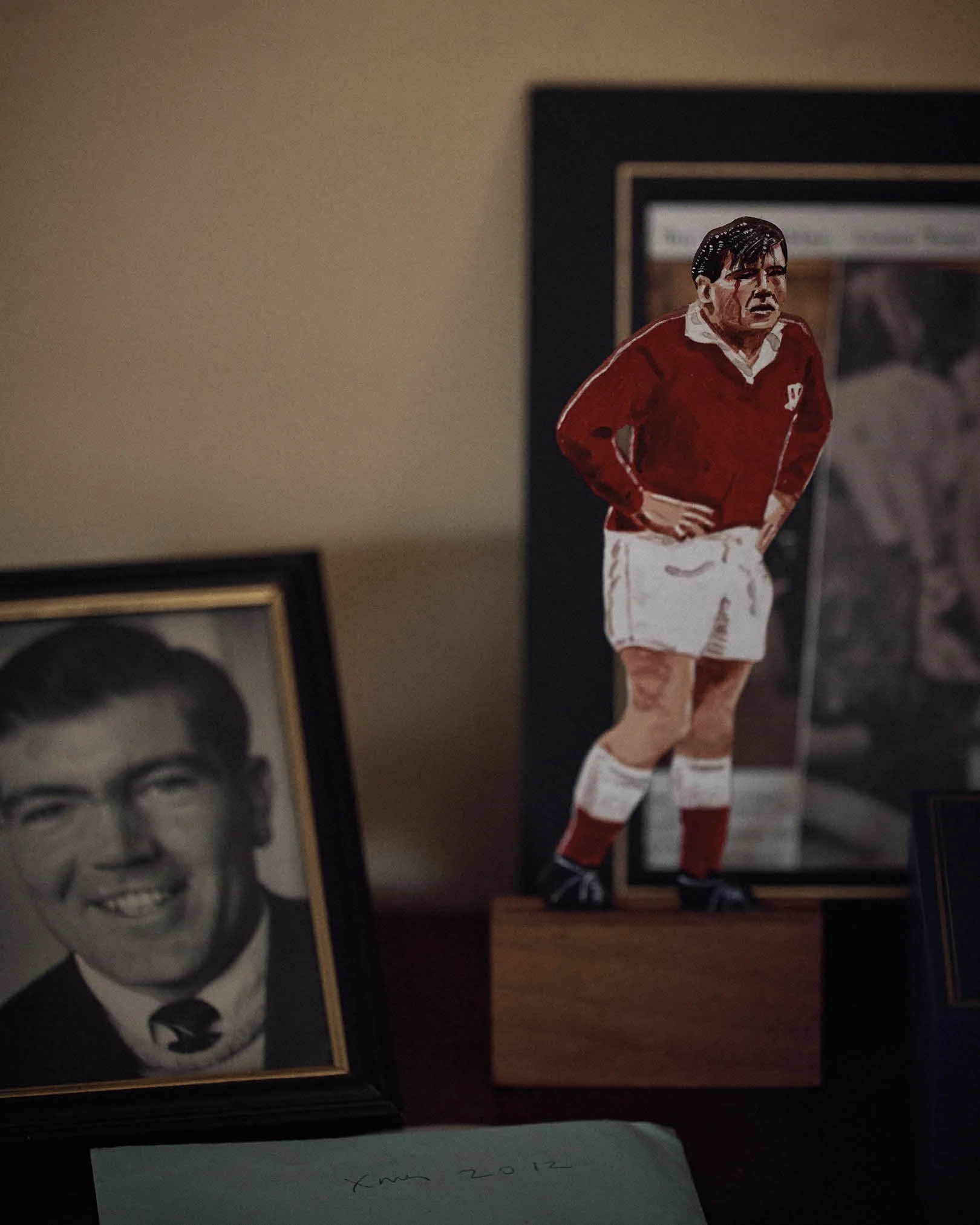
Indeed, when things didn’t go his way, such as not being selected by the Barbarians in 1957, the platitudes went up a notch, one scribe describing him as, ‘one of the world’s greatest forwards and as good a sportsman on and off the field as ever anyone could wish to meet’.
Doubters were always proven wrong. ‘Meredith’s magic blinds Baa-Baas’, screams the report of Newport’s 6-0 win over, naturally, the Barbarians. It goes on to describe Bryn’s performance, scoring the first with a dummy, and a ‘Cliff Morgan-style’ sidestep, before making ‘jinking from a loose maul to create from nothing’ a simple try for John Anderson.
Bryn, it proclaimed, was the, ‘honourable master of British Rugby, forward extraordinary, and doyen of hookers’.
The 34-cap hooker – a record at the time – was almost half a century ahead of his time, with his running game in open play, leaving reporters to liken him to a ‘class three-quarter’, something he didn’t deny in a 1960s’ Q&A, when asked about the secret to his style. ‘I just love to run with the ball,’ he responded. ‘It is every forward’s dream to be a three-quarter’.
It’s something he still firmly believes today. “You were one of the pack, and if you happened to be at the scoring end, then why shouldn’t it be you?” he explains to us. “I don’t see why a hooker should be any different to any of the others, because you’re all part of the same thing.
“You’re handling a ball all the time, and although you’ve got a certain, specific job to do if you’re in the scrum, that’s only part of it. I mean, the major part of it [rugby] is getting from A to B.
“I used to think it when I first took up the game of rugby, at a club like Newport,” he continues. “When the scrum breaks up, where do you go? When the lineout breaks up, where do you go? Nobody told you, so I worked it out for myself, I’d follow that ball. Wherever that ball was, that’s where I should be.”
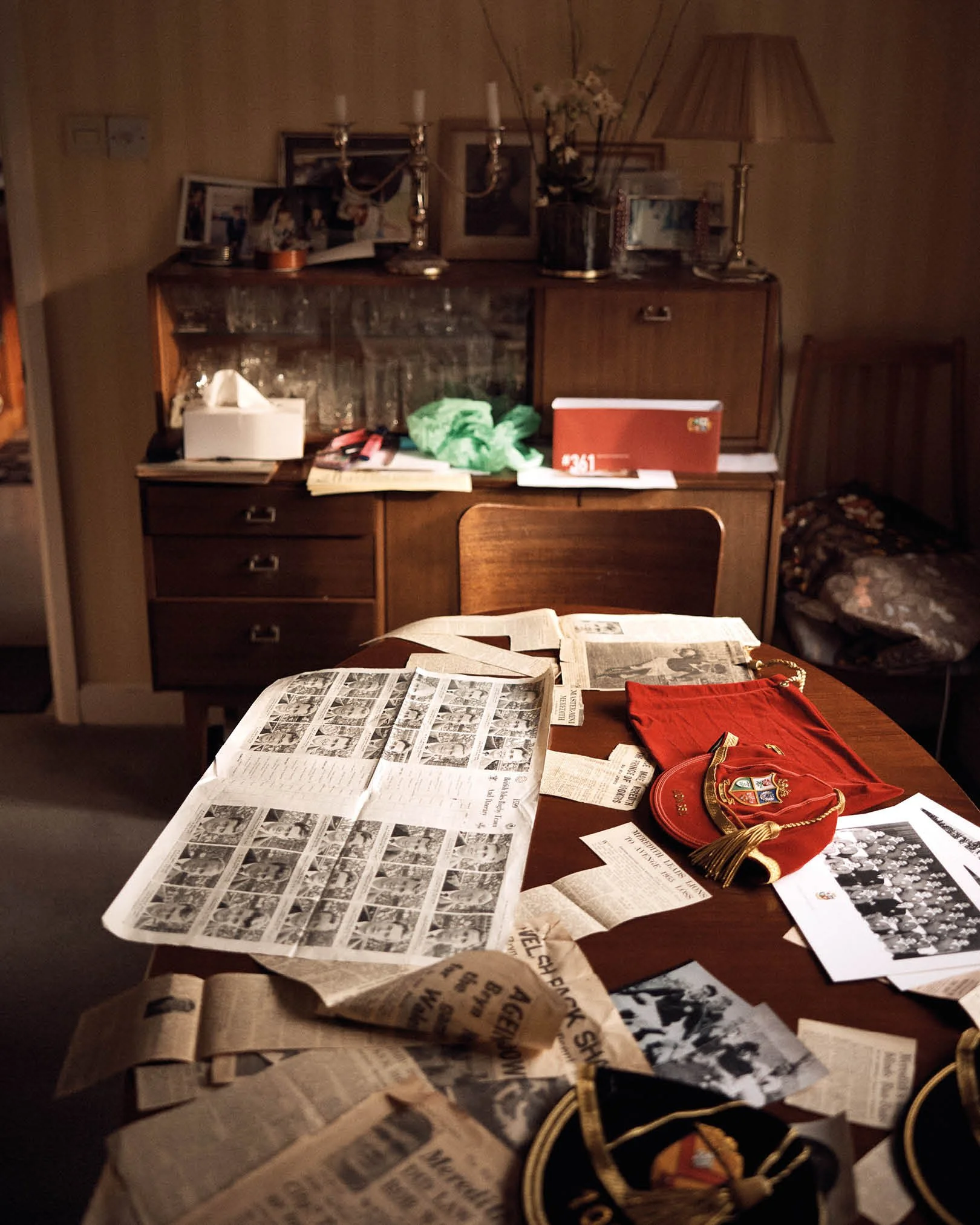
And he often was, with a bulging cuttings book full of his try-scoring exploits. But, even before you get to the rugby, you want to go to the start of a life such as Bryn’s, and that means going back a long way, to 1930, the year he was born. Born and growing up just north of Pontypool, by the time the Second World War rolled around, he was almost nine. “I remember the build-up to the war,” says Bryn. “All this antagonism between Germany and Great Britain, all throughout the 1930s, and then Germany started to take over the continent. Eventually what broke them [Great Britain] down, was when they decided that they [Germany] were going to walk into Czechoslovakia, and [Neville] Chamberlain [then prime minister] said, ‘if you don’t get out of Czechoslovakia by the weekend…’ or something like that, and, as I remember it, it was simple as that. And on the Sunday, we were at war with Germany.”
Life changed, although in some ways, it didn’t. What could you do as a child in war-time? “Well, it was more what you couldn’t do,” he says, quickly adding, “not that we did anything anyway, because my father was a worker, physical worker, in the tin plate works, so lived a certain type of [modest] life.
“He’d been a collier before that, like most Welshmen,” says Bryn, “I suppose he did it because there was nothing else to do; all of my family, all my cousins, all my uncles, all worked in the pits.”
Luckily for Bryn, he avoided the same career path as his family, by getting a scholarship to West Monmouth Grammar School. “I went to the grammar school and, basically, if you went to secondary school, you didn’t normally go down the pit. Going to secondary school didn’t stop [all] people going down a pit though, because my eldest brother went and still went down the pit.”
Memories come and go with Bryn, although he’s still remarkable sprightly for a man just over five years short of his century. Rugby was never part of his life until he arrived at the grammar school. “Rugby football didn’t come into it,” he says of his early years. “I didn’t have football boots; who could afford football boots when there’s no food on the table?
“The only time that I became interested was in school, when I was fourteen or fifteen, and there was a notice on a board, about playing for the colts – which was under-15s back then.
“I put my name down, I’d never had a rugby ball in my hand, the only thing I knew about rugby was that you mustn’t forward pass and mustn’t knock on.”
There was one problem though. “I was selected after the trial match, but I didn’t have any boots,” he recalls. “I remember going to the first game, which was at Newport High School, I wore my school shoes.
“That was my first game of rugby,” he laughs, “playing in school shoes. Now, when did I get a pair of boots? Oh, that’s right…
“One of the boys in the team was the son of a farmer, and must have been doing well in those days, because he had a new pair of boots,” says Bryn, picking up the story – one of his favourites, Sarah tells us. “So, he had an old pair, didn’t he? And he stood up in the classroom one day, and said, ‘I got a pair of boots, anybody want to buy them?’ I said, ‘How much do you want for them?’ ‘Two shillings’.
“I had a weekend job delivering papers on a Sunday, and I got five shillings a week for that – bloody good money that was – and so I bought these boots.
“What I remember about this,” adds Bryn, “is that I wasn’t at all embarrassed about wearing shoes in a match, and it was quite something
to be playing rugby in a secondary school.
“But that was my start,” he concludes. “And then those two-bob boots lasted me for twelve months. And then after that, my father did buy me a pair of boots, which lasted me for the time that I was in school.
“After, I was in the Navy, so I managed to buy my own boots…”
With the boot back-story sorted, we move on to what he did in them. The ‘squat and swarthy bulldozer’ [as another paper describes him], was soon picked up by Welsh Secondary Schools. “Cliff Morgan was the same year as me,” he adds. “And then by the time you were eighteen, you were in the forces, you had to join the Navy, Air Force or the Army and I joined the Navy.
“Fortunately, I was able to go to Devonport and Devonport Services were a good side in those days – I don’t know what they are like these days – but they played Newport, Cardiff, Swansea, Llanelli and all the first-class clubs.
“In fact my first two games, were against Ebbw Vale and then Newbridge, you can’t get a tougher introduction than that. I just accepted it, I knuckled down and I suppose it came a bit naturally to me, not that I was attempting to get in the Welsh team or anything like that.”
That said, after he left the Navy, he went to Newport, and according to a ‘Star Interview’ he gave to one newspaper, he considered his position – often second row during his school days – to better his chances of earn a cap. ‘I thought if I was going to get a Welsh cap I should play prop as I would get two chances instead of one. So I decided to ask Newport to consider me as a prop forward which they did. I played prop forward against the All Blacks and a week later Wales picked me as a hooker.”
His career choice was teaching, studying at Exeter University. “I went to St Luke’s, they had a wonderful team in those days, and great reputation,” he explains. “They were producing English internationals, Welsh internationals and they were very prominent at that time.
“It was very impressive to get into that side, I captained them for a season, and then left, and then I had to mess around a bit because I didn’t have a job.
“I couldn’t get into a school in Wales, I had to go into England, and I landed up in Hertfordshire in St Albans Grammar School. I taught there for about four or five years, in charge of the rugby, then I got married.”
The Lions rolled around in 1955, when he was still in England. “I got a letter asking if I would be prepared to go if you were selected,” says Bryn. “But I didn’t know, I’d just got married, I was only on a fiver a year or whatever, teaching was very poorly paid in those days. I thought to myself, ‘well, I haven’t got any money, how am I going to survive? How is my wife going to survive?’ So I wrote to the education authorities in Hertfordshire to ask them if I’d get paid because I might be selected for the Lions…”
They initially said no, due to South Africa being an apartheid country, but as the tour was over a holiday, meaning he wouldn’t be in school for half the time anyway, a second letter eventually saw the education bosses relent.
The flight would take 36 hours, with stops at Zurich, Rome, Cairo, Khartoum, Nairobi and Entebbe before landing in Johannesburg. “The Lions were going to pay for all the expenses in South Africa, so it was just party time, really,” smiles Bryn. “Everything is new, the weather is different, and the food is different, it’s fantastic. Everybody wants to meet you too, it’s terrific, you’re greeting people all the time, and they were greeting you, and it’s all very nice.
“So there we are…” he says, as if summing up what was actually one of the most iconic Lions tours of all time.
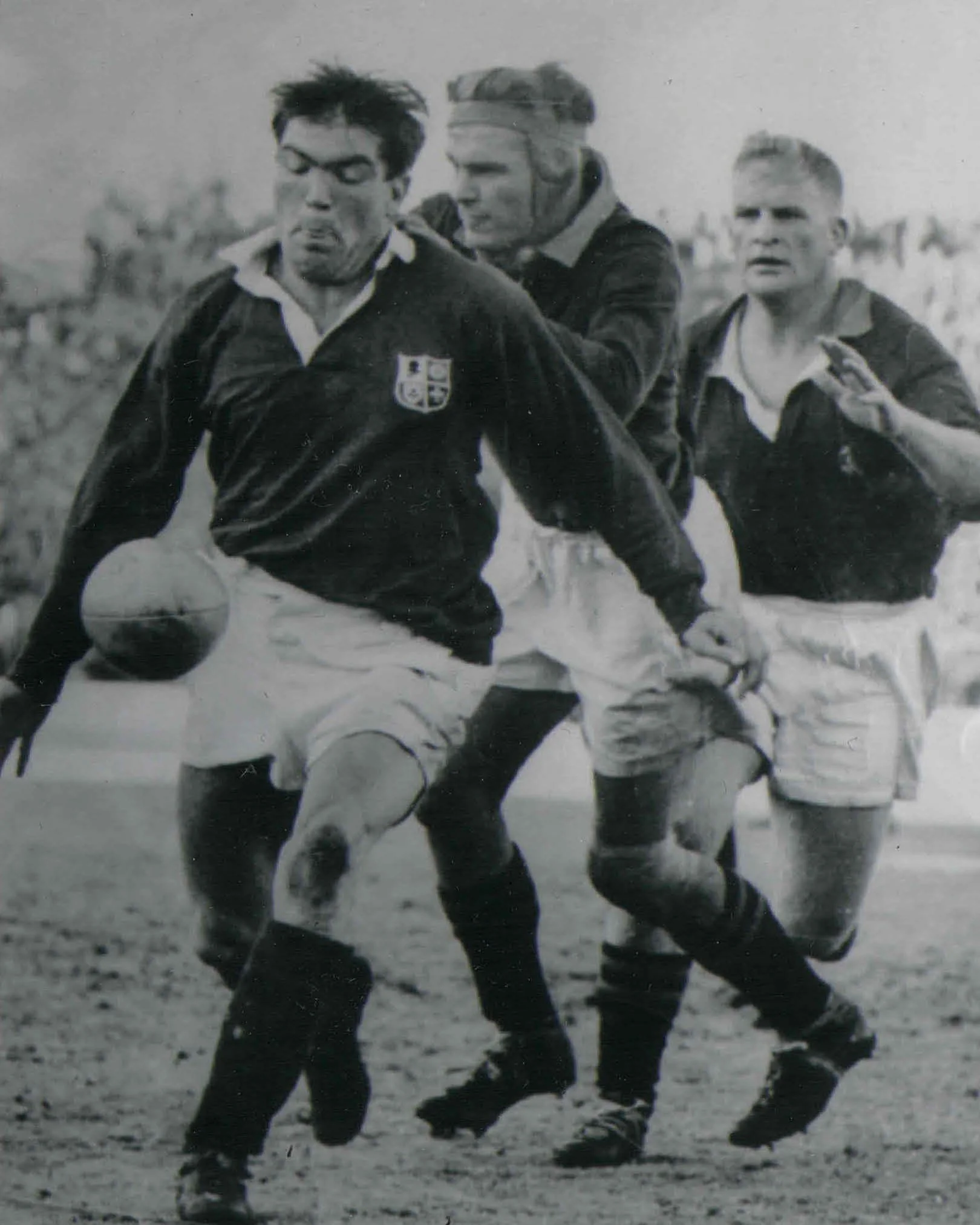
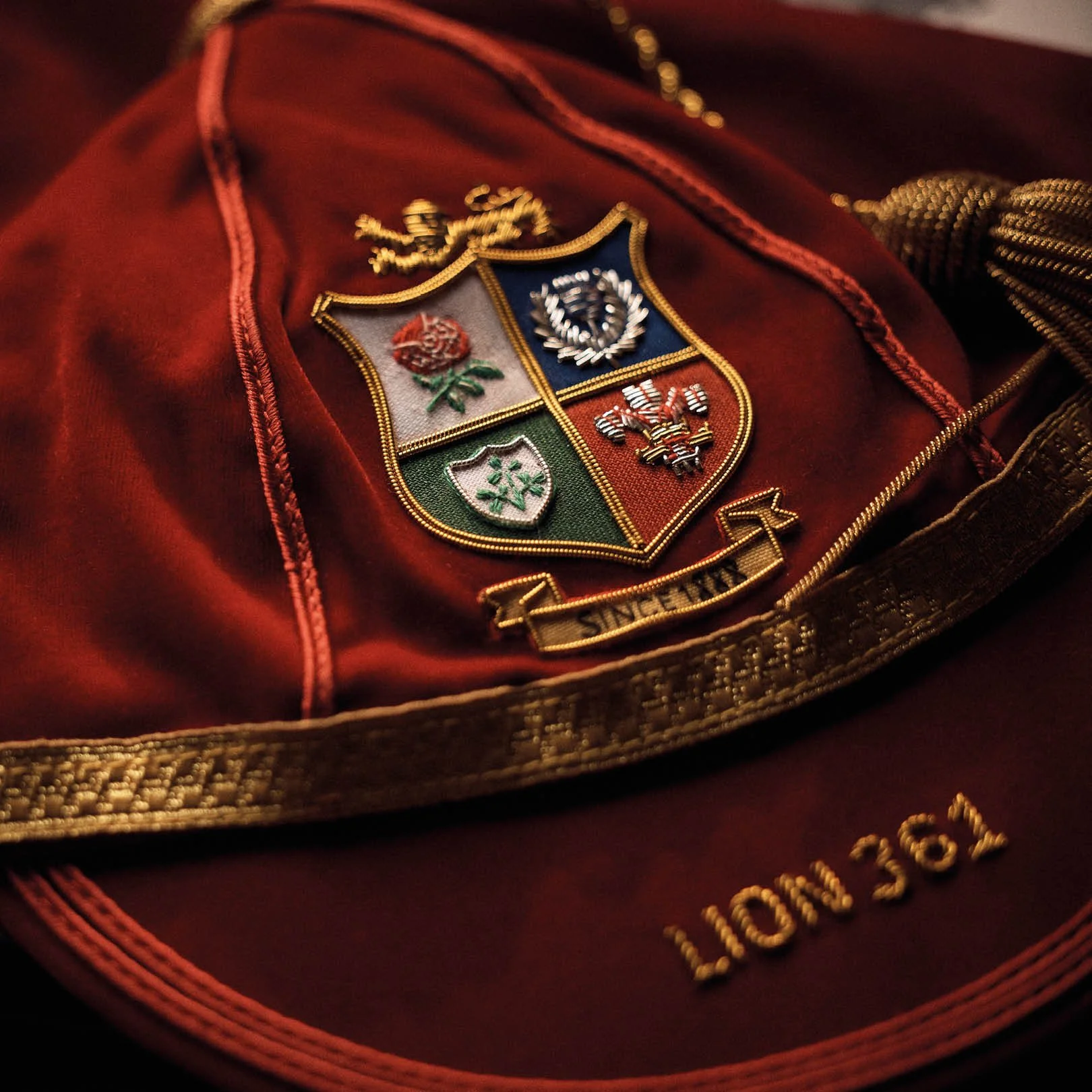
The magnitude of the tour was huge. South Africa had not been beaten in a Test series in close to sixty years, and every local side was fearsome, but the Lions’ record of nineteen wins, one draw and five defeats from 25 matches was seriously impressive. Drawing the series 2-2, after winning the first Test 23-22, losing the second 9-25, winning the third 9-6 and then succumbing in the fourth 8-22, was enough for legendary Springbok coach Danie Craven to later write: ‘They live long in our memory, for a long time to come we will sigh with relief when we realise we kept the ‘rubber’ intact against such a side as this. This fact is one of the greatest accomplishments in the history of our Rugby’.
“They were tough games,” says Bryn. “They were all tough games, whether you won them or not, because you didn’t know the strength of this region or that county game or whatever.
“It’s very difficult at the time [to appreciate it], because everything is new to us,” he adds, “but now we’ve got the history to look back on we can see how difficult it was.”
Bryn played in all four Tests alongside Bobby Williams and his cousin Courtenay Meredith forming an iconic all-Welsh front row. “There was also Phil Davies, Jeff Butterfield, great centres, and Tony O’Reilly of course.”
Irish wing O’Reilly is one of the most famous Lions of all time, arguably the most famous, scoring 37 tries in the red shirt, a record that’s unlikely to be beaten. “He used to invite me and my wife and the children over to Ireland every year,” recalls Bryn. “He’d have a great reunion, put up a big marquee in the garden, and we’d have a dinner one evening, then we’d have something else another evening, and the following day, we’d be off to the races…
“And all this was included, there was always a car outside you could use and go whenever you wanted to, he was the most generous person.”
Back to the tour, Bryn says off-field entertainment was as epic as the rugby. “We did a safari, everything was laid on for you, and we’d say, ‘we’d like to see a couple of lions, a crocodile or whatever’, and they’d sort it. They even took us down gold mines, just as part of the tour. How could that be a challenge?”
After the tour, Bryn gave up teaching to return to Wales. “Schweppes offered me a job, so I’d be spending my day in pubs, which was very, very good. They were a very good company to work for, and I had no trouble at all if I wanted to take a day off to play rugby.”
The next Lions tour, 1959, would see them visit Australia and New Zealand, but famously Irishman Ronnie Dawson – also a hooker – was chosen as captain. Despite Bryn’s status as not only the best hooker on the planet, but one of the greatest forwards of all time, Dawson’s appointment meant he was likely to pick himself, as was the right of captains back then. “You’d just got to accept it really,” Bryn says. “And it’s a pity, really, because I don’t think that they thought about that sort of thing…
“I used to say to myself, ‘well, if I was captain, who would I pick? I’ve got to pick myself’. If somebody thought he was good enough to be captain, then I’ve got to support them, that’s how I felt.
“I used to grumble about it,” he admits. “But at the same time, you couldn’t do anything about it.
“I impressed the New Zealand press,” he says. “They thought I should have been in the side and they said as much…”
Nonetheless, Bryn wasn’t selected for the Tests, although there had been a precedent of a captain choosing his positional rival. “It had been done in the past,” says Bryn, “because the previous tour to New Zealand and Australia, Karl Mullen an Irishman, was the captain and a hooker, and he sometimes gave it to the Welsh hooker, Dai Davies.”
The next tour, 1962, it was back to South Africa and Bryn was back in the driving seat again, starting all four Tests, only this time, he was on the losing side for three, a draw making up the fourth. Needless to say, his memories of this have been pushed behind the 1955 vintage in his mind’s pecking order.
His greatest rugby days, he says, were when he reached the next level: club to county to country to Lions. “It’s a progressive sort of thing,” he says.
He never rested on his laurels. “It’s all very well to say, I was good enough last time, I was good enough for the Lions, but don’t expect it again, you’ve got to earn what comes your way.”
After the tour, he retired. Well, tried to. He actually ended up helping out Newport for another season, and then also turned out one last time for Wales, who had asked him to come out of retirement, fittingly against Ireland. He was described as ‘a Peter Pan of rugby’ for playing until 32. The game, in November 1962, had been delayed from its usual March date due to a smallpox outbreak.
While he’d always answer his country’s call, Bryn knew his time was up, one writer commenting, ‘a quiet modest man, who loves rugby football, Meredith is conscious that he is keeping younger men out of the Welsh side’. “Because it was traditional,” Bryn tells us, “as soon as you got to thirty, it was, ‘cheerio’, and it was accepted, and you didn’t have to say it really, other people were probably ahead of you. It was just, ‘you’re thirty now, goodbye’.”
After ‘more farewell attempts than Melba’ – one writer’s reference to the 1920s opera singer Nellie Melba who gave countless farewell concerts – Bryn bowed out against his old rival Ronnie Dawson at Lansdowne Road with a 3-3 draw. He’d missed three games in nine seasons for Wales, a run that included many great wins and even the infamous 0-0 draw with England in 1962.
“It’s the type of people that you meet along the way,” says Bryn of his rugby life, “and most people who played rugby, they were very acceptable anyway, they were playing for nothing.
“This is the whole of rugby football, it doesn’t matter where you go, all the valleys have got their clubs and you’re always accepted in a minute. There’s no sort of ‘side’ to it, or anything like that.
“Rugby is like part of you, part of your life, and you were part of it, and you just accept that, it’s not even a conscious thing.”
And even though he’s not played for over sixty years, he still feels the same. “It doesn’t suddenly end there because you come off the pitch,” he says. “It’s just the beginning of the second half, but with a pint in your hand.”
Not that he wouldn’t answer the call again. “I said to somebody the other day, if somebody said, ‘have a game of rugby’, I would say yes. And I’m 94.”
Story by Alex Mead
Pictures by Chris Kennedy
This extract was taken from issue 29 of Rugby.
To order the print journal, click here.