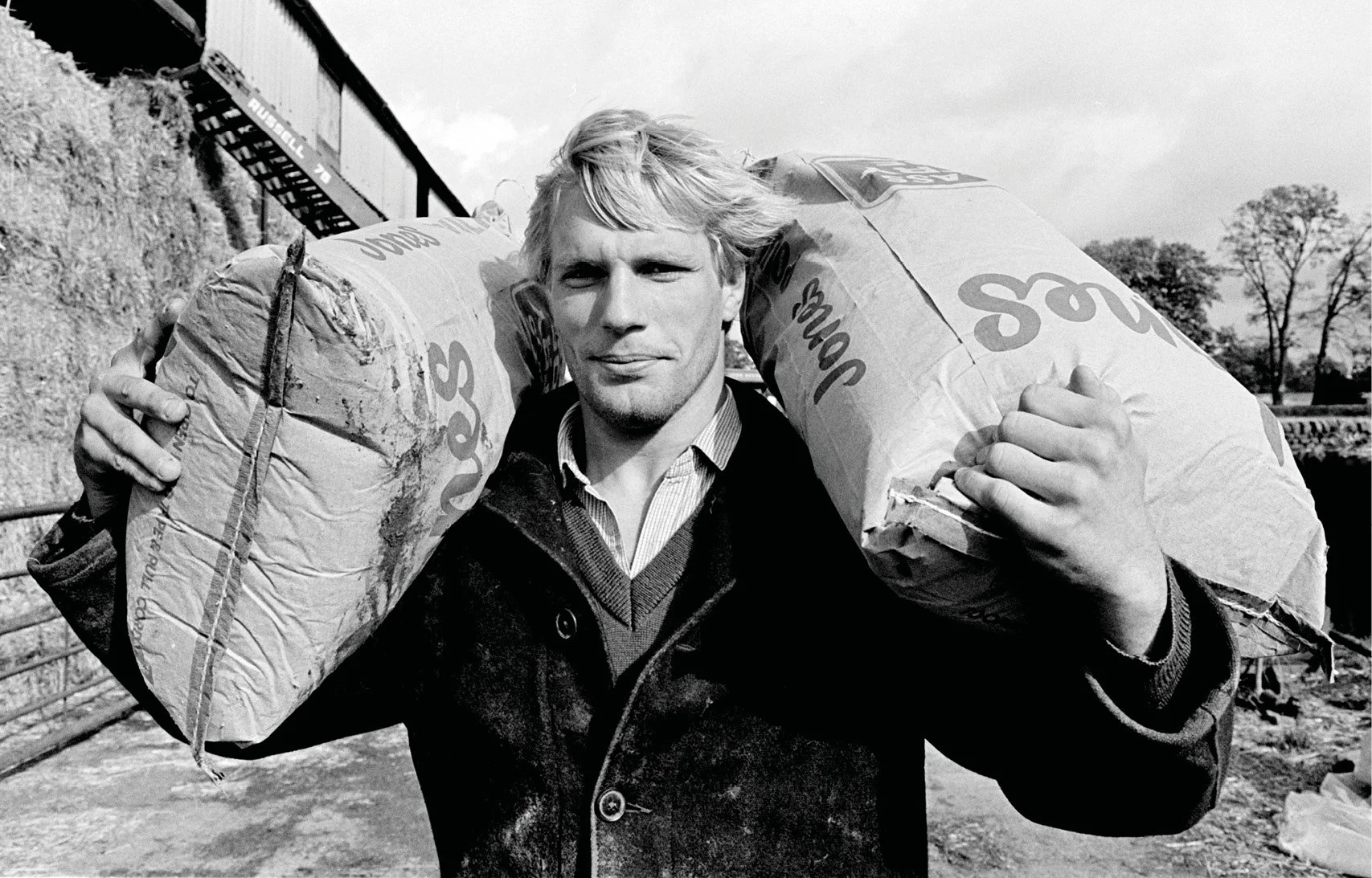
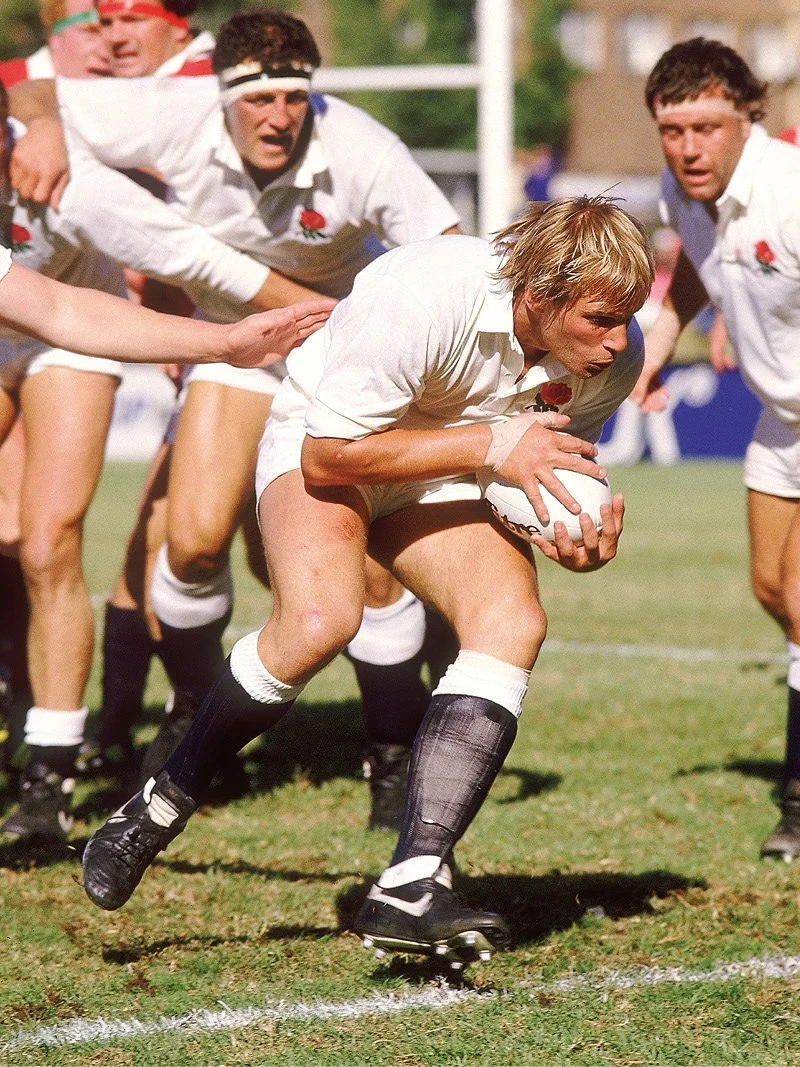
The blond hair earned him the moniker ‘Straw Man’, but Peter Winterbottom was anything but. Built of farming stock, strengthened by seasons in New Zealand and South Africa, he became one of England’s legendary opensides. But when he made his international debut, few, including the man himself, thanks to one individual, could remember he was even on the pitch.
Getty Images
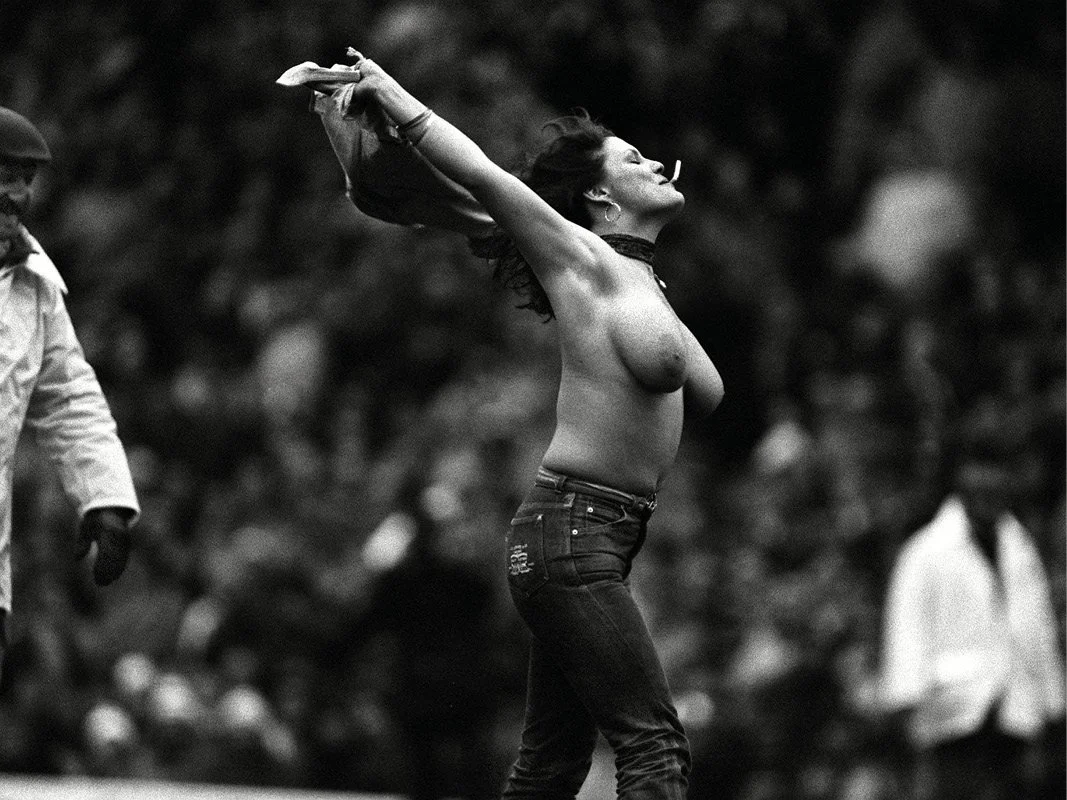
Even today, rugby union rarely makes its way from the back pages to the front, but what happened on the field when England met Australia at Twickenham in 1982, when Peter Winterbottom made his debut, was headline news. And that match’s day in the sun (and The Sun) wasn’t limited to that weekend, it’s still being talked about today, more than forty years on. It can be found on almost every round-up of 80s television and sporting moments. Unfortunately for one of England’s truly great opensides, it all had nothing to do with his performance.
“At half-time,” recalls Peter Winterbottom, “Billy Beaumont was doing his speech on the pitch – because we used to stay on the pitch in those days – and I’m looking at the north end, and a guy ran on in a gorilla suit. Billy said, ‘lads, don’t look, concentrate’. And, I’m looking at the gorilla thinking that’s the issue. And of course, everybody else in the team was looking at the south end, which is where Erika Roe ran on from. And Erika Roe’s mate too, who nobody can remember, but both of them ran on with no tops on, the crowd was going mad…”
With a cigarette in hand, swirling her top above her head, confidence in abundance, Erika Roe’s appearance was impromptu, and ultimately an iconic 80s moment. “It wasn’t a regular occurrence,” recalls Peter, “I mean, not many women had done that. Well, I can’t think there was any women had done that before, and, erm, she was quite well endowed, so, you know, it certainly pleased the crowd.”
While England would win the game 15-11, Peter didn’t finish the match. “I tried to tackle a guy called Brendan Moon, who came down the middle. He was a big, big Australian winger, and I tried to tackle him, and I thought I had, but I got up after the tackle and staggered to the lineout. In those days you didn’t have the sort of concussion protocol that they have now and so the physio came on with his sponge and put it over my face and that was it.
Shutter Stock
“Then, of course, I watched the video later, I hadn’t tackled him at all, his knee had just hit my head and that was by far my worst concussion. I think I was quite lucky. I didn’t get too many concussions during my career. Not that I can remember anyway… I think possibly nowadays, they would have deemed some of the collisions I had as concussions, but in those days, you just got on with it.”
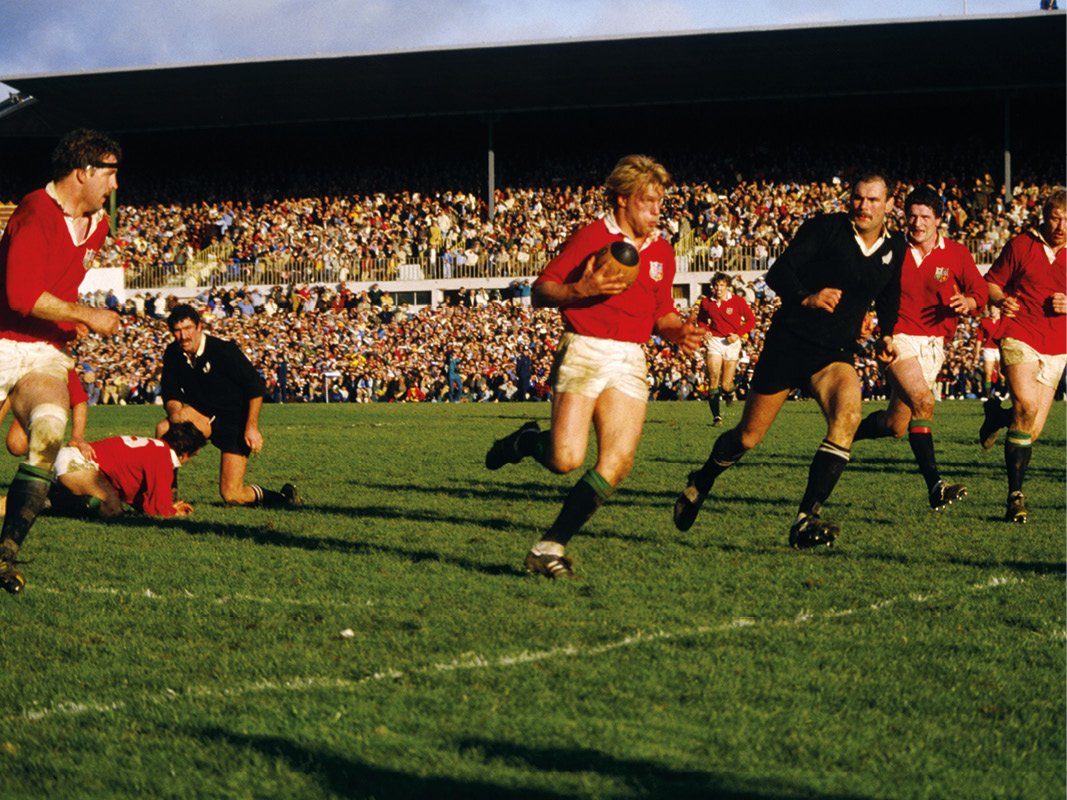
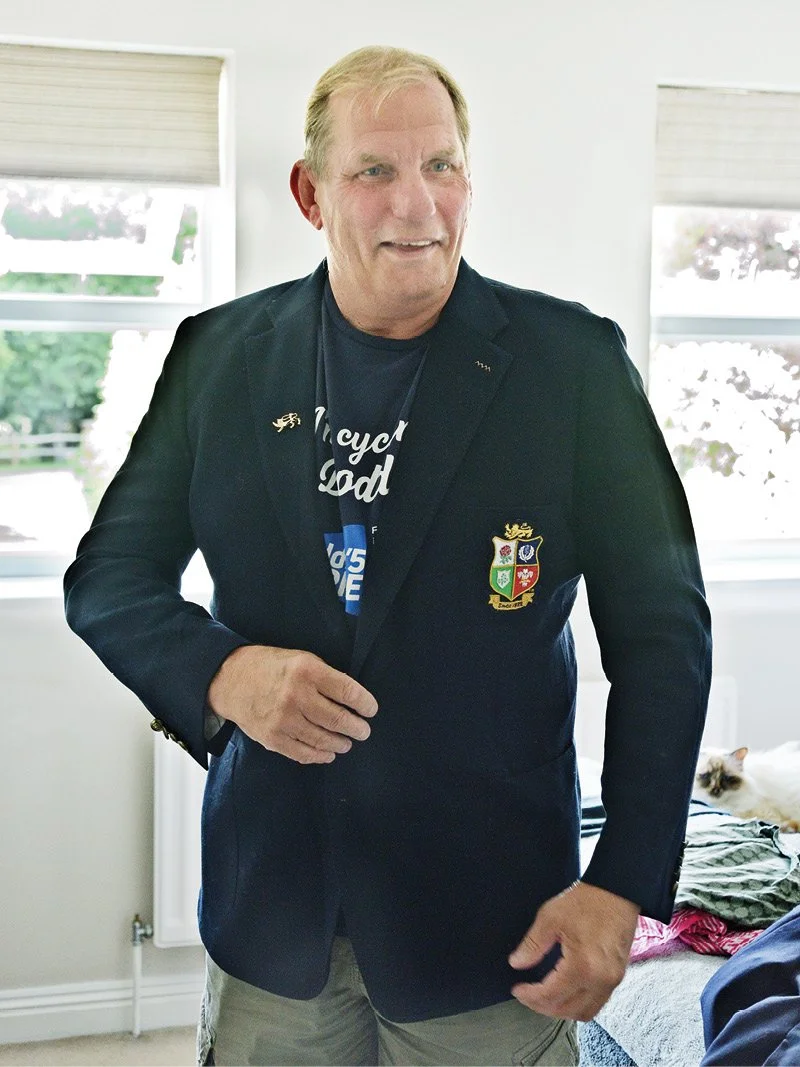
Peter Winterbottom is a name synonymous with being one of the toughest tacklers in one of the toughest eras of rugby, serving England through the tricky 1980s into the first modern golden era under Will Carling. The ‘Straw Man’ – due to his thatch of blond hair – won 58 caps for England (only the second player to pass fifty caps, behind team-mate Rory Underwood); he started seven Tests for the British & Irish Lions against the All Blacks (in tours ten years apart, 1983 and 1993); he won back-to-back Grand Slams (1991 and 1992) and was part of the England side that probably should have been the first to win a World Cup.
Born in Otley, he played for Headingley, making his England debut in the Erika Roe match aged just 21. Rugby was balanced with life on the farm. “My uncle was a farmer,” explains Peter, “so when I was young, I used to work there in holidays and then I left school, went to agricultural college, and after that went back to the farm and worked there for a couple of years.”
In rugby, opportunities arise to play abroad – although they were rarer back then – and he had the chance to play in New Zealand with Hawke’s Bay. “I said to my uncle, ‘I’ve got this opportunity to go and play rugby, and I want to take it’,” says Peter. “And he was a bit pissed off, and said, ‘Well, look, if you’re going to go to New Zealand and play rugby, then, you know, you can forget the farm’. ‘Okay, well, I’m going to go and play rugby then’.”
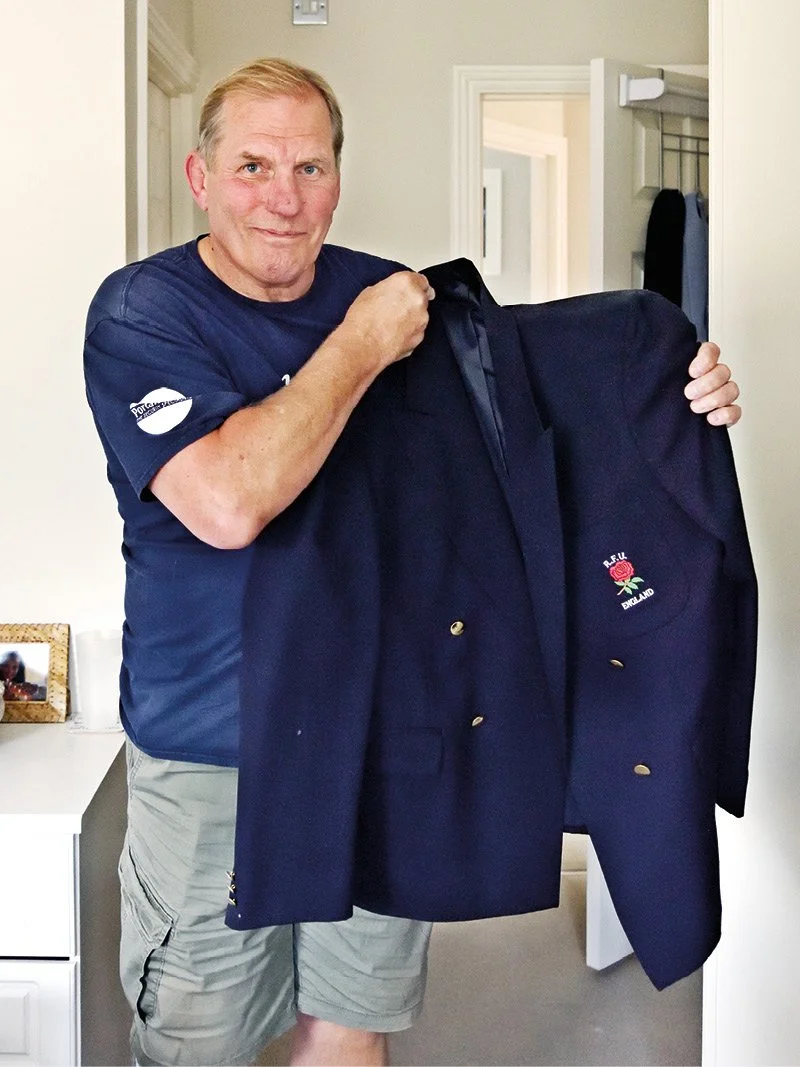
Long before the professional era, it was more of a busman’s holiday, as he still plied his trade on farms in New Zealand. “It was beef and sheep, and I had a great time,” he says. “The Ranfurly Shield was something not many Englishmen will ever experience, but we went down to Wellington and we took fifteen thousand supporters down from Hawke’s Bay. There were thirty thousand in the stadium, and we lost by a point.”
He’d return to England, and farming. “And then obviously, the following year, I was able to go out with the Lions,” he explains. “In those days [1983], it was an eighteen-game tour, so we were there for eleven weeks and some of the games are pretty brutal. They weren’t as physical as the games nowadays, but they were dirtier: kicks, punches, you know, all that sort of stuff.
“They were tough tours, they were good players as well,” says Peter. “They had a hell of a good Test side. We were close in three Tests, and then in the last, it blew out. We probably deserved to win one of the Tests. We had a lot of injuries, a lot of good players came home, which just didn’t help it at all, and it made it difficult.”
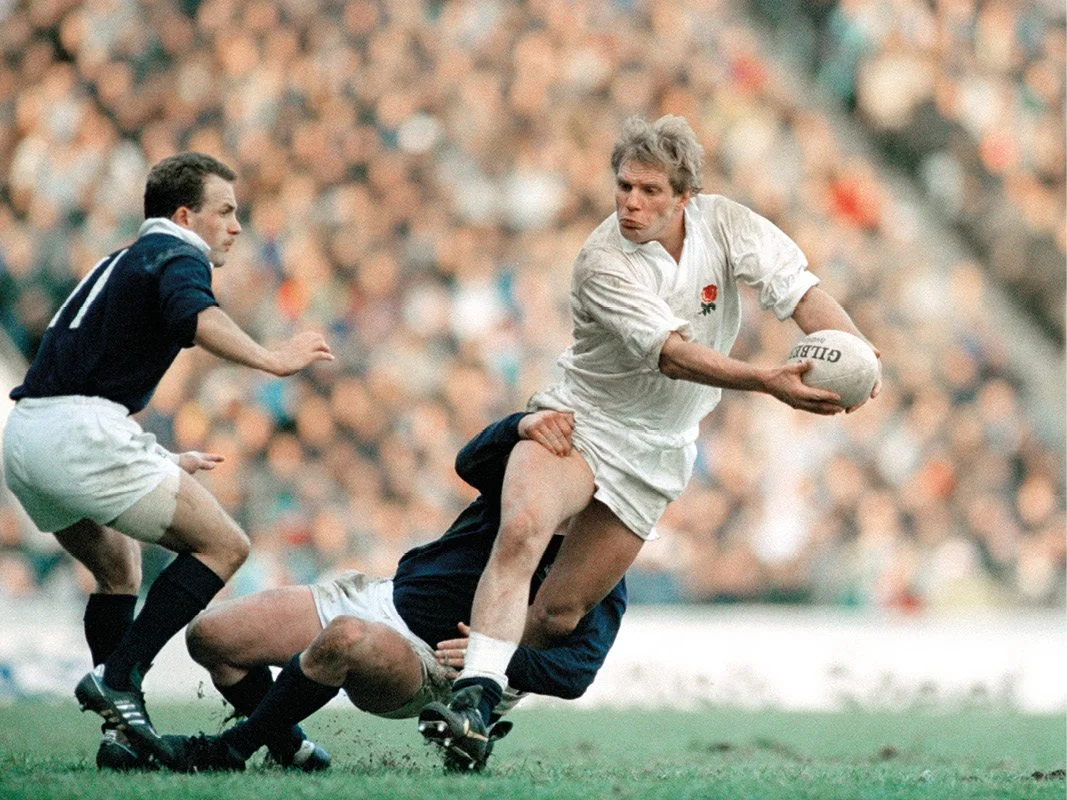
After the gruelling Lions tour, South Africa was next, this time for England. “We got a kicking,” he says. “We lost both Tests, we drew with Western Province, which was a big game, a big game – it was sort of the third biggest game we had.”
Getty Images
The South African hospitality on the pitch, didn’t dampen the wanderlust. “I stayed on with Mike Teague, Nick Youngs and Chris Butcher, and we decided to stay out there and go and play in Durban,” recalls Peter. “We had a few months down in Durban living on the beach at a place called Umschlanger, and we played for the Durban High School Old Boys.
“The club rugby in Durban wasn’t particularly difficult,” he adds, “and we didn’t play particularly well; we were having sort of a big party down there and playing rugby as well, you just sort of meet so many people. I’m still in touch with people from Durban, you know, and some from New Zealand too.”
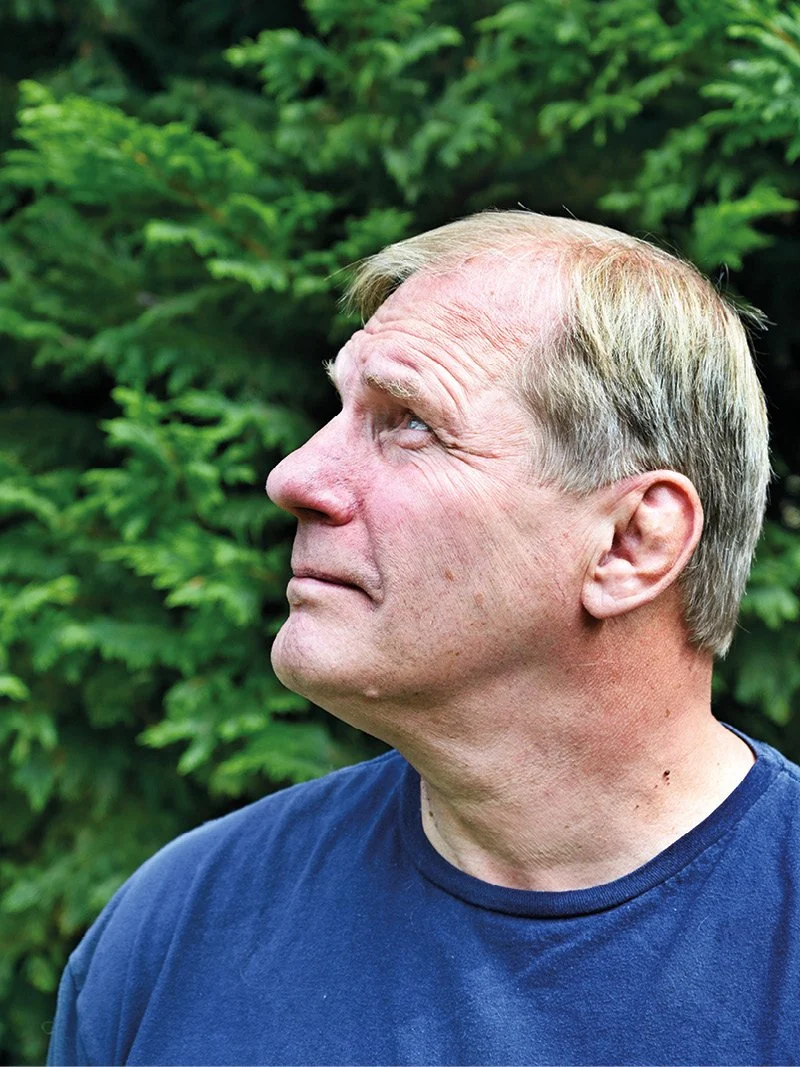
We meet Peter in his home in Weybridge; en route we’re passed by assorted supercars, something that reflects the proximity to the famous St George’s Hill private estate, once home to the likes of Nick Faldo, Ringo Starr, John Lennon and Jenson Button, now home to an awful lot of very well-heeled financiers. Peter has been in that world too, obviously not to St George’s Hill levels, but he did switch from farming to finance, making the huge leap – demographically and geographically speaking – from Headingley to Harlequins. “When I was at Headingley, Harlequins was probably the one club in the country I hated the most,” he admits, “because I just thought everything that English rugby stands for is Harlequins: too public school and, you know, up their bums.”
Nonetheless, they wanted him and found him opportunities in the city, jobs which he had no qualifications for nor even a vague idea how to do. “It’s sort of quite weird,” he recalls, “you go into the office at seven o’clock in the morning to go and meet whoever, for your first day at work, and you haven’t got a clue what’s going on. I mean, not a clue.”
Given how job opportunities were created, the interview process was also questionable. “I had an interview with one guy who ran a broking company and the interview was basically being in the pub all afternoon. At the end, he said, ‘right, you’re done, start when you want’. I didn’t take that job. I met a mate who had played for London Welsh, and he said, ‘come and work for me, I run a desk’…”
So how did he breach the knowledge gap from farm to finance, livestock to stock? “You make the coffee, and hopefully you get a lunch, and eventually you actually work out what the hell is going on. On a broking desk, it can be very quiet, but it can be absolute mayhem. And when it’s mayhem, unless you know what’s going on, you have no clue. I did that for twenty years…”
Despite his preconceptions of Harlequins, a club that you didn’t just turn up at but had to be ‘invited’ to play for, Peter was pleasantly surprised. “The club couldn’t have been more different from that [which he expected], even when I joined in 1988. There was John Olver, who I’d been to school with, as captain and then there were the Claxton boys, Terry, Mickey and Gary who, you know, drove trucks and were real London boys.
“There was a complete array of different people that were Oxford and Cambridge guys and Dick Best was the coach, and he was a quality coach, he knew how to get the best out of people. You’re also playing with people like Everton Davis on the wing and Andy Harriman, fantastic players.”
And Mickey Skinner… “God, yeah, he’s a one-off isn’t he?” responds Peter. “Larger than life character. If you think about what it takes to build a rugby team, a person like Skinner is absolutely critical. He’s honest, upbeat, always having a laugh, tough as old boots, he’s always leading the charge and the tougher the game gets, the harder he plays, that’s the sort of guy you want.”
Getty Images
It’s impossible not to get lost in tales from this era, the final days of rugby’s wild west, before the dawn of professionalism, and with it more television cameras, instant replays and TMOs. “I think it’s a little bit too clinical nowadays,” says Peter. “I remember a game we played against Nottingham in the quarter-final of the cup, and they kicked off. We had this referee, a guy called Colin High, and I don’t know whether he would have been put up at the Petersham Hotel (in Richmond) by the committee or given lots of beer, but Nottingham kick off, one of their second rows got in the wrong place, I punched him, he swung around to try and hit me, missed, and Colin gave a penalty against him, and he was complaining that I’d hit him.
“We go to the lineout, and Colin said, ‘I saw that, Peter, don’t do it again’. You can never have that nowadays…” he laughs. Respect and metal-studded rucking of any prone player went hand in hand. “I love the old story about Wade Dooley in Paris when I think he got hit by Olivier Roumat,” continues Peter. “I don’t know if he went down, but there was a sort of bit of a fracas and the referee blew his whistle and called Roumat over, and Wade Dooley walked up and said to the referee, ‘don’t you dare send that man off this pitch’.”
Results-wise, the start of Peter’s England era wasn’t the best. “We weren’t very good, in fairness,” he admits. “Through the mid-80s, we were poor. The coaching wasn’t great, there was no real direction for the English team. It was very amateur, we’d come through the era where we had the boot scandal with Adidas [when players had allegedly been given ‘boot money’, which was against amateur regulations], they were clamping down, so it was very amateur. We used to come and meet on a Thursday afternoon before an international, and train Thursday, Friday, then you play on Saturday. Not even club sides do that now.”
In 1987, England finished bottom of the Five Nations table – where they’d largely hovered since a runners-up spot in 1982 – but their lacklustre form was amplified by the first-ever Rugby World Cup. Held in New Zealand, England were beaten in the quarter-finals [16-3] by a Wales side that had finished just one spot above them in the Five Nations championships. “It all changed when we’d gone to the World Cup in ‘87 and we hadn’t performed particularly well there,” explains Peter. “When we got back, they changed the whole management, and a guy called Geoff Cooke came in and he transformed the whole thing.
Getty Images
“What he brought,” continues Peter, “was a whole new sort of professional attitude to the whole party. Fitness became a big thing, I remember him saying to us, ‘Who are the best team in the world?’ ‘New Zealand.’ ‘How are you going to beat New Zealand?’ And we all sat in this room, sort of looking at each other, going, ‘Oh, I don’t know, well, you know, we’ll kick more penalties than them.’ And, he says, ‘You don’t know how to beat them, you don’t know how to become the best team in the world. You’ve got to strive, you’ve got to get your skill level up, and that’ll take a couple of years, at least.’ He said, ‘The only way that you can beat New Zealand is to get fitter than them, that’s your only way.’ And, luckily, everybody took it on board and we went away, and we all got fitter.
“And, I mean, we didn’t beat New Zealand straight away, it took five years [1993’s 15-9 win at Twickenham], but England did it eventually. But that was the change. He brought Roger Uttley in as the coach, and he would push the RFU into doing things like getting girlfriends and wives to travel to the away games and stay in the hotels.”
The mindset change was also reflected on the pitch. England might have been known for uncompromising forwards – and they had the likes of Wade Dooley, Mike Teague and Dean Richards to keep up that tradition – but now they had Will Carling as captain and the likes of Jeremy Gusccott. “Suddenly, you’ve got a team of tough forwards but also really good, exciting backs.”
The changes started to bear fruit soon after the World Cup. “In 1988 we beat Australia at Twickenham [28-19], it was Will Carling’s first game as captain and we beat them, playing good rugby – I think that was when we first saw the change.
“And from there, it was a period of sort of success, which is great for somebody like myself, because when Geoff took over, I was 28 so I’d been around for a few years, but the last five years of my rugby were the most enjoyable.”
England finished the 1989 Five Nations as runners-up, beating champions France 11-0, but suffering a draw with Scotland 12-12 and narrow defeat in Cardiff [12-9] to put paid to their hopes.
A year later, they were runners-up again (this time to Scotland), before taking a Grand Slam in 1991, just in time for the home Rugby World Cup. “We were playing good rugby, but we’d been to Australia in the summer of 1991 and got beaten badly [losing 40-15], and that was probably a good thing, because it sharpened us up a little bit. We knew that we had to get fitter.
“We went into the World Cup knowing that on our day, we could compete and while we lost the first game to New Zealand, we managed to get out of the pool and then had a really tough game in Paris against France.”
They won 19-10, then defeated Scotland in the semi-final (9-6), to set up the final with the Aussies. Infamously, England changed their tactics, and ended up losing 12-6. “The way I see it and saw it,” says Peter, picking up a story he’s had to tell a thousand times before, “we didn’t think that we could dominate the Australian pack the way we dominated other packs. So, if we’re not going to do that, how are we going to win the game?
“Because they had a great back line, it was a conscious decision to sort of slightly play more with the ball, and less of a kicking game. And as it happened, you know, we won God knows how much ball, and we churned it up, we created opportunities and didn’t take them. And the Aussies had one opportunity in their own 22, and they kicked it down the pitch, got the lineout and scored, and that was effectively the difference between the two sides.
Getty Images
“It could have gone either way,” he reckons. “After the game a lot of people are saying, ‘well, you should never have changed tactics. You’d have beaten them had you kept it tight and kept a kicking game,’ but who’s to know?
“And some of the players were pissed off,” he continues. “I remember having a beer with Brian Moore on the Monday morning after the final. We were both at work, and I got to my desk, and by about 10.30am, I said, ‘I’m just sick of this. I can’t do it’. I phoned up Brian, and I said, ‘Right, meet in the pub at 11 o’clock?’. And we did, and we sort of went through everything that had happened. And he was adamant that we should never have changed our tactics. But, I said, ‘well, we did…’”
Even for a career as varied as his, Peter did briefly fall out of love with the game in the late-1980s, after spending a season in South Africa, playing for Transvaal in the Currie Cup. “It was a really hard season in South Africa,” he admits. “Really physical, and it was mentally quite tough as well, especially if you’re the only Englishman playing rugby out there.
“When I came back, I remember sitting in the dressing room with Harlequins going, ‘I really don’t know what I’m doing here’,” admits Peter. “I’d never had that before, I’d always wanted to play rugby and always wanted to get stuck in and suddenly I’m going, ‘I’ve no interest now’.”
The summer off international rugby in 1989 after not getting selected for the Lions proved to be the perfect cure. “I remember watching it on TV,” he says. “I had the summer off, trained throughout, away from the club, just doing fitness training, and watching my big mate, Mike Teague, get player of the series. He was outstanding and I’m watching that from London, thinking, ‘I’ve got to get back out there.’
“And the next four or five years, I was enthusiastic, I really wanted to do it. You don’t realise that players go through that. Now, having gone through that, I understand if a player’s a bit off and if he’s losing his form, that this can happen.”
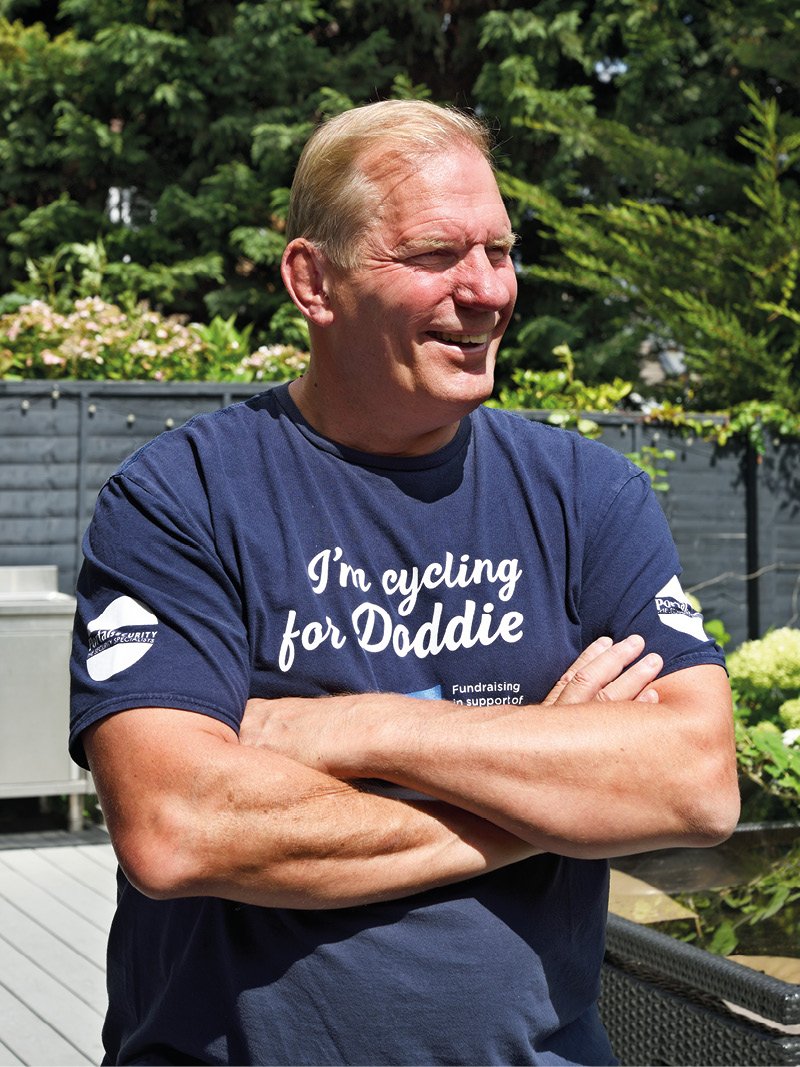
The game was changing and Peter could see it happening in front of him. As professionalism got ever closer, he knew it had to happen, not least because he knew how tough things could get playing as an amateur. “I remember the 1983 Lions tour to New Zealand and there was a guy called Roy Laidlaw, the Scottish scrum-half, and he said to me, ‘Look, over eighteen games, we average 26,000 people watching and I’m not getting paid, my wife had to go and get free meat from the local butcher because we had no money’. And that’s when you think, well something’s got to change, because there weren’t any financial perks.”
Carling’s era of success – including back-to-back Grand Slams in 1991-92 – changed how English rugby was seen, not just by those around the world, but those at home. “The whole perception of the game was changing and then, we got BBC Sports Personality of the Year and we got Team of the Year and people start recognising you; well, not many, but a few…”
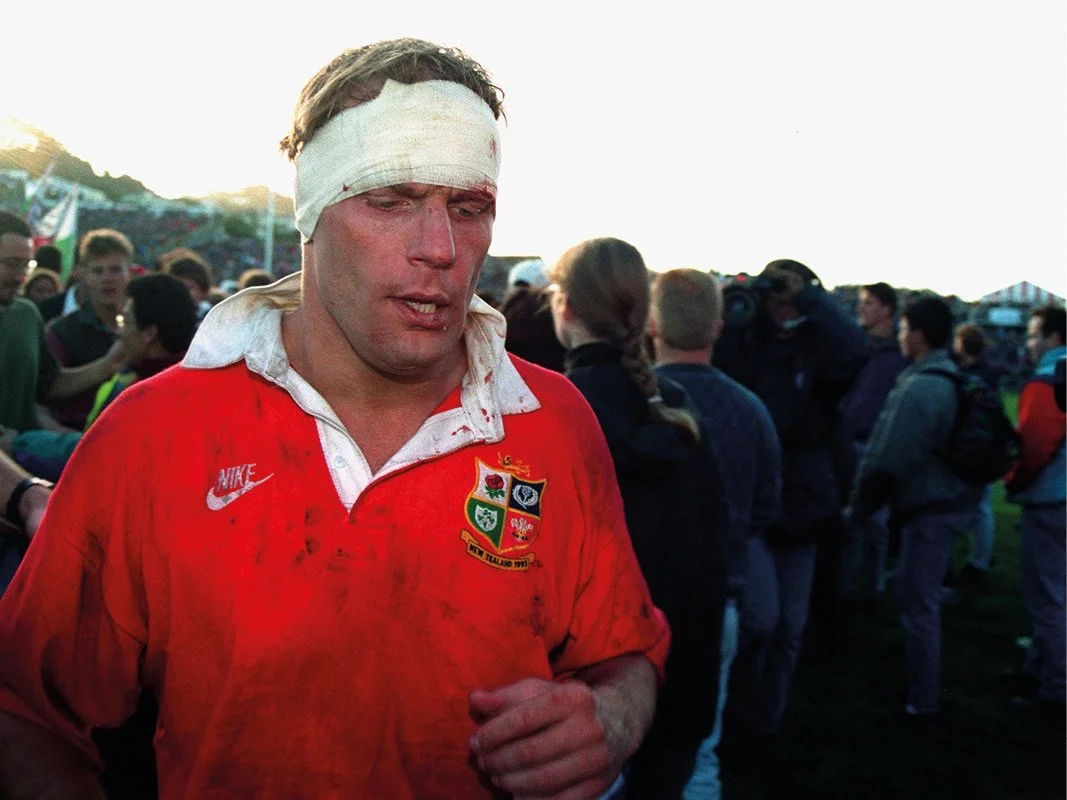
Peter returned to the Lions for the 1993 tour to New Zealand, ten years after his first tour, and he was looking to finish his career on a high. “Rugby is a religion in New Zealand, every time you walk around the corner or go into a shop in New Zealand, you know they’re on you.
“I remember in 83, we were in a place called Hastings, and we went to a school, and I can’t remember who went with me, John Carlton I think, and we’re sitting in a school and you remember a guy called Josh Kronfeld, the All Black flanker? He was one of the kids, and he put his hand up, and this kid said, ‘Excuse me, do the Lions use a man-for-man defence or a drift?’
“Honestly, I wasn’t quite sure,” admits Peter, “So I said, ‘I think this is one for John’! But it was just an indication this little kid of ten, knew more about rugby than I did.”
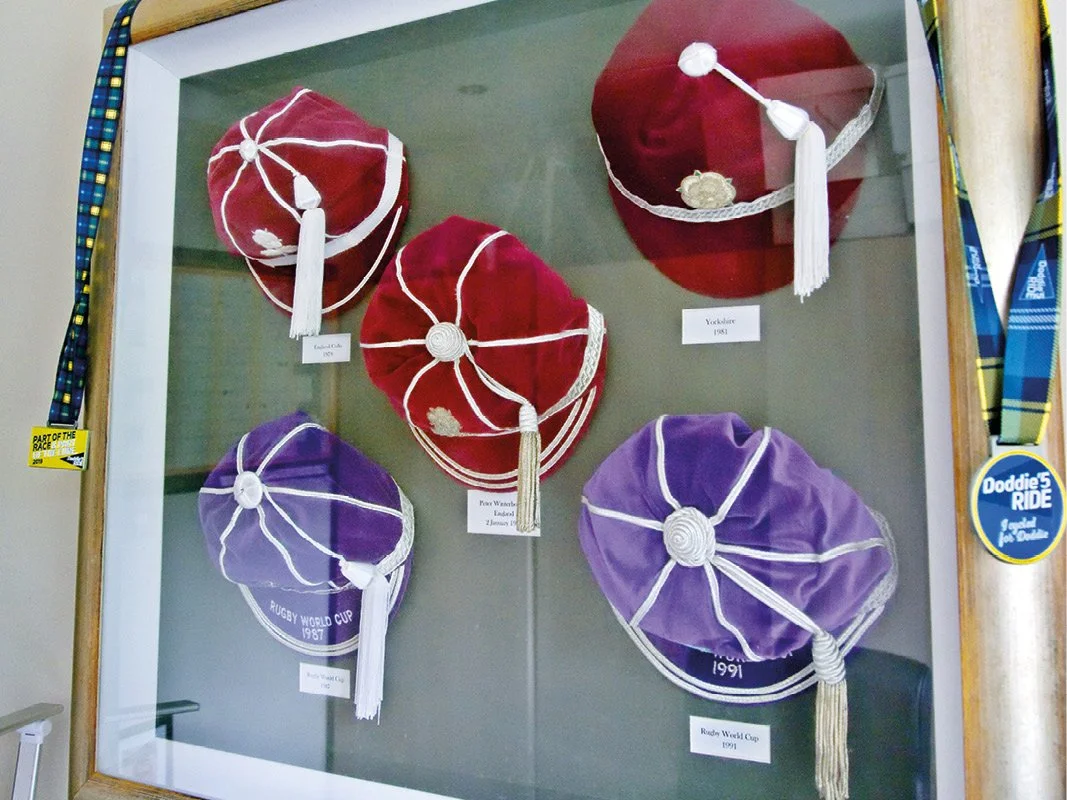
The series ended in defeat despite England levelling it with a 20-7 win in the second Test, before a crushing 30-13 loss brought the tour to a close. “The perfect way to finish would have been winning that last Test,” he admits. “Because I decided I was going to pack up, I knew it was the right time, I didn’t want to be a sort of gnarly old 35-36 year old, who could only punch people.
“I thought, ‘that’s it, I’ve had a good run’, I had no bother calling it a day because, I think I played more rugby in my sort of twelve or thirteen years of playing senior rugby than most people will ever play.”
England could at least savour the second Test win. “One of the great feelings I had during a game was probably when we had twenty minutes to go and [I was] standing at the back of the lineout. I was just thinking, looking at Michael Jones, who’s was a great, great player, thinking ‘there’s nothing you guys can do now, we’ve got you beat, you can play anything, throw anything at us, and we’ll beat you’. And it’s quite a good feeling that and you don’t often get it, not in a big game.”
And so a great career came to an end. He’d have spells coaching with Harlequins in the immediate aftermath of his playing days, and he’d also be involved with local club Esher, with whom he still has a role, but now his focus is on other things. Such as curry sauces. Wafting through the house for the duration of our two-to-three hour chat has been the spiced scent of cooking sauces being conjured up by his wife Trish. “I left the city a few years ago now, and obviously coach Esher, but also my wife’s got a cooking business called Emily’s Kitchen – Emily’s our daughter. She cooks curries, spag bol, and various dishes and we sell it on websites and local markets. They’ve won a few Great Taste Awards, and my job is head of procurement; I go to Bookers and the supermarket, I’m the delivery man, and I’m chief taster.”
He was tempted out of the kitchen for one last game. “I think it was for Harlequins’ centenary or something… a match between Jason Leonard’s old boys team against somebody else’s team. My wife was sitting in the stand, and I got the ball, and sort of ran, thought I’d pass it, dummied, tripped up, landed on the ball – and I’d had bad ribs previously – and I stand up, holding my heart, and she’s in the stand thinking, ‘oh, my God, he’s had a heart attack’. I hobbled off then, and that was the last time – I couldn’t get out of bed the following day – I thought, ‘no, that’s definitely the last time for me’.
“At least I was on the pitch for a bit longer than some of them,” he adds. “The old Scottish second row Neil Edwards, he came on as a reserve, and he ran fifteen yards onto the pitch, stopped and then turned around and walked off. He obviously thought, ‘What on earth am I doing?’.”
With almost sixty caps, Lions tours, World Cups and having travelled more as a player than many of his era, he surely can’t have any regrets? “Oh, loads of regrets,” he says. “I don’t want to go into them all. I think people who say they have no regrets, are talking rubbish.
“I don’t really regret anything I did on the pitch,” he adds, “apart from when I kicked a Frenchman in the head, which was not my finest hour, but apart from that, I don’t really regret anything else.”
Story by Alex Mead
Pictures by Nick Dawe
This extract was taken from issue 32 of Rugby Journal.
To order the print journal, click here.