Orrell RUFC
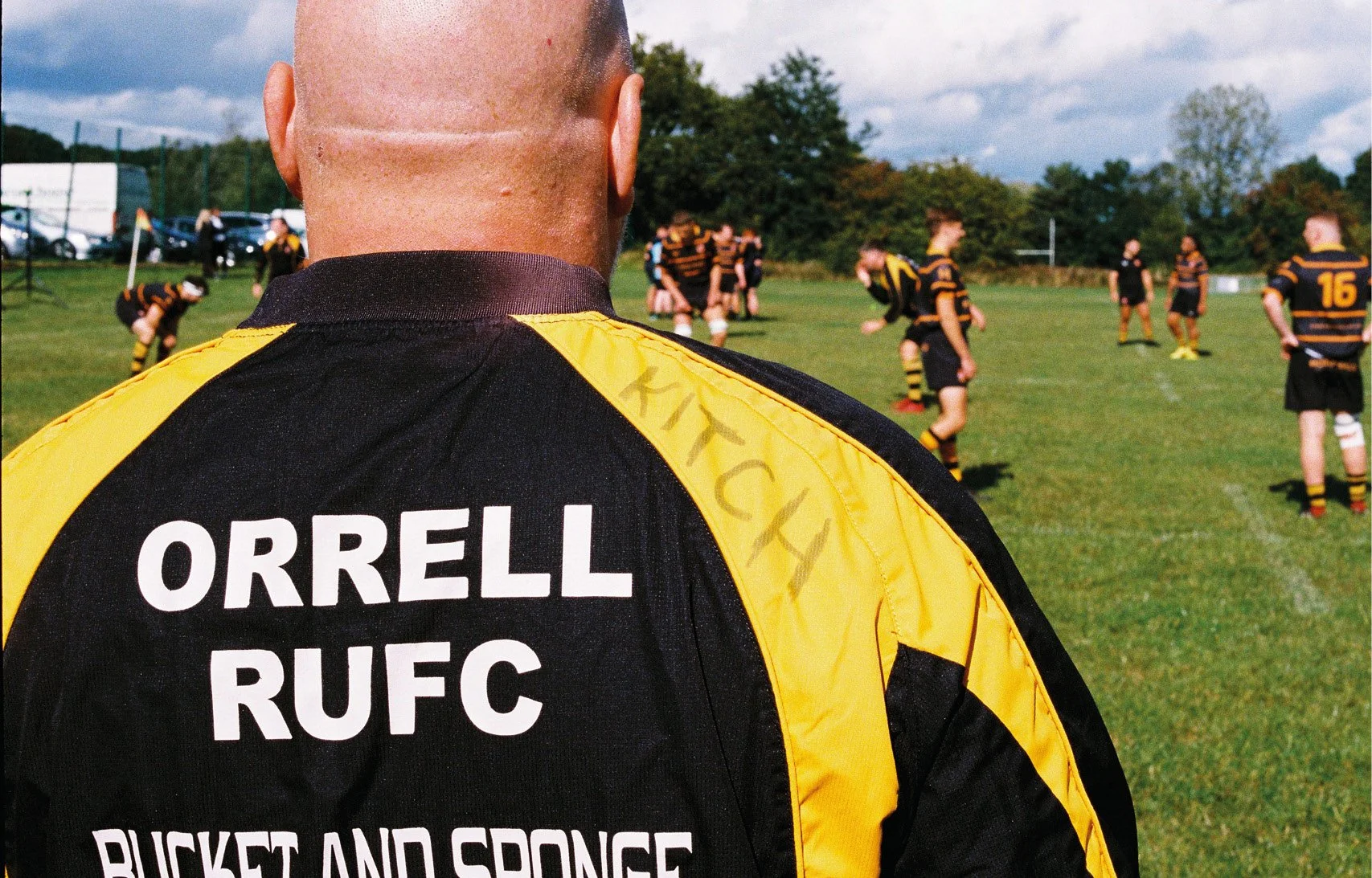
Rugby union’s answer to Icarus, Orrell soared through the 1970s, ’80s and ’90s with famed teams and players, only to crash down to where we find them today, level nine of the rugby pyramid. But with an unlikely former England star now at the helm, brighter days could be just around the corner for the storied Lancashire club.
Auckland-born Denny Solomona was a league sensation, scoring 42 tries in a single year for Castleford, before moving to union where he would wreak similar havoc for defences, racking up 47 tries in 98 games for Sale. He even scored a match-winning try on his England debut against Argentina, sitting down and dizzying myriad Pumas defenders in the process.
After such a career, there are plenty of places, or pitches even, that Denny Solomona thought he might have stood on eight years on. Perched on the sideline of a sixth-form college pitch in Wigan, issuing instructions to a group of part-time players in his role as head coach of Orrell, a team currently plying their trade in the Counties 3 ADM Lancashire and Cheshire league (level nine in the rugby pyramid), almost certainly wasn’t one of them.
Once upon a time, Orrell could stake a genuine claim to being rugby union’s answer to Icarus: a club that soared into the upper echelons of the English game only to tumble spectacularly, brought low by a mix of financial misadventure, shifting priorities and, quite literally, fire. The days of toppling rugby’s giants in the John Player Cup, of lifting Lancashire trophies, of finishing just behind Bath in the old Courage League One – undone by a single, cruel drop-goal against Wasps – feel not so much distant as mythic.
And yet, every week, a team still pulls on the black and amber jersey, representing the only union club in a town where rugby league is woven into the local DNA.
Aside from the colossal pull of Wigan Warriors, the area is dotted with more than a dozen amateur league sides, leaving Orrell a curious anomaly: a former union force, stubborn, proud and slightly out of time.
Today, they face Ormskirk, who have made the trip across the county hoping to spoil what’s quietly becoming, for Orrell, a season tinged with cautious optimism, stoked, in no small part, by the presence of Denny, a man whose own story feels as unpredictable, and as stubbornly unfinished, as the club he now leads.
“Through coming here to coach, I feel like I’ve found a bit more respect and passion for the game,” explains Denny. “I’ve always had a kind of love-hate relationship with rugby, because I’ve done this for so long, it was all I knew. From taking a step back and then going back into rugby with Orrell, it’s kind of rejuvenated that whole reason why as a young kid Denny started playing rugby in the first place.
“I’m very open and honest about all the ugly sides of rugby; it’s all the pressure, it’s that you can’t leave rugby at the club you’re playing for. When you’re at home, you’re always watching rugby, how your upcoming opponent plays, what their little habits are.
“There’s the frustration and the sleepless nights because you’re nervous. There’s the politics of rugby, working out how to react to not getting selected because you’re just out of favour. It’s brutal that one person’s opinion of you can dictate your career; if you’re out of favour with the head coach, you’re done for.”
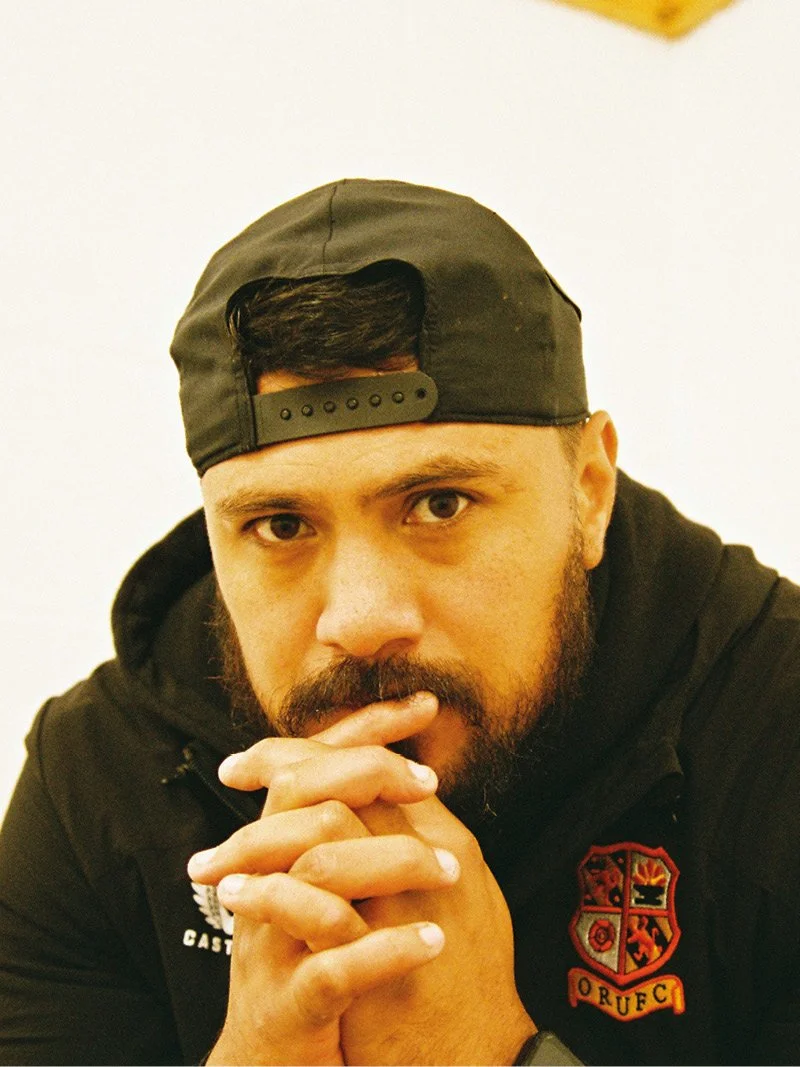
From an early age, it was clear that Denny had the kind of instinct you don’t coach, the quicksilver ability to see space where others saw structure. Having moved to Australia and learnt rugby league, by nineteen, he was already lining up for Melbourne Storm’s first team, a precocious teenager with the desire to get to the try-line seemingly hardwired into his brain.
He moved quickly across hemispheres to London Broncos, and then to Castleford Tigers, where over two seasons he scored an astounding sixty tries in 45 games.
Then in December 2016, with two years still inked into his Castleford contract, Denny walked away; not just from a club, but from a code. He turned his back on league and joined Sale Sharks in the Premiership. The decision, abrupt and unapologetic, invited lawyers into the room. Eventually, a sum in the region of £200,000 changed hands and Sale got their man.
After ten tries in eleven games for Sale, it didn’t take long for the national conversation to begin. Three months in, he made himself available for England and Eddie Jones, ever the opportunist, called him up for the summer tour of Argentina.
In his first Test, Denny came off the bench and did what he’d always done, scored a try. It was the match-winner and a headline-stealing debut.
However, that try in Argentina would be his only one in an England shirt. Not because the talent had dimmed, but because timing, like form, is fickle. Looking back, even he concedes the moment of his breakthrough arrived at precisely the wrong time.
“I was competing with Anthony Watson, Jonny May, Elliot Daly, all at their peak,” remembers Denny. “They were all playing Lions, playing really well at their clubs and consistently for England. It was tough as they had been growing up through England as well, they’d all done under-18s and 20s together.
“It was just probably the wrong time, wrong everything really, but that’s nothing against those guys, they were all playing amazing. I’d never say I should have been playing in front of a certain person, because every one of them had their own right to play in that jersey. I realise now that you have got to take every opportunity, and unfortunately, I might not have done.
“I had a goal, but I wish I’d reframed my goal, because once I hit it, it was like there was nothing else to achieve and that’s no fault to anyone else but myself. I became an international rugby player, that had been my goal for the longest time. Once I played for England, I didn’t know what was next.
“That was a mindset I had, that’s what killed me; maybe I should have made it my ambition to be the best England winger. That’s my only regret in rugby, not being able to shift that mental goal I had.”
Denny remained with Sale until 2021, with the standout moment being their 2020 Premiership Cup victory over Harlequins. From there, he played five times for Dunedin Super Rugby outfit Highlanders before hanging up his boots and returning to the UK, where he began a plumbing apprenticeship.
Today, he owns and runs Pasifika Plumbing and Heating, but, as withso many players before him, Denny found leaving rugby behind an impossible reality to confront. “It was my first job outside of rugby and the transition was difficult. Especially because I had a newborn at the same time as moving back to England, and it probably wasn’t the best time to consider retirement because there was so much stuff happening in the background.
“It was adding another plate to spin, and at the time, I already had three or four plates on the go,” says Denny, exasperation creeping into his voice at the memory. “But my partner and I, we’ve learnt to ride the wave sometimes.”
When he returned to the UK, he set up home in Orrell. “I was playing for Rossendale at the time, I had just started up my own business as well as having three young kids. It was a busy time, and it was a trek to get to Rossendale. I’m very family oriented, so it wasn’t really working out for me.
“I spoke about this with Colin Ratcliffe [sponsor of Orrell RUFC and a keen supporter of Sale], who mentioned Orrell. He gave me a lesson in the history of the club and said ‘do you want to play or coach?’, and I told him I’d be mostly interested in coaching.”
Denny had little interest in pulling on the boots to roam the wing again. At just 32, it seems his playing days are behind him. But from the moment he arrived at Orrell, he sensed potential; untapped, overlooked, but undeniable. This was a club with history, pride, and every reason to feel forgotten. It didn’t take long for his mind to start whirring with ideas, drawn to the possibility of building something meaningful.
“I told the committee to leave it to me and that I would try my best. I didn’t promise we’re going to win the league, but with a bit of structure, we could win at least a couple more games than we did last year.
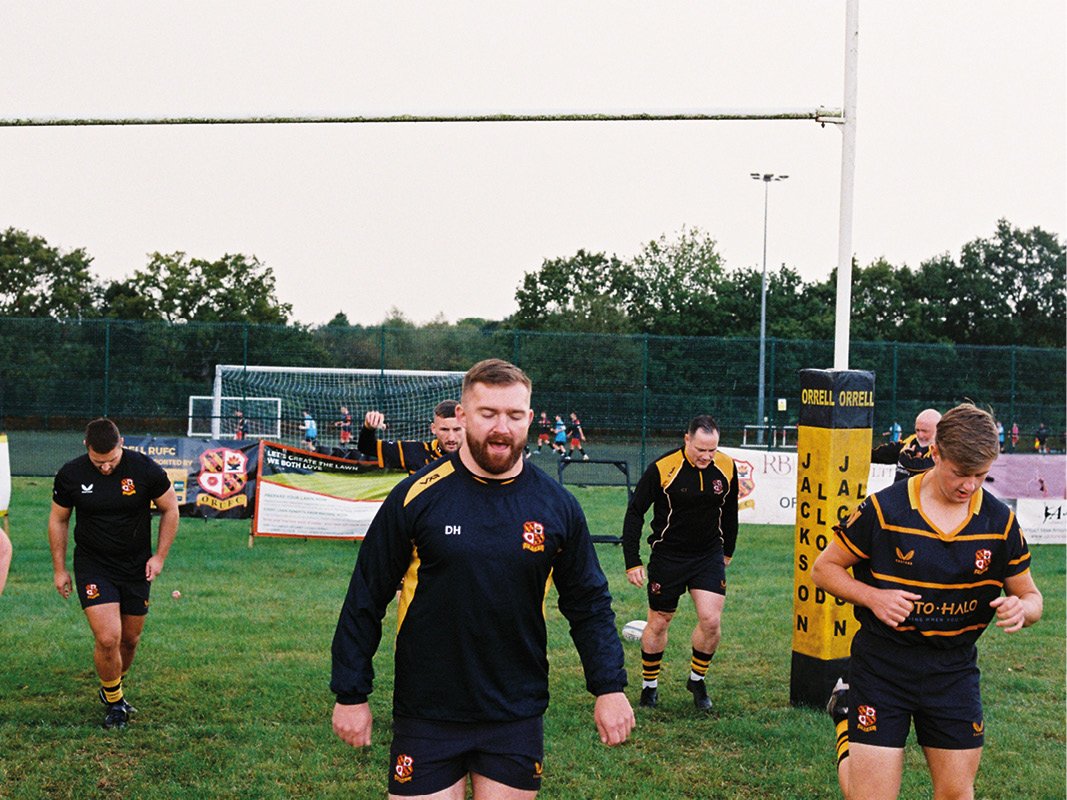
“I have brought in a structure of how to play the game, training and a pre-game routine. These lads were not used to meeting at a certain time, they rocked up just before warm up, they warmed up and played.
“I’m getting guest coaches as well, like Jacob Ford, George Ford’s little brother. I’ve had Ben Curry, who’s obviously a current England player. Getting those boys to lead sessions is a win-win. What I get is a personal breakdown specialist and a forward specialist. What they get is great experience teaching drills, and the opportunity to develop their coaching. By getting these guys to coach, hopefully the players can understand that we’re trying to get Orrell’s status back.
“I want us to be a tough team and a physical team; I want us to tackle hard, I want to run hard, I want to be a team that when our opponents get home they’re like, ‘shit, I’m a bit sore here’. But I also want to play an expansive game, I want to run it from the 22, I want to run it from the try line.”
Coaching with a philosophy which very much aligns with Denny’s current modus operandi of ‘riding the wave’, it would be easy to cast aspersions about the seriousness or potential longevity of Denny’s tenure at Orrell’s helm. But those doubts are quickly dispelled in conversation with the man himself.
“I’m not here for one or two years, I want in for the long run,” he assures. His confidence feels far more grounded than the usual bravado of a young coach. There’s a compelling magnetism about Denny, strengthened rather than diminished by his healthy scepticism towards the top levels of the game.
Having been through plenty in his own career, there’s a wisdom and wariness behind his words that belie his age, and it’s enough to make people believe that change might finally be coming to Orrell. That belief was bolstered by their opening game of the season: a commanding 26–7 victory over Colne & Nelson, giving Denny’s coaching career the perfect start.
“Coaching’s not daunting, in the sense that I am not questioning myself on the details of how to coach,” says Denny with simple confidence. “It’s all relatively easy. The difficult part is understanding how the players will react and how you can communicate best with your players, that’s the hardest thing.
“I didn’t want to come in and bring new tactics and drills in all at once, because these lads, they work nine to five every day of the week, so they only get one hour to really train or release some of the frustrations or energies on Wednesdays and Saturdays, so I don’t want to bombard them with too much stuff.”
There’s something grimly fitting about the biblical rain that greets players and spectators at Orrell’s first home game of the season. At a time when Denny’s arrival should signal renewed hope, the heavens seem determined to dampen proceedings, quite literally, as supporters seek shelter in a conservatory area, hastily repurposed with a makeshift bar.
Bill Lyon, president of Orrell and the club’s foremost authority on its storied history, has been around long enough to be wary of false dawns. He began playing for the club in 1966, and represented Lancashire from 1970 to 1978, lining up alongside Fran Cotton, Bill Beaumont and John Carleton, who went on to become Orrell’s first British & Irish Lion. Carleton was later followed by the likes of Steve Bainbridge, Dewi Morris, Austin Healey and Dan Luger, who all donned the famous red jersey as well as the black and amber of the Lancashire club.
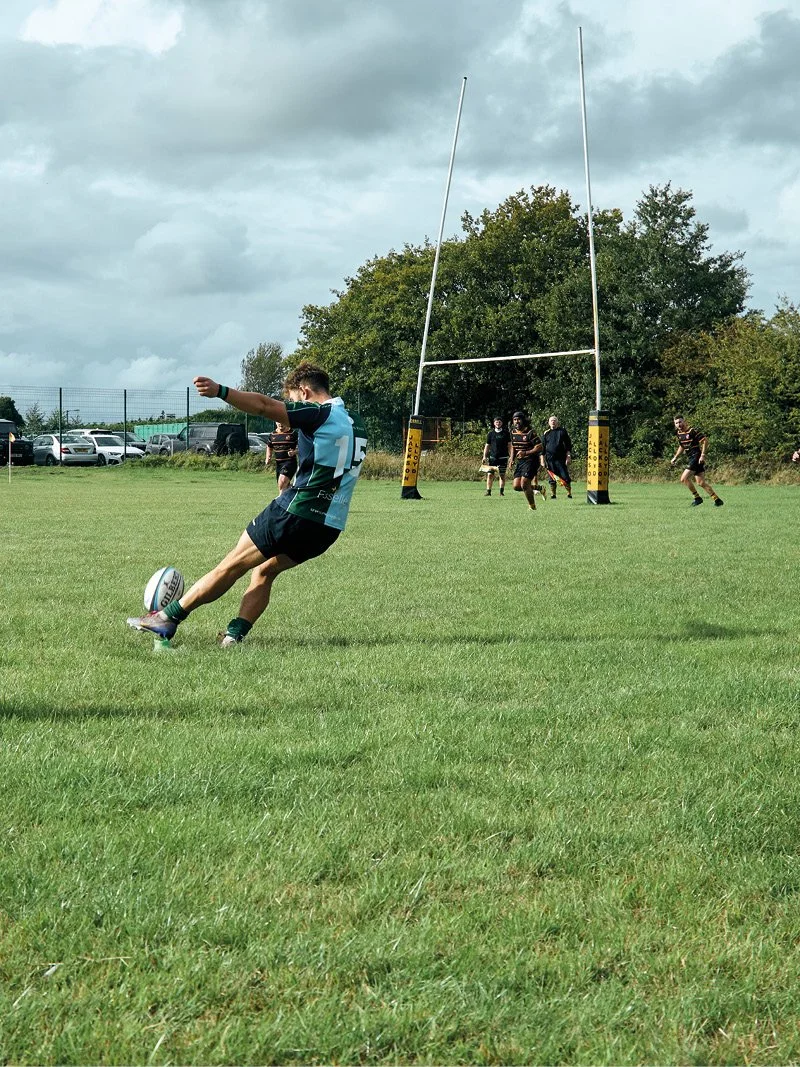
Bill recalls those early days with fondness and is always eager to share stories of Orrell’s lofty past with anyone willing to listen. “I was lucky enough to start when I did,” articulates Bill, “because that was when they reintroduced the County Cup. We beat Liverpool in 1972, and winning that opened the door to enter the national competition, which became the John Player Cup. Orrell started to pick up some of the bigger teams in the cup which led gradually to ever better fixtures.
“When we notched victories in the John Player, people began to be very complimentary about the style of rugby. In the 80s we just had a gigantic pack, and teams used to come to Edge Hall Road and, frankly, get destroyed. We were in the top division, with the big boys, then in 1991 we were runners up to Bath.
“During that 1991 season, every week ten of the fifteen players were local lads. By local I’m talking about a five or six mile radius around Edge Hall Road. We operated in this way and were number two in the country, and that hasn’t happened since and won’t happen again.”
Between 1990 and 1995, Orrell stood alone in the Courage Leagues as the only village club among a field of city-based sides. Their very existence in a rapidly evolving rugby landscape was beginning to feel increasingly anachronistic.
The arrival of professionalism in 1995 only widened the financial gulf between Orrell and the rest of the top flight. The club dropped two divisions to the third tier, and a decision was made to sell.
Dave Whelan, former owner of Wigan Athletic and Wigan Warriors, completed the purchase in 2002. With financial backing over two seasons, Orrell surged from the third tier to finish as Championship runners-up.
The club’s committee announced a £10 million investment plan over five years, with Whelan openly dreaming of ‘drinking red wine away in Toulouse’ in the European Cup in the not-too-distant future. “I was there at the end-of-season dinner in 2004, where Whelan announced his grand plan for the future,” says Bill. “He said he was pushing all his resources towards a drive to the Premiership. What actually happened shortly after, was a sudden withdrawal of his support for Orrell.
“He was pulling the plug with around twenty contracted players, an Australian coach, all gone at a stroke. So from there we were left high and dry. We sort of soldiered on until 2007, but common sense prevailed and we approached the authorities to say, throw us down to the bottom, because we’ve got to start again.
“I’ve no real hard evidence of this, but you got the sense that as the money got more involved, then the volunteer aspect started to fade away a little bit. We were an exceptional amateur club, but professionalism killed us really. We had huge fundraising functions which were always well-attended, because people still cared. But the sense of shift was palpable.”
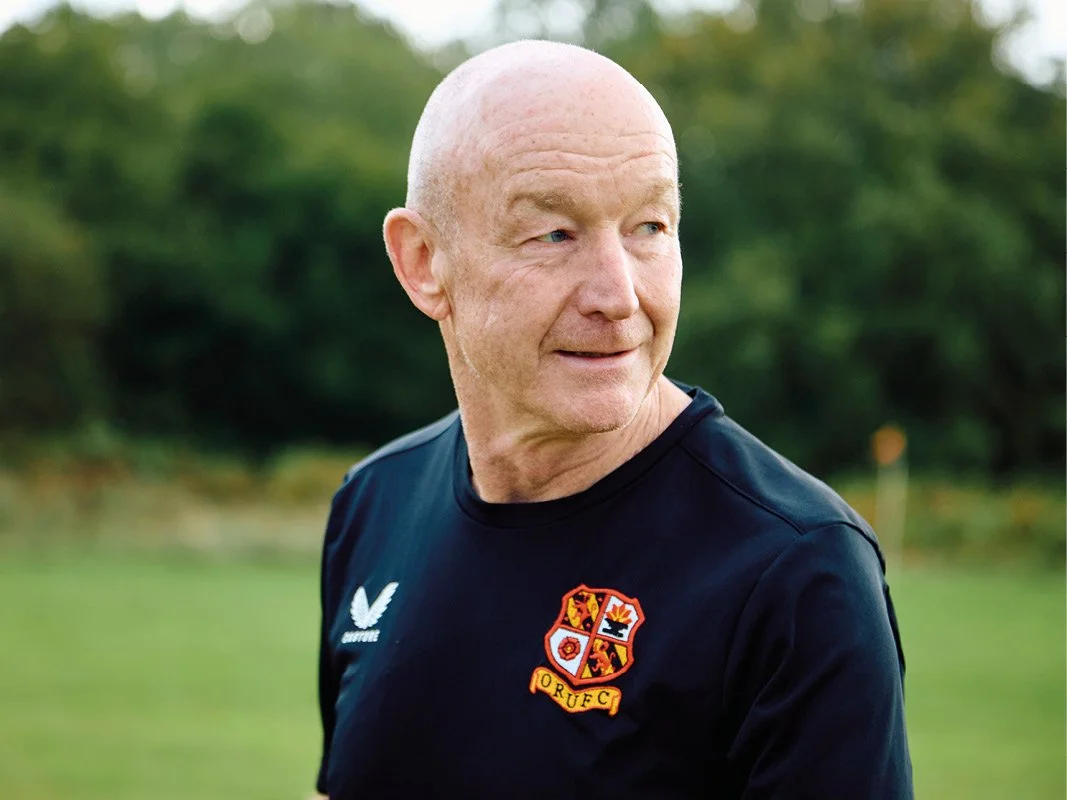
The impact of those turbulent years still lingers as the latest iteration ofthis famous club takes to the field at St John Rigby College. Today’s side carries the quintessential Orrell ‘local lad’ spirit, with broad Lancashire accents echoing around the ground as players fire each other up before kick-off.
On the touchline, Denny exudes a quiet, watchful presence, occasionally breaking his focus to toss a ball with his son, proudly dressed in full rugby kit.
Today’s match coincides with the Orrell Proms, a music festival at the nearby cricket ground, where Orrell sometimes play due to their somewhat nomadic state.
It speaks volumes about the club’s recent revival that, where once they struggled to field even one side on the weekend of the Proms, they now have two in action with the seconds playing over at Winstanley College.
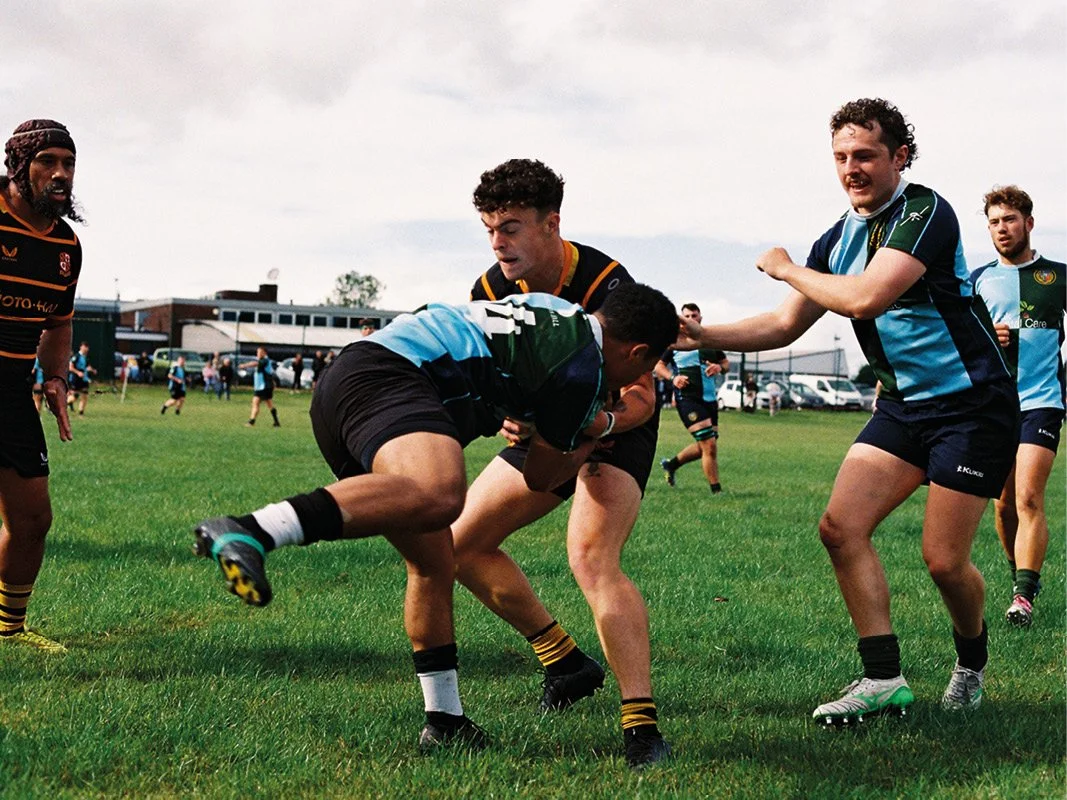
From the whistle, Orrell look sharp, meeting tackles with force and intent, drawing hearty applause from supporters on the sidelines, some of whom once packed down in the club’s fearsome 1980s forward units.
It doesn’t take long for Orrell to open the scoring; some slick passing and wing play leads to a well-worked try and a 7-0 lead, putting Ormskirk immediately on the back foot.
David Robinson, chair of Orrell, charges from the crowd to update the small scoreboard at one end of the pitch, where the score remains unchanged until half-time, with Orrell absorbing a sustained spell of Ormskirk pressure.
A key source of pain in Orrell’s decline has been the loss of their historic home ground, Edge Hall Road. Known for its fearsome atmosphere and physically dominant home sides, it was more than just a fortress, it was the indisputable heart of a club. That’s what made it all the more painful when the original clubhouse was destroyed by fire and, in 2007, the club was forced to leave.
“The famous quote is when Harlequins played us in the old John Player Cup they said they were beaten by a team that’s basically a lay-by on the M6,” remembers David. “So we went from that lay-by on the M6 to being a force to be reckoned with, and a huge part of that was Edge Hall Road. I actually live on Edge Hall Road now. There’s one pitch left, and the other three pitches are a housing estate.
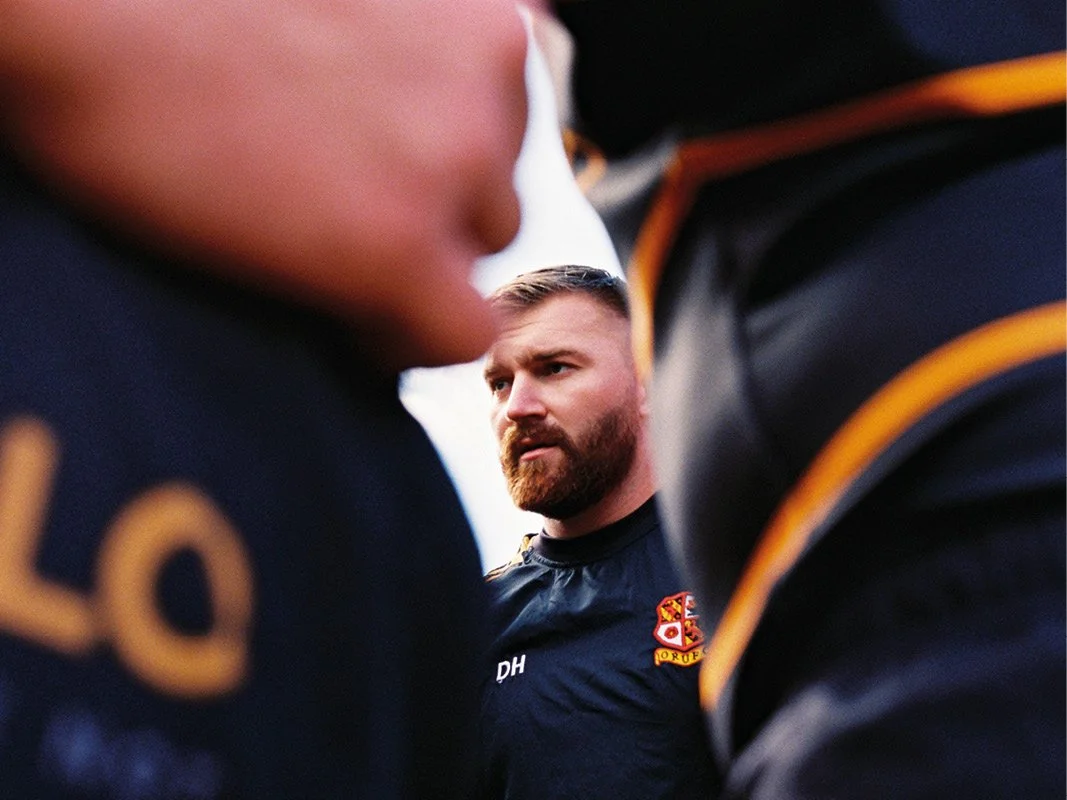
“When the clubhouse burned down, that was like a line in the sand moment,” continues David. “There was so much history there, and it was gone overnight. When I came back to watch Orrell again, I went with some friends, we all had a beer and walked down. We were stood on the terrace, and then there was no clubhouse there, just the pitch. It almost took my breath away to see that virtually everything had gone. It was just heartbreaking, really.”
With one pitch still remaining at Edge Hall Road, amid renewed talk of a new dawn at the club, it seems only natural to consider a return to Orrell’s spiritual home. “Personally, I have mixed views about returning to Edge Hall Road,” explains David, with a sense of gravity entering his voice. “I know there’s a lot of people of my generation and older who would like to see us play there again. It’s now owned by Wigan Warriors and Wigan Athletic.
“The owners have invested a lot of money in it in the last twelve months, so there’s a clubhouse now, there’s a fabulous gym, the pitch is of great quality. They’ve started to improve the old stand and put new floodlights up.
“I have had some early discussions with people from Wigan Warriors about using it, but my personal opinion is that I don’t see it as a place to play every home game, for cost reasons.
“I think it’s an opportunity to give players something to buy into and hopefully attract players if we could play several games there a season, that would work. I think in terms of longevity and being able to attract players in, having our own base is a benefit.”
Wandering around the touchlines and speaking to gathered fans on the topic of Edge Hall Road and past glories, there is a yearning for yesteryear. To some extent, it’s only natural for nostalgia to seep into any conversation about Orrell. But for those working to make the club as good as it can be right now, its constant presence can become wearing, something David feels with particular sharpness. “The fact that we were a league one club and we’re not anymore is the source of a lot of local negativity. People say ‘it’s not as good as it was’, and ‘it was great in our day’, that’s only to be expected.
“Sometimes I have to take a good, long, hard look at myself and stop myself from saying that, because what we had in our day has gone, and the players now don’t know any different, so we have to make it as good as we can for them.”
The second half begins in both earnest and error, a scrappy sequence of mistakes and opportunism that sees Ormskirk pounce on Orrell’s lapse in focus to cross the line, only for the home side to return the favour moments later, capitalising on a loose ball to score. The background hum of the nearby M6, which had hovered benignly over proceedings like white noise, seems to swell, not quite to a roar, but something with edge, as Ormskirk begin to exert real pressure, turning a string of penalties into points and nudging the scoreboard to 21-14.
Orrell respond again, levelling the scores with another try, and suddenly there’s a different kind of noise: sharper, more urgent voices rising from the sideline, the mood tipping toward something charged and expectant.
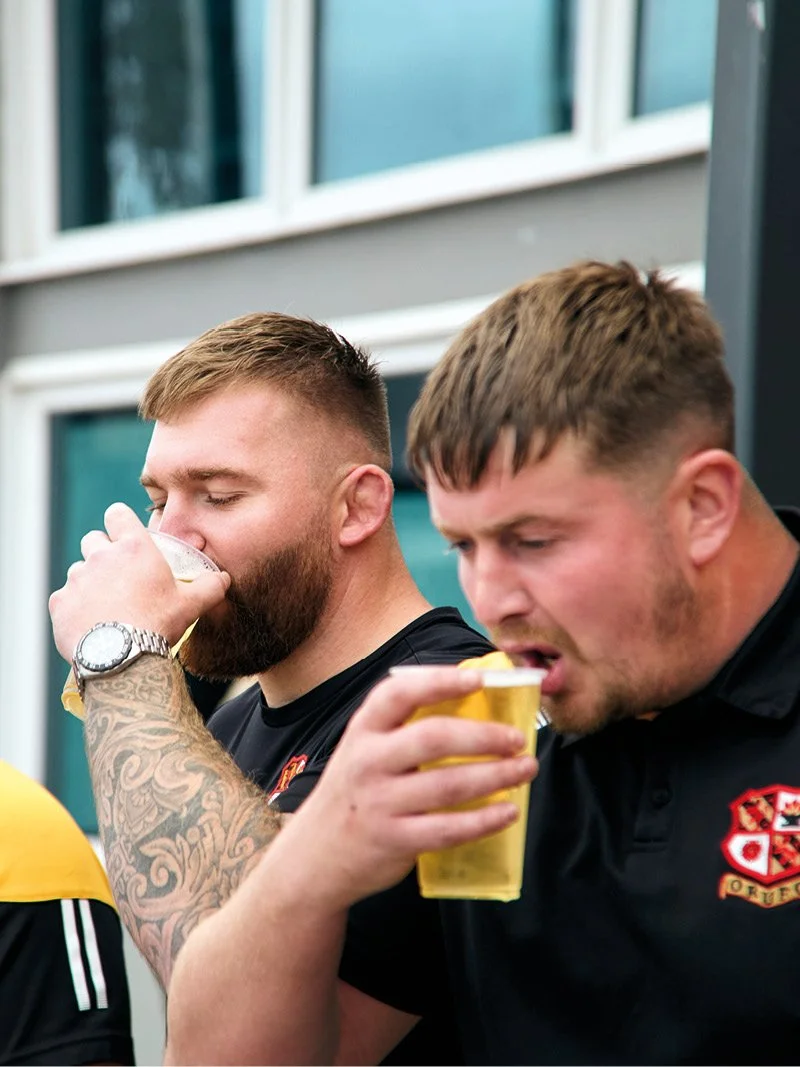
In the middle of it all stands Denny, still, composed, his gaze flickering between the breakdown and the backs. Occasionally, his daughter climbs onto his shoulders, granting himself the best view in Wigan, and lending the whole scene the air of a tableau: part grassroots drama, part family portrait.
At 21-21, with the match balanced on a knife edge, Orrell’s openside flanker and captain, Dan Huxley, begins to imprint himself more firmly on the contest; a flurry of tackles, a raised hand in discussion with the referee, a presence felt wherever the game is most alive. “I played my first game when I was seventeen, and I’m 28 now, so it’s been an up and down eleven years,” notes Dan with typical Lancastrian affability and diffidence. “I became captain at eighteen. It was daunting at first, because I was the youngest player on the team when I was first selected captain. My granddad was captain for a long time, so it’s family tradition.
“I’ve always played with my cousin, who’s just retired. My brother, my dad, and all of my uncles have played. My granddad played with his cousins. So, there’s a lot of Huxleys in there. Everyone knows everyone, you can’t get away with anything, put it that way.”
A joiner by trade, Dan runs his own building firm, Huxley Construction, which appears as the sponsor of Orrell’s training wear. A decade as captain, his commitment to the cause has never been in doubt, leaving him at a loss when the fortunes of the club hung in the balance for several years. “When Covid hit, a couple of those lads who were nearing thirty had kids and half our team didn’t really come back,” remembers Dan. “Our coach at the time had been struggling with his business, and then it took off so he left to do that. It was impossible to get lads back down, commitment was just out the window. I remember being so frustrated, at times last season it felt like we were staring down the barrel a bit.
“But with Denny coming in as our new coach, he’s brought along some new faces and some quality younger players are playing their first season in adult rugby.
“We’ve had a good pre-season, which we’ve not had for the past probably three years, and then the past couple of weeks, we’ve had fifteen-on-fifteen at training.”
With the score stuck at 21-21 and time running out, Orrell continue to hit hard and run the ball as tempers flare on the pitch and the referee is keen to act swiftly on any perceived slight on his authority.
Off the pitch, veteran spectators on the sidelines note the transformation of the side with genuine astonishment. “We’re used to watching them forty or fifty down at this stage,” one of them chuckles. This transformation is not at all lost on Dan.
“The way we’re playing now, it’s night and day. People watching the first game of the season said they couldn’t believe it was the same players out there.
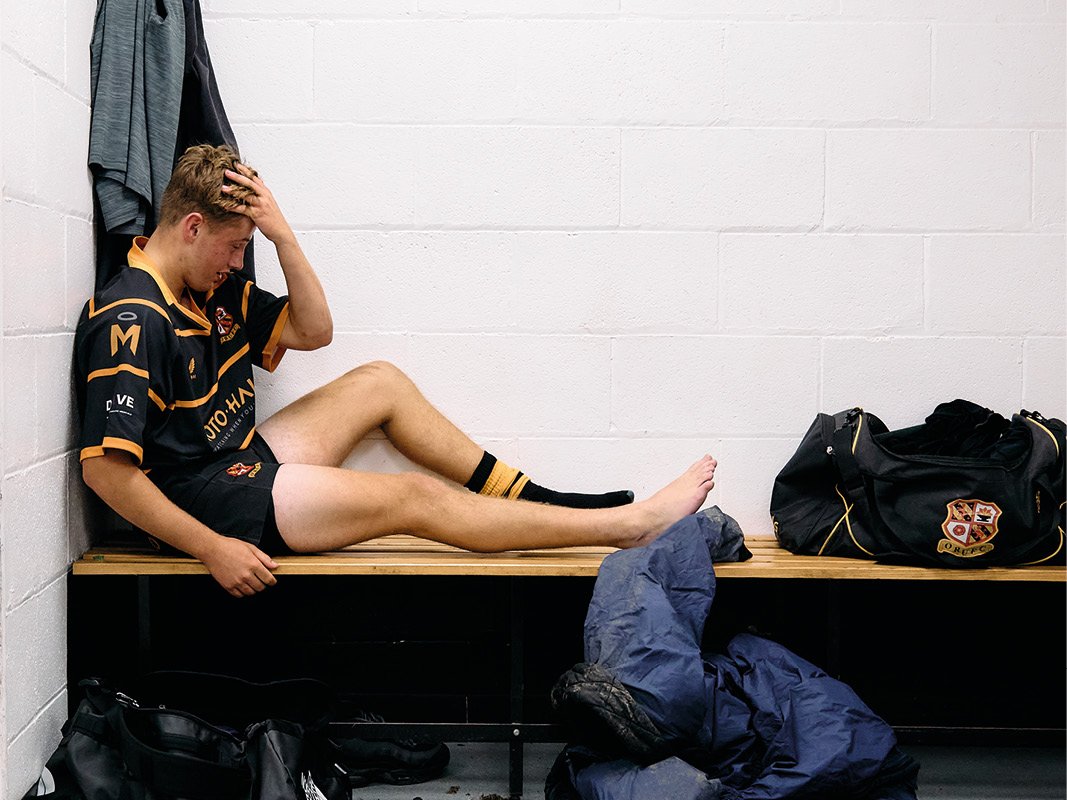
“The biggest thing is we’ve got so much more structure. We’re not the biggest pack, we’re somewhere near the smallest team in the league, but our strength is our speed and fitness. Denny’s recognised this and got us running the ball way more which opens up the pitch for us, and it helps when you’ve got England players leading sessions,” Dan laughs.
“Ben Curry was dead good, he came across a bit nervous himself, I presume that he’s not done a lot of coaching because he’s been concentrating on playing.
“It’s more than just the lessons we can get from his drills, it just keeps the lads interested because Denny is actually pulling some strings and helping the club. He won’t be a one-season wonder, he’s genuinely interested in helping.”
Being around the club for as long as he has and his association with the Huxley-Orrell lore, Dan reckons he’s got a pretty good read on the club’s history. When asked about captaining a club who everyone accepts were stronger in the past, he emits a laugh which verges on the exasperated.
“People saying Orrell was better back in the old days is just something you get used to,” says Dan wearily. “I’ve learned to take it with a pinch of salt, a lot of those men were great players and big lads too, but I don’t think they’d cut it in the current game.
“I say that even though every male family member I’ve got has played for Orrell. As kids, we were all around, growing up around the place and I’ve heard every story, probably ten times over. They’re special, but they can feel a bit distant I suppose. The club’s in my blood, and I feel as though we’re making the first small steps of something special. Sometimes you get a sense of these things.”
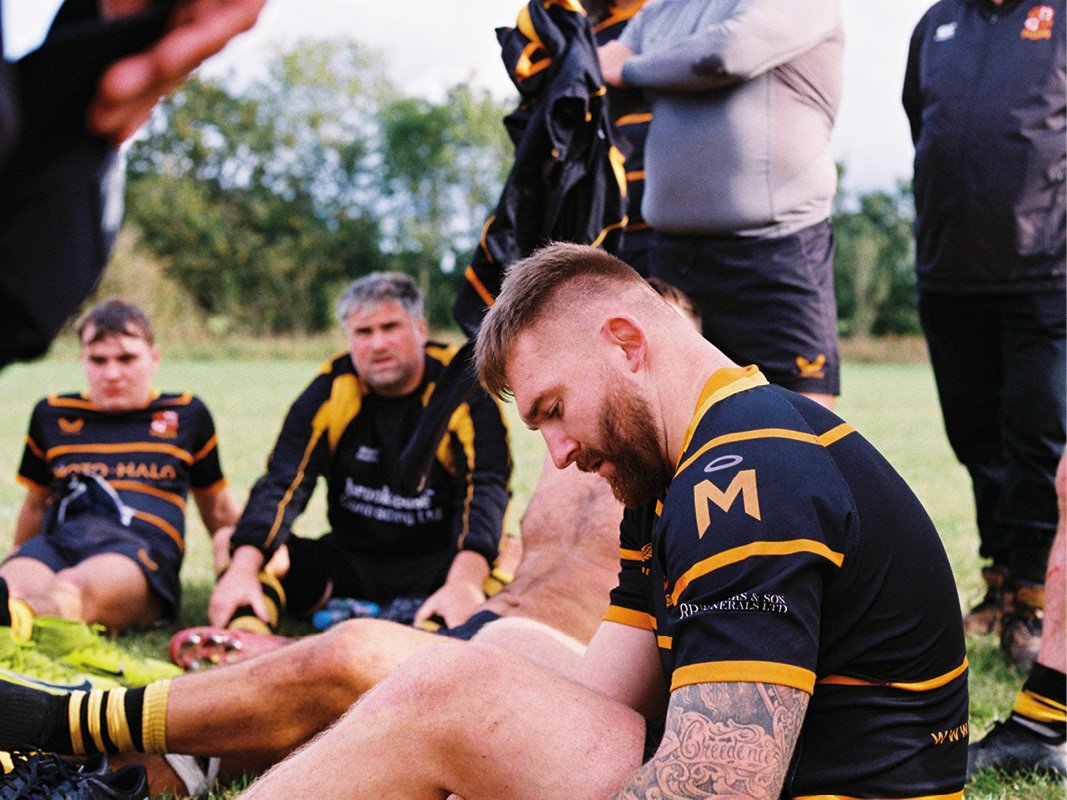
With time running out and the score still locked at 21-21, the mood alongthe touchline begins to shift as one by one, the gathered supporters start to reconcile with the idea of a draw.
For a side that’s grown familiar with frustration in recent seasons, a win and a draw to open the campaign is far from a poor return, even if, given the chances they let slip in the first half, Orrell might reasonably feel they should have been out of sight.
Still, there’s one last act to come. Orrell’s forwards dig in and drive into the breakdown, forcing a final opening as Ormskirk’s defence begins to tire.
The ball finds its way to outside centre Kieran Herbert, who arcs through a fractured line and dots down for a last-minute winner, the kind of try that stirs echoes of his coach’s playing days without straining for the comparison.
He’s quickly surrounded by team-mates, and cheers rise up from the sideline as the result sinks in. Soon after, the crowd filters back into the conservatory, the low hum of post-match chatter carrying the lightness of early-season hope.
It’s even more fitting that, when everyone arrived at St John Rigby College, the rain was hammering down with a threatening intensity, throughout the contest, right to the last, Orrell’s current home remains bathed in Lancashire sunshine.
Story by Scott Duke-Giles
Pictures by Russ Williams
This extract was taken from issue 31 of Rugby.
To order the print journal, click here.