Mike Catt
Mike Catt’s rugby career started when he got bored of backpacking around England and gave Bath a call, Gareth Chilcott answered. Then, an eventful career unfolded, taking in press hammerings, injuries, World Cup glory, a Lions Test and, of course, Jonah Lomu.
Every rugby player that ever earned the honour of facing Jonah Lomu has tried to track down a photo or two of them playing against the great man. Given that the number of players who squared up favourably to Jonah can be counted on one hand, a typical photo in this genre will see a player being venomously handed off, or dragged along the ground while holding on to one of Jonah’s feet, or variations thereof. It’s become its own artistic category.
And within it, Mike Catt owns the ultimate work of art. Jonah trampling right over the top of him in the 1995 Word Cup. If social media had existed in 1995, meme-land would still be pushing out fresh content about it.
For Catt, it’s something he’s gotten used to talking about. It’s consistently been a decent icebreaker in the workplace, and in some ways, it’s kept him young.
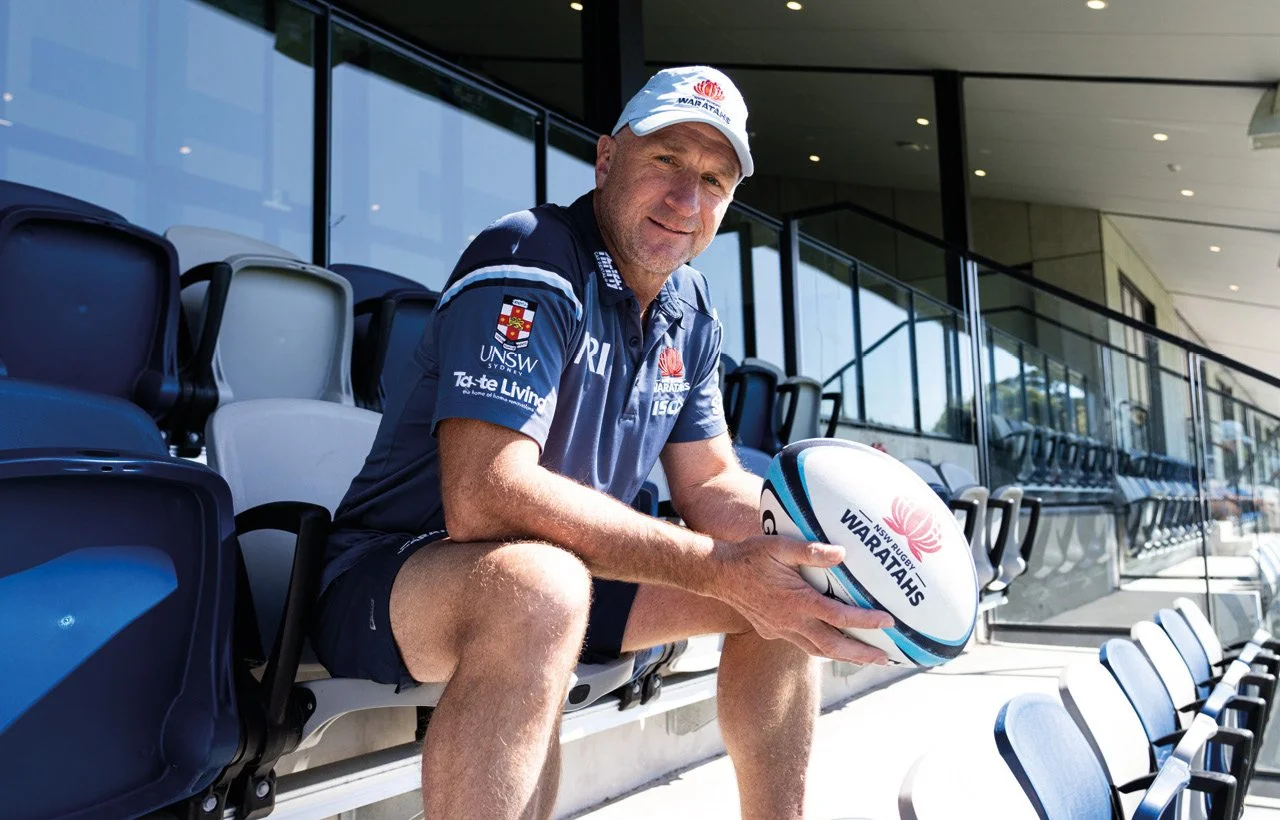
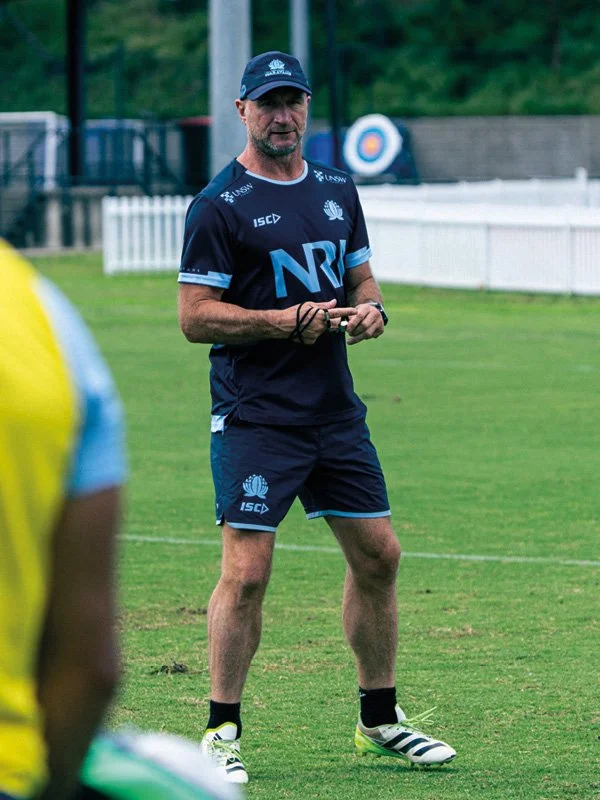
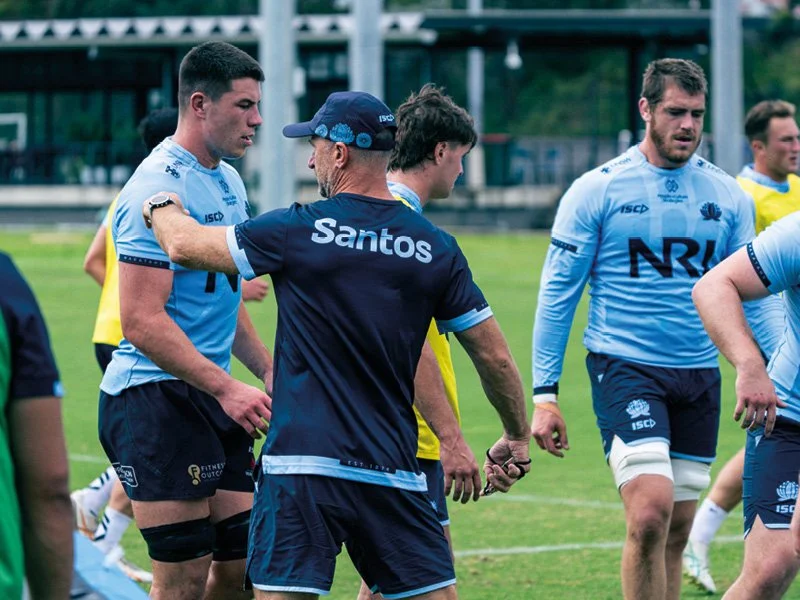
“Every time I come to a new job, there’s a picture of me getting run over by Jonah, even kids who weren’t born at the time say to me, ‘I’ve been on YouTube and I’ve seen Jonah, and all this stuff’.” Mike smiles as he talks to Rugby Journal from the Waratahs training base in Sydney, where he is five weeks into his new life as assistant coach at the club.
There’s a chance it’s a forced smile. After all, it’s 7am in the morning in Sydney and this is our first question to an England legend and World Cup winner, but Mike is nonetheless equanimous. “It is part of my journey. I don’t have a problem with it. It’s good banter, and I wasn’t the only one,” he says.
If the wider rugby world know Mike Catt for this moment in time, England fans know him for many more positive ones. His career was one that matched the fortunes of the teams he played in, whether they were Bath, England, the British & Irish Lions, or London Irish. There were crushing lows, false dawns but massive highs too.
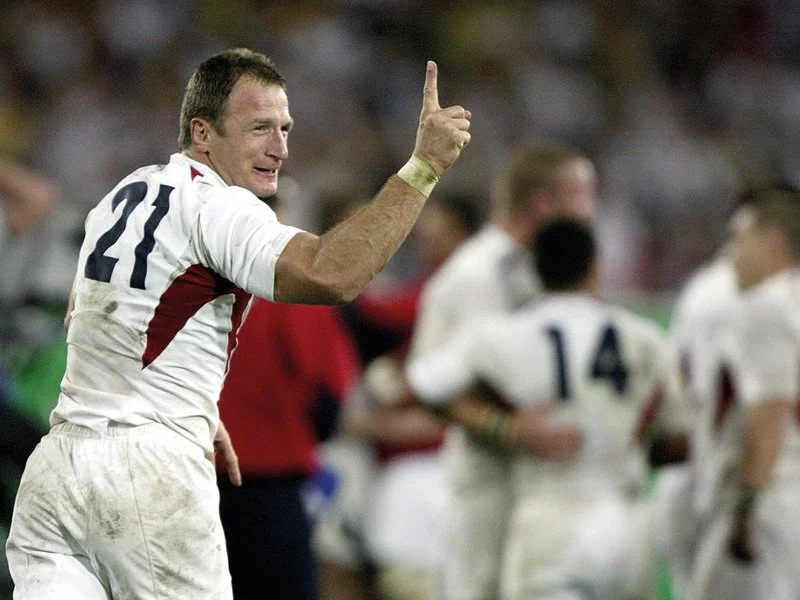
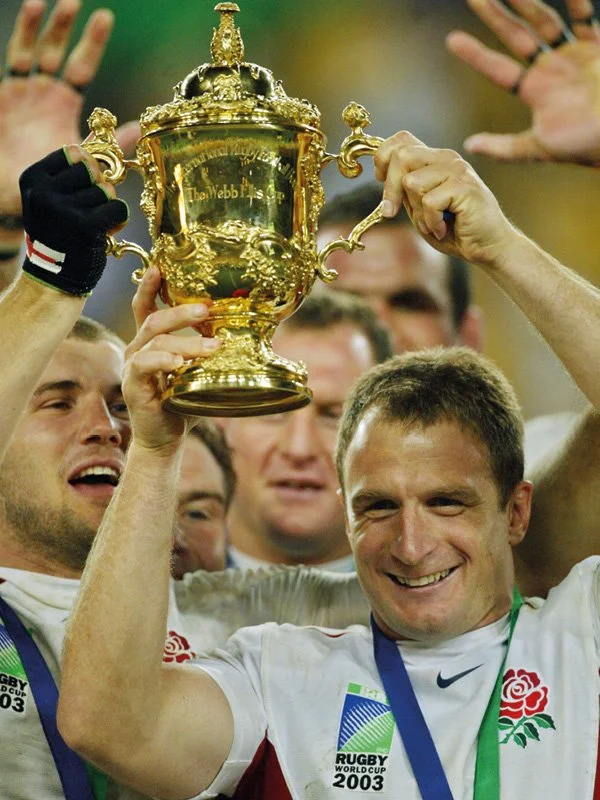
There’s his World Cup 2003 final cameo and his thundering carry in the phase that led to Jonny Wilkinson’s drop goal, there’s his calmness off the bench in the quarter-final against Wales which turned the match in England’s favour, or his leadership of an unfancied England team at the 2007 World Cup, dragging them all the way to another World Cup final in Paris, or his time as player-coach at London Irish where he spear-headed them to a Premiership final aged 37.
And that’s before you consider his twelve-year stint at Bath, where he won the Heineken Cup and multiple league titles during the glory days of The Rec in the mid-nineties.
But what of the bad times and the hard times, what sticks in the mind the most? “Well, you know, goal kicks. I missed five out of five at Old Trafford [in 1998].” says Mike. “The first time England had ever played at Old Trafford and we lost 25-8 against New Zealand. I should never have missed five out of five, they were so easy as well. So I got hammered in the press there.
“It got to the point, before Jonny Wilkinson turned up, that if I missed a kick in the 20th minute, the press were blaming me for England losing the game by one point because I missed a kick. It was quite hard for me to stomach. You might have a good game, you might miss one or two kicks, and you get hammered for it … yeah, it’s funny, it’s a funny one, the press and me.
“I understand the job they’ve got to do but without the press genuinely understanding what it feels like to stand up there, you know, to be in that situation,” he says. “It can affect kids, it can affect people. Not every article they write is a fucking good article, do you know what I mean?”
While media sentiment flickered in the wind around Mike in the early part of his career, it never affected his passion for the game – which became a powerful tonic for Mike on troubling mornings reading the newspapers in the late nineties after an England international. “You know, if I didn’t love the game as much as I did, there’s a good chance I probably would have packed it in,” says Mike. “I could very easily have packed it in. But it was just through the love of it. I’ve loved every single minute of it I can genuinely say. I’ve had my moments where I’ve been hammered in the press and all that sort of stuff, and sometimes justified, but I just love doing it. It was my escape from everything. I could just get on a rugby pitch and go and play the game. It was brilliant.”
Mike’s enthusiasm for the game not only kept him in the game but led to a fanaticism for improving his game and for reaching his own peak physical condition, one that saw him regularly head out for pavement-pounding runs the morning after a full-blooded eighty minutes for club or country. While his team-mates were negotiating how to roll out of bed and take on the stairs, Mike was lacing up his running shoes. “Sunday morning after a game, I’d go and run. It would clear my head, it was the only way I could clear my head. The only way I knew how to do anything. There wasn’t any hot and cold tubs then, you just manned up, had a drink on a Saturday night and then got up in the morning.
“My strength was my fitness,’ he reflects. “I always thought, you have to be a good decision maker as a 10 or 12, and if you’re the fittest person on the pitch, that means you can make better decisions later on in a game, when people start fatiguing. So I always drove that. It wasn’t until Jonny Wilkinson came along … otherwise, I never lost a fitness test the whole way through. I just loved it. I thrived on it.
“It’s the way you become mentally tough as well, is running. You could sit on a rower, you could sit on a bike as much as you want, but when you run you’ve got to take yourself to a really dark place. But with that comes resilience so you can plough through eighty minutes pretty, pretty easily.”
There’s little doubt that Mike’s base level of fitness is what persuaded Clive Woodward he was worth a place on the plane to Australia for the 2003 World Cup, despite Mike not having played for England in nearly two years due to injury.
“Clive called me up three days before they left for Australia,” recalls Mike. “I’d been texting him saying ‘just give me a game [in the pre-World Cup warm-up matches]’. And he wouldn’t give me a game. He said, ‘no shortcuts, no easy ways to go’. Okay, I thought, but I just kept training. I was in Spain flogging myself every day running. I don’t know why I was doing it because he wasn’t giving me anything. But then he phoned me up after England had lost to France in Marseille and said, ‘can you come up and do a fitness test?’. I did a fitness Test with Andy Gomarsall and Austin Healey, and I just blitzed that. I was buzzing. And then, he gave me a call on the Sunday, and off we went to Australia.
“I just loved it, you know, I was like a 16-year-old kid playing with my mates in the park because it was a bonus that I was there. We slowly got through the competition, and I played a little bit more, and then got selected for the semi-final against France. That’s why I think Clive took me – two seasons prior Serge Betsen had destroyed Jonny and the way we wanted to play. Since then Clive had always said he wanted another kicking option. Tins [Mike Tindall] and Will Greenwood weren’t kickers really, so that’s why Jonny and I got on really well. We could dovetail in terms of ‘you take five minutes, I’ll take a minute’; ‘I’ll take a kick, you take a kick’, that type thing. We had a brilliant, brilliant relationship in terms of that.”
After the win over the French – with Mike playing his part expertly in wet conditions, successfully nullifying the impact of Betsen on England’s gameplan – Mike famously told Clive Woodward to drop him for the final in favour of Tindall.
“Clive said ‘I haven’t made my mind up here’ and I said ‘put me on the bench’. The French match was the first time I’d played 70 minutes for two years and I was battered, so I was quite happy, and I did a really good job off the bench anyway.”
Had he ever asked to be dropped before? “No, you wouldn’t, it doesn’t come into it as a competitor. It just worked really well for us then. I hadn’t played for ages. You forget how emotionally and physically draining it is if you haven’t done something for a while. We were pretty open and honest with each other, and I just said to Clive, ‘look, just put me on the bench. I don’t mind it’. So that’s what happened.”
Mike’s contribution in the final, although much shorter, was no less telling. Entering the field in the 79th minute when England were winning 14-11, his total assuredness in extra-time gave England the confidence to finish off the Wallabies in the 100th minute. And of course, after the mayhem of the Wilkinson drop-goal, it was Mike who delivered the touch-finding kick that ended the game.
Mike arrived in England from South Africa in 1992 as a backpacker. His parents had given him a plane ticket to England as a 21st birthday present so he could meet his grandparents for the first time.
“I went backpacking, got bored after a couple of months, moved to my uncle’s place in Gloucester, and then just phoned Bath up,” explains Mike. “I had never heard of Bath before. Gareth Chilcott answered the phone, I think. My uncle spoke to him, and he said just come down.”
In South Africa, Mike had played for Eastern Province at schools and under-21 level as well as six times for the senior side, so he knew he had the cut for first grade rugby anywhere in the world. However, Bath was not an easy gateway to the English game, housing as it did half the England team at the time, with players such as Jeremy Guscott, Ben Clarke, Richard Hill, Victor Ubogu and Jonathan Webb.
Mike’s ambition initially was just to play a few games in a new climate, so he started out in the Bath third team. Later in the season though, Guscott got injured and Mike, by now promoted to the second team, began to be fielded at outside-centre for the Bath first team. “It was an incredible life experience,” Mike recalls. “I stuck at it. I could easily have just packed my bags and gone back home, but I loved the way Bath played with Stuart Barnes and Phil de Glanville. They were winning and as a youngster that accelerates your experiences and your skills.”
Bath’s business benefactor Malcolm Pearce gave Mike a job in his newspaper business, providing him with an £8,000 income, allowing him to dedicate the rest of his time to rugby.
“I used to work stacking newspapers starting at two o’clock in the morning,” Mike says. “Then I moved into one of Malcolm’s newsagents: Johnson’s News. I went and worked there behind the till and stacking shelves. A few of the boys worked in the dairy, as Malcolm had a dairy too. Some guys were in accountancy and stuff like that. He looked after us.”
While Mike was being looked after on the field, there was no arm-over-the-shoulder approach by his Bath team-mates on the field. Not before he had proved himself anyway. “It didn’t matter whether you were a nice guy or a horrible guy. It didn’t really matter. The John Halls, the Andy Robinsons, these are tough men who wouldn’t really acknowledge you until you had proved that you were a good rugby player.
“Probably a little bit like South Africa at the time, it was pretty hard-nosed. If you wanted to change position for example, you had to go and play in the second team before you changed position in the first team, stuff like that.
“But, those guys are all friends for life now. It was an amazing time.”
At the end of Mike’s first season at Bath he was selected for England U21s’ tour of Australia in the summer of 1993, where he first met the likes of Will Greenwood, Simon Shaw, Mark Regan and Lawrence Dallaglio, all future World Cup winners heading to Australia for the first time.
Dallaglio and Greenwood have both since recalled Mike’s fashion choices in those days. Denim being the common theme to their recollections. So, what was he wearing on that first England tour?
Mike laughs, and pauses before making his defence. “Yah, I mean, fashion in South Africa wasn’t really fashion in the UK when I turned up. I had a white, knitted jumper from my grandma actually, a nice woolly one and all the boys were like ‘what are you wearing?’. The fashion police were definitely out.”
Once Mike started playing, his England U21 team-mates forgot all about what he had arrived in. England had a very successful tour to Australia, winning the age-grade Test against their Australian counterparts, with Mike scoring a try along with two from Kyran Bracken.
After making a name for himself in England’s colours, Mike’s progress up the ranks was swift, making his England debut in the Five Nations against Wales in 1994 and being selected for the World Cup in his native South Africa in 1995.
Meeting Jonah in that semi-final didn’t hold Mike’s England’s career back at all. While Paul Grayson moved into the fly-half role for England during 1996, Mike nailed down the full-back jersey, and England were a flowing running rugby outfit, winning the Five Nations despite losing to France.
The following season Mike largely had to make do with bench duty as Tim Stimpson emerged as England’s first choice full-back. But he impressed on England’s summer tour to Argentina and was a late call-up to the Lions squad in South Africa, in place of the injured Grayson, winning a full Lions cap in the third Test, starting at fly-half, as the Lions lost to a retaliatory Springboks 35-16.
“It was the first time I had experienced anything with the Irish guys, with your Scots, with the Welsh boys, and it was just the most incredible camaraderie and bond,” he recalls. “It was professional at the time, but it was still amateur, and we had an amazing time on the back of playing good rugby. And it was just brilliant rubbing shoulders with the best of the best. And to win a series in South Africa was huge for me.
“I grew up wanting to play for the green and gold. That’s what every South African boy growing up in South Africa wants to do. But I’ve never looked too deeply into anything. I’ve always wanted to be a professional sportsman, whether it was triathlon, whether it was rugby, I don’t know, but I always wanted to be a professional sportsman. I just loved what I did. My opportunities came somewhere where I never expected them to come, but the opportunities were given to me and I took them.”
Mike then takes the interview on himself. “Everybody asks me, who’s the biggest role model that you had coming through your career? And I’d go, well, it’s myself, because as a player you’re the only person that drives your mentality, your attitude, your ability to stay strong when you’re injured all the time, getting dropped, getting hammered in the press. Ultimately, you’re the person that makes you who you are. You look back at that person and you go, ‘yeah, it was me that was putting in those hard yakka’. I love listening to people and watching other people but it’s yourself that you look to, you know.”
He stops before adding, “getting carried away there, sorry mate”.
It’s a rare delight to hear this kind insight, affording us another glimpse at the fire that has driven Mike all these years as a player and now a coach.
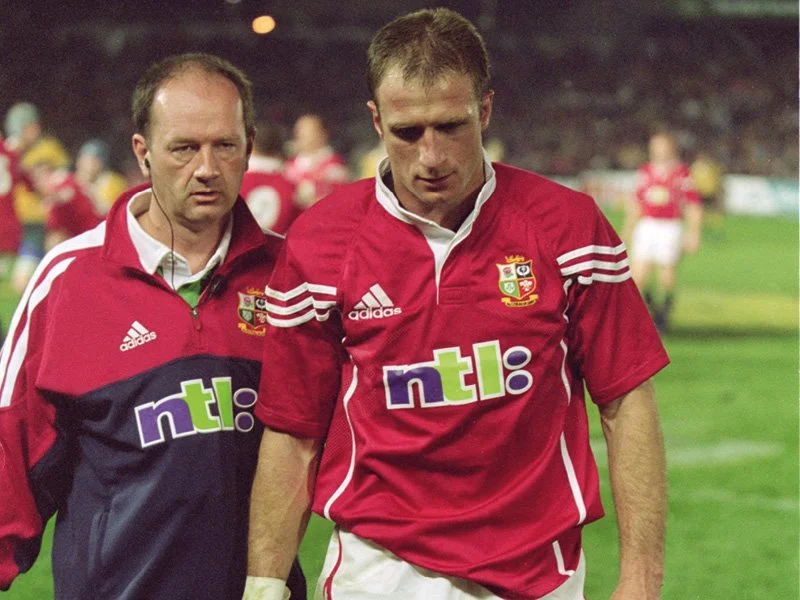
When selection came around for the 2001 Lions Tour to Australia, Mike was playing some of the finest rugby of his career. Ensconced in England’s midfield with Greenwood outside him, England tore through the Six Nations only for an outbreak of hand-foot-and-mouth disease to stop them travelling to Ireland and wrapping up a likely Grand Slam.
Catt was selected as a member of the original Lions touring party and widely tipped to make the Test team alongside Brian O’Driscoll and/or Will Greenwood. But he sustained a back injury before the tour, which almost prevented him boarding the plane to Australia. Once in Australia, his calf started playing up as well.
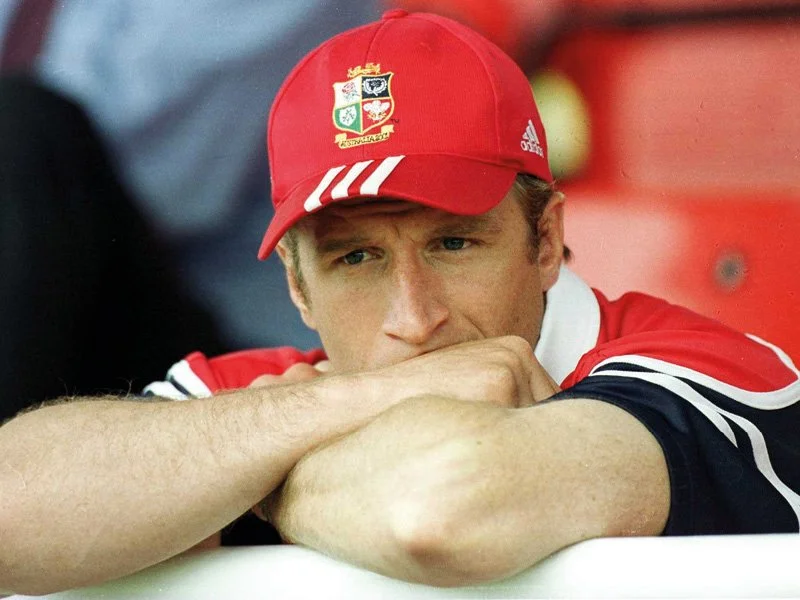
“I probably shouldn’t have gone on the tour to be honest,” admits Mike. “But Graham Henry said, ‘I really want you to come’ and I did everything I could, I didn’t want to miss out again.”
Despite waking up at 5am every day on the tour to coax his body into action, Mike was losing his fitness race. As a last chance saloon, he was selected to start against Australia ‘A’ in the fourth game of the tour, but he pulled up lame. His Lions tour hitting the buffers before it had ever got going.
Mike was not the only England player with a tour-ending injury. Phil Greening, Dan Luger and Dallaglio had all been ruled out, so the four of them went on a roadtrip as a consolation prize. “We hired a car and we followed the tour up the coast, stopping at Byron Bay and places like that, it was amazing experience, a great, great time for us all. And we were always among the Welsh, the Scottish and the Irish, it was just a hive of activity.
“And one of the best experiences I’ve ever had was the first Test in Brisbane. Obviously, I wasn’t playing but walking out the tunnel there was this sea of red. The whole stadium was pretty much red. And it was like, ‘oh my God this is phenomenal’. Everywhere you went out, whether it was Brisbane, Melbourne, Sydney, it was just red. The support we had was so, so special.”
During the 2025 Lions Tour to Australia Mike will, at least professionally, be on the other side of the sea of red, in his new role as the Waratahs’ assistant coach.
So how did the move to Australia come about? “I got a call from Dan McKellar [Waratahs’ head coach] saying ‘look, I’ve got an opportunity out in the Waratahs, would you be interested in coming? It’s a shorter season and would be a new experience for the family. So I spoke to my wife Ali, and it was sort of a no-brainer as it would be a great experience for the kids who are thirteen and fifteen now. It’s the way I sort of grew up and I wanted to give my kids the experience of growing up like that, but also I’ve never coached in Super Rugby before. I admired it from afar like every northern hemisphere player does, so to get an opportunity like this is pretty special.”
Five weeks into his new job, Mike is staying with a friend before he moves into a small flat on the beach in Bronte [in Sydney’s eastern suburbs]. In January, his son will join him and in the summer Ali and their daughter will too.
Next summer will be a busy time for Mike with the British and Irish Lions turning up on Australian shores towards the end of June, playing Mike’s Waratahs on 5th July. It’s a match which will pit Mike against not only his compatriots but his recent colleague at Ireland: the Lions head coach Andy Farrell. Mike left the Irish set-up earlier this year after four successful years with Farrell and the renewal of acquaintances in seven months’ time will add an extra layer of intrigue.
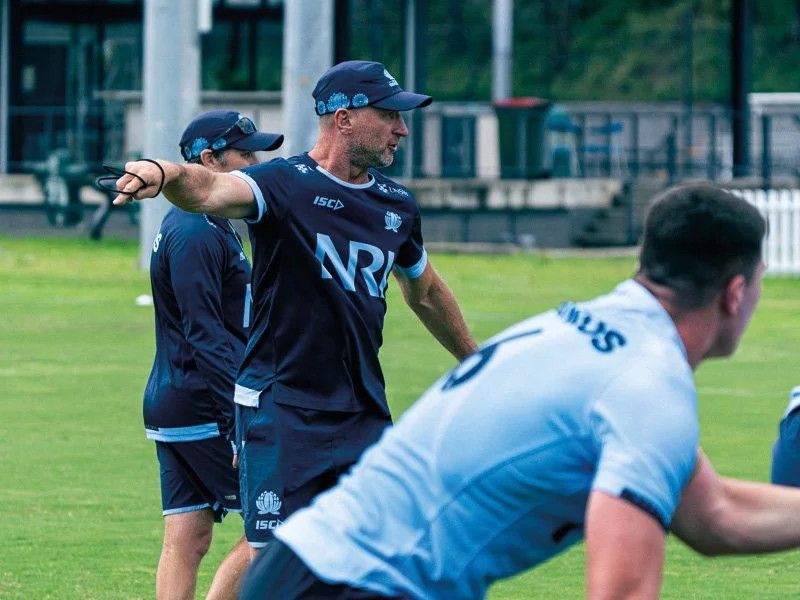
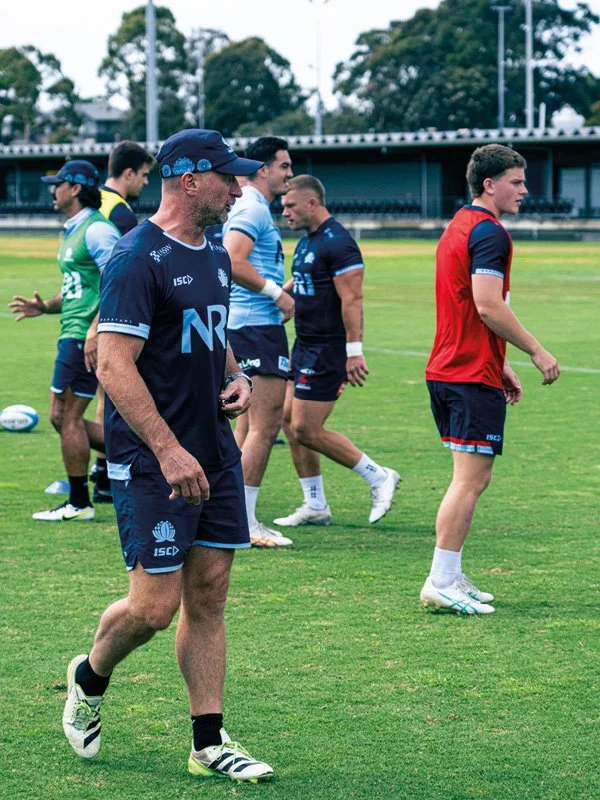
Mike’s focus for now though is on developing his Waratahs squad as players. The team finished twelfth out of twelve in last season’s Super Rugby table and Mike is relishing the chance to work with the raw talent at his disposal, and to pass on his love for the game to a new group of players. “If you can coach a young kid into understanding what loving the game of rugby is, and how he gets there, to put a plan in place for the kid to get there, that’s where I get so excited,” says Mike. “The way I sort of coach is the guys’ buzz, you know. They go back to when they were sixteen years of age and they are playing with their mates on the pitch, that just frees everything up and just creates a great environment.
“That’s the crucial thing,’ he says, “especially with the new generation coming through, just being able to free themselves up.
“And if you are part of a successful environment, that’s life changing. And if I can give that to a young player because of my experience, that is why I love coaching so much, to take them to their potential.”
The interview has only just begun to scratch the surface of Mike’s coaching career, but Mike has to start his work day for the Waratahs, so time is up. Tomorrow they will jet off to Japan for a friendly match with the Kubota Spears in Tokyo. Once in Japan, Mike manages to call us back and tick off a few of our extra questions; so many more could still be asked, but they will have to wait.
His career may only have started when he got bored of backpacking around England, but really that backpack is still slung over his shoulder as he keeps travelling towards his next adventure on the rugby horizon.
Story by Jack Zorab
Pictures by Hugo Carr/NSW
This extract was taken from issue 28 of Rugby.
To order the print journal, click here.