Kent Bray
A mercurial fly-half who faced the Lions in 1989, played The Varsity Match when it mattered, and was part of Harlequins in the star-studded Carling era, Kent Bray had an enviable rugby life. But off the field, as a trader, his cocaine addiction would spiral to thirty grams a week, leaving him on the edge of the abyss.
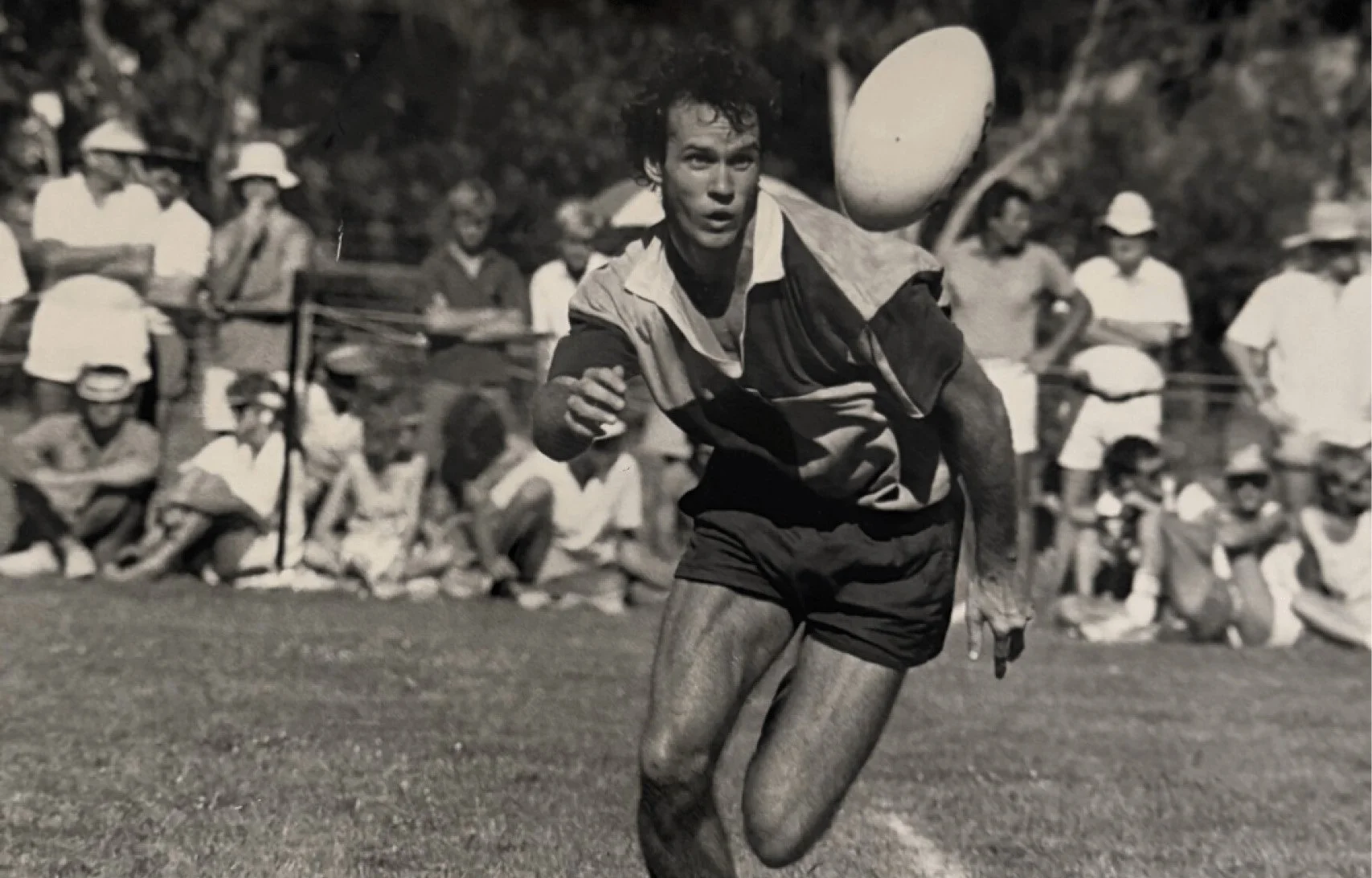
“I really want to make this point,” says Kent Bray at the start of our conversation. “I know I’ve had some really bad stuff happen but the one thing I want to express robustly is just how grateful I am. Grateful to be alive, and grateful to have had the life I’ve lived.”
Kent had that life, not just for a moment in time, or a purple patch when everything goes right for a year or two, but year-after-year through his 20s, 30s and 40s. Well, most of his 40s.
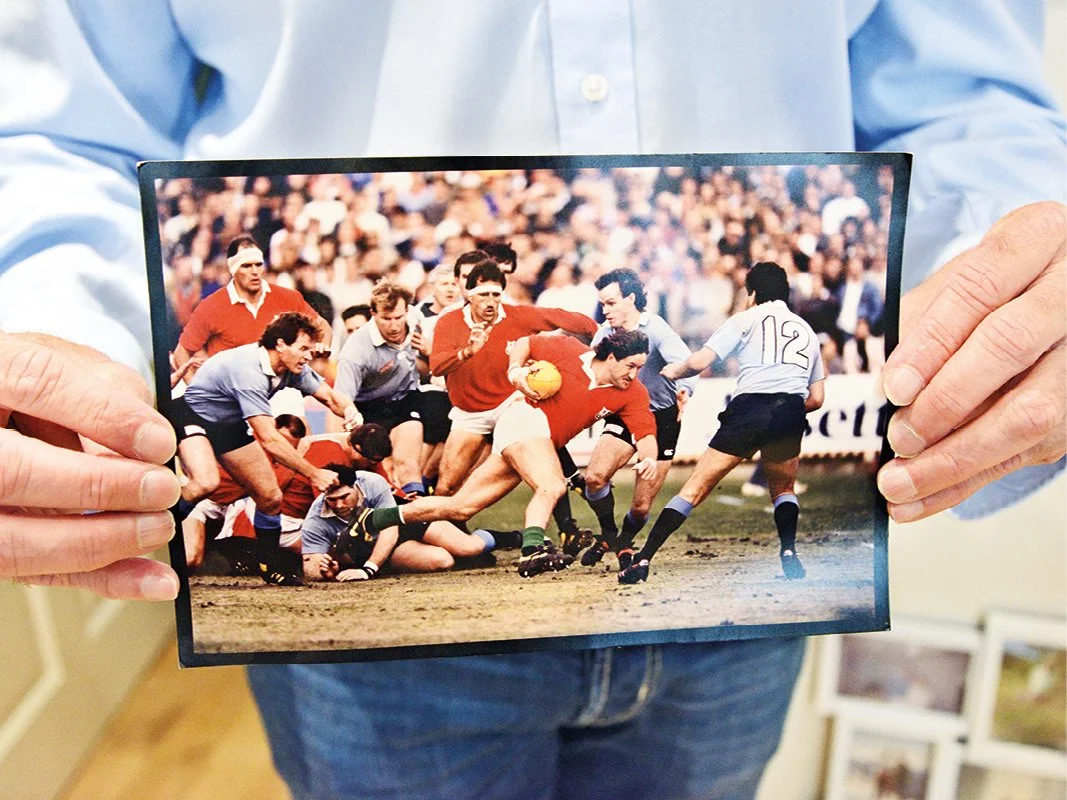
A hugely talented Australian fly-half, he was one of the youngest players in a New South Wales team packed with internationals – including World Cup winners David Campese, Marty Roebuck and Nick Farr-Jones – that faced the British and Irish Lions in 1989, narrowly losing the match 21-23.
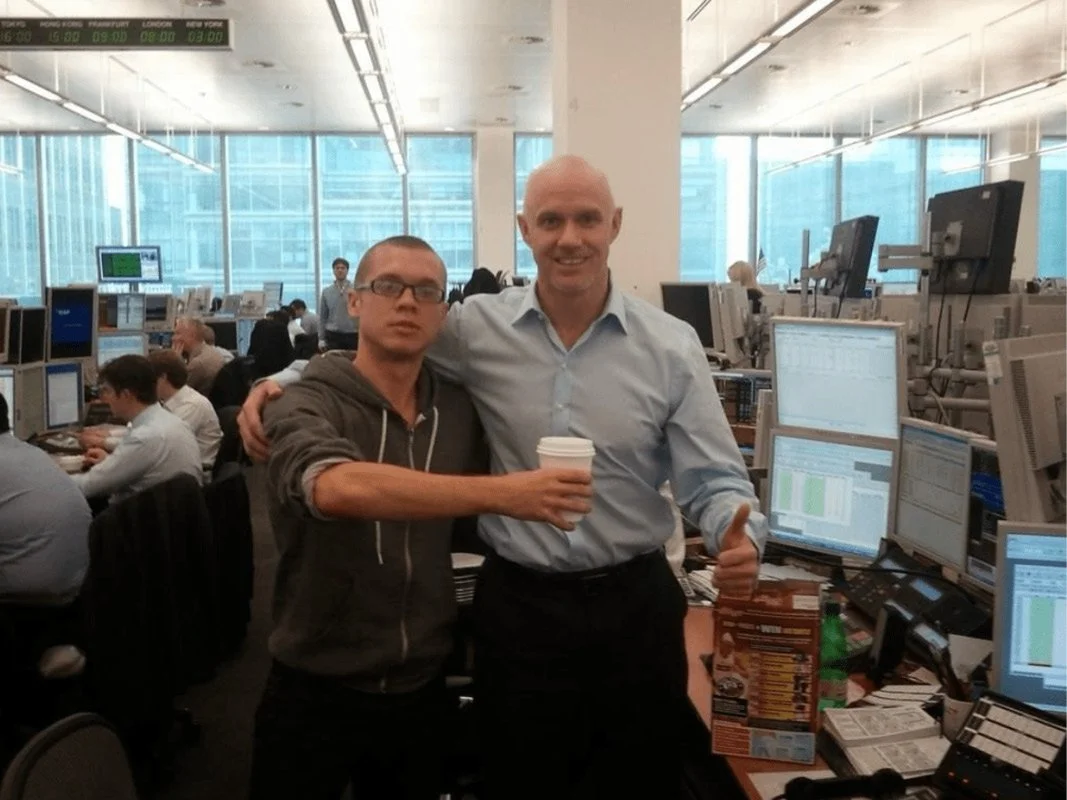
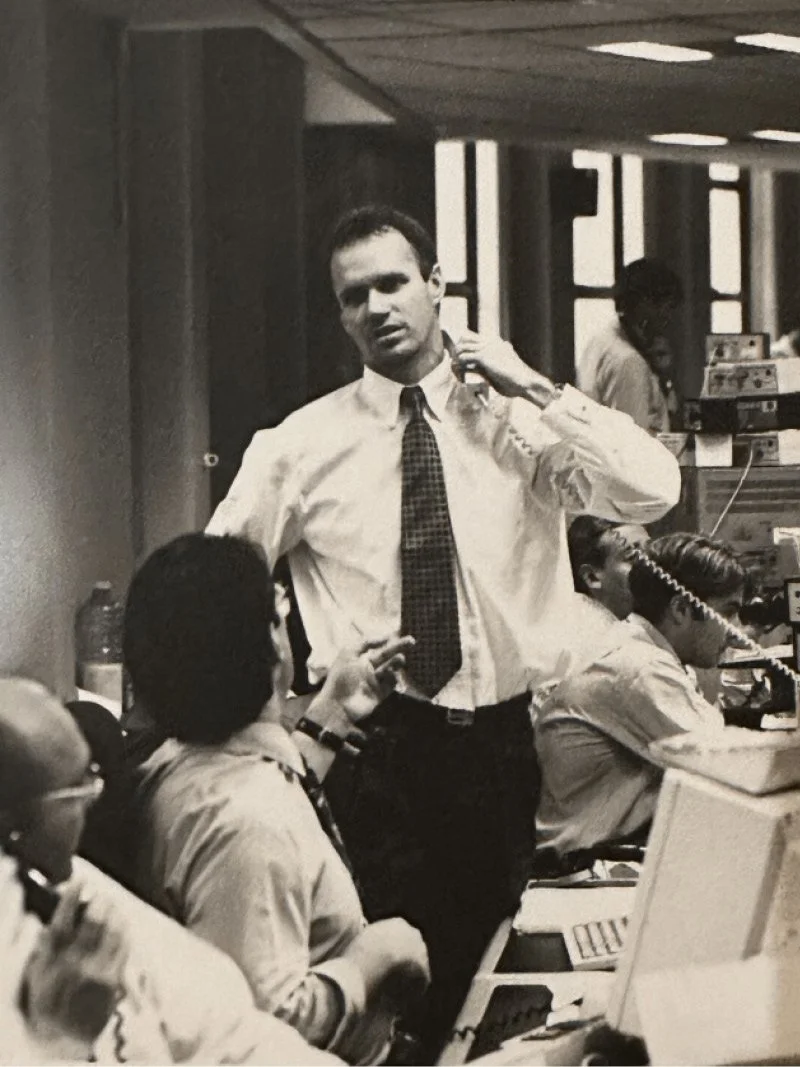
Then, he came to England, got a degree at Oxford University and spent six years as a player, then coach, at Harlequins, when their team featured Will Carling, Jason Leonard, Brian Moore, Mick Skinner and Peter Winterbottom. At the same time, he combined playing rugby with making a fortune with (and for) Citibank’s foreign exchange desk, eventually rising to the position of director.
Some may know him as Gary Stevenson’s boss in the best-selling book The Trading Game, and for being the man who openly questioned Gary’s claim of being, at one point, Citibank’s biggest trader.
Be it academia, rugby or finance, Kent has always excelled, either through talent or sheer hard work. Or both.
There was one other area in which he excelled, or perhaps excessed would be a more apt description. Ten years ago, Kent was sitting in a hotel room having accepted his fate, that he was going to die through cocaine addiction. It was just simply a matter of when.
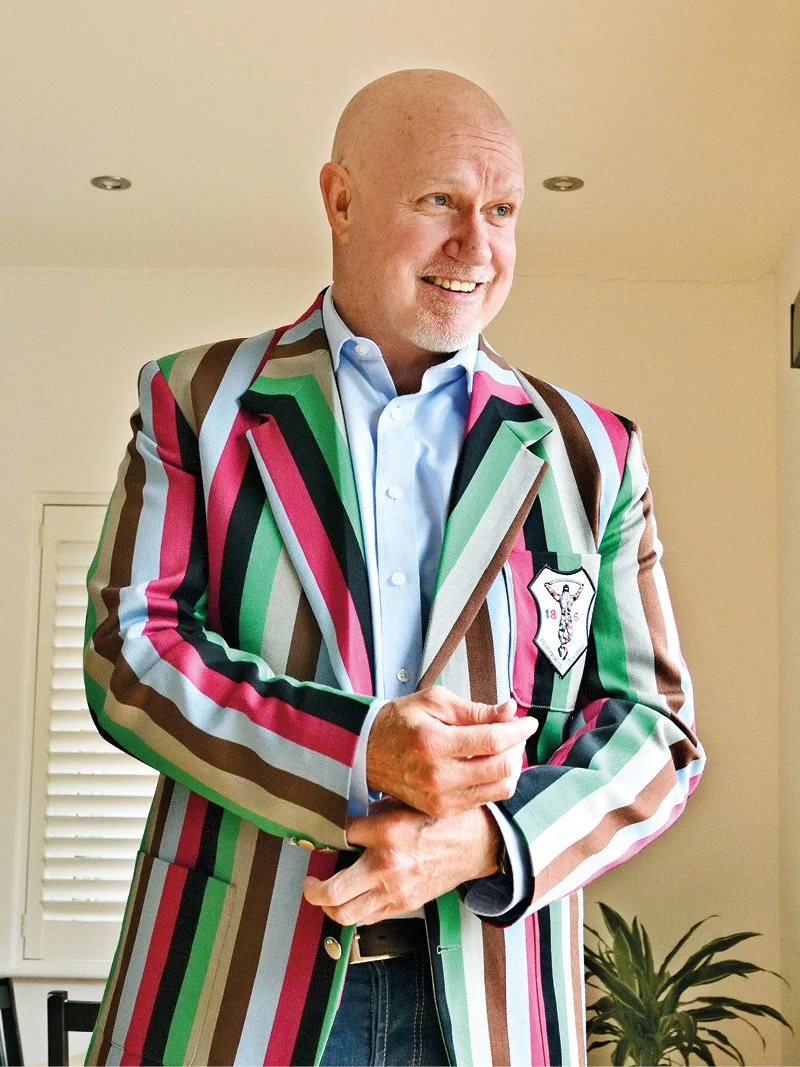
Kent was introduced to cocaine by a very successful businessman who supported Harlequins and who offered it to him at a match sometime in the early 2000s. By his own admission, Kent was somebody who would act on instinct. Yet while that first line of cocaine clearly had the desired effect, it took around ten years to go from something he did once a month, to weekends, to seven days a week, by which point he would start his working day by meeting his dealer. “I was in a toxic relationship with the mother of my two kids, I wanted to leave the UK, and I’d lost about three to four stone, having previously been around fifteen stone, because I was in the grip of cocaine addiction,” he recalls.
“And when I say cocaine addiction, I was doing twenty to thirty grams of coke a week. Some days I was doing six grams of cocaine a day, and I was spending £80,000 a year on the drug. Now, for those that don’t know anything about cocaine, twenty to thirty grams a week is like doing forty bottles of wine, and I wasn’t doing it because I was enjoying it. I was doing it because I was addicted.”
Kent’s account of that time is laced with moments of black humour. He would only use the drug on his own, which helped him to mask his addiction from his team at work. One colleague assumed Kent’s weight loss and behaviour was because he had a strict fitness regime and was training for triathlons.
In 2014, he left Citibank knowing he was financially secure, but everything else about his life was unstable.
It was rugby, or more specifically a group of rugby players and coaches, that helped Kent to turn his life around to the point where this month he is celebrating nine years of being clean. Now he’s using that series of extraordinary life experiences to help others as a counsellor and mentor.
Rugby Journal meets Kent at his house in Billericay, Essex. This is where city boys go to live when they become men; when they have earned a seven-figure bonus. They come to Billericay to settle down, get married, have kids, buy a house, pay a mortgage and own a luxury car or four.
Kent’s spacious and immaculate abode is also now home to his office where he conducts online counselling sessions. He became a qualified counsellor in 2022. Because of Covid most of us had to work from home and using tools like Zoom and Teams became part of everyday life to the point where you don’t have to seek professional advice in person anymore. You can do it online instead.
There was also the impact of the pandemic on mental health across society, along with a growing willingness among men, especially older men, to talk about mental health.
A survey published in 2024 by mental health charity MIND revealed that 54 per cent of men said they were comfortable speaking about their mental health, compared to 46 per cent of women, and those figures are higher among older males.
Because of the life he had, men of a certain age are more likely to open up to a guy who played rugby at the top level but also understands what it means to hit rock bottom when you seemingly have everything you need in life.
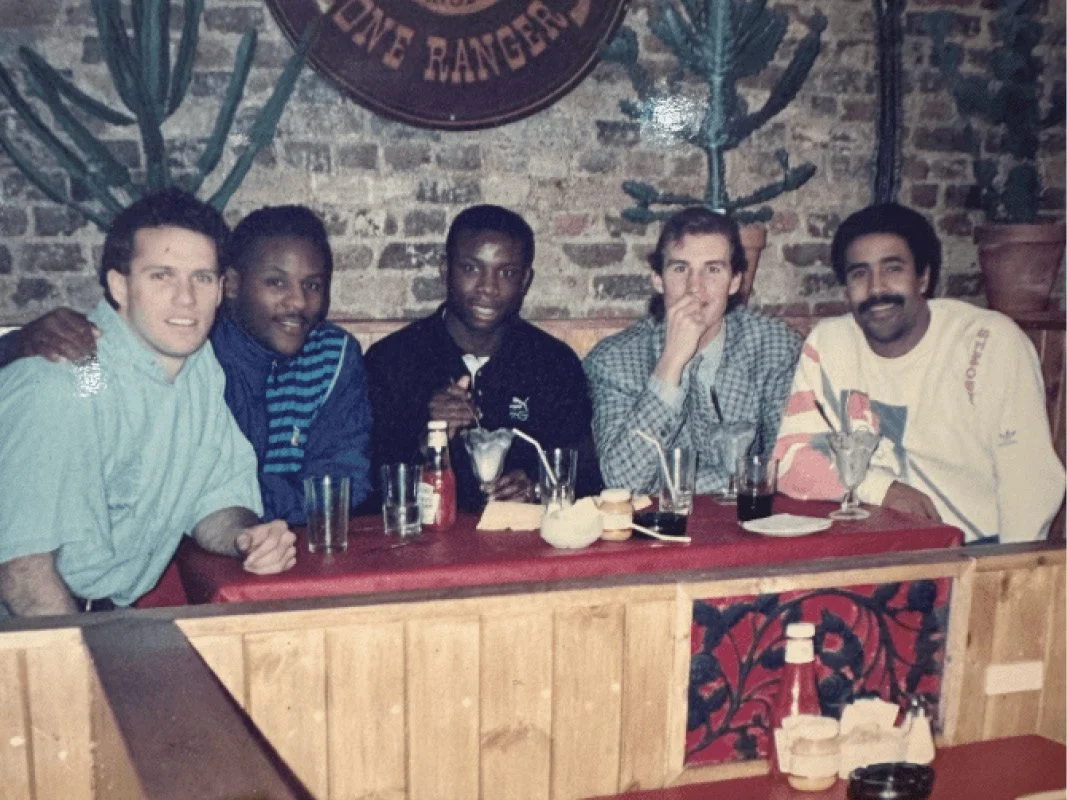
There have been ten Rugby World Cups since the first tournament in 1987 and Kent has attended nine of them, including eight finals. “I’ve always gone with the same group of friends – Frank Austin, Dirk Hansen and Troy Coker,” he says. “I was in the stadium when Troy lifted the trophy [with Australia] in 1991, which was pretty fucking surreal!”
Kent knew it was going to be difficult for all concerned when they met up in London for the 2015 tournament. The moment they saw him they couldn’t help but see that he looked so strikingly different, but the confidence and bravado that you often need to succeed not only in sport but also as a trader, made him believe that he could simply tough it out. “Yeah, I was in a world of pain, really. They looked at me and I could see in their faces they knew something was wrong.”
They went out that night and Kent, by his own admission, did a rotten job of trying to cover up his addiction, making frequent trips to the toilet.
Being typically blunt Aussies, they said he ‘looked like shit’. “I said, ‘I’ve been under a lot of stress, a lot of pressure.’ They said, ‘mate, but you’ve left the city’.
“Then three or four days before the final, Troy said, ‘I’ve spoken to the boys. We’re going to have an intervention. You’re an addict. You’re addicted. You’re gonna die, you know that, right?’
“And I said to myself, I’m not having an intervention. I can get this under control. But that’s what addicts do. They deflect.”
Troy eventually got through to him. “The moment that would be a catalyst for change for me was walking through South Kensington,” begins Kent, “about two or three o’clock in the morning, and I was like, four or five bags of cocaine in, plus lots of drink. Troy just put his arm around me, which is unlike Troy. He’s quite an aggressive character! He said, ‘We’re leaving in two days. Please, please you’ve got to get professional help.’
“Dirk said to me a few years later, they were sitting on the plane going back to Australia, and one of the guys said, ‘you know, we might not see KB ever again’, because that’s where I was at.
“I did everything I could in the next five months to stop,” he continues. “It’s that macho mate thing to prove you’re right. And I did reduce the amount I was taking but I couldn’t stop.”
Troy’s words did at least convince Kent to go into rehab. “Eight days after coming out of rehab, I relapsed, and I ended up in a hotel room in Essex for three weeks by myself,” recalls Kent. “I thought, ‘If I keep doing this, eventually I will die because doing coke can put an enormous amount of stress on your heart, especially when you’re doing the quantities I was doing. It was the lowest point. I was filled with self-loathing, self-pity, guilt, shame, remorse and embarrassment about what I was doing and where I’d ended up, and I had anger, resentment and paranoia.
“I was on my own. I’ve got two kids who I love dearly. But I dropped out of all social groups. I hadn’t contacted any of the Harlequins guys in ages. Then I had what they call a ‘spiritual awakening’.
“I went to the toilet, and it said 3:22am on the clock on the TV, and my life just flashed before my eyes. And I had this moment of clarity, which was, ‘Mate you have got two choices – die from cocaine use or get recovery.’
“I threw myself into recovery and went to Narcotics Anonymous. The 18th June 2016, was my first clean and sober day.”
As part of his recovery, Kent moved to Southend, rented a flat and began to reacquaint himself with the man he used to be. “I walked into Westcliff Rugby Club one day just to watch a game. And this guy called Pete Jones, who I’d never met before, came over to me and he said, ‘Are you Kent Bray?’ I was amazed that he would have remembered me, for two reasons. It wasn’t as if I was a household name, and I had hair when I played for Harlequins.”
Westcliff had just taken on a young coach in Jacob Ford [son of Mike, brother of George] and Pete felt that Jacob could benefit from being around somebody with Kent’s experience. “When I got back on the training field and put the ball in my hands, man, it was beautiful,” he says. “It was fucking beautiful!”
And so, for the next three years, Kent would be Westcliff’s director of rugby. “It reminded me what I was about and what I had lost. To get back into that rugby community, I felt alive again. I’d lost a ton of confidence and self-esteem in my addiction. It’s like this cyclone that rips through your life, destroying everything and everyone in sight.”
That period also allowed Kent to reflect on his life and the events that had shaped him. He was sixteen when his brother, Scott, who was two years older, died having gone into hospital for what everyone thought would be a routine operation. The following day, Kent was playing rugby for Rockhampton, refusing to be consumed by grief.
Getty Images
One of the Rockhampton students watching on the sidelines that day was Sandy Horneman-Wren. Like Kent, Sandy studied law and he would go on to become a judge. ‘The most determined individual game of rugby I ever saw played was by Kent on the day following the death of his brother, Scott,’ Sandy later wrote. ‘I did not know Kent then, but had marvelled at his brilliance in past games. The deception of that day was that to most who were there, they were unaware of the grief of the boy wearing jersey fifteen; and he was going to play the house down. And he did.’
From that point, Kent always looked forward, not back.
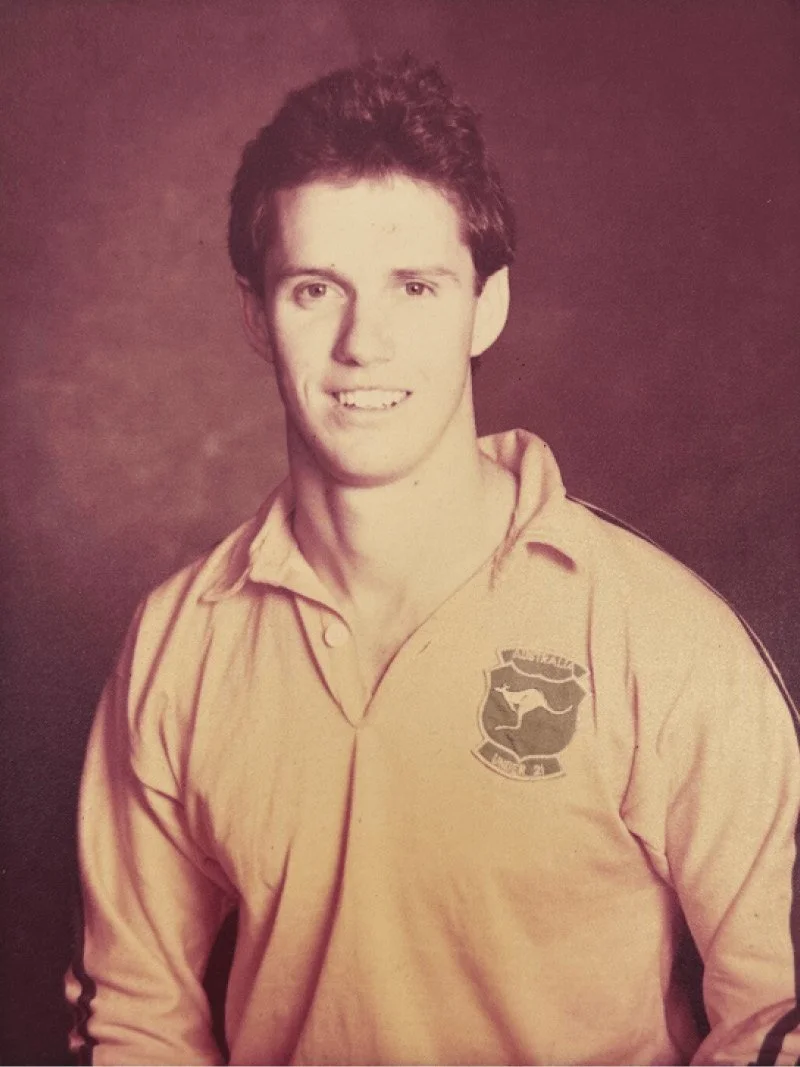
He played for Australia under-21s and spent several seasons at Queensland. Had he chosen any other team in Australia he probably would have been a regular fixture at fly-half. At Queensland, he played second fiddle to Michael Lynagh.
Although he practised law, Kent had no passion for it. He decided to move to England, to get a degree in social studies at Oxford University and play in the Varsity Match against Cambridge back in the day when the contest could attract a crowd of 50,000 at Twickenham, was screened live on BBC2 and was a showcase for future internationals.
He briefly returned to Australia but had to accept he wouldn’t become a fully capped Wallaby. So, he came back to England and signed for Harlequins.
Playing for Quins was known as a good route into the city. It put him in contact with guys working in finance who would welcome a well-educated rugby player with a big personality into their ranks and he got a job with brokerage firm RP Martin.
Kent’s aim was landing a role with one of the big financial institutions in Canary Wharf and after a seemingly endless stream of interviews, he joined Citibank in 1993. Soon after, he was earning £100,000 (£50,000 basic, £50,000 bonus), playing for a team that contained half the England XV and was dating ‘an absolute glamour’ who worked for the socialite magazine Harpers and Queen.
Also in 1993, Kent received a call asking if he would play for Scotland. There was a gap in the Five Nations schedule and the Scots had a game for a representative team lined up against Ulster at Ravenhill, except they were short at fly-half and Kent was eligible to play because of his Scottish grandmother.
Kent thought to himself, ‘ah, why not?’ and had a game of his life. “Mate, it was one of the days where literally everything I did came off,” he recalls. “It was freakish.” After the match, Scott Hastings asked if he would make himself available for Scotland. “It was the autumn series in 1993 and the All Blacks were coming over,” explains Kent. “The reason I remember it very distinctly was because Jeff Wilson made his debut and got a hat-trick of tries playing on the wing for the All Blacks. But leading up to that game, they picked me in a Scottish Development XV to play against New Zealand and I couldn’t turn down the opportunity to play against the All Blacks.”
Kent kicked four penalties, registering all of Scotland’s points in a 30-12 defeat. He couldn’t have done much more to make the international XV but ultimately Gregor Townsend got the nod. Years later, Kent was on a charity bike ride with ex-Scottish internationals Roger Baird and Iwan Tukalo. “Iwan said, ‘Your name rings a bell’. I explained that I played for Scotland and then I said, ‘Can I tell you right now I’m glad I didn’t get a full cap. I don’t mean that to be offensive but I’m an Aussie. I’m a proud Queenslander’.
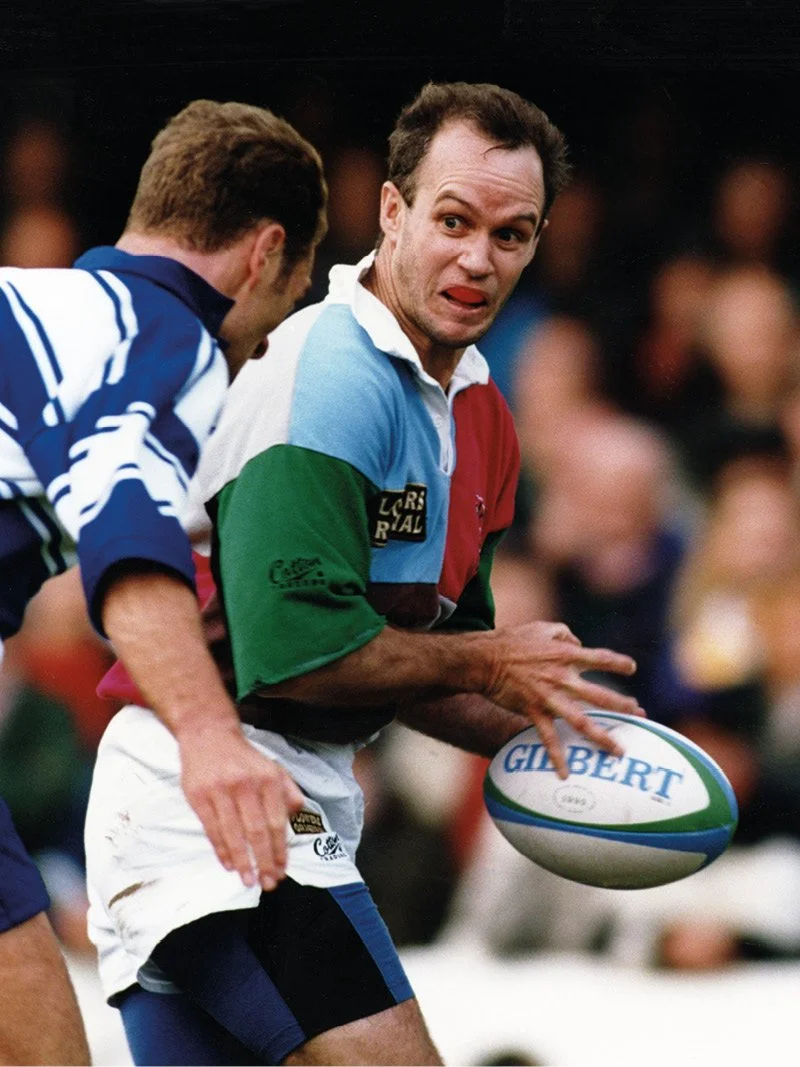
In his final season at the Stoop, Kent was named player of the year, having set a new points record, although he still believes he got the award more as a ‘thank you’ for the six years he had spent there, rather than that one season. Looking back on that time at Harlequins, was there a sense that they underachieved? “It was a team full of characters,” says Kent. “Brian Moore: very intelligent, very intense. Will Carling: privately schooled army boy, movie star good looks, England captain at 23. Peter Winterbottom: absolutely hard as nails. Mickey Skinner: crazy as a cut snake. Jason Leonard: could sit with the King of England or a homeless person, and both those people would feel comfortable. Yeah, amazing characters, but, yeah, we underachieved for the ability that we had in that team.”
What happened next, is a story about life after rugby and what it means to reach a certain level of fame. “You play for a club like Harlequins or Gloucester or Northampton and you have an identity,” explains Kent. “Whenever you go into that club everyone knows your name. You go to the ground. You put on the jersey. You run out and the place erupts. You get interviewed after the game. You turn out for local charity events. You are validated. You are somebody. You feel that adulation. You feel the love and it seeps into every pore, nook and cranny of your soul, right?
“Then somebody else starts wearing that jersey,” he continues, “somebody else is getting that adulation, you go from this peak when you have this really fulfilling career and then you stop playing. Whenever you go back to the club, increasingly fewer people recognise you unless you’re a Martin Johnson or Lawrence Dallaglio. You start to lose that identity and that’s when guys struggle.
“I worked in the city, got a million-dollar bonus and I know this sounds crazy but it doesn’t compare to that five minutes before kick-off when you’re in this heightened physical and mental state. You’ve got that brotherhood: ‘I will be there for you. Will you be there for me?’ And you look each other in the eye and those moments cannot be replicated in the real world.
“Did you watch that documentary on 2003 World Cup winners?” he asks. “Ah, man, it was painful to watch at times. You would think winning a World Cup, you would be happy for life. But everyone has their own struggles. Life just turns up.”
As part of his programme of recovery, he went to see Peter Winterbottom to explain why he hadn’t been in touch and to open up about his addiction. He did the same with Gary Stevenson, who recently came to the fore again, going viral for his views on entrepreneurs. “Three or four years into being clean I thought, ‘I wonder what Gary is up to?’ because I was harsh on him at the end of my time with Citibank and the reason why was because I was high on coke.”
They met for lunch and Kent opened up. Gary was in the process of working on The Trading Game. Although Gary used pseudonyms for all the characters it was obvious to anyone who worked at Citibank that JB in the book was KB in real life. “When I read the book I was conflicted,” says Kent, “because if you didn’t know Gary, you didn’t know trading … look, it’s a really good book and what he says about the inequality of wealth is absolutely correct. But when I read it, well, yeah, there’s two things. One was having the opportunity to earn that sort of money, and he wrote some ridiculous, inflated stuff about how great a trader he was.
“For me, it comes back to gratitude. He ran everyone down in the book. And I thought that was distasteful, but that’s my ethical and moral code, right?
“Grant Birkett played for Harlequins, and he got one cap for Scotland. It was Birko who got me my job at RP Martin and I’m eternally grateful to him. Harlequins, when they brought me over, sorted out my accommodation, got me a car, just let me settle. Again. I’ll always be grateful.”
Kent was offered jobs to go back into the city but was encouraged to become a counsellor by another member of his recovery group. He gained his qualifications and then began to promote his new life as a qualified therapeutic counsellor, initially through Instagram but predominantly through LinkedIn. “I didn’t want to go back to the city,” he says. “It’s a bit like your rugby career. When it’s over, it’s over. And I thought ‘I’m gonna have to do something else’, and I just had a revelation that I’ve had a ton of experiences in my life. I tell you, it’s up there with the most bizarre things that have ever happened in my life – I presented myself [on LinkedIn] and I started getting guys contacting me and asking, ‘can you mentor me?’ I hadn’t really thought about mentoring or knew that much about it.
“We’re talking successful, professional men, decent level of education, a bit of sport in their background. On the outside it looks fine, married, kids, house etc … but they are struggling in different ways. And so I’ve become a counsellor and a mentor.”
The Trading Game is reportedly being adapted for TV. If and when that happens then Kent will be thrust into the spotlight as the ‘coke addicted trader’ which is how he is referred to in the book. He is more likely to see it as an opportunity to connect with more people who are addicted, and maybe even save a life. He also volunteers with MIND which can often mean dealing with cases of extreme abuse and multiple addictions. “It is by far and away the most fulfilling vocation I’ve ever had in my life,” he says. “I’m sixty. I’m in the last quarter of my life, my kids, who are fifteen and twelve, are now very much a part of that life.
“I want to use my experiences to help other people.”
If you are looking for someone to talk with about an issue that is causing you concern, then contact Kent at his website kentbraycounselling.co.uk
Or listen to his podcasts on YouTube and Spotify.
Story by Ryan Herman
Pictures by Nick Dawe
This extract was taken from issue 30 of Rugby.
To order the print journal, click here.