London Welsh
Picking up glass from the park pitch before his first training session, Cai Griffiths knew this wasn’t the London Welsh he’d helped to the Premiership three years before. It literally wasn’t, it was the amateurs at level 9 who’d just finished mid-table, and he was tasked with returning this iconic rugby name back to the national leagues. Five promotions, no salaries, easy.
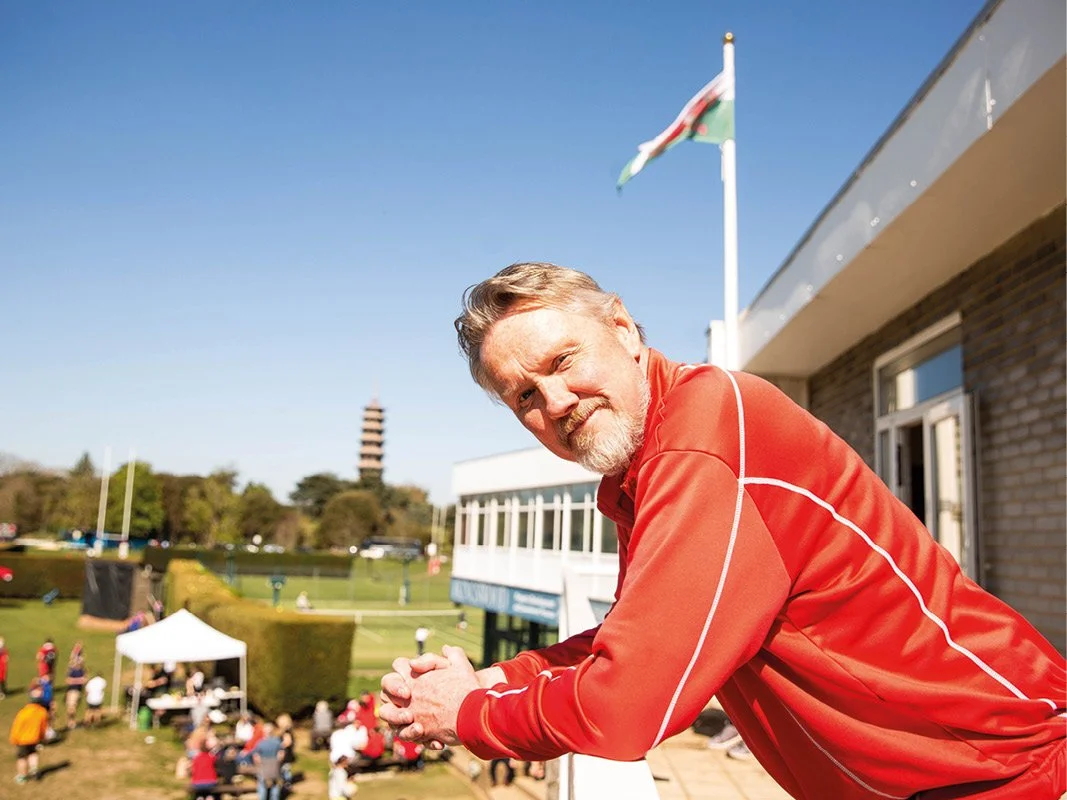
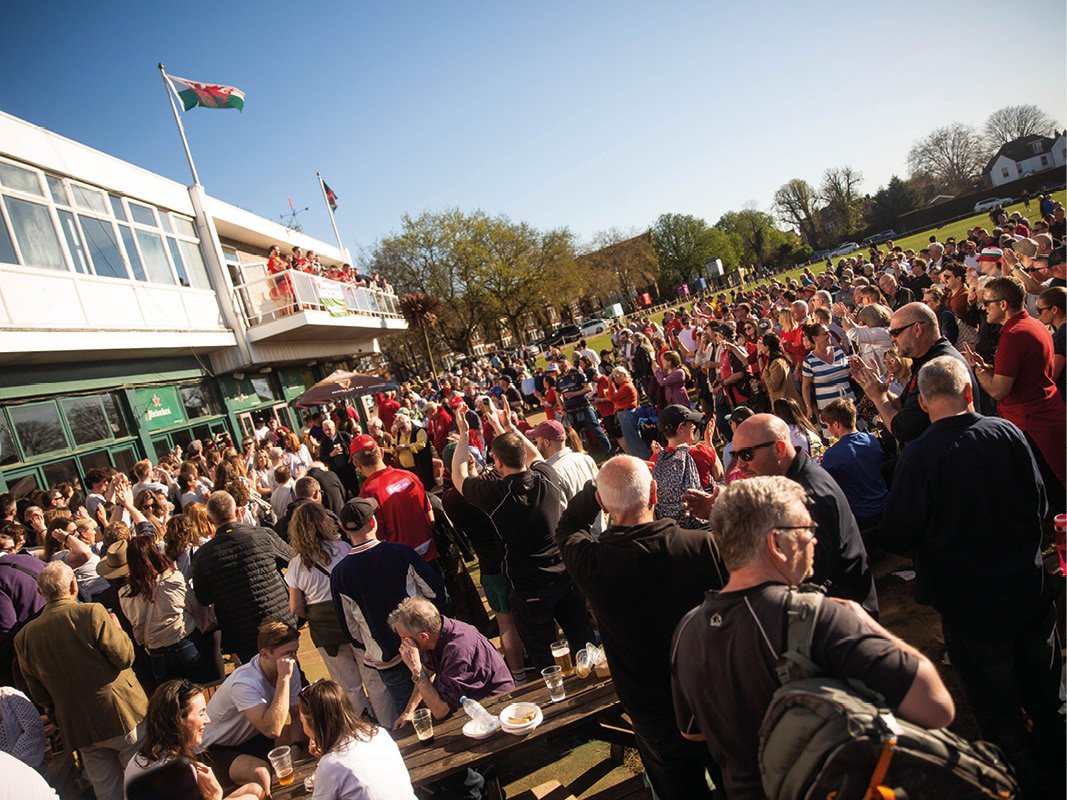
Bathed in sunshine, nothing but cloud-free, bright blue skies in almost every direction, the only exception being the presence of that most famous of ‘non-rugby’ rugby landmarks, the 163ft Great Pagoda at Kew Gardens. Even without the rugby, there’s reason enough to want to be at the Old Deer Park, London Welsh’s historic ground on an unseasonably glorious day like this in April.
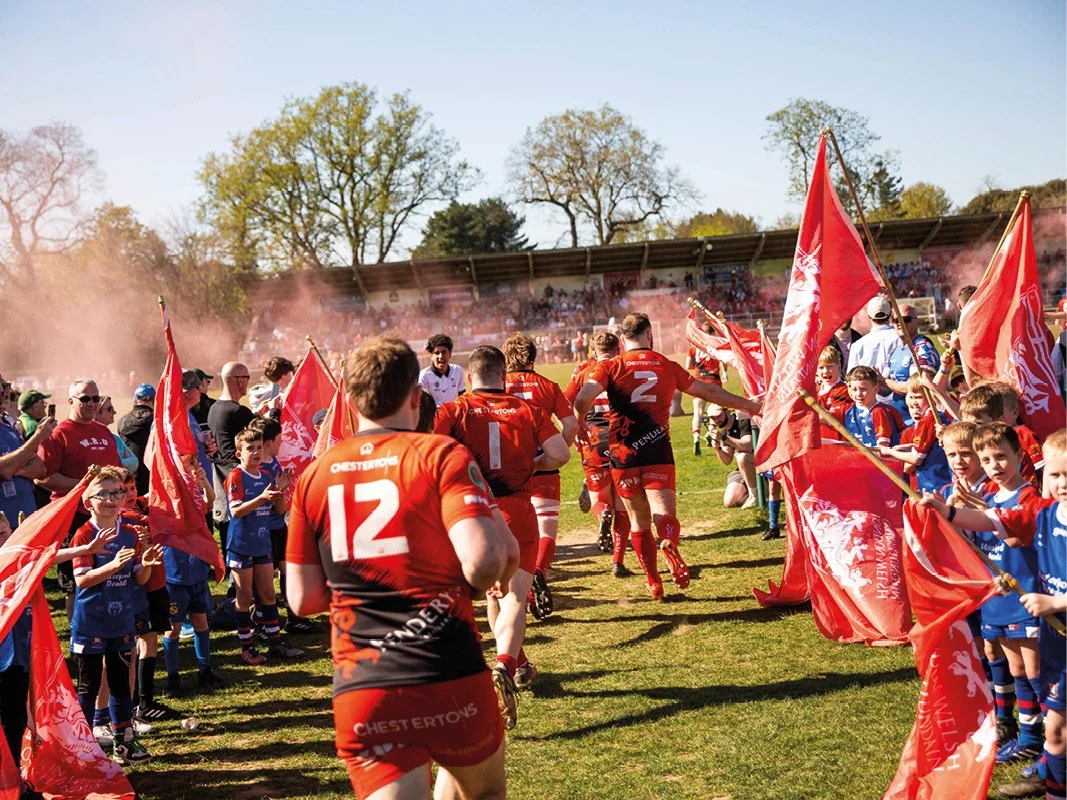
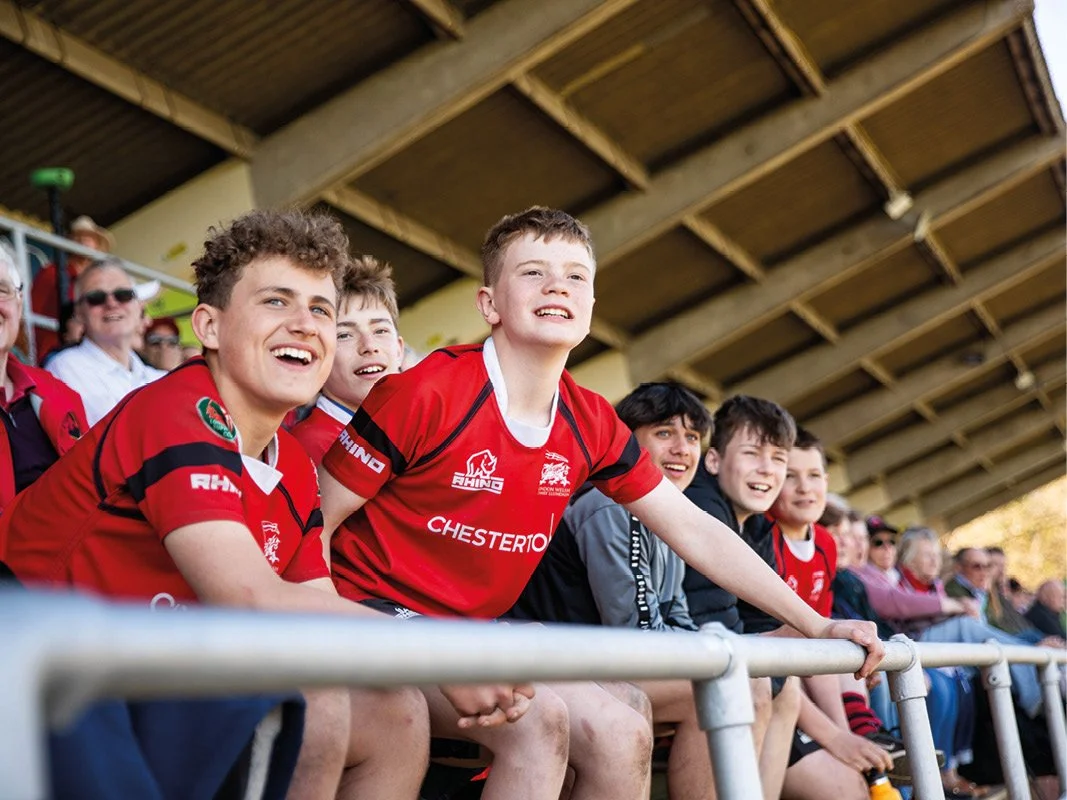
The sun’s not the only one to show up: turning up in their droves are the London Welsh faithful, who give true meaning to the latter, having followed their side in serious numbers as they climbed their way up the leagues, bringing the Exiles ever-closer to a league more befitting of their history within the game.
Bracknell isn’t a game which usually pulls in the punters, and it’s not every club at level 5 of the English pyramid (or any pyramid for that matter) that can bring in four-figure crowds, but here we are, among what must be close to 1,500 rugby folk for the final home game of London Welsh’s Regional 1 South Central campaign.
This season has seen them take the league at the third time of asking, securing a fifth promotion in eight seasons, an ascendency that took them from Herts/Middlesex 1 to National 2 South. “It’s 1,417,” says Danny Griffith’s, the club’s chair, correcting our crowd estimate. “We have it independently verified so we know for sure.”
Ironically, we’re speaking to Danny after the match, as he was absent due to illness that day. “I had a massive allergic reaction to something,” he explains, “nothing I’ve ever had before, I was head to toe in hives, my lips were double size, mouth swollen, I was just lucky it wasn’t anaphylactic.
“Not being funny,” he adds, “but if I’d gone to the game, I’d have just looked like a spotted gnome walking around the club…
“I was gutted, absolutely gutted not to be there…”
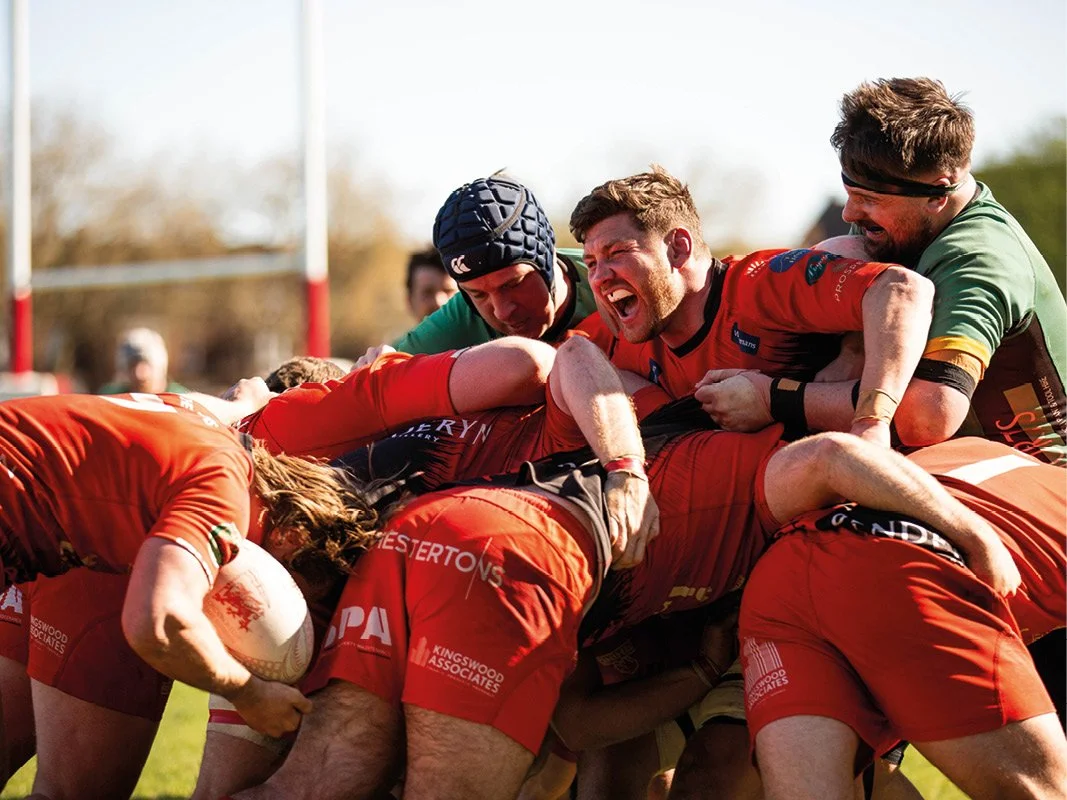
The day was as perfect as you could want from a day at the rugby. Even without an affiliation to the home side, the presence of the likes of British & Irish Lions legend John Taylor at a 400-strong pre-match lamb shank dinner; a live soundtrack provided by a young Welsh choir; and just the general feeling you get at a club which was once on the brink and is now enjoying the fruits of a hard-slog journey back, transcends the ground. Maybe not to Bracknell, who are soundly beaten 50-12, but even they enjoyed a cold pint in the sun afterwards, having pushed London Welsh for the whole game, the scoreline perhaps not completely doing justice to their efforts.
Not that London Welsh is a good place for any side to go. Before they fellto title rivals Jersey in February, London Welsh hadn’t lost in 23 matches, home or away. It’s the kind of form and dominance not seen at the ground for many years. They’ve known the best of times, it’s on almost every wall. One wall in particular, next door to their own museum, The John Dawes’ Room, tracks every great moment with a timeline, and it’s got plenty of ‘stops’. It tracks myriad moves across London – Stamford Hill to Tufnell Park, Kensal Rise and Cricklewood, Raynes Park, West Kensington, Hendon, Hampstead, Acton, Leyton, West Ham, Herne Hill – before home was found in the shadow of the pagoda on Kew Road.
It tracks the successes on the pitch: from being crowned the best club in England and Wales in the early-70s, to agonising cup final defeats at Twickenham, and the richest of Lions history. This was, after all, the club that paved the way for the ‘Welsh-style’ of play, and had seven players on the Lions tour of 1971 which culminated in a still-iconic Test series victory over the All Blacks (winning 2-1, with a fourth Test being drawn). There are also promotions to the Premiership and more silverware in the British & Irish Cup, before it stops
in 2017, with liquidation, although perhaps in a show of defiance that the club was not done, it’s not actually a ‘full stop’, but an ellipsis that follows the words ‘The Journey Begins’. “We’re now going to get another bit made for this to cover all the promotions,” says Joe Jones, who finds us perusing the timeline while he looks for a place for the choir to practise. He’s the chair of the London Welsh Rugby Choir, a group set up by four friends (Joe being one of them) as a way of finding a good excuse to go on the British & Irish Lions tour of 2005. It went better than expected. “We had such a good tour, such a good welcome, from that welcome, we then got invited to the Olympics, onto the radio, we did Hong Kong Sevens,” he explains.
And for anyone who’s been a regular at Old Deer Park for the past seven season, they’ve provided the musical score for their rise back to the national leagues. Although Joe is more keen to talk about the London Welsh side of the 70s. “They had 14 internationals in 1971, I think the only non-international was Freddie Davis the prop,” he says. “But I didn’t start playing until 1973, because I was at university.
“When I came to London I needed to find friends,” continues Rhondda-born Joe. “ I had no idea you could just turn up at London Welsh, one of the biggest clubs in the world, with a pair of boots, and just ask to play. But you could back then.
“I always thought we’d do it, we had the right mindset,” says Joe, switching topics swiftly to the current generation’s fifth promotion. “And we’ve scored 900 points…”
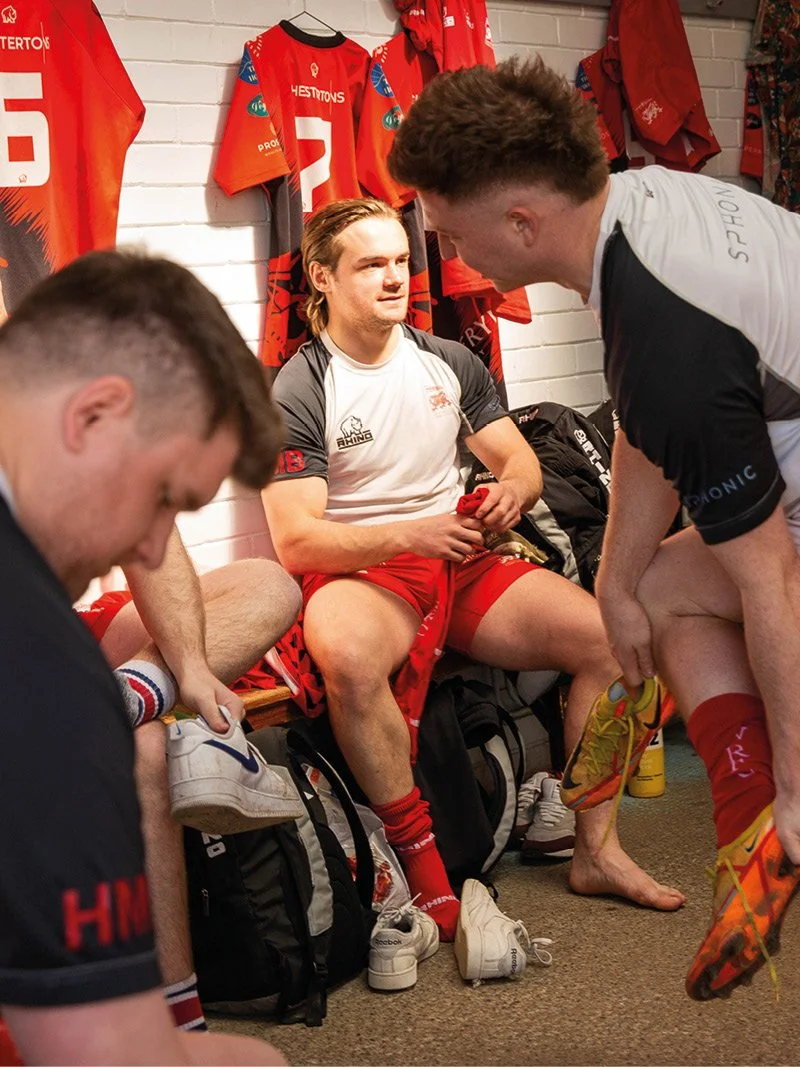
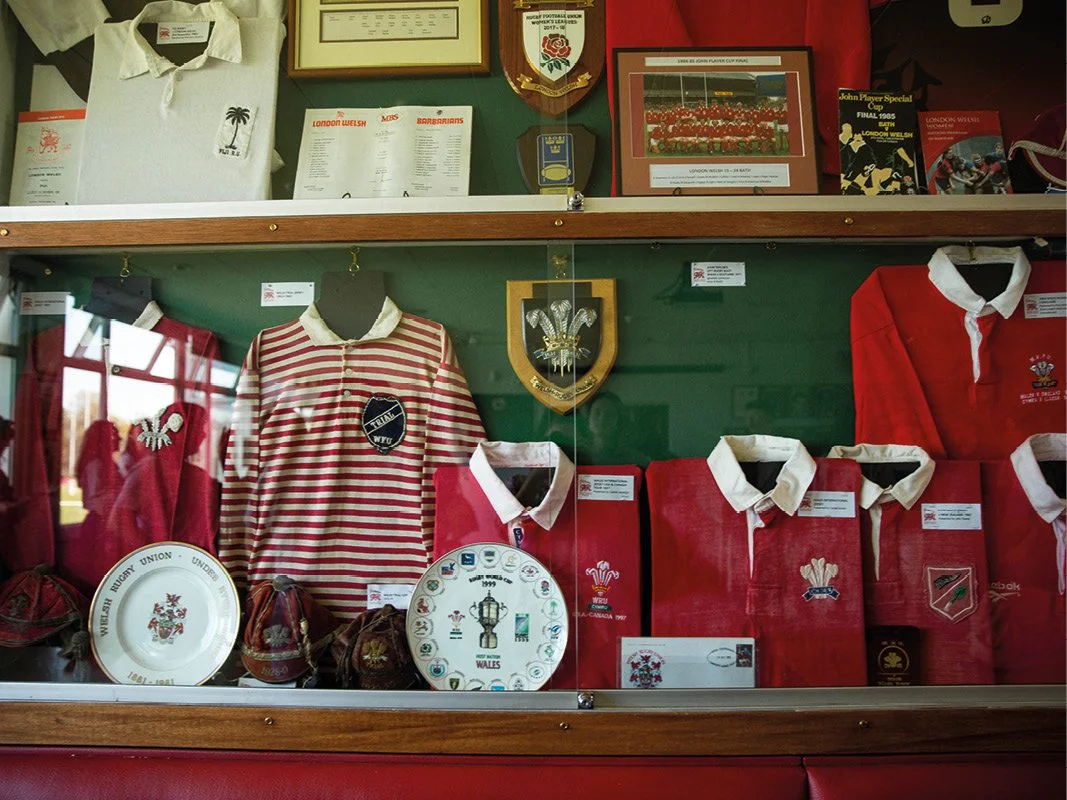
The John Dawes’ Room is now open, Joe takes us through to a room adorned with walls full of shirts, assorted caps, rugby knick-knacks and of course a Grogg or two, and another London Welsh stalwart Morlais Evans joins the chat. “It’s our style, and we got past the 1,000-mark today,” he says, picking up on Joe’s comment about 900 points. “We’re used to free-flowing games, and it was only when Jersey came to play at home a few weeks back that we lost, but that was their big hurrah. If Jersey had lost that game, their season was over, and they played out of their skin, especially second half. We led all the way through until the last minute.”
“The ref added ten minutes,” chips in Joe.
“Unbelievable,” agrees Morlais, “some of our boys didn’t know defeat until then: we’d won 23 or 24 games on the trot.”
Joe is keen to sing the praises of the London Welsh style some more. “I’ll give you an example,” he begins, “it’s always been about playing attractive rugby. The first game I ever played for London Welsh, away somewhere, I had the audacity to kick the ball for touch and after game I had to stand on a stool and drink a pint as punishment.
“Nobody at London Welsh kicked for touch, you always recycled the ball through hands.
“And it was John Dawes who changed everything,” he continues, “he introduced fitness regimes at a time when nobody even trained: it was turn up on Saturday, smoking a fag, and have a couple of pints after game.
“He also brought everyone into the idea that the ball moves faster than a man so if you pass the ball, you’ll beat the man. He realised we had small forwards, but if he made them the fittest in rugby then we could move ball around, so rather than getting bogged down in a maul we’d get the ball going.
“Look at this photograph,” says Joe, changing topic again, “It’s the Prince of Wales, now the king, opening our clubhouse in 1969 – that wouldn’t happen to a normal club anywhere else in the world.”
It’s not just rugby brains that make Joe passionate about London Welsh, it’s the beauty too, as he points out of the window to the ground. “And I don’t think there’s a nicer ground in Britain actually… just look at it.”
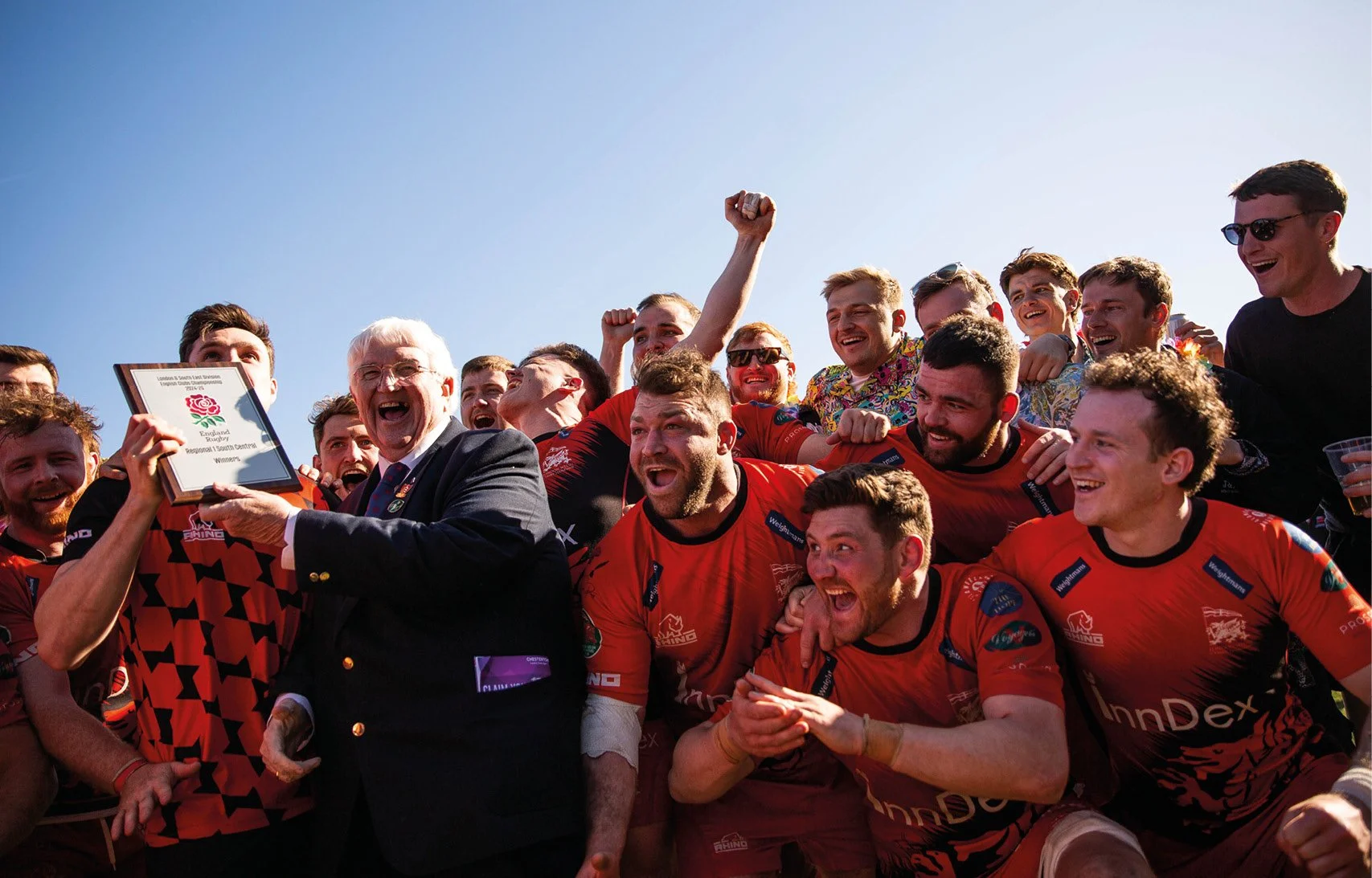
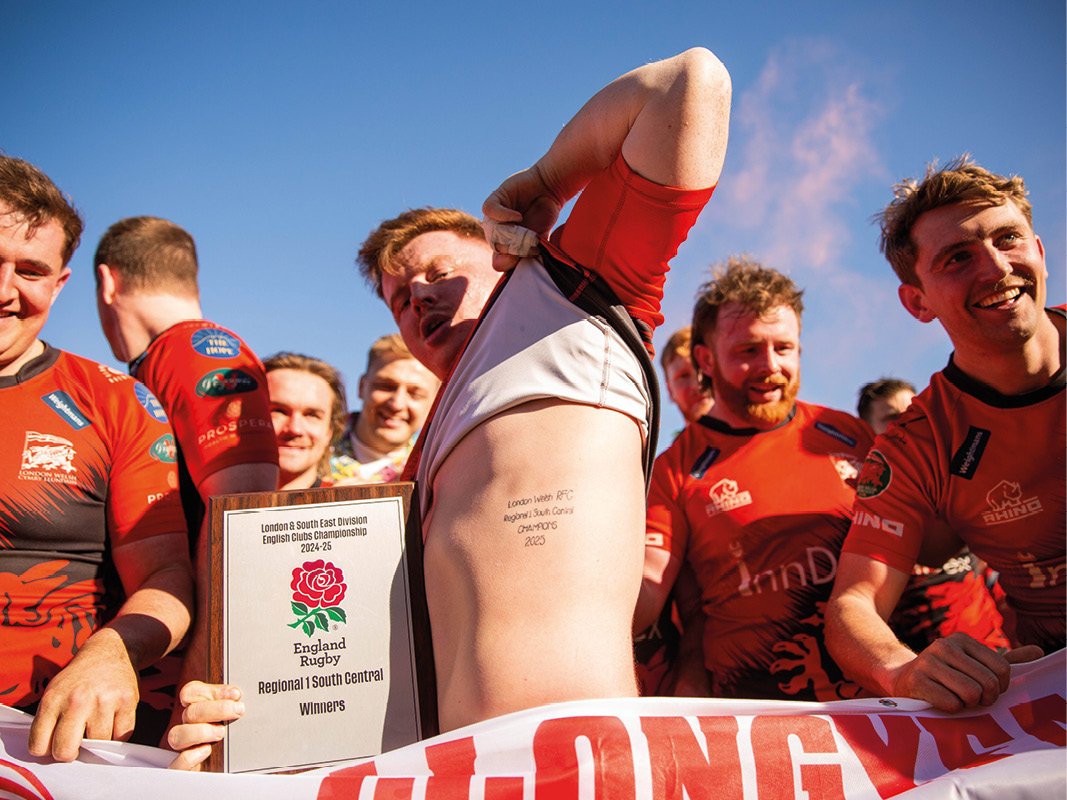
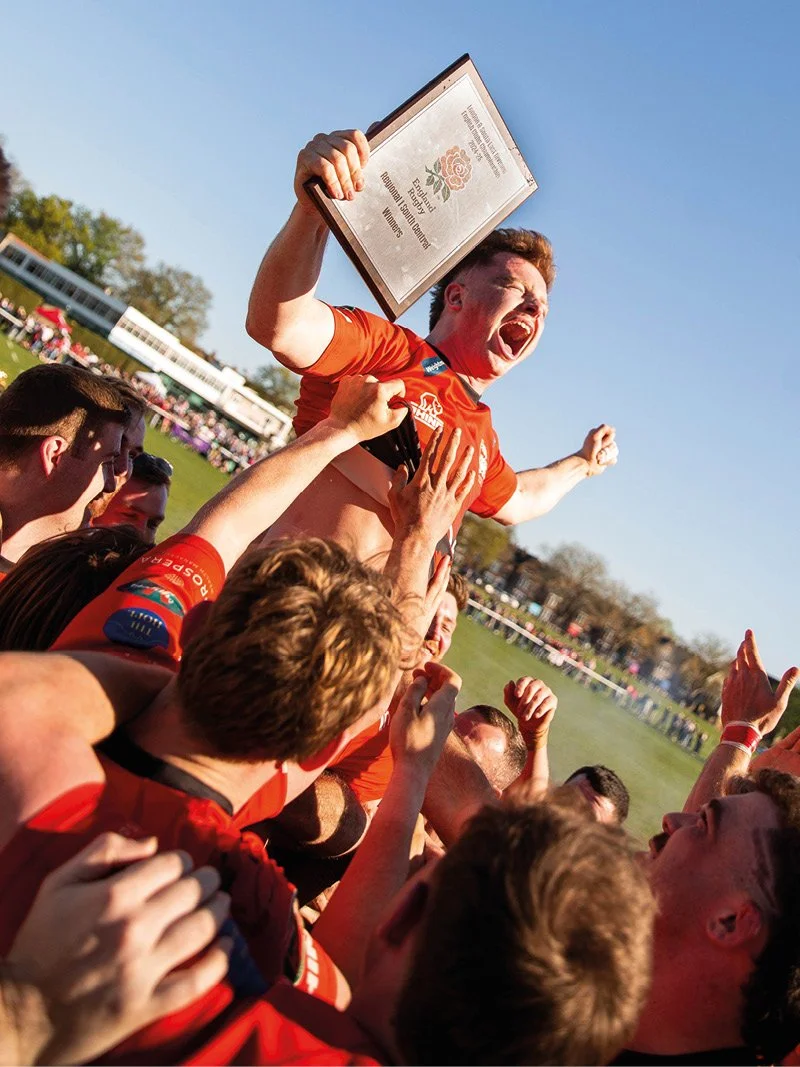
After the match, while the celebrations look set to go on long after thesun has set on leafy south-west London, there are speeches from the terrace of the clubhouse, Champagne corks popping, fancy dress at every turn, and a fitting sea of red that would even make those other lions proud. The prize for winning ‘Regional 1 South Central of London & South East Division, English Clubs Championship’ is a humble wooden plaque adorned with those exact words, but the real reward has been the revival of a club that could easily have just left things as they were – with an amateur side already gracing level 9 of the pyramid – and not bothered the upper echelons of club rugby again.
The record up to this point makes impressive reading. In 2017/18, level 9, the first post-pro-era season, they took the title with 21 wins, from 22; a year later, twenty wins, one loss, and one draw – 0-0 with rivals Old Streetonians. Year three, seventeen wins, one defeat. A fourth consecutive promotion was temporarily put on ice due to Covid’s intervention, before a fourth full season – twenty wins, four defeats – delivered promotion to where they stood this campaign, level 5.
It took them three attempts to leave this notoriously difficult level, as they finished sixth, third and now, finally, first, with just the sole defeat a slight blotch on an otherwise perfect record: 21 wins, one defeat, points for 1,041, points against 393. “It was a huge step up [to level 5], especially the quality of the top four or five,” explains Danny. “We also had Jersey coming into that league, so we knew it was a task, but Cai said ‘we’re going to win it’ – one of the players even got it tattooed on them last year, they were so determined to win this league, and believed they would.
“But the way we did it,” says Danny, “if you’d said that at the start of the season, they’d have bitten your hand off, the results we’ve had, the way we’ve done it, we’re ready to go up. It’s a massive challenge in Nat 2, we’re up against fantastic teams, but if we can maintain position, acclimatise, work out what we need to do, then within the next three years our aim is to be a National 1 side, which is the max we can go with current model. We look at Richmond and what they’ve done to become a sustainable side at that level…”
Neighbours Richmond have been the inspiration behind a few things that London Welsh have got right, even before the professional arm of the club was liquidated in 2017. “When I was chair of the amateur side before,” begins Danny, who took over from Gwyn Williams for the 2018/19 season, “you always had the backing of the pro side with the facilities and finance, but when they went, we were completely on our own so we’ve had to find the money, and that’s been difficult.”
Luckily, even when the London Welsh name disappeared from the Championship, it was already living a second life in the lower reaches of the pyramid with an amateur side [launched in the 1990s]. “The reason we separated the clubs was because of Adrian Davies, who had come from Richmond, and was on our board at the time, and he’d learnt the lessons from Richmond, so we protected the London Welsh side,” says Danny. “It’s a fallacy that London Welsh got kicked to the bottom of the pile, because the [amateur] team already existed [in the league], it wasn’t like what happened with Richmond: they ceased to exist, and people don’t get the nuance with these different scenarios.
“Although,” he admits, “it would’ve been good if [the pro side] had been able to carry on a bit higher up.”
It looked onerous on paper, but a return to National League levels was completely realistic. “We knew that four promotions would take us into the old National 3, so level 5, and that’s possible to do within a five-year plan,” says Danny. “We took that to the board and the penny dropped, ‘Christ we can do this within five years’, and get to a decent level of rugby.
“We put that to our supporters and they were absolutely fantastic, and then we were a team playing in Herts Middlesex 1 with crowds of 800 turning up because they bought into this vision. We weren’t knocked out, we were going to fight our way back, this was project reset.”
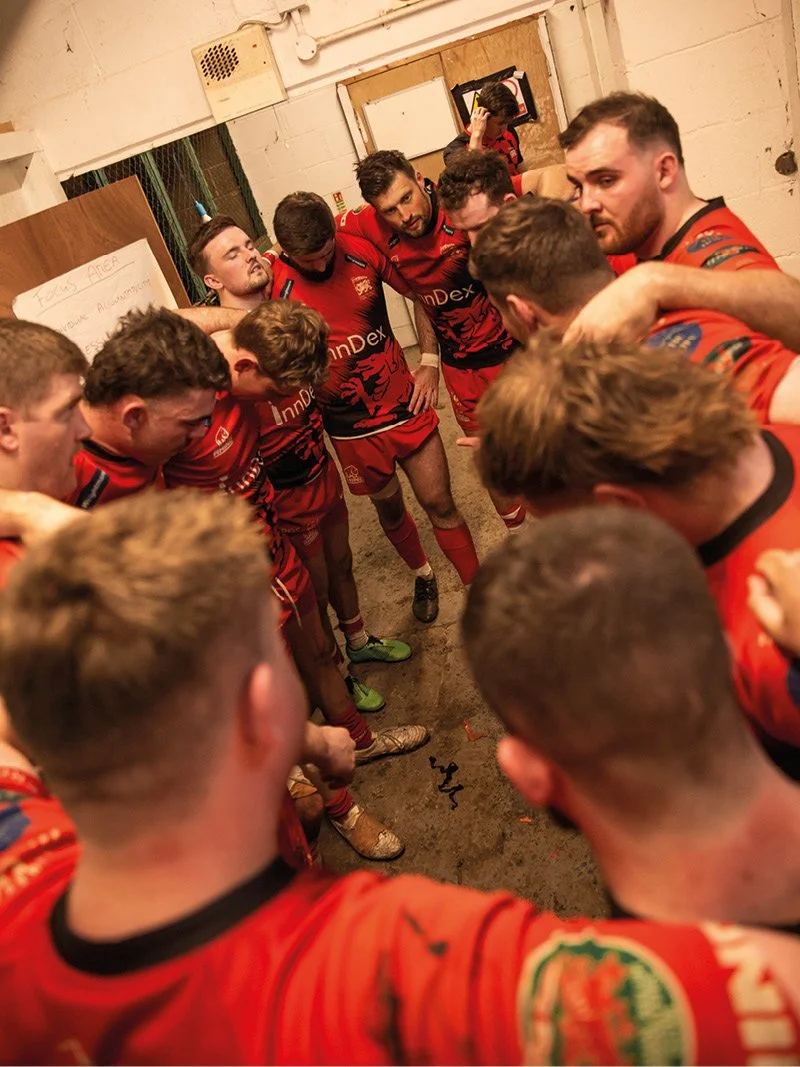
Sonny Parker, who’d been involved in the pro set-up, Cai Griffiths – another former player – and Will Taylor, formed the first new-era coaching team. And their charges were already in place, a group of London Welsh amateurs who’d just finished in the lower reaches of level 9. “It essentially was the same squad, the difference was how they were taking it seriously, training regularly, it was the attitude – they suddenly realised they were the first team, and people were going to come through the gate to watch them play.
“Even as amateurs they had a much more professional attitude. It was a strange one: there was a group of players who gave up – regular training wasn’t for them, fair enough – but we had Cai as a player-coach, and having someone who knows rugby like that, an ex-pro playing alongside you, means you up your game. It was the little things, how he controls the game, it makes a massive difference.”
Naturally, success brought more players. “For people coming up from Wales, we were a good team to go to so it [recruitment] became quite organic, although Jon Shankland – a former player and director of the club – was also reaching out at every opportunity to find new players…”
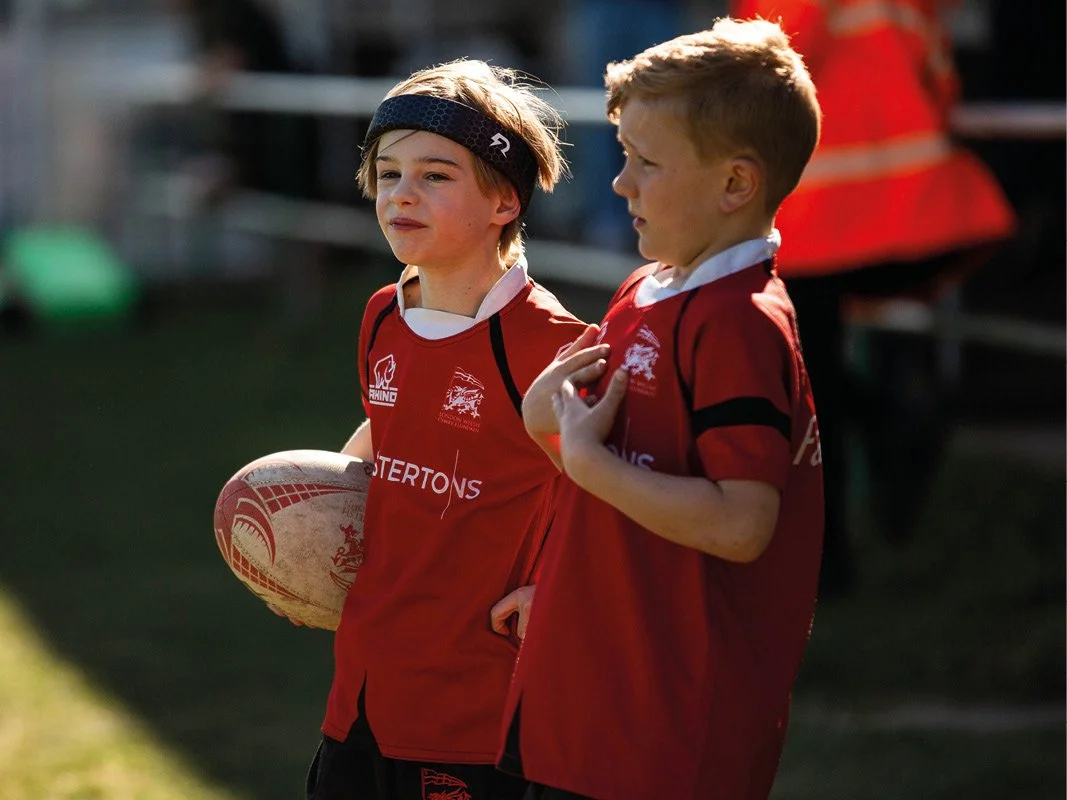
The financial model was the same as Richmond. “We pay travel costs, give them food, and loads and loads of beer post-game,” says Danny. “We’re brutally honest up front about trying to do it sustainably. One thing I can’t dismiss is the sponsors, Chestertons, and the community, who shored up holes when we were struggling to make money for things like rent – ODP is not a cheap facility. At the moment, it’s the best part of £300-400k a year [to run the club], and that includes the whole community side, youth, minis, rent, feeding players, kit…
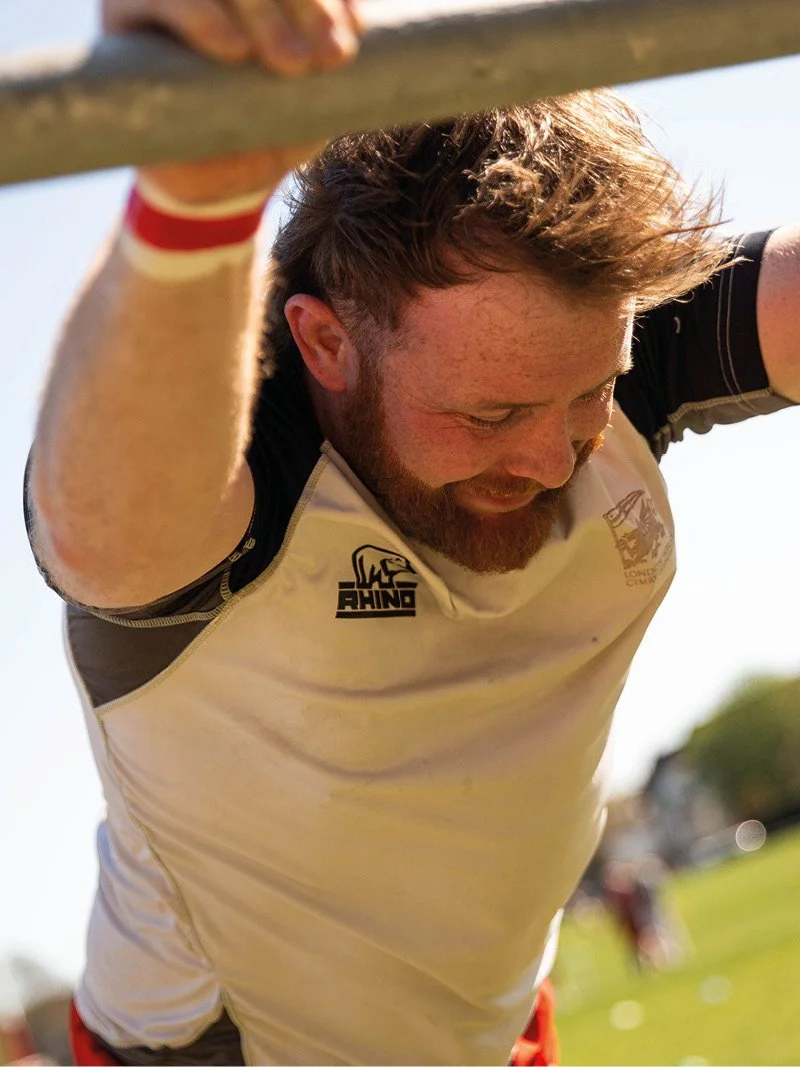
“It wasn’t sustainable to pay people,” he continues. “It was about people wanting to be part of the club, and for them to go out on the field at Old Deer Park with 1,400 people supporting them – for a 24-year-old that’s pretty amazing. Those kinds of memories are ones that stick with you for life compared to playing on a park with two guys and a dog. So, we were lucky to retain players and people…”
They’ve also found other ways to bring in the crowds, and extra revenue. “We started charging on the gate because of two key drivers, one being, ‘why would someone buy a membership if it’s free to walk in through the door?’ The other thing was the British attitude of, ‘if it’s free, it’s rubbish’. And people who come here now are getting a decent quality of rugby. Now with members getting in for free, we’re taking about £1,500 with casual supporters coming through on top of that.”
Balancing the books is of paramount importance, it’s what stymies any talk of going all the way back to the top. “Realistically, the model we had as a pro side was unsustainable; we just had one guy, Kelvin [Bryon, who passed away last year], propping it all up, but what we’ve got now is working.
“It’s a multi-spoke wheel, I can’t point to one person, one sponsor that, if we lost them, it would be disastrous; we’re now in a good financial position, with the supporters, with a nice level of sponsorship. And much as we are grateful for sponsors, it’s not just one, we’ve spread our bets, rather than having the situation we had before.”
Danny believes that the lessons of professional rugby, learnt the hard way in the early days by London Scottish and Richmond, latterly London Welsh, and more recently London Irish, Worcester and Wasps, still haven’t been heeded. “Rugby union is like rugby league was in the 1980s,” he says. “Far too much money sloshing around, people getting paid ridiculous money for low spectators. Back then it was league and the likes of Jonathan Davies and John Gallagher getting paid huge salaries for playing in front of some 5-6,000 crowds – that’s similar now with union.
“I do wish there was a definite split between pro and amateur,” he concludes, “where for instance Premiership and Championship are paid, and everything below is amateur, as opposed to getting paid £300-400 – that just ruins it. Something has to give in the next three to four years, it can’t carry on, it’s just not sustainable.”
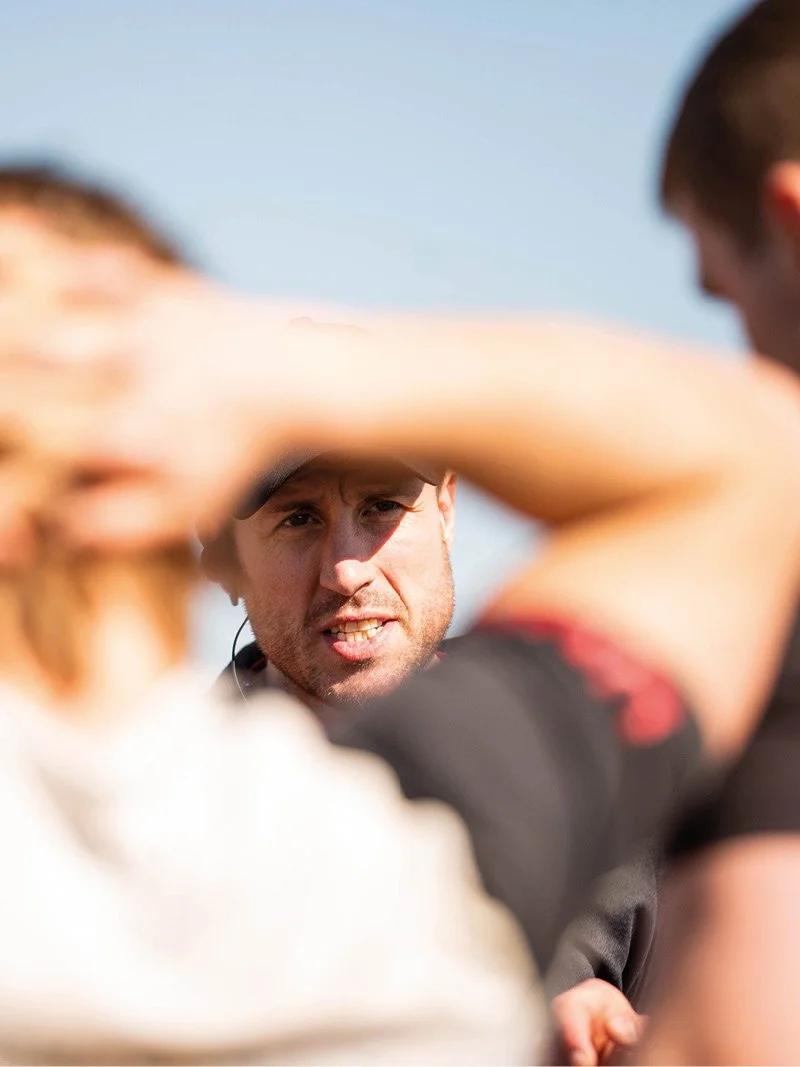
Not every ground in south-west London is equal. For every fan-packedOld Deer Park, historic Richmond Athletic Ground, or shiny Prem-standard Twickenham Stoop – not to mention that big lump of concrete down the road – there are also plenty of park pitches, full of lovely surprises. “The first session we took was next door to Pools in the Park: we couldn’t train at our place during the summer because of the cricket, so we were there picking glass off the fields,” recalls Cai, taking us back to the beginning. “There must have been 35 players there: the majority of the players that year were the players who finished sixth the previous season.”
He echoes the thoughts of Danny, with the change in mindset and improvement in coaching having an obvious impact. Even when Sonny left after one season, and Cai had to step up, he was well-supported. “Sonny left and then Tom May came in as coach,” he explains.
“Because we only have three subs, sometimes you have to look at it strategically. Who’s the best person to play? Who are you going to put on the bench as one back cover? And because of that and a couple of injuries, Tom had to come in a few times. It was the same with Steven Shingler recently, he stepped up to play, and Tommy Bell too, both were in a coaching role with us, but have played when needed.”
The key thing for Cai, is that while the club have had a handful of ex-pros put on the jersey in their rise, it’s only been as a stopgap, the hard graft has been done by the squad. Perhaps the only exception is Cai, a tighthead prop by trade, who played Wales at age grade, before spending a decade with Ospreys, winning three Celtic League titles and an Anglo-Welsh Cup and having a stint at London Welsh in 2013, in the Championship, when they secured promotion to the Premiership. “I would have preferred if Sonny had stayed for another two years,” admits Cai, “Yeah, but things happen, I enjoy that leadership role but it’s hard to be director, forwards coach and player…
“Within the first three seasons, I got 55 caps, so I was consistently playing, but the majority playing second row, because I think I had better props than myself playing.”
When rugby broke for Covid, Cai saw it as a chance to regenerate the body and go again for another two years, but instead his body ‘didn’t get better’, and he settled into a rugby life on the sidelines.
He’s carried out the role with aplomb, barely missing a beat in gaining year-on-year promotions. “Every year we’ve lost one game,” he says, “apart from when we came up to level 5, we lost six or seven our first year.
“But every year we’ve had a game that shocked us, reminding us that, actually, we’re sometimes not as good as we think we are.”
For Cai, the journey has been a literal one, taking him to places he never got to visit as a player. “I love going to different rugby clubs and just seeing what that history looks like, so that was a really good because I’ve never experienced that. When I turned pro at seventeen, it was just straight into the top end and no sort of community game.”
He’s also clearly grateful for the path his life has followed since professionalism left him at something of a dead end. “I was lucky that retirement was my decision,” he explains. “It wasn’t a career-ending injury or anything like that. I did twelve to thirteen [professional] years, I think I had my fill, if you know what I mean. It wasn’t like I had only three years and I got injured and then I’m out.
“I think coming out of the game is always a challenge but my fiancée has always been very supportive.
“My final contract finished in the May with the Ospreys, I’d just started dating her, I didn’t have a job, I didn’t have anything, and she said, ‘Oh, come to London. We’ll make it happen’.”
Like a rugby Dick Whittington, Cai arrived just with three bags and his retirement package (which would last six months), but after six weeks of searching he still had no work. “Then Bury St Edmunds came to offer me a player-coach role and then a week later I got a job offer as a training provider.”
While Sonny would bring him to London Welsh after a season, Cai now continues to balance his coaching with a role in sales for a training company (a different one). It’s a balance he’s been happy to manage, not least because of the success, but also because he’s keen for London Welsh to do the right thing, hence the word ‘sustainability’ being something of a catchphrase for anyone involved at the pointy end of the business for the club. “We’ve paid more expenses because costs are skyrocketing, and we don’t want players to be out of pocket,” he says. “But I’ve heard some horror stories out there where some players at this level get paid £250-£350 a game and that is absolutely disgusting. How is that sustainable? So for me, it’s, let’s look after the players.
“But there’s no difference to what Shingler was getting paid compared to, say, one of our props – they are getting paid exactly the same.
“I think for us it has to be sustainable, so if that means we’re here [National 2] for another three years just to find our feet to kick on again, then so be it. We’re targeting the top six going in there.
“We are lucky that we’re probably coming out of the hardest league at level 5, so we are battle-hardened by having three years in that league.
“And I think what I’m really excited about is to have five subs as well,” he adds.
With so much success – few coaches can boast records such as his – you’d think turning professional would be a consideration. “Shings, our attack coach, he’s with Ealing women and it’s definitely going to be his career, he’s going to go to the top, he’s so talented. But for me, it won’t be, I’ve got no aspirations at all.
“I’ve seen right at the top,” he adds, “I’ve seen the demand on those coaches, the time that they spend day in, day out, just reviewing games, coaching and everything else that comes with it.
“And I’ve done that from a player’s perspective, and I haven’t got the energy to do it. I’ve seen it. They’re on their laptops 24/7, reviewing the games, sorting session plans, everything is just too demanding.”
Even his own future at the club seems to be ever-changing. “At one point, I thought this might have been my last season,” he admits. “It was just my work, it’s going really well and basically doubled in size, so it’s that balancing act. Sometimes it’s a challenge because I need to be in Manchester in the day, then need to come in on a Tuesday evening and still perform as a coach.
“But,” he adds, “I’ll stick at it for another year.”
And if you win National 2? “Well, there’s always one more year isn’t there?”
Story by Alex Mead
Pictures by Danté Kim
This extract was taken from issue 30 of Rugby.
To order the print journal, click here.