Alex Matthews
Even with a professional contract being offered, Alex Matthews didn’t want to sign it. She was questioning herself, her mindset, even her ability to pass and catch a rugby ball. But, she loved rugby. Really loved rugby. She just had to rediscover that love, then who knew what might happen next.
Getty Images
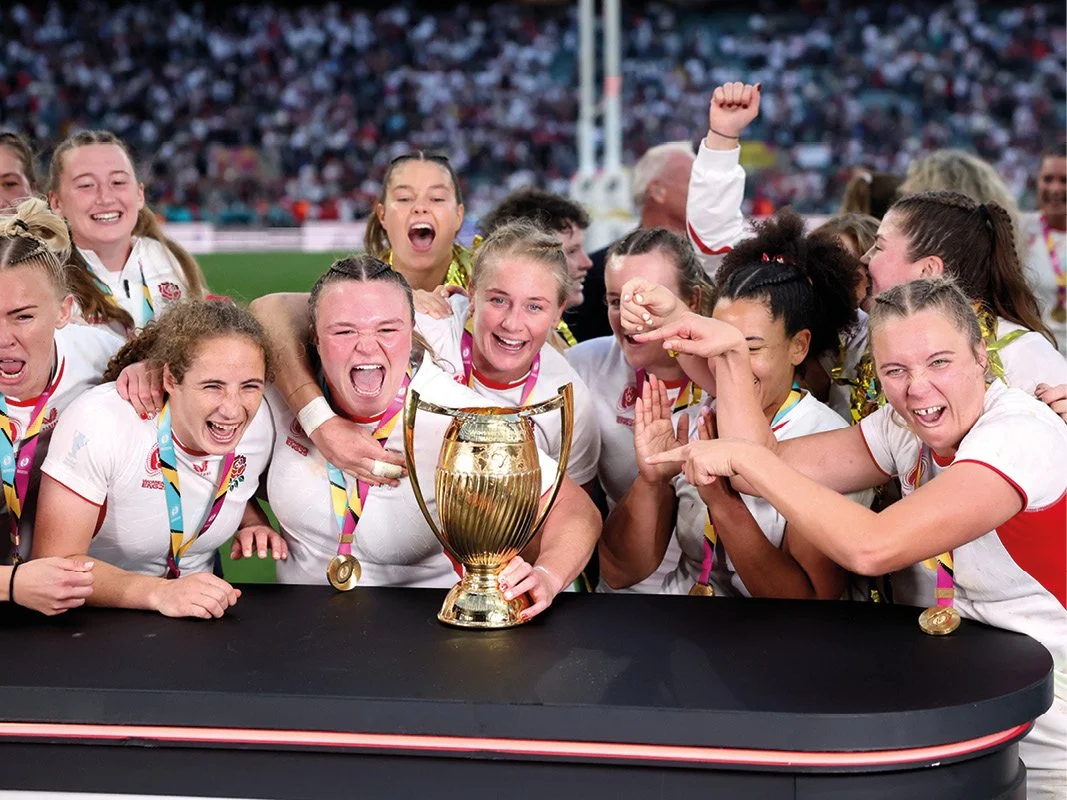
On the Tuesday after England became world champions at Twickenham in September, while many of the squad are still appearing on screens and in studios across the world, voices still hoarse from the celebrations, one player is quietly going about their domestic chores. It’s not that the player in question didn’t play a big role, quite the opposite: she scored two tries in the final, and even captained the side en route to winning the World Cup for the second time in four attempts. Nobody could question her right to be front and centre, but that’s not the way Alex Matthews likes it. “Yeah, been a little bit busy,” Alex tells Rugby Journal, “but it’s back to reality now, back to normal life, I’ve just been doing the food shop and catching up on an awful lot of washing, I’ve done about four loads now. I’ve just been unpacking, getting organised…
“It just feels normal,” she says of the past few days, “celebrating, it’s been lovely, lots of drinking… I saw the family yesterday, it was nice to see mum, she was reliving it all, getting emotional, comparing 2014 to now. She was looking back at pictures and seeing nobody in the ground [in 2014], versus the unbelievable scenes we’ve just had.”
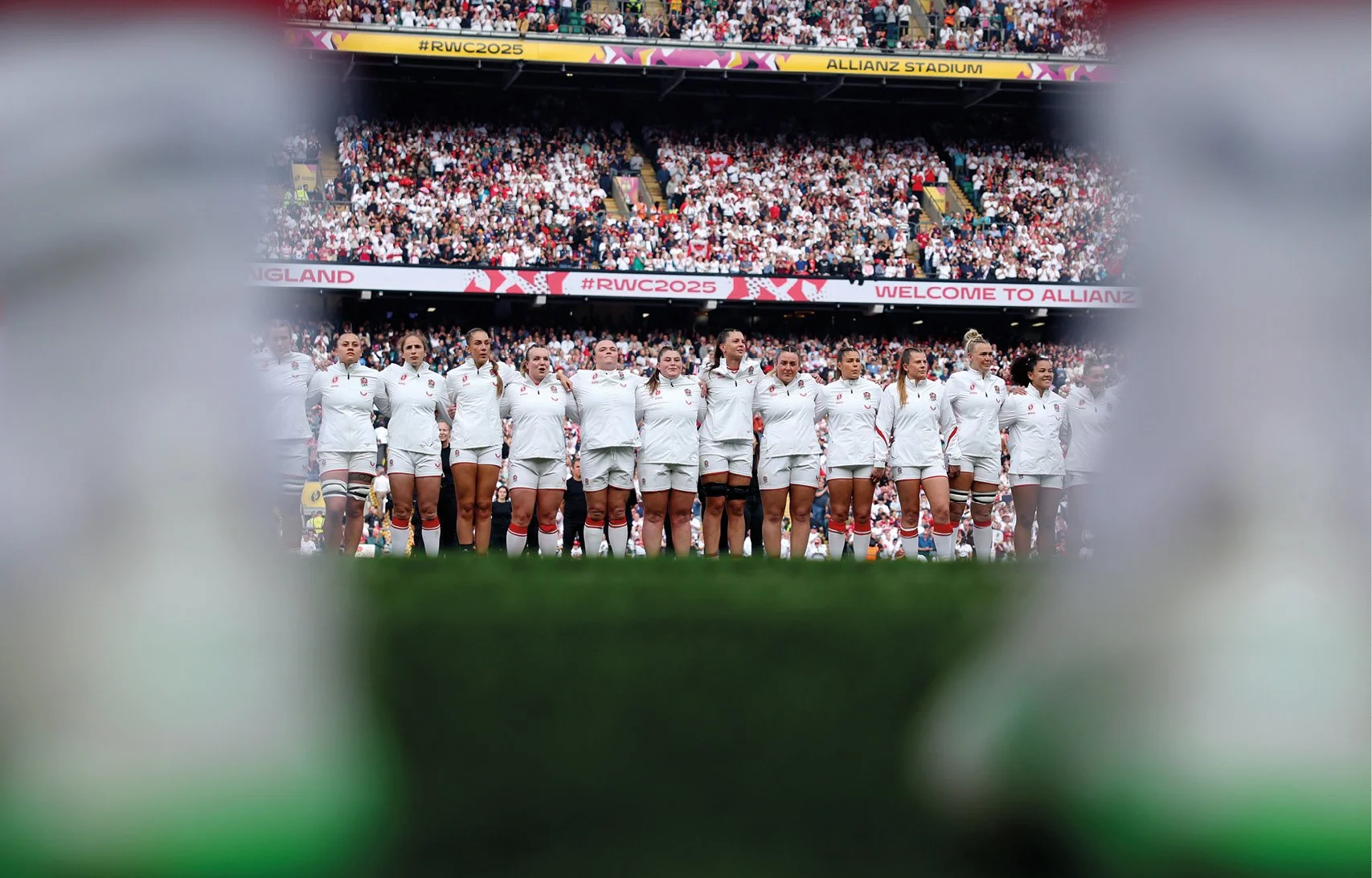
A home final in front 81,885 at Twickenham, and not just any old 81,885. This was a crowd unlike any the old stadium had ever seen, fervently passionate, celebratory from start to finish, even those whose side didn’t win. It was a carnival. “Getting off the bus at the Allianz was unbelievable,” continues Alex. “The sea of people, looking up at the stadium and seeing every stairway, every stand full of people overlooking from the balconies, Twickenham never had a reception like it…
“That’s the thing, for people who weren’t there in person, it is difficult to capture that, you can’t really describe it,” she says, reflecting the views of so many who were there. “I walked down [from the bus], saw Mum, and gave her a cuddle and had a cry before I went in. She was right at the front in a bright red jacket.
“As soon as we cuddled, I burst out crying. I think it was just what I needed,” she admits. “I was quite overwhelmed the day before and morning of, not overwhelmed just, ‘wow this is going to be special’ and I think I needed to let it all out. By the time I got to the changing room, I was, ‘right, let’s go do this’. I’ve asked for one photo of the south stand to be printed out, as that [the atmosphere] is what made the day. Winning was the cherry on the cake.”
Every final is a finale, but not all are quite as fitting as this one. It was less a rugby match, more a coming of age of the modern women’s game, making the loudest statement possible that it couldn’t be ignored anymore. The crowds didn’t just gather for England either. “In New Zealand [for the World Cup] it was just the home team getting crowds, but the fact that Samoa and South Africa experienced their biggest crowds ever too, that made the tournament for me,” she says. “Just the amount of love every nation has been given. The New Zealand captain did a much better job of summing it up than I could: she said they were expecting nobody at Twickenham [New Zealand played their bronze final there], so were taken by surprise, when people showed up for them, it was one big celebration…”
Process-driven is how Alex describes the England World Cup camp, and, well, normal, a word that she keeps using. “Honestly, it’s so bizarre,” she says. “It was like the Six Nations, so normal, it felt like an ordinary camp, which is exactly what Mitch [head coach John Mitchell] wanted. It’s a big enough occasion already, speaking among the leadership team, we wanted to make it normal.”
That word again, she says even up to the semi-final against France, while there were some nerves, it was no more than she’d expect from a Six Nations clash.
Early in the tournament there had been a slight change from the norm for Alex: captaincy against Australia, in the absence of Gloucester-Hartpury clubmate Zoe Aldcroft. “That was pretty cool,” she says. “Mitch told me a week before, I gave him a punch on shoulder and said, ‘what are you doing to me?’. I wanted to say no, but the opportunity to captain a team at a home World Cup, well, I never thought I’d be able to add that to my CV, and again, having those girls around me, they’re great. Mitch just said ‘you lead from front already, don’t change anything at all’.”
She also had to say the “last words before we went into battle”. Memorable? Not for Alex. “I can’t even remember what I said,” she admits, “I’ve got it jotted down somewhere, but I don’t know what I said. I know at half time it was very simple, because Australia had showed up, and what we were doing wasn’t working, the girls wanting to go off script, but we were very much ‘stick to game plan, keep it simple, let’s enjoy it, don’t go and do anything special’.”
A slim 19-7 half-time lead, became a 47-7 thumping by full-time; captaincy was a doddle. “We weren’t panicked by it, but it definitely gave us focus areas…”
England revelled in having a week between games, meaning they could slip into their usual routine for training camps: low-key on Monday, building up as the week went on. The squad was under the spotlight, which is exactly as they wanted it, being able to spread the women’s rugby gospel with such huge audiences watching as important as any win they could deliver. Different personalities emerged from within the squad, more voices for the next generation to relate to.
Not one to post on social media – she says she only looks when she’s tagged in something – Alex did break the habit with a post after the Australia win:
‘Yesterday was for the quiet ones – the overthinkers, the reflectors, the planners. The ones who thrive in stillness, notice what others miss and only speak when their gut rumbles. A reminder that it’s ok to not be the loudest or boldest, that impact doesn’t need volume and you don’t always need the spotlight to shine.
‘There’s strength in quietness’.
It resonated, not just in likes. “The amount of messages I’ve received from parents and children saying what impact we’ve had on them. I was just saying I was doing it for quiet people, I didn’t want to do it [the captaincy], I stepped out of my comfort zone, to be a role model for a different audience of people.”
And what an audience. For the final alone, the BBC reported viewing figures of 5.8m, a number that swelled to 12m across the entire tournament.
Getty Images
The moment with her mum as she got off the bus aside, Alex only felt a little nervous before the final. Training was good. “Boring as it sounds, it was no different and we actually had the best week of training,” she says. “The way we trained on our tough day, if we played like that, we were in a good position, everything seemed to be clicking. At the same time, if we’d had the worst team run, we’d probably have said, ‘well, we’re going to play well tomorrow’.”
The team had got all of the ‘emotional stuff’ out of the way earlier in the week, the presentations, the video from home, so that they could focus on the job in hand, which Alex didn’t underestimate. “The last time we faced Canada at the World Cup, in the semi-finals [in 2022], was one of the hardest games I’ve ever played,” she says. “I remember coming off that pitch more exhausted and emotionally drained than in the final.
“We saw how physically dominant they were against New Zealand [this year], which is a challenging thing to do, and how quick they were, but I was excited, I was up for a challenge, that’s what you want…”
On match day, the backroom staff had family and friends in, including coach and former captain Sarah Hunter’s baby. “It was really family-orientated, calm, so it was a very nice touch.” And then the anthems. “Oh, I’ve never sung a national anthem like it,” she admits. “I’m normally mumbling, so that nobody else can hear, but this was the loudest I’ve ever sung. I was just feeling this huge pride of being up for the challenge, ready for whatever they threw at us, I knew it was going to be a good fight.”
Emotions were kept in check. “Sadia [Kabeya] walked out [at Twickenham], and immediately said, ‘I think I might cry’. I said, ‘you can’t cry now, too soon’. It was just a whole range of emotions, I was just excited to be there. When we walked out, Mo [Natasha Hunt] gave me a tap, a little smile, and it was full on from then.”
Canada came out firing, scoring first, but few watching ever felt England’s third world crown was in doubt, Alex included. “I can’t remember the score, but I think it was only ten minutes in, and thinking ‘we’ve got this’,” she admits. “I don’t know what it was, but I remember being confident that unless we do something really stupid, we’ll have them. They kept coming at us, but our defence won us the tournament. We spoke about it before; our physical defence really showed.”
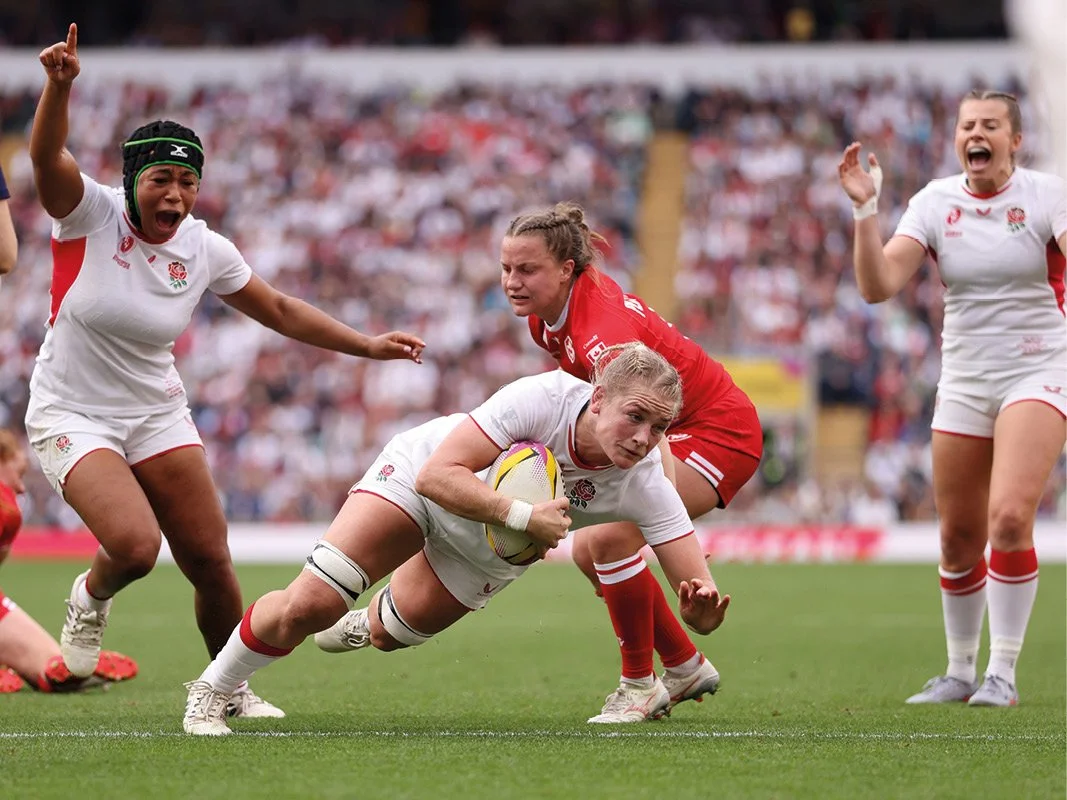
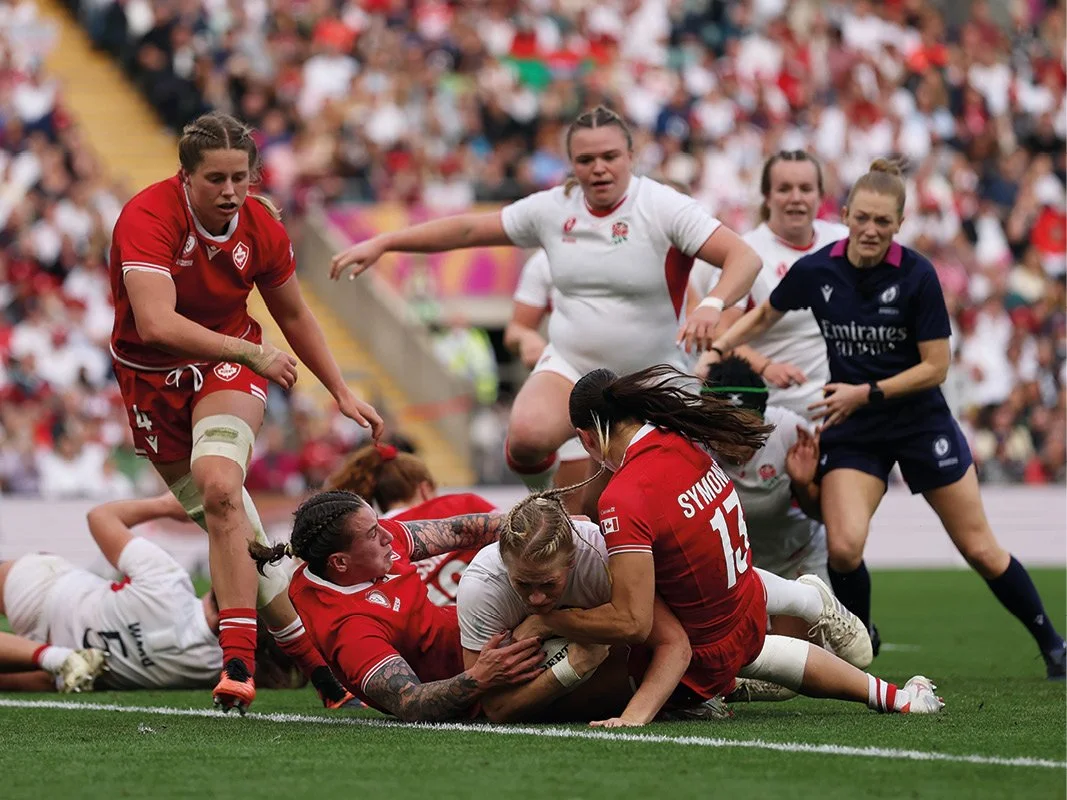
After Canada had scored in under five minutes, Ellie Kildunne then did her magnificent thing by finding space in a phone box to put England in front, Amy Cokayne stretched the lead, and then Alex stepped up for a try that seemed to secure victory, even with just 25 minutes played. The England scrum had driven Canada back, Hunt picked up, Alex broke too, took the pass from her team-mate and made it 21-8. There was no way back for Canada.
“Me and Mo all week, were talking about just backing our instincts, backing each other,” says Alex. She scored again, powering over from close range, for the final try in the 33-13 win. Job done, ecstasy right? “Again, it was a bit like 2014, I didn’t really feel like anything,” says Alex. “Jonny Wilkinson refers to it as just another win, and it is. Obviously, seeing other girls get emotional, getting happy, one girl cried a bit, but it felt like another game. Everyone puts so much expectation on it, when it happens, it’s ‘ah okay’. But the bit that got me was looking around the stadium, seeing it still full, people still cheering, as we were getting medals, all that happened, and it was absolutely rammed.
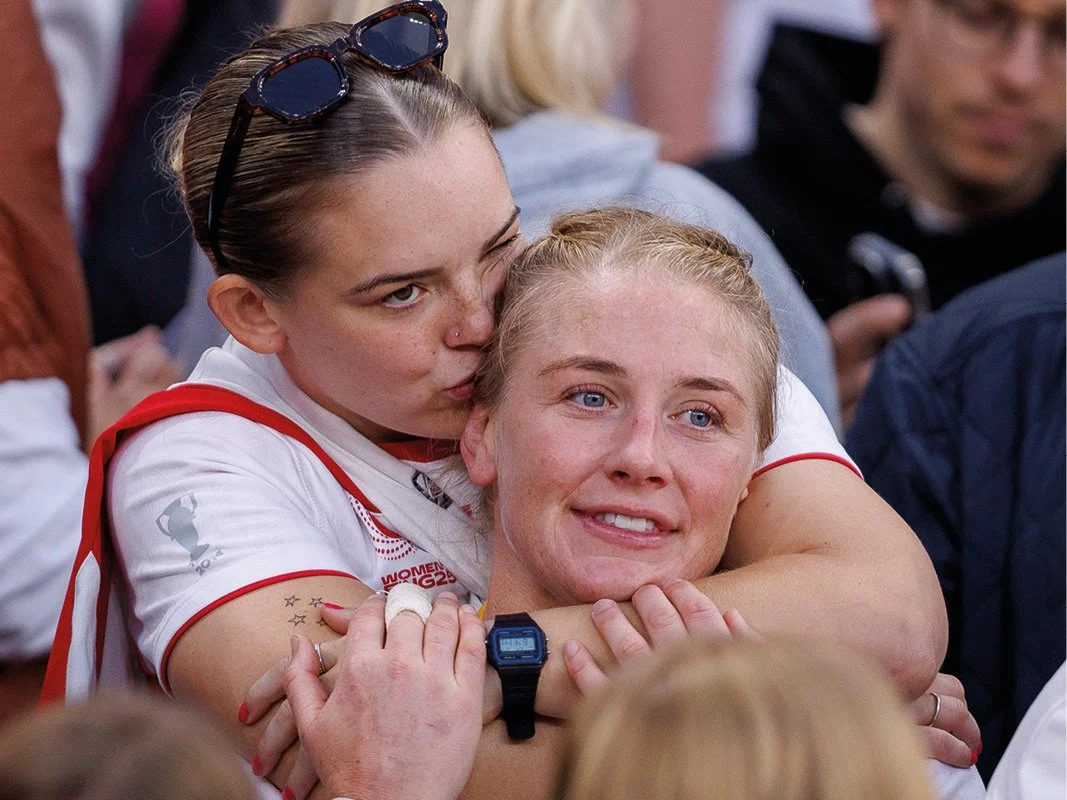
“We were on the pitch for hours, I think, I’m not too sure,” she continues. “Once we’d done laps and thanked everyone, I tried to find the family, they wrapped me up in cuddles – there was a nice little picture of it – and said they were so happy, lots of cuddles and kisses. Mum was emotional, she had tears in her eyes because she was so happy, she cried at everything, and she’s the stable one in the family. When I scored, she cried both times. I’m not sure if that was because of the pint she was enjoying or what, bless her…”
Afterwards, there was a reception at Twickenham – with a free bar, Alex is keen to point out – then the Cabbage Patch, with Alex finding her way home at 3.30am. “Some girls were still going at 6am,” she adds.
The next day, they were all off to Battersea Power Station for the balcony presentation and party. “We bumped into two men [at Battersea] who had been to every single men’s World Cup, and this was their first women’s World Cup, and they’d travelled around the country, and said it was their best World Cup ever. For two men’s supporters to say that, we must be doing something special.”
Now, it’s back to normal life. As she’d already seen Lady Gaga perform, she declined O2’s offer of tickets to her gig, and left the team hotel on the Monday after the final. “I do feel a little bit lost now I’m out of it,” she admits, “leaving the hotel, leaving everyone after we’ve been together for months and months. Now I’m not living to a schedule, I’m going to have to work out what to do with my day, how is this all going to work? Even going food shopping was a bit overwhelming.
“We’ve been in such a complete bubble with the same people all the time, I don’t even know how to eat breakfast. This morning, I was piling my breakfast with eggs to get the right amount of protein and I had to remind myself I don’t need to do that, so I put some back.”
There was no emotional goodbye, with all the players dispersing at different times, to different places. “I left on my own,” says Alex. “It’s a bit like a prisoner being released, although you get the blues after any tour.
“I think visiting my parents was a bit surreal,” she continues. “Everyone down the road stopped in to congratulate me, which was nice. I pulled up to my house in Gloucester, and the neighbours were coming out to say well done, and they’ve not met me yet, I only moved in during the Six Nations, so I’ve not been there.
“But today is the first normal day, I’ve not had time to think about much, just got the life admin to catch up on…”
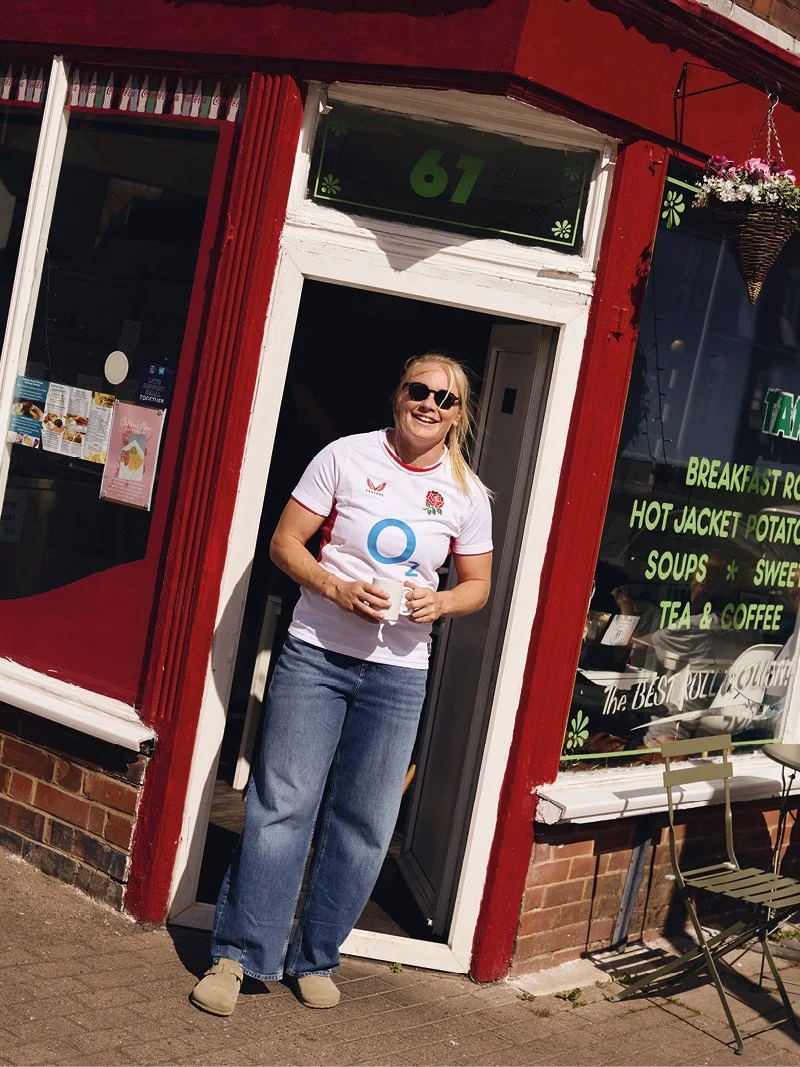
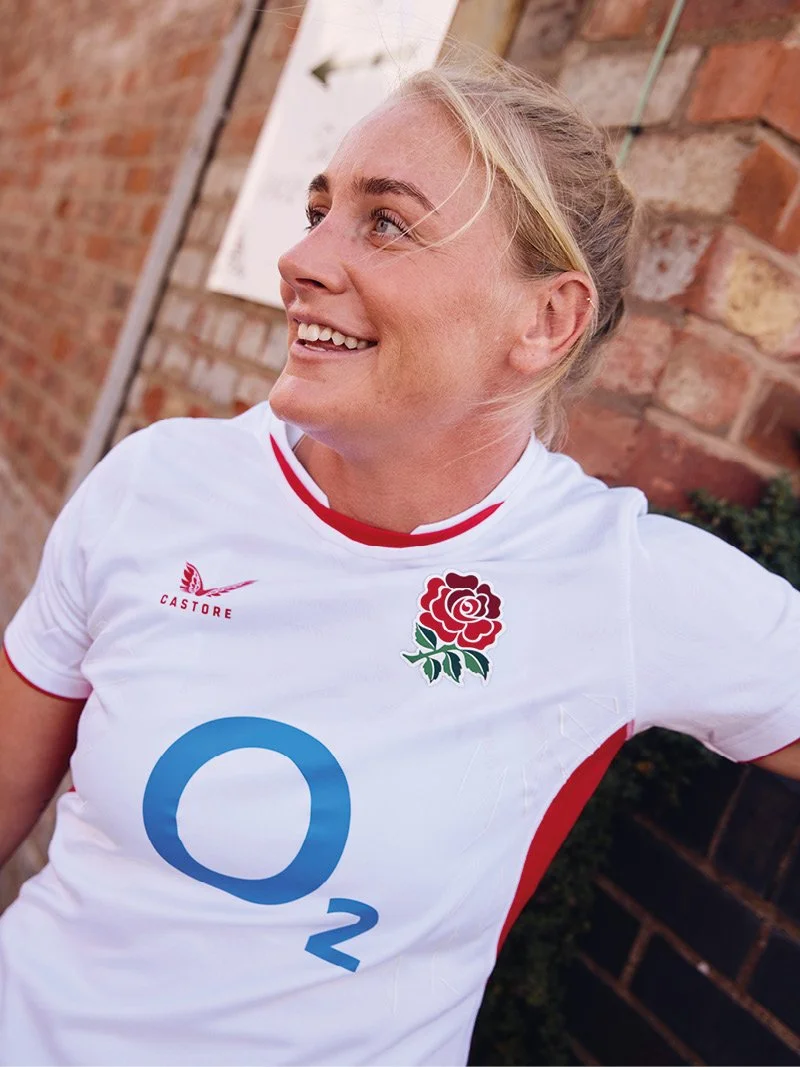
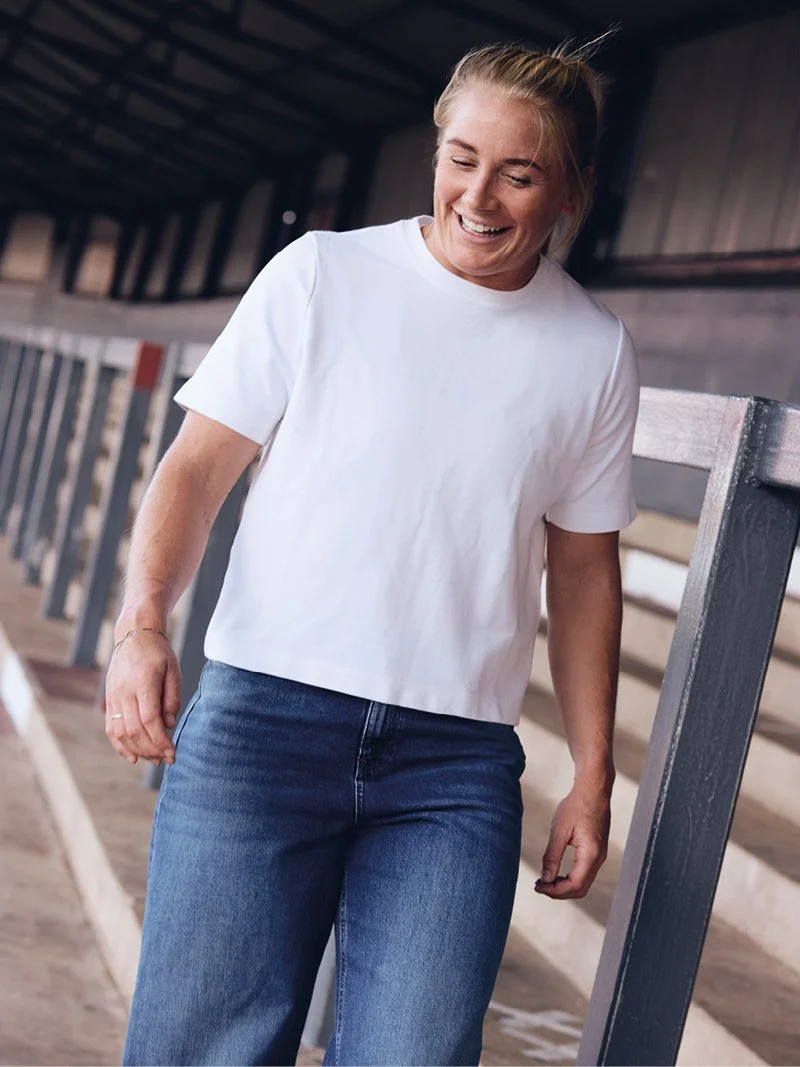
TJ’s is the kind of café we all know. Serving up giant plates of all things good and fried, but given the menu also has plenty of evening meal options, you know it’s a place for the locals to always find someone to chat to. And on the eve of the World Cup, for one old lady with a shopping trolley, grabbing a cuppa after a busy morning shop, that was Alex Matthews. We’re at TJ’s partly for the fry-up, but also to get Alex’s back story, something which the Gloucester pensioner may have already gazumped us to. Curious onlookers have also stopped for a chat, we are just a couple of hundred yards from Kingsholm, and we’ve got Alex wearing an England shirt, so it’s not hard for them to put two-and-two together, albeit some are coming up with five. “They thought I was Mo, blonde girl!” laughs Alex. “They wanted me to sign a picture from last year, and they were like, ‘That’s you, isn’t it?’ pointing to Mo. She’s half the size! Me and Zoe get mixed up all the time though.”
Getty Images
Gloucester-Hartpury are now the dominant force in English women’s club rugby, threepeat champions, so getting recognised, sometimes correctly, isn’t uncommon.
“More of the [Gloucester] men’s fans are getting behind the women’s game, because it’s a rugby city,” says Alex, “even our end of season was down at the Food Docks, they had a big screen, and I wasn’t expecting anyone to come, but it was full of fans, local people, getting behind us.”
Alex’s first title win came with Richmond, her first club, where she played alongside sister Fran, and it was while at the south-west London club, she got called up for England, making her debut in 2011, aged eighteen. “I have been doing it for a very long time, haven’t I?” she says. “But I also think, where’s the time gone? The season is so busy. I almost haven’t had time to stop and appreciate it all either This season, especially, I did think, ‘God, I have been doing this a long time’.”
Does she feel old? “No, I don’t,” she responds, quickly. “It’s crazy. And I think Mitch puts me in the ‘old’ group, because obviously it’s just the four of us – Scaz [Emily Scarratt ], Mo, Marlie [Packer] and me – from the previous World Cup [win in 2014], but I’m like, hang on, they’ve got like, four or five years on me, don’t put me in their bracket. So, I think I do get caught up with the ‘old, old’ group, but I’m not, I’m just ‘old’.”
Born in Camberley, Alex made the move to rugby to follow Fran, although being in the youngest possible minis group, she decided it wasn’t for her. “I didn’t like it, I think because it was too kiddy-like,” she says. “Even at that age, I was super introverted and awkward. It was all ‘scream louder, I didn’t hear that!’, and I was very much, ‘oh, get on with it’. So, I stopped for a year, and then I went back, I think because I was watching Fran from the sidelines, beating up the boys, and I wanted to join in.
“Then my coach, Bob Jones, who was this big, bald, proper London-accented bloke, scar all down his face, was just shouting at us. And I was like, ‘I love it’. He just told you how it was, he didn’t shy away because we were little kids. Under-9s was my favourite year because it was tackling. I think the boys were quite scared of it, whereas I used to love the one-on-one tackle drills; they were like little battles.”
There was little visibility of where rugby could take Alex. “I think I had one photo of Paula George that my dad cut out of the newspaper, and that was the only memory I have [of England women], otherwise it was just whatever Fran did.”
Career-wise, the plan was just getting through school, although a PE teacher pointed her towards Hartpury, where she could ‘get to do rugby and do A levels on the side’, which sounded good. “I absolutely loved it. You get that freedom; you’re sixteen, yet you’ve got the schedule, and you can pretty much train like you’re a professional while doing the A levels. And then, obviously, you’re surrounded by friends all the time, and have the evenings to do whatever. It’s good fun.”
And then, easy breezy, she was playing for England. “It was almost like, and it sounds silly, but for me it was just the next step,” she says. “Everyone talks about barriers and all, but I’ve had it plain sailing really. I did county, I got selected for regional, one step into the next. I followed my sister into senior rugby and so on, time flies by and look where I am, a fourth World Cup.”
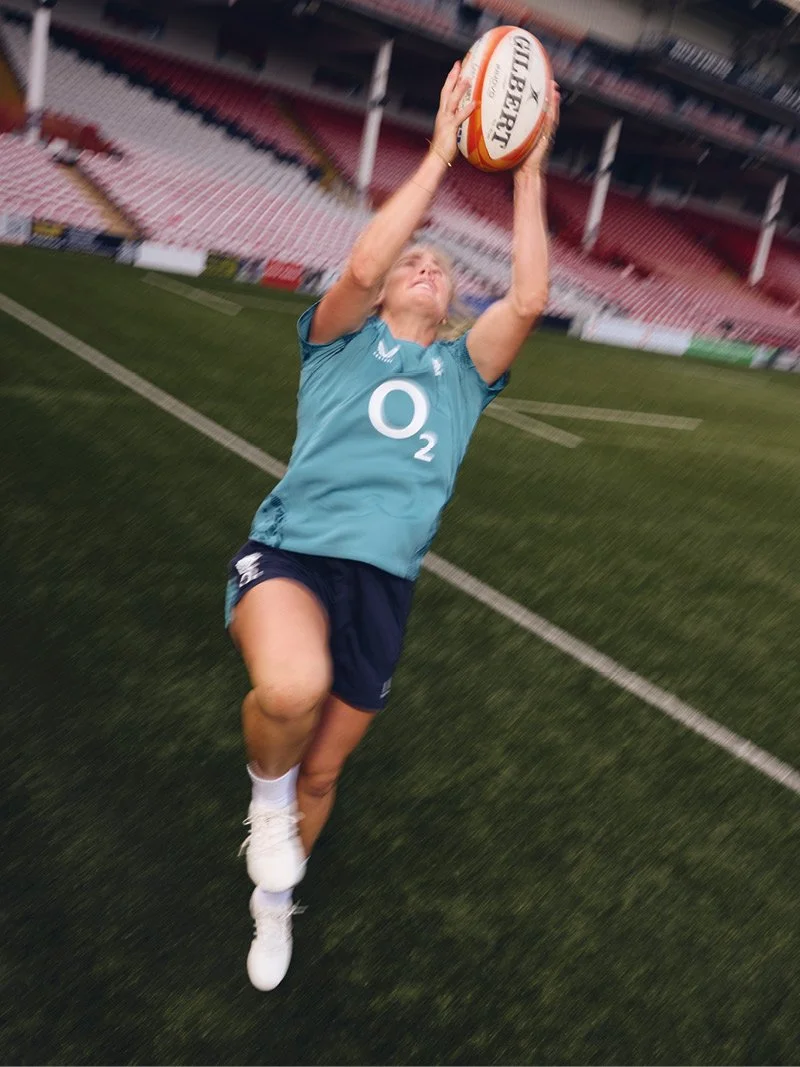
Sevens has played a huge role in Alex’s rugby life, good and bad. Either side of the fifteens World Cup win in 2014, she was part of the sevens set-up, but the experience wasn’t always positive. So much so, she had to be persuaded to return to the programme after the 2017 fifteens Rugby World Cup.
England’s fifteens boss Simon Middleton was keen for Alex to have her future sorted before the World Cup and, at the airport to New Zealand for a World Cup warm-up, coach Matt Ferguson took Alex to one side. “He said, ‘what are you going to do?’. I was like, ‘I don’t know, I don’t like sevens, it’s not for me. I hated it’.”
It’s easy to forget that these were pioneering days in women’s rugby, professionalism was still new, and being a pioneer isn’t always a good thing. “The first two years I was in sevens, I don’t know if it was the environment, but I was miserable,” she admits. “It’s my biggest regret, because I was full-time with Fran and I remember driving to training at Surrey Sports Park, and thinking, ‘this is all I’ve ever wanted to do, to be a full-time rugby player, this is my dream, I should be happy, but I don’t want to go’.”
Such was her unhappiness, it manifested in a complete lack of confidence. “I think that fear of failure was drilled into us,” explains Alex. “I convinced myself I couldn’t catch or pass a ball. And I’d been playing rugby all my life, I was in the top fourteen players to be contracted, and I’d convinced myself I couldn’t play rugby.
“I actually got really ill,” she continues. “I don’t know if it was this environment or my own stress, but I developed an autoimmune disease as well. I rapidly lost 10 kilos, everything was over working. You can have overactive thyroid or underactive but basically my thyroids were releasing too many of the hormones.
“I just wasn’t getting fitter, all I was doing was extra running sessions, I couldn’t lift a barbell or do one pull-up. Nobody was paying any attention. And it was Fran that said, ‘Look, can we get bloods done or something?’. After that I said, ‘I’m done with sevens’. I wanted to go back to fifteens and find the love for rugby again.
“Individually I absolutely loved the girls there, but the standards they expected...” she pauses. “I don’t know what it was, it was quite an unhealthy environment, carbs were frowned upon. You’re in an elite programme, and yet you feel like you can’t eat carbs. It was professional, but so unprofessional. You look back on it, we didn’t get anything right in that sense. Obviously, it was early days, and you’re going to learn from it all.”
Getty Images
The programme back then was very different to what the Red Roses have today. “At Surrey Sports Park there’s a corner cupboard , the closet – that was our meeting room. We were basically in the janitors’ corner cupboard, that was where our lunch was, there was no daylight or anything. We were just in a cupboard. That wouldn’t have helped my mind state, either.
“My sister, equally, she didn’t really enjoy it,” adds Alex. “Even now, I’ll speak to Marlie [Packer] about it, no one particularly enjoyed it, but it was never anything we spoke about. I think because it was something you’ve wanted for so long, it was almost like you had to be grateful, you know, ‘oh my god, we’re finally professional’, it’s just what it is…”
The saving grace for Alex was twofold. “I went back to fifteens, and got on medication,” she says. “Actually, in the last few months, I’ve been ... what’s the word? Basically, I haven’t got it anymore. The meds have levelled my bloods out, I started putting on muscle again, and then just enjoyed rugby again.”
She did return to sevens, in 2018, although perhaps not with exactly the right attitude. “I basically told myself that by Christmas I was going to leave the programme, before I’d even signed anything,” she admits. “We only started in September, but then he [coach James Bailey] worked his magic and I enjoyed it.”
The two years after she rejoined the programme proved to be the most important, almost paving the way for what she would achieve later in her rugby career. “Just from the point of letting go and just playing, it almost completely changed my mindset,” she says. “James Bailey used to speak about loving the game. I think the first two years in sevens programme, we thought professional meant everything’s got to be perfect.
“But I think this time [with sevens in 2018] was when I properly fell in love with the game again. I’d always been such a perfectionist and worried about failure growing up, but I just let go of that. And I was like, ‘all I have to do is enjoy rugby’, I’ve been doing this so long that the rest of it will take care of itself.”
The sevens might have been a mixed bag, but her career has, to date, been topped and tailed with World Cup wins in fifteens. “I think I was just happy to be there,” she says of the 2014 final. “I’d just finished my final year of uni, which was stressful, I had a hip operation in October because I wasn’t actually part of the training squad for a lot of the World Cup. I got back before our training games against the USA and had to do a fitness test.
“I just remember how much it meant to the old girls,” says Alex of the 21-9 Rugby World Cup final win, also against Canada. “They’d been to finals, lost them, it was a similar story, I just knew in the build-up how much it would mean to them to win, so I almost wanted to do it for them.”
It’s an experience she’s been able to apply this year. John Mitchell, she says, holds the key to the togetherness of the current crop of World Cup winners. “He’s good,” she says succinctly. “I mean I was a bit anxious when he arrived, obviously change and all of that, and you read the media, and they don’t seem to like him, but I think he’s been so good for our culture. It’s the tightest I’ve ever felt as an England squad; everyone gets on like, there’s less little cliquey groups. It’s so much more open and honest, fluid and less serious.”
One of Mitchell’s key things has been players finding their ‘why?’. “Mine changes,” she says. “At the beginning, I obviously wanted to be like my sister. Then it was to make my parents proud. Then, I had a brother that died of muscular dystrophy just before I was born, he was sixteen, and all he wanted to do was kick a football around, and he couldn’t, because he didn’t have the muscles to do it.Hearing the stories made me think, actually, I’ve got this body, let’s take advantage of it. My parents always said as well, as long as your body’s moving, keep doing it.”
Alex truly loves rugby, which is why it was so hard when her sevens life became difficult. The love of rugby, together with all of the above, is now the ‘why’: it always has been really. “You know when you’re little, you have a nightmare or whatever, and to get myself back to sleep, I used to picture myself playing rugby. Rugby, just thinking about it, is what relaxed me.”
Fourteen years of World Cups, Olympics, Commonwealth Games, title triumphs and continually striving to be the best is no easy thing. “Yeah, yeah, it’s hard to try to stay at the top all the time,” she considers. “I think I did lose a bit of purpose, just a little bit, for a couple of years, which is why I came to Gloucester.”
She joined Gloucester-Hartpury before the title-winning had begun – it’s no coincidence they started after she arrived – because of one person. “To train with Zoe [Aldcroft],” says Alex. “She’s literally the sole reason I came to Gloucester. She’s just got something about her, hasn’t she? We say she’s ‘tapped’! It’s just her mindset . I just find her inspiring, she’s so competitive, I wanted to train around her, be around her. If I was younger and I had to pick a role model, it would be Zoe.”
Alex’s dad, Dave, was diagnosed with prostate cancer in 2023. She found out in New Zealand, while on England duty in WXV. “We played Canada and then the morning after, I got a message off the doc saying to come see them when I was free,” she explains. “I was like, ‘oh God, my gum shield’s triggered something, I’m going to have to do an HIA, because I’ve got a history of concussion.
Getty Images
“I wasn’t expecting it,” she says of the news delivered, “I was absolutely blindsided. But Fran was with the refs out there as well, a couple of hotels away, so I got her to come to the hotel, and broke the news to her. I’m glad I could do that because otherwise she’d be in Australia – where she now lives – by herself and she’s the softer one of us, I say she’s the nicer one.
“I didn’t want to tell anyone for that whole week, because I didn’t want people asking me questions, to impact the team. I told Amber Reed, she was my roomie. And she said, ‘I’ll ask you one question a day, and that’s it’. She was very normal with me, but I just didn’t want to affect anyone or impact anyone.
“I don’t think people realise how intense camps can be, because other than being in the shower or going to the toilet, I had no time to process anything or cry. Even when I went out for a walk one evening, I bumped into all the Welsh girls. It was Sisilia [Tuipulotu, a Gloucester-Hartpury team-mate], bless her, and she just caught me and gave me a big cuddle and didn’t ask anything.
“It was hard,” she continues. “It was one of the toughest weeks of my life. Even in the scrums in New Zealand, when it was silence, I remember just thinking of my dad and then being, ‘no, now’s not the time’. It just hit me in the most random moments.”
At the final whistle against New Zealand, when England won 33-12 , it did hit. “Sunts [Sarah Hunter] gave me a hug and I just cried, let it all out,” she recalls. “And I think that was the cliff of it. I just broke down there, everyone thought, ‘oh, it’s because, yeah, they’ve beaten New Zealand’.
“I think England rugby even used it on a social thing, ‘Oh, they’ve beaten New Zealand. This is what it means’. Nope, nothing to do with that.”
England had offered to pay for the sisters to fly home, but they knew Dad wouldn’t want that. “‘Don’t change your life for us’, they always said,” says Alex.
However, she did consider it, including the possibility of moving to Harlequins to be closer to her family home in Surrey. “He walks around, a bit unstable on his feet, just in a lot of pain all the time, and it ages you so much. Early on, when he started losing his hair, we used to call him a little chick, when the hair started growing again.
“I remember at one of the Gloucester games, just catching him in the stand and, he just looks so old, that got me as well, with his little walking stick. He was just so, like, he’s always been so healthy, always active. He’s a little gardener, that’s his retirement job. So yeah, it’s hard.”
The challenge is also worrying about her mum. “I end up finding myself worrying more about my mum than I do about my dad. It’s horrible seeing your dad in pain and deteriorating, but your mum’s going to be the one left with everything to deal with. So, yeah, I worry about her a lot.
“I Googled it [prostate cancer] out in New Zealand, and the best-case scenario was five years; it’s crazy, but my dad is a stubborn man.”

The World Cup hasn’t just given both Mum and Dad Matthews even more reasons to be super proud of their epic daughter Alex, it has also led to more conversations, more awareness, about her dad’s condition. “We’ve had support from the rugby cancer charity [Rugby Against Cancer], which was quite nice that they reached out, and Prostate Cancer UK reached out too, offering support, inviting us to events, and other little things like that have been nice…”
Repeating the fact she’s not one of the ‘old, old’ England girls, she’s not yet too worried about what happens next in her career. “I worry a little bit about my career, I think because I’m one of the first to do solely professional rugby, I’m not sure what’s next, rugby is all I’ve known,” she says. “I don’t know what’s out there [for a post-retirement job ], I don’t know what I want to do, everything I keep doing just comes back to job satisfaction.
“I’m not bothered necessarily about money or recognition or anything, if I’m enjoying it, and I help people, then that’s fine. But I still don’t know what that [job] is…”
There are other considerations about her future too, including a family. “Yeah I want to have a family,” she says, “but I’m 32 now, when do you do that in rugby? That’s the side of it the men don’t have to think about. They can still have a family, their wage will help support their family to move around with them, club to club.
“And I think that is definitely where the women’s game’s going to struggle like that, because it’s hard, I know Abbie’s [Ward] done it, but I don’t think it’s easy.”
All of that is for another time, though. Right now, Alex is happy in her rugby. She’s finding success, yet again, on the pitch. “Yeah, I am happy,” she repeats. “I’ve come around at a good time to be a part of all these incredible teams.”
Retirement isn’t something she’s considering, as she says, again, she’s not in the bracket of Scaz (35), Mo (36) and Marlie (36), so isn’t ruling out another World Cup. “I’ll be there in four years,” she says, “I’m in my own little bracket, because I was so young in 2014, but I haven’t thought that far ahead.
“I honestly can’t take anything for granted: anything could happen between now and then that rules you out, I don’t know. To be honest I’ll see where my body is, but I think I’ve got more to give on the pitch, and from that sense, I don’t think this is my last one, but we’ll see whatever else pops up…
“When do I call it a day?” she asks herself. “I don’t want to be rubbish and just carry on playing, I don’t want to play beyond my time, and I want children, I’ve got to fit that in sometime. And I’ve also got to start looking at careers outside rugby, so when do you fit all that in?”
Who knows, but if anyone can make it all work, it’s Alex Matthews, double World Cup winner, double try-scorer, multiple club title-winner, Olympian, sometime captain, and most definitely in an England bracket all of her own.
Story by Alex Mead
Pictures by Richard Johnson
This extract was taken from issue 31 of Rugby.
To order the print journal, click here.