Jamie George
Captaincy, a century of England caps and his daughter Lydia all arrived soon after the passing of his beloved mum, but when Jamie George returns to his hometown club of Hertford, the echoes of her vociferous support still resonate.
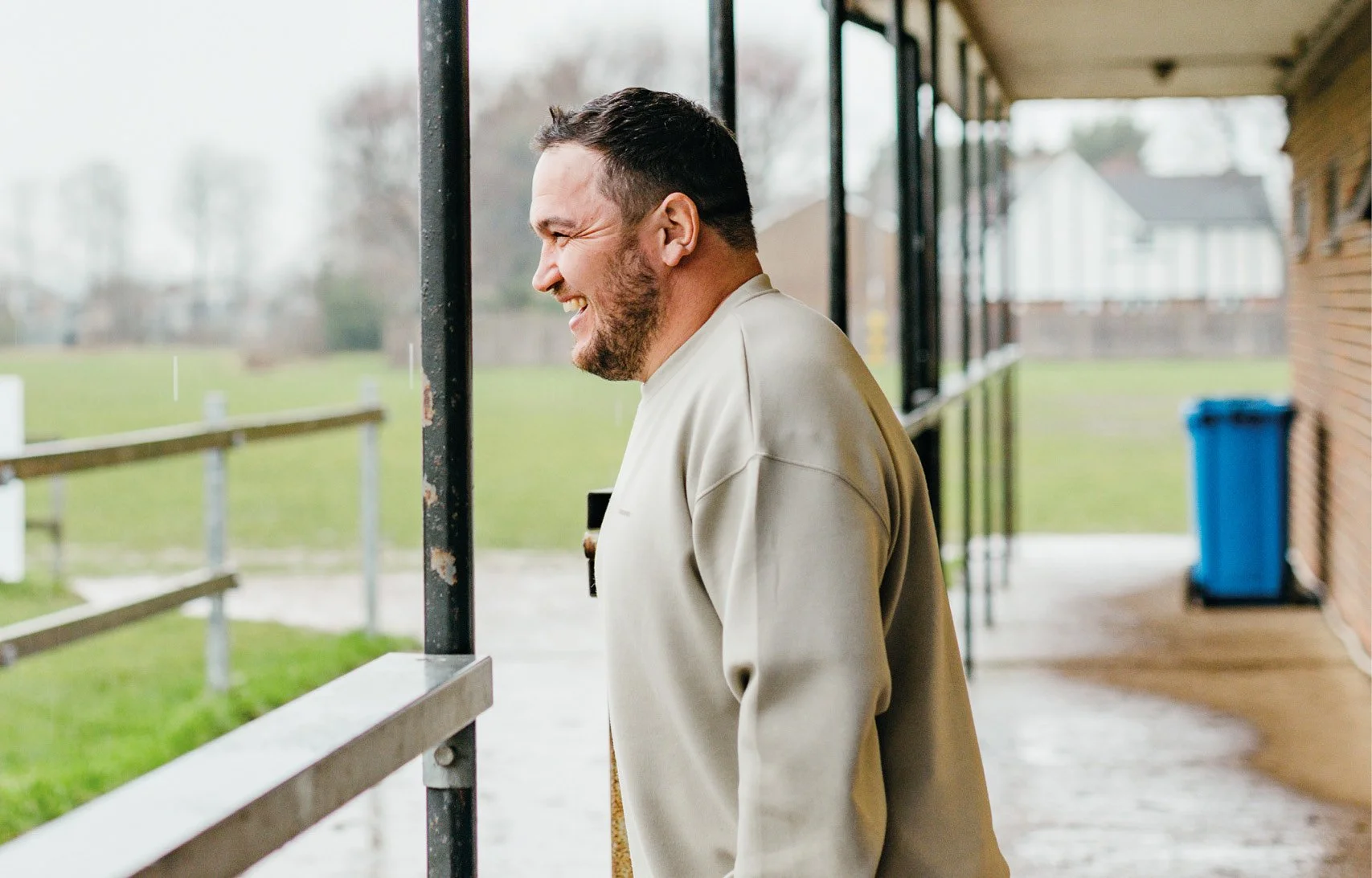
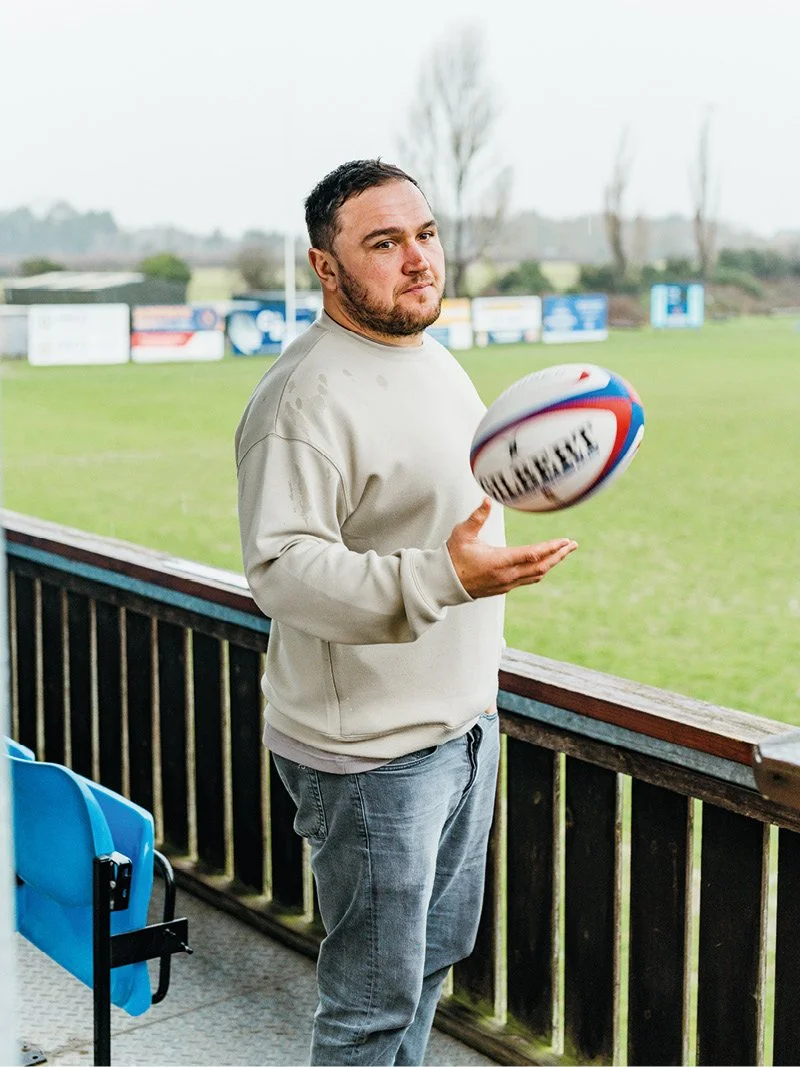
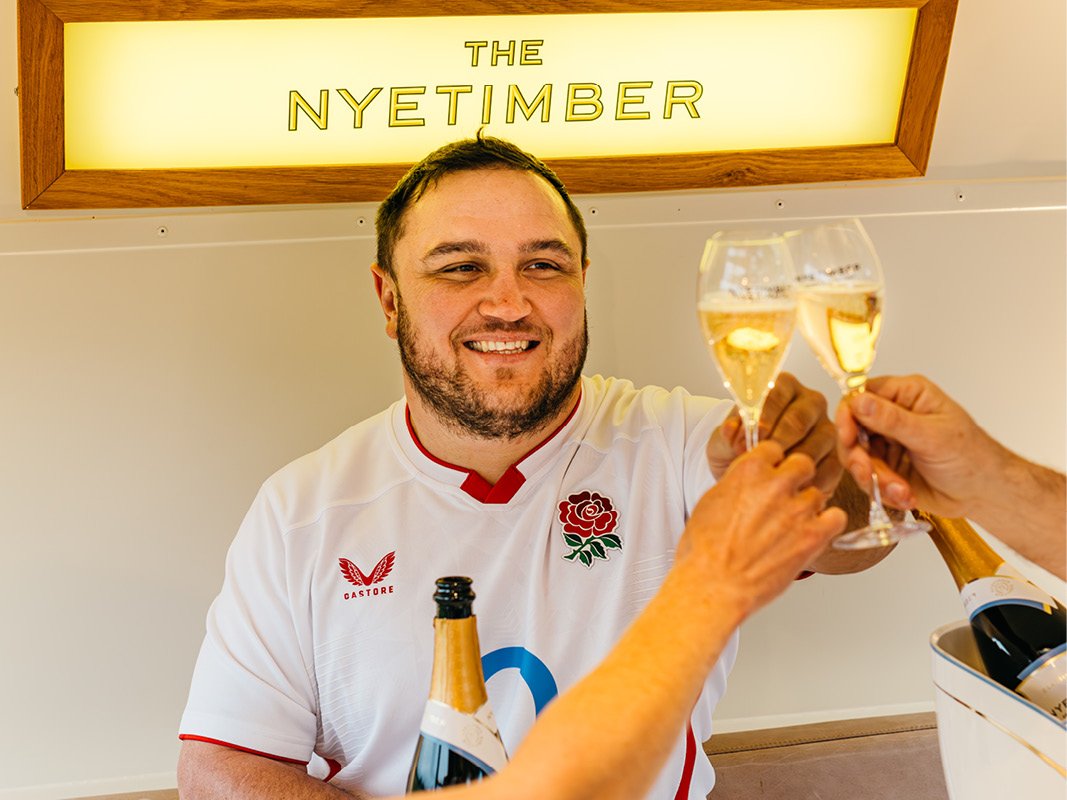
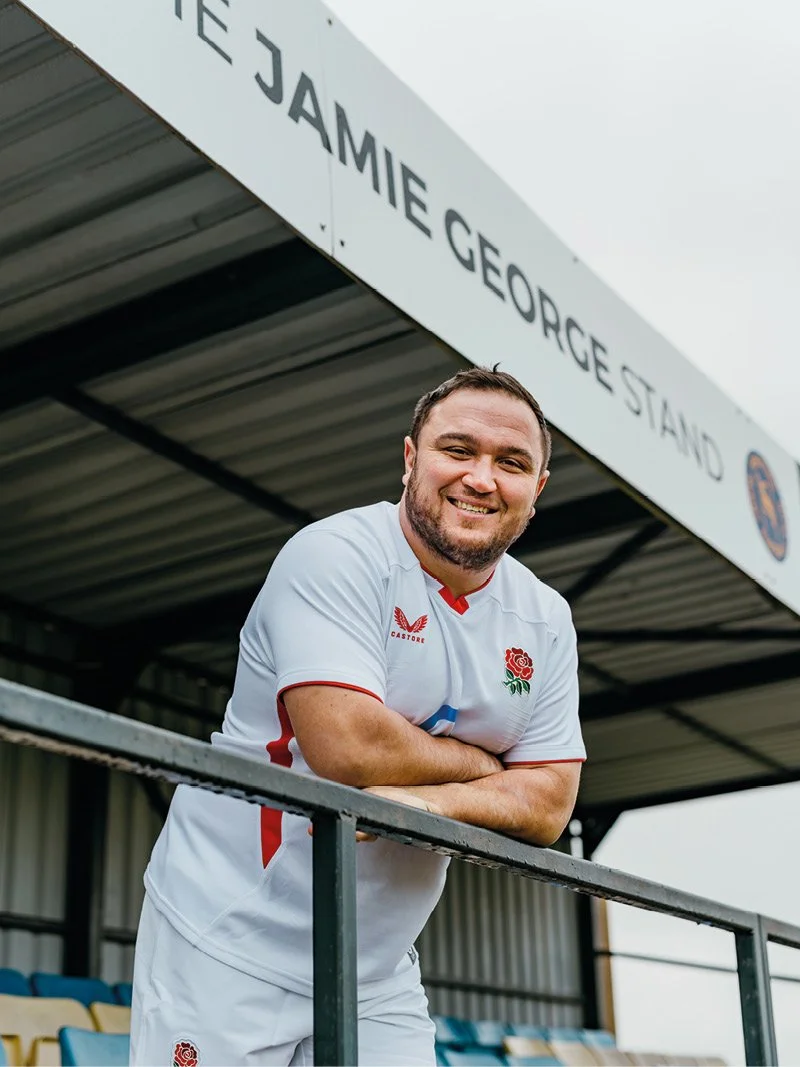
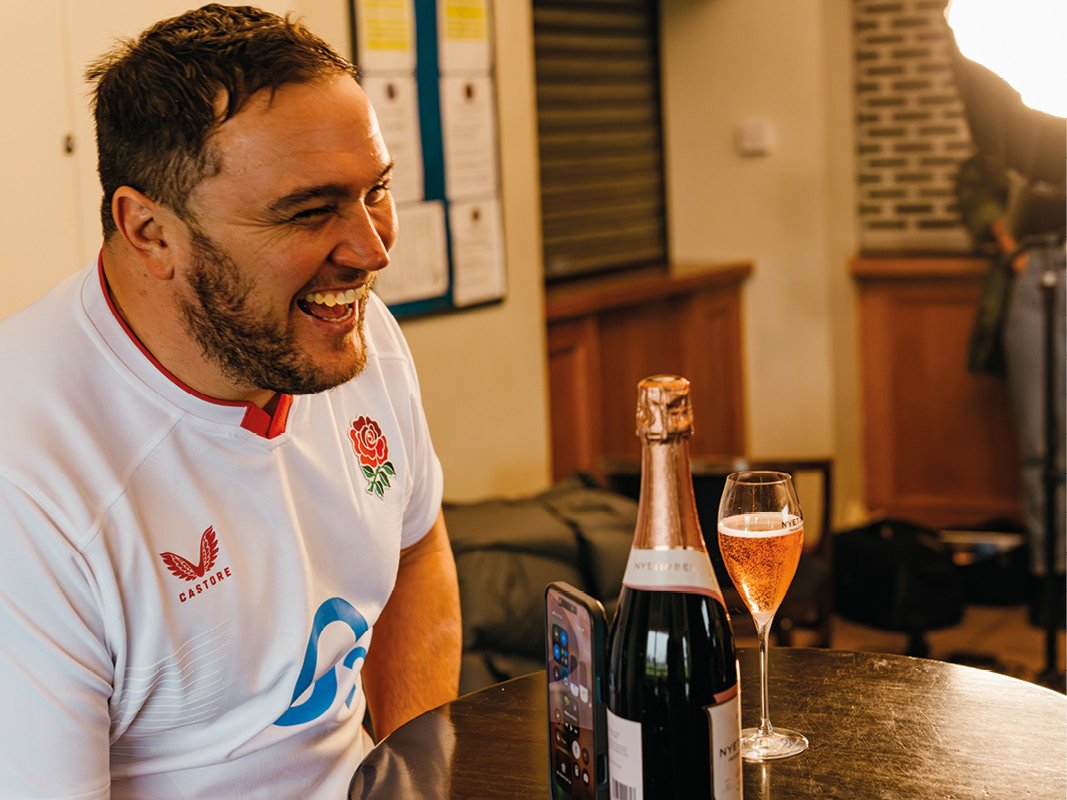
The Muppet Box has long been part of Hertford RFC’s heritage. The small, box-shaped, viewing balcony was added to the clubhouse in the 1960s, along with two squash courts. Sadly, the squash courts are no more, instead replaced by an impressive changing room block and physio centre, but the Muppet Box remains. And, on a suitably wintry English afternoon, Jamie George is popping corks and toasting an empty rain-sodden ground with a glass of bubbly on the famed Hertford RFC viewpoint. His glass, of Nyetimber, since you ask, is tilted towards a small stand on the far side of the pitch that bears his name. “It all comes back when you come back down here to Hertford,” Jamie tells Rugby Journal. “You get flashbacks to mini rugby days, learning to play tag rugby … I love coming back.”
We’re the first people to speak to Jamie about his retirement, as when we meet, his decision to stop playing at the end of 2027 hasn’t yet been announced. Reflection is everywhere. “I guess it’s a bit of a full-circle moment,” he admits. “Driving up that driveway, it brings back so many happy memories.
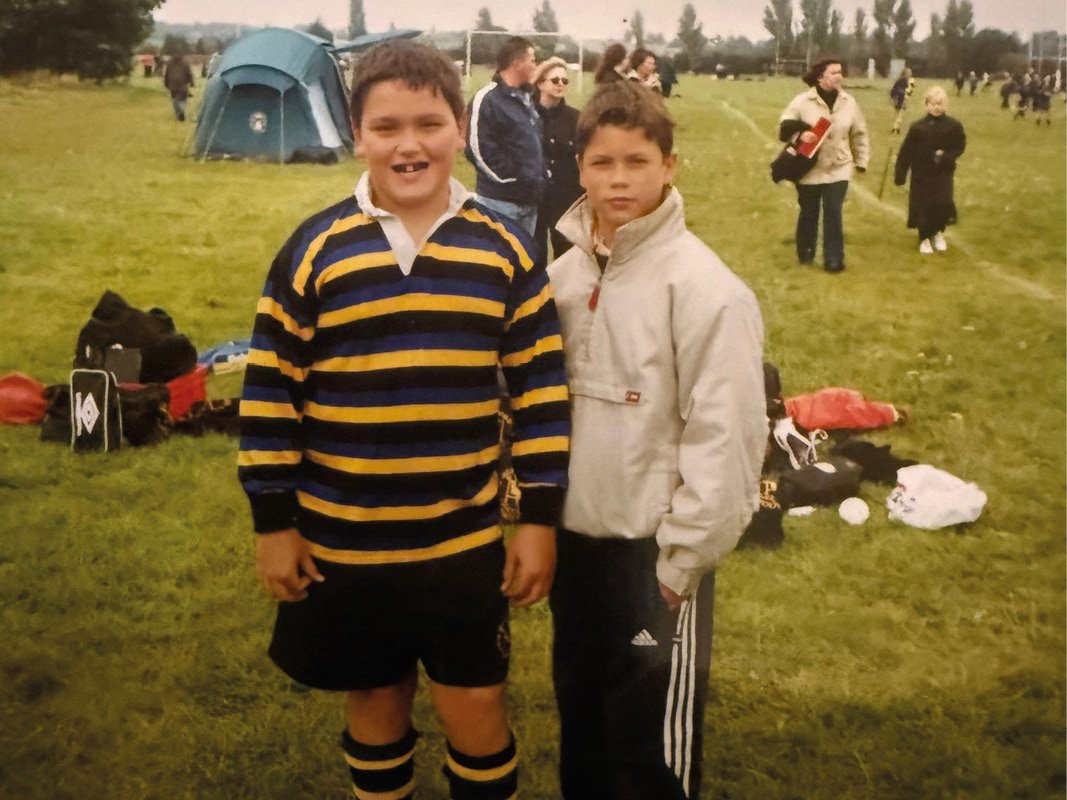
“I think I was a very different kid to what I am as an adult,” he continues. “I came from a massive rugby family, so rugby was always going to be a big part of my life and I think my dad was always pretty keen to get me down here, but I was a very shy kid, I didn’t speak to anyone.
“There were a lot of concerns from teachers about how I didn’t really communicate with very many people,” he admits. “You probably wouldn’t guess that now. But, actually, this club and the sport of rugby itself, has changed my life and changed me as a person massively.”
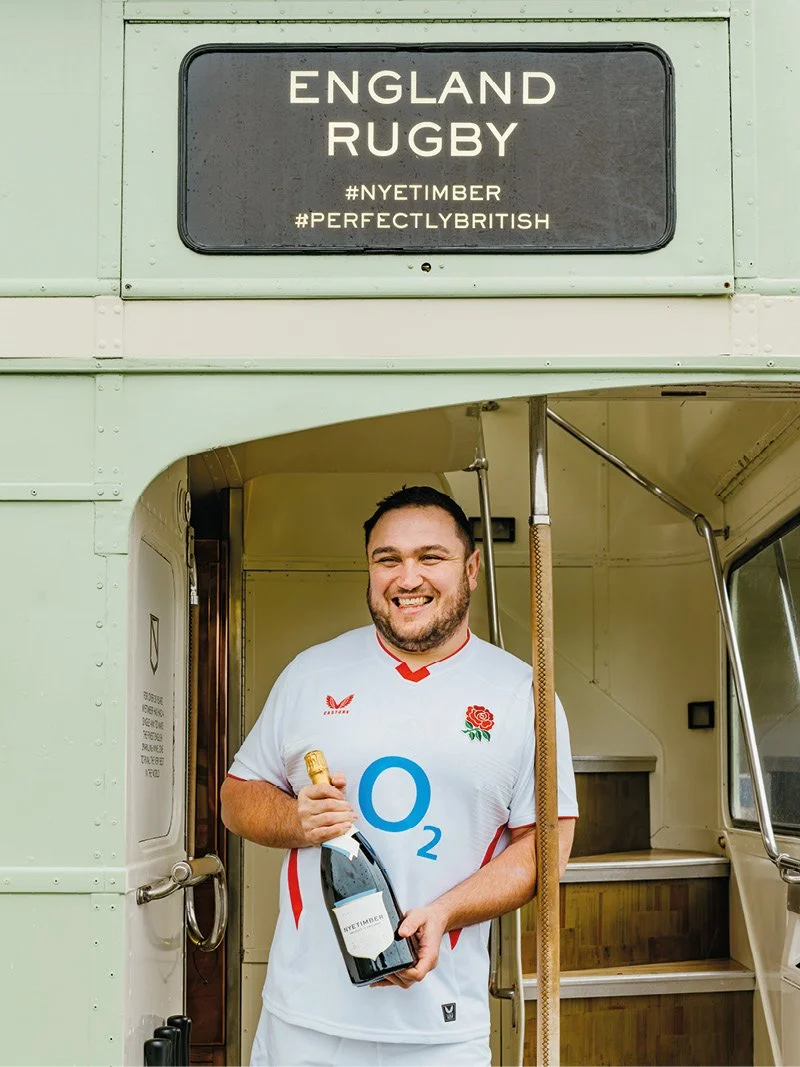
Hertford is an impressive club. They’ve got pitches almost as far as the eye can see across an enviable sixty acres, some even floodlit; changing rooms everywhere, a big clubhouse and dining hall, with a balcony across the top – leading to the Muppet Box – and they run four senior men’s teams, a women’s side with age grades, and, going by a recent visit on a Sunday, about a million minis. They also know how to have a good time: “The bar must have taken about £25k last week,” we’re told by one club member.
Jamie George is their favourite son, hence getting his own mini grandstand. The 35-year-old Saracens and England hooker, has 110 caps for his country and counting (including twelve as captain), has been on three British & Irish Lions tours, and won myriad silverware with his beloved Saracens, including three Champions Cups and six Premiership titles.
He stopped playing for Hertford when he was fourteen, and Saracens came calling. But, for him, the place is still full of memories and mates. There’s plenty of stories too, of “really special coaches”, of team-mates who went on to play for the first team and moments here with his family.
First, his dad, Ian. “He was a massive influence for me,” says Jamie. “He played for Northampton, a bit for London Welsh and for the Barbarians. He was on the bench for England a few times, but never got on. Captaining the Baa-Baas was probably a highlight of his career. And my uncle was a big rugby idol for me, and idol generally, really. He also played rugby for Northampton.”
Dad though, was not one to share endless tales of his glory days. “My dad was someone that, you know,” he says, pausing, “doesn’t say a huge amount. I actually only found out how good he was when I started playing [professionally].
“You’d bump into people at games who used to watch my dad play and they’d tell me how good he was and how unlucky he was not to play more for England.
“If you met him, he’s just the most humble, down-to-earth guy. He wants you to forge your own career and doesn’t really want to have too much of an influence on it. He always allowed me to do it my way and offered little words of wisdom here and there.”
Dad has been there throughout. A teacher by trade – Jamie grew up in the school grounds where he worked – there were two sides to him. “He was always one of the scary teachers, who likes things done properly, a bit of a disciplinarian. Your top button had to be done up and your tie had to be a certain length, people used to sort of be quite scared by him, but actually, he’s a big softie.”
Jamie and his dad are clearly close, perhaps even more so since the passing of mum Jane. “There’s been a few really nice moments, since my mum’s passing, when probably the emotional side of things has come in a little bit more,” he says. “Stuff like my first game as captain, or my 100th cap. You know, my mum wasn’t there for those situations, but my dad sort of stepped up. There’s always a lot of emotion when you lose a parent. “But you know, I think he was always then saying how thankful he was for what I was doing, and the ability of me to keep a smile on his face in difficult situations, and that’s a real privilege. That’s something that I’ve been really proud of, making him proud in those moments when things can be quite tough.”
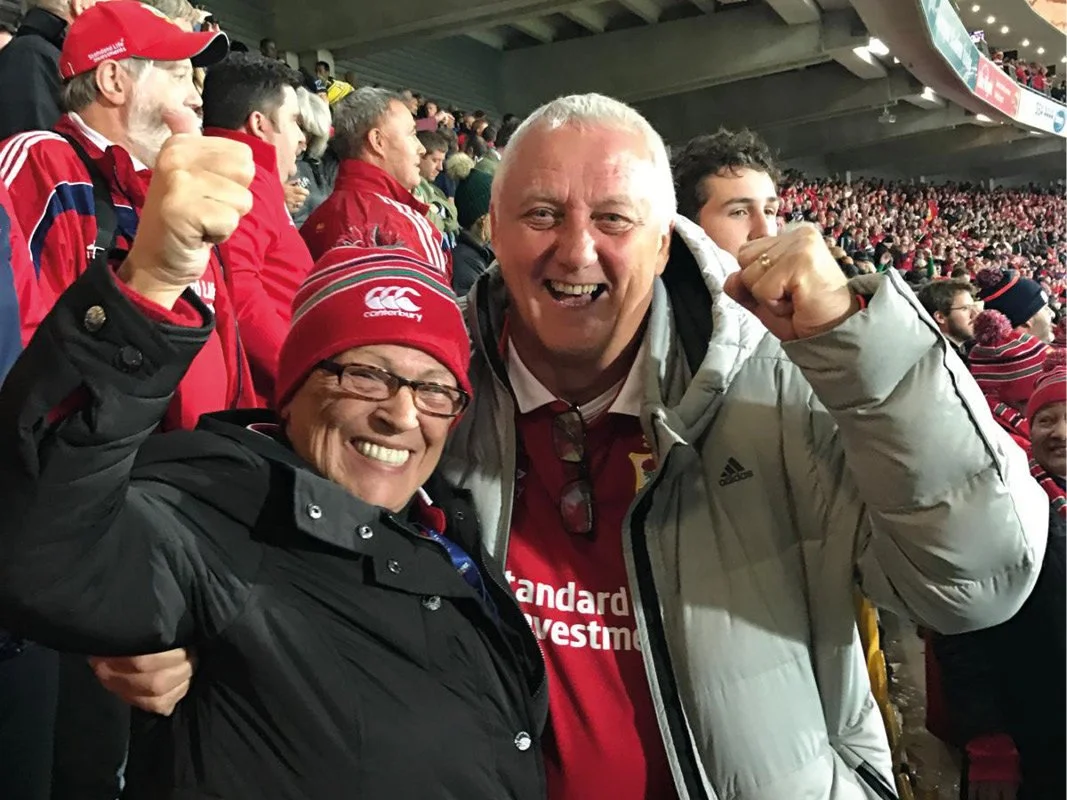
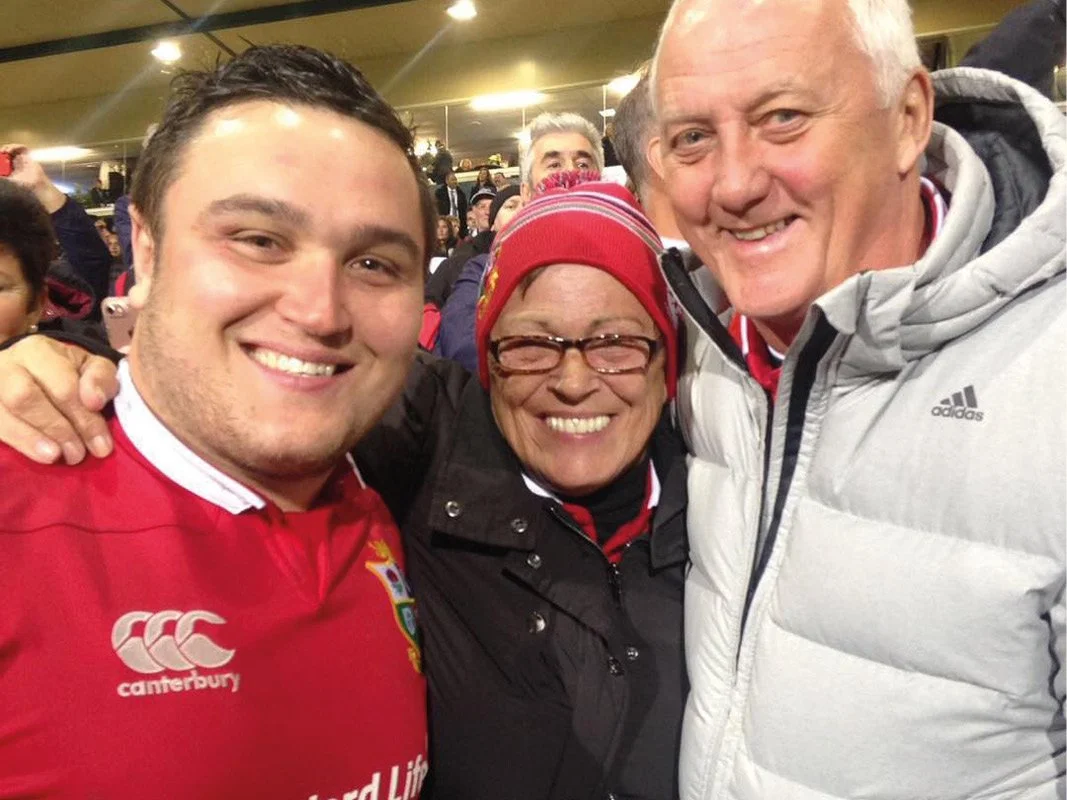
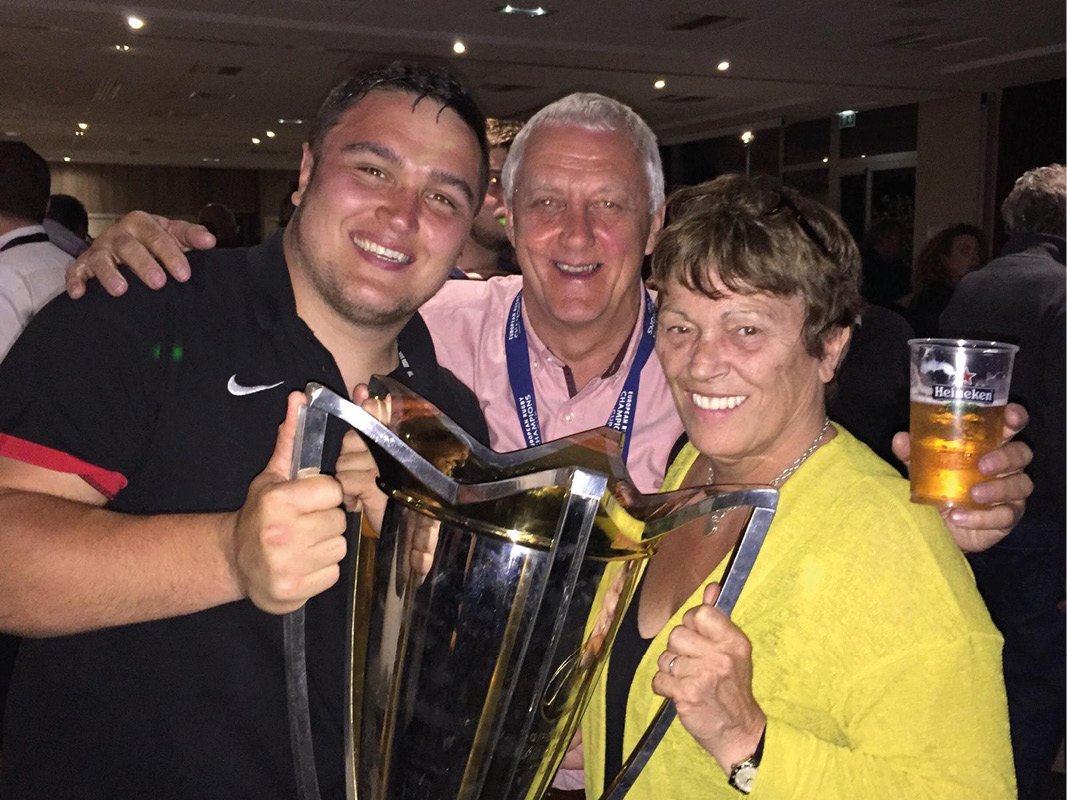
Wellington, 2017, the second Test of the British & Irish Lions series. Jamie has started at hooker and the tourists have beaten the All Blacks 24-21 with an epic comeback that sets up a deciding final Test. “There’s a picture of my mum and dad after the game, and you can just see in their faces how proud they are, how buzzing they are, how happy they both are,” recalls Jamie. “It’s an amazing picture to have, especially now, it’s probably one of my favourite photos of all time, to be honest. There’s so much there in that picture; a picture shows one thing, but actually the back story is another. And, in 2017, I played a handful of games for England. I hadn’t started a game for England, I didn’t expect to go on the Lions, let alone start a Test match, and I managed to start all three, which was beyond my wildest dreams.
“When I got selected, I immediately thought I would be part of the mid-week team, which I was more than happy with. And I think just that one picture, in the stands, hugging each other, arms in the air, happy, that’s what it’s all about. That’s what it’s always been about for me.”
While dad was the rugby player, mum was definitely the rugby ultra. “My mum was a pretty fierce person,” he says. “I guess I get my competitive instinct from her. We used to fall out here a lot, because, unlike my dad, she was very, very vocal on the sidelines, and if anyone messed with me, or if I wasn’t pulling my weight or whatever, she let them and me know about it.
“We had a lot of those conversations,” he says, quickly adding, “she was a brilliant woman, her proudest moments were being a parent to me and my brothers.
“And she loved rugby,” he adds. “The thing that I always think back to was when I went to visit her on her deathbed, and she’d be asking me, even though she could barely speak, about the England rugby team, about how Marcus Smith was getting on...
“That’s what she cared about,” says Jamie. “She cared about the lads. When I first joined Sarries as a full-time professional, I moved in with a couple of the boys, and every weekend, it was back to my parents’ house. My mum would put on this massive spread, try and feed everyone, and send them all back with Tupperware full of food. She just loved being around people, she loved hosting and loved making people happy.
“She was a challenge for a lot of it,” he laughs. “She was just your typical Yorkshire girl who said exactly what was on her mind at all times. She’d be making it very clear when she was proud, she’d make it very clear if I disappointed her. We’d fall out all the time about different things like that.
“But I think probably in hindsight,” he considers, “when you reflect on it, and I reflect on it a lot, it’s probably because we were very, very similar.
“I loved her to pieces,” he says. “She sacrificed a huge amount to allow me to do what I do.”
Jane passed just before Jamie was made England captain ahead of the 2024 Six Nations. “She’d been atevery game from under-fives to literally the game before I’d taken on the England captaincy,” he says. “I’ll always live with a little bit of regret that she was never able to see that, but equally, I know that she would have been watching those games and been very, very proud.
“It does make you grateful,” he considers, “whenever you lose anyone, you do a huge amount of reflecting. I reflect on how much she did for me, I was always so grateful for everything that she did. She was genuinely my biggest supporter.”
Jamie is in a good place. More stories about his family, especially his mum, such as “her lucky hat”, a beanie that was always on, whatever the weather, or how she always had to walk in and out of the same entrance at Saracens, or how “wherever I was in the world, playing here or in front of 82,000 at Twickenham, I felt like I could always hear her voice”.
Rugby, says Jamie, has “been a tool for me to make people proud, and be able to give them stuff that they might not have had previously”. The arrival of his daughter Lydia happened soon after he lost Jane. “She was born ten days after my mum passed away, so it was all a bit of a whirlwind, a crazy time in my life,” he says. “It was slap bang in the middle of the Six Nations as well, so it was quite full-on.
“But being a dad, the feeling it gives me,” he begins, “it’s really hard to put into words. I felt like it’s given me purpose. I certainly feel more motivated now to do well.
“I want to be the best I possibly can be because, you know, Lydia’s two, and she comes to games, but she won’t remember them. I want her to be forever proud of what I’ve achieved. Not just as rugby player, but as a person as well.
“I’m not necessarily bothered about her being too fussed about rugby,” he says. “It’s more about who I am, how I’ve been with people, who I continue to be and how I show up for people: that’s probably what the most important thing is to me.”
Lydia made an appearance at Twickenham in her early days, something Jamie wasn’t sure about. “I was just worried that she wouldn’t enjoy it,” he says, “and that whole week in the lead-up, you get a lot of publicity, and a lot of people talking about you, and I don’t really like that sort of thing. I don’t like the spotlight and the focus being on me. I was weighing up whether it was a selfish thing to want the pictures of me carrying Lydia out rather than actually her enjoying it.”
A conversation with George Ford – dad of Alarnia – changed his mind. “He said, ‘you’ll have those pictures forever, and it will be so special, and Lydia will enjoy looking back on those in years to come’. I was so thankful that I did it.
“Now seeing her after games, it puts things into perspective, win, lose, draw. She doesn’t care, like, she just wants a hug.”
Jamie is the kind of player you feel you already know. When we’re with him, he’s playing the role of ‘supertaster’ for Nyetimber, smelling the assorted aromas of their English fizz, and revealing his own tasting notes, including ‘strawberry laces’. He reads the script beforehand. “I’m not sure this is Maro’s thing,” he says, presuming the England captain must have been considered for the role too. “It was written for you,” he’s told. The dry, easy-going, cheeky humour reflects the person he not only seems to be from a distance, but very much is in real life.
He’s at ease with the biggest names in the game, because he grew up with them. Influences haven’t just come from home, from Hertford, they’ve come from Saracens. “I mean, the first name that comes to mind is Mark McCall,” he says, name-checking his director of rugby. “We joined in the same year, and, you know, he’s someone who’s got had a huge amount of belief in me, he gave me an amazing amount of opportunities, but also made it very clear to me what it takes to be the best, and held me to that standing for a very long time now.
“I genuinely consider him a friend and a mate and someone that I would call if I was in trouble,” he says. “And I was really lucky to grow up with a group in the academy with players like Owen Farrell, George Kruis, Jackson Wray, Will Fraser, the Vunipolas – they are people that I idolise really, even though they’re the same age group.
“We generated this really cool environment and culture where we drove each other really, really hard, but we also backed each other. We’re each other’s biggest supporters. I think that I wouldn’t be the player I am without those guys.”
While there’s been plenty of good headlines for Saracens, they’ve also had their dark days, none more so than the financial scandal that saw them relegated to English rugby’s second tier. “The relegation and salary cap scandal was a huge challenge to everyone,” Jamie admits. “The uncertainty around our future was obviously a really difficult time, but I think the way that we then rallied around, got clarity, understood the situation that we were in, and then had this sort of ‘us versus The World’ mentality was one that we absolutely loved.
“I think it’s a really big part of our story, that we were hugely successful, we had to take the relegation on the chin, then off the back of that, to come back and reach a Premiership final and win a Premiership final, it says more about the club than the relegation does in any way.”
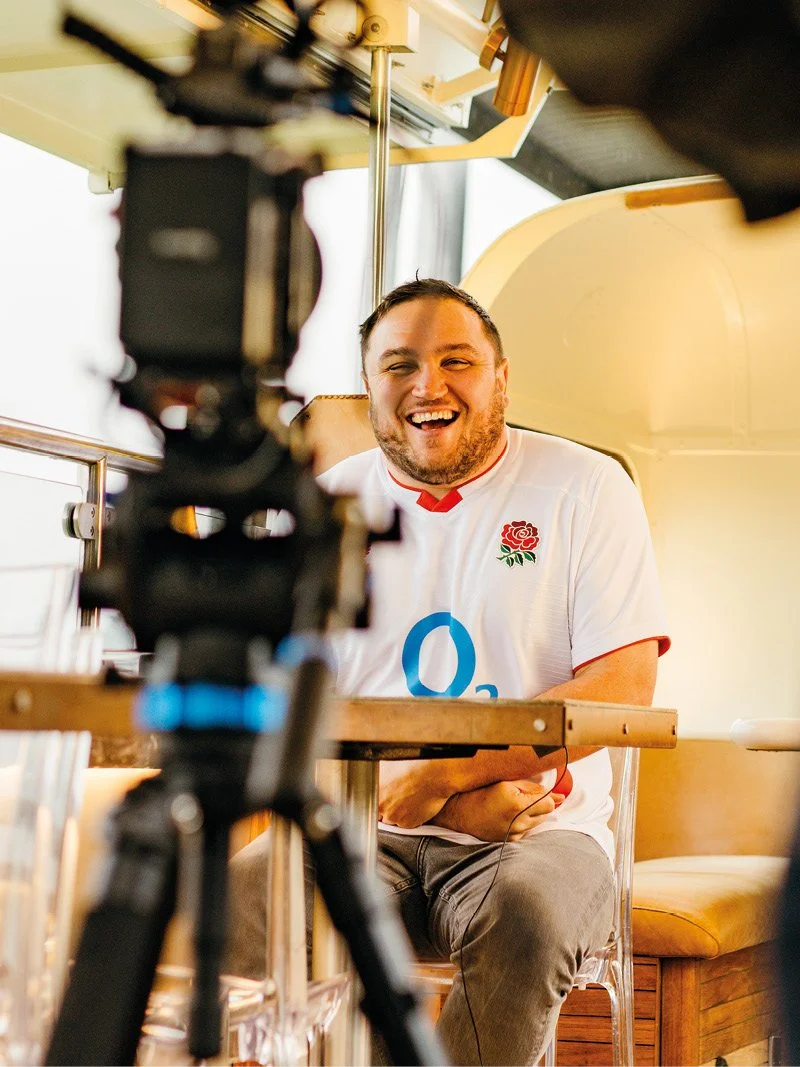
It’s a good time to chat to Jamie. At Hertford, we spend hours in the rain with him, as he jumps on and off a vintage bus, tastes wine, gets soaked sitting in his own stand and is dressed up by a fashion mag in oversized jumpers and trousers. He takes it in his stride, as we continue to look back on his career. Lots of good stuff, but not without challenges, albeit few regrets. “I honestly don’t have many,” he says. “I hope that when you speak to anyone that’s worked with me, [they would say] I come into work and love being there every day. I had some struggles, like under the Eddie Jones era, as many people did, being away from home and in a tough environment. I struggled there a little bit. So I probably have a couple of regrets around how I handled things then, and my reactions to things. But other than that, I’ve loved the journey.”
It’s not quite over yet: he’s got another full season of club rugby to go, hopefully another season of international rugby, finishing ideally with a Rugby World Cup. “I’m not going to miss training in this,” he says, pointing to the rain-filled skies, “which is pretty much the months from November to March, training in the rain.
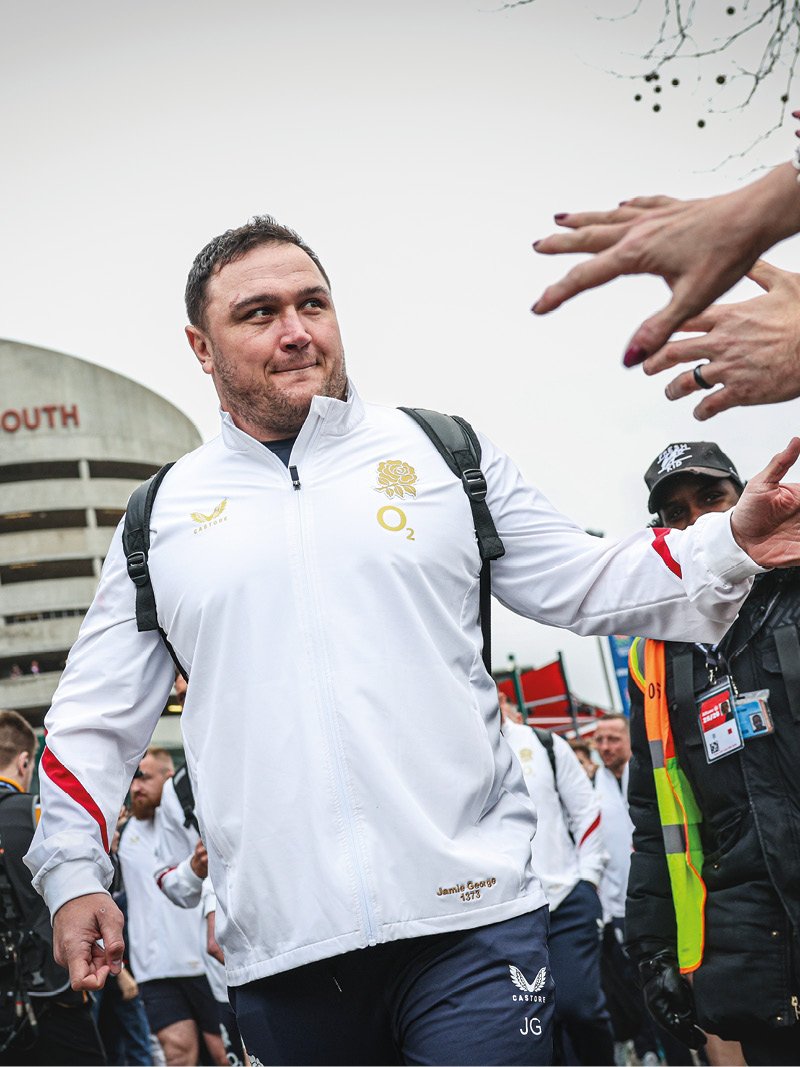
“I’ll miss the people though,” he says. “That’s the big thing for me. There’s a big part of me that loves the tactical side of the game, building up to a big game, the feeling in the changing room, the feeling before a Test match.
“You know, I’ll miss that interaction with the fans. I’ll miss that connection,” he says, finding the right word. “I’ll miss the feeling in the sheds after a game. If you asked me to close my eyes and think of my best moments in rugby, like, I won’t remember specific moments in games, I’ll remember being in the changing room, mostly with a trophy, having a beer, having a laugh, listening to music, and probably the two days that follow after those big wins.”
Silverware-wise, it’s not been too shabby. “It’s been decent,” he says, laughing. “Honestly, it’s surreal beyond anything that I could ever have dreamt of. I used to go down to watch Saracens at Vicarage Road, and from that moment, I fell in love with the sport.
“I’ve been able to go on and play 300 times for that club, and it means a lot to me to be retiring as a one-club man, because I never saw myself playing for anyone else. The loyalty I’ve shown, and the loyalty they’ve shown me, is something that means everything.
“I reckon three or four years ago, I probably wasn’t enjoying rugby as much as I probably should have been,” he says. “And something that I realised then was how lucky I was to do what I do. If you told my ten-year-old self what I’d be doing at this moment in time, I’d have bitten your hand off.”
Story by Alex Mead
Pictures by Mark Parren Taylor & Adrian Dennis
This extract was taken from issue 33 of Rugby.
To order the print journal, click here.