Hamilton RFC
Hamilton, on the edge of Glasgow, carries the weight of a dukedom and being named after one of Caledonia’s most powerful families. It’s a town that’s seen a lot of history, and a fitting setting for the next frontier of women’s amateur rugby in Scotland.
Hamilton, a large town ten miles southeast of Glasgow, is a curious place to find yourself on a Sunday. It is old and formally titled – a town with a dukedom, named after the all-powerful Hamilton family. Its edges are softened by country houses and leafy streets, but its centre is resolutely grey, dominated by the Lanark County Buildings, a slab of 1960s brutalism rising into the sky, which preside over the frayed Caledonian architecture down below.
Those who are out on the morning we visit are moving with purpose, darting between doorways to secure coffee or an Irn-Bru, small acts of preparation against the heavy rain forecast later in the day, and perhaps against the consequences of the night before. Empty bottles and cans line the streets as evidence, as well as the well-worn pubs dotted around the train station.
Hamilton is 55,000 strong, and sits above the Scottish average for income and employment deprivation, yet on a short walk through its centre the prevailing impression is one of warmth, with half-smiles and raised hands.
That mood carries into the clubhouse of Hamilton RFC, where a congregation of friendly faces seems to distill the town itself. We are met by Kevin McCann, the club secretary, who greets us with a slap on the back, a laugh, and the question, “aye, did you find some nice hospitality last night?”.
This afternoon, Hamilton’s women are due to face Annan, visitors from the rugby-rich Borders, in Arnold Clark Women’s West League 2 (tier five). We’re here not just for the hospitality, but because of Vodafone, as part of their clubs.connected programme with Scottish Rugby, which equips grassroots Scottish clubs like Hamilton with free of charge connectivity for 12 months, as well as offers on both consumer and business products for club members and sponsors.
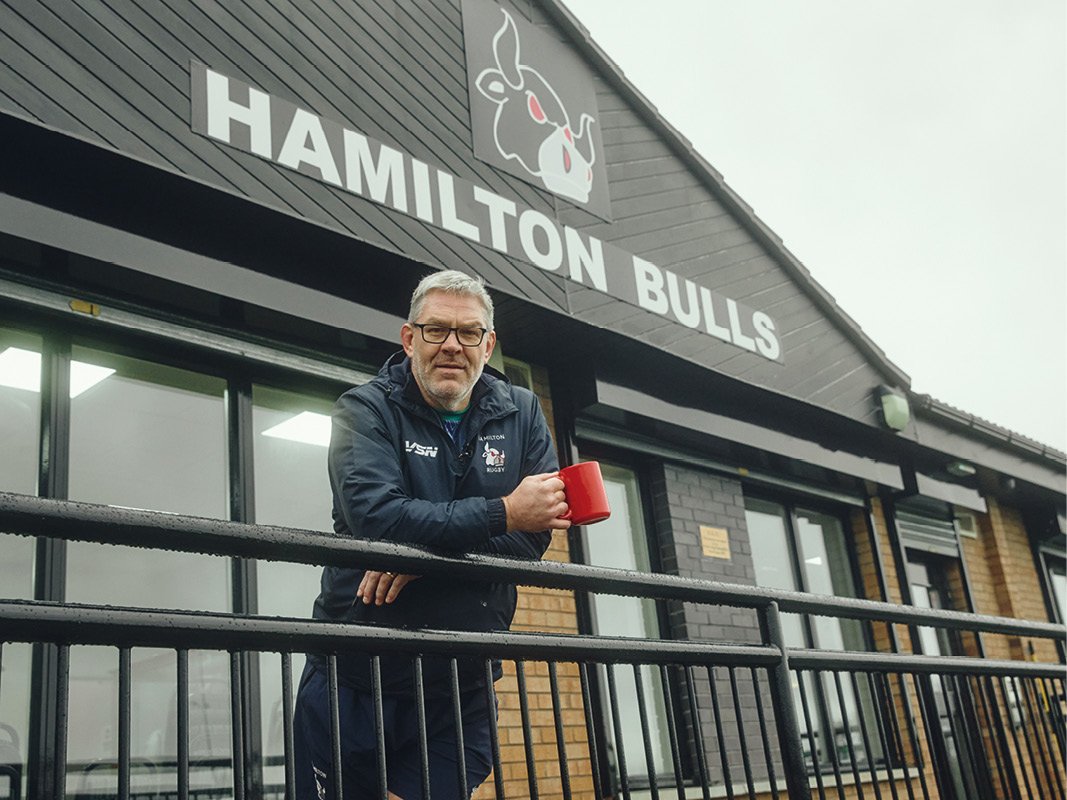
Part of the romance of afternoons like this lies in the immersion of shirts framed on the walls, lists of captains. Sensing our need for context, Kevin ushers us towards David Gemmell, a man revered in these parts from his time as captain, when he helped guide Hamilton to seven promotions in seven seasons during the early 2000s, a unique achievement in Scottish club rugby.
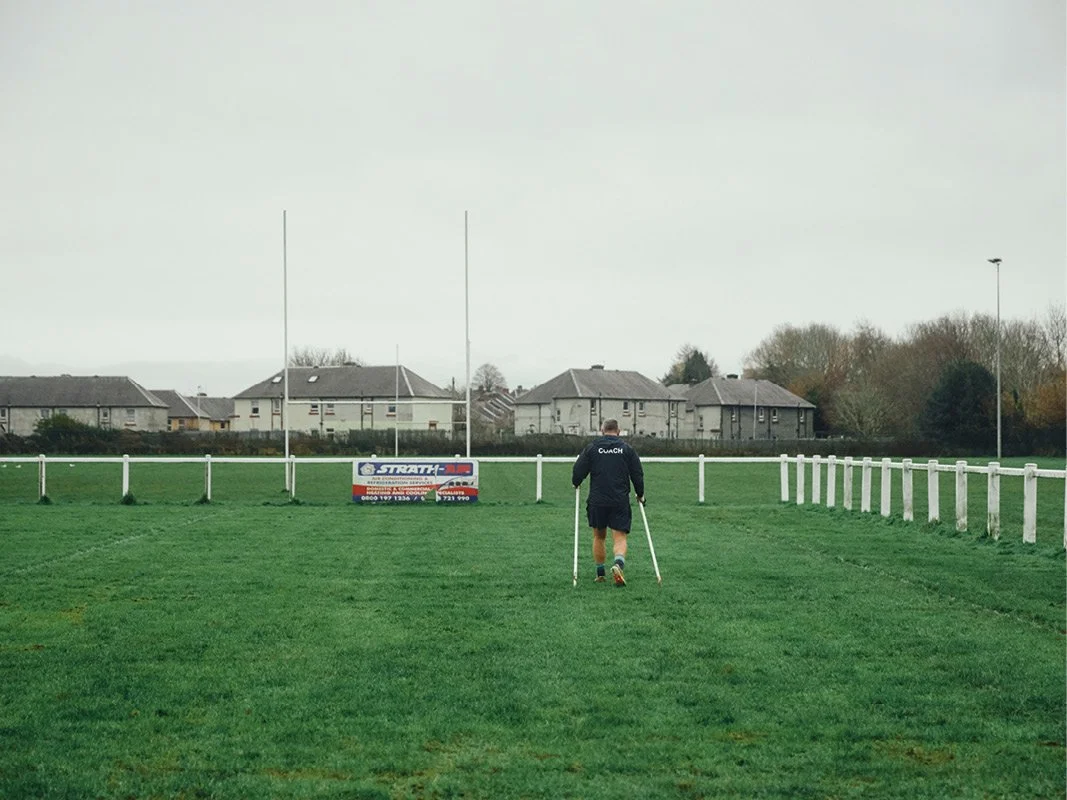
Tall and imposing, David has been part of Hamilton for 39 years, from the age of fifteen to fifty-four, which he is today, now coaching the women’s side. He is the kind of omnipresent rugby figure easily imagined in shorts in all weather, an image made more vivid by the amber rain warnings hanging over Scotland. For the moment, it remains dry, but David’s eyes drift toward the pitch, which he admits has seen better days and may struggle once the rain arrives.
He talks animatedly about his time as a Hamilton player, his stories threaded with asides and far-flung anecdotes, as though his life and the club’s history are not really separate things at all. “I got a story,” says David quickly, speaking in a suddenly serious tone, “which will give a good impression of who I am.” He tells a tale of befriending an unknown Frenchman on board a train to Murrayfield for Scotland v South Africa, “I invited him along with us, my family and some friends, and we travelled through to Edinburgh, took his number and told him to enjoy the game. He then messages me later on to say that his wife knows me, because I had been in the Scouts with her little brother. I hadn’t seen her in 35 years, and bumped into her French husband on the train to Murrayfield. Now they live in Paris and my whole family went last year. We met up with Olivier and Diane and went for dinner.
“So, what I’d always say to you, is just speak to everybody. Make friends with everybody, and you’ll have a friend in every city in the world.”
We ask about David’s line of work, only to be met with polite deflection. “Look at where we are,” he says, gesturing around the clubhouse, “let’s talk about rugby.”
And at the rugby, especially in Hamilton, is where he’s happiest. “I’ve lived in Hamilton from the day I was brought home from the hospital to the house I live in now,” he says. “It’s part of me, I guess. Like loads of places the town centre is a bit … aye it has seen better days. But it’s always been a nice place to live and it still aspires to be a nice place to live.
“We’re in the middle of a mining country, so when I was hitting third year at secondary school, in the year 1985, we had a whole lot of industrial action up here, and effectively the outcome was there were no more extracurricular activities taken by the teachers.
“This meant no more rugby at school, which meant I had to find a club.”
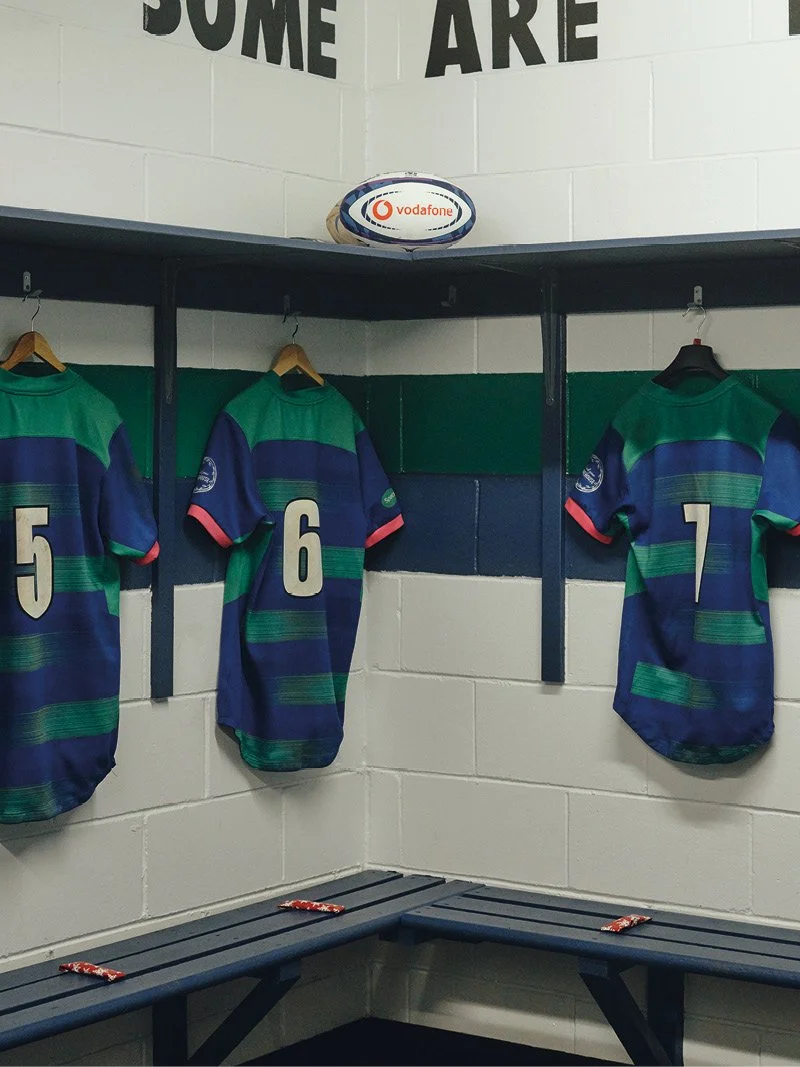
So, it was Hamilton RFC, and it has been ever since. Founded in 1927, the club once carried a reputation for an infamous social side, memorably banished from its own pavilion in the 1950s for the cardinal sin of leaving beer cans by the entrance and forced into a nomadic existence. By the 1970s and 80s, that image had been reshaped, with Hamilton flitting between the district and national leagues.
David knew that joining the club at fifteen and throwing himself straight into adult rugby - “I was fine, I was a big lad,” he assures - would have made his father, a semi-professional footballer in the years after the Second World War, proud.
“I lost my dad just when I moved from primary school to secondary school, around about the age of 11, my dad was ill for a year, and then he passed away with cancer. He could barely walk by the time I was growing up.
“He would have loved…,” David begins before stopping thoughtfully, “he was a sports fanatic. He would have loved to have seen how successful I have been in rugby.
“My boy, he’s 22 now and he’s got fifty-plus caps for the first XV, and I got to play with him in a game for the firsts in May 2023. That was a dream come true.
“My claim to fame is playing in the firsts from 1988 to 2023 … five separate decades. Do you like that? I knew you’d like that.”
Through his own admission, David’s playing time for the first during his forties and fifties was scarce. But during the early 2000s, the peak of David’s Hamilton career coincided with the club’s true halcyon days.
Under coaching of Ian Morrison, Hamilton embarked on a scarcely believable rise: seven promotions in seven seasons, climbing from Division 5 West to Premier 2. Moving from talking to David, whose recollections of Hamilton are scattered with quips and affectionate asides, to Ian is a marked shift in atmosphere.
Both men are intense in their own ways, but Ian carries a different weight. A hard, thoughtful figure from Elgin, north of Inverness, who makes his living installing entrance mats for large buildings, he has the air of a disciplinarian.
Coaching, however, was not his first encounter with Hamilton. Years earlier, he had made the long journey south from Elgin to play in a cup match. “I got one of my worst injuries playing against Hamilton,” he remembers, “I broke my jaw … you’d be amazed how many people claimed it was them when I came back.”
When he arrived at Hamilton, Ian was a rugby duck out of water. A self-described obsessive, he entered a ramshackle set-up and was, by his own admission, a little taken aback. “I was one of these guys who read every rugby magazine, every report, watched every piece of rugby I could find on the television,” he says. “I was just a fanatical rugby player and coach.
“My first training session at Hamilton, there were six players. I went right back to the people in charge, and said, ‘I can’t do anything here. I’m not going to be wasting my time doing this’. Then I had a meeting with all the players, a rag-tag bunch, some of whom believed they were a lot better than they were, and others like David, who were genuinely excellent.”
Ian told the players he would treat them as though they were operating at the highest level. Punctuality was non-negotiable. Shirts and ties were expected. A fine system followed. Matches were filmed by the club secretary and replayed to the players, mistakes paused and examined without ceremony. Footage of upcoming opponents was sourced too, distilled into tactical dossiers that made preparation feel almost professional.
Hamilton’s rapid ascent forced the Scottish rugby world to pay attention. The high point came in 2004/05, an unbeaten season that ended with the National One title and the certainty that this was no accident. Recalling that period, Ian glows with pride, framing it as a victory for rugby obsessives everywhere, even though he is careful to steer the praise away from himself.
“Don’t think for a moment that Hamilton’s success was all me,” he warns, “that’s not the way I would like to describe myself … but I was a catalyst.
“I’ll say one of my great achievements as a coach was at one stage when we were in Premier Two, we had over sixty people training. Nowadays Hamilton are better than most, but they’re struggling to put two teams out.”
As the women begin their warm-up, those gathered point to the foreboding skies which have now just begun to break, with droplets of rain running down the clubhouse windows. Hamilton’s president, David Vickers, watches on grimly. “I hope that bloody pitch holds,” he murmurs, scanning the playing surface from the warmth of the bar.
On a day like today, running a rugby club can feel like a manic challenge. It’s not just the common problems of raising numbers, or keeping a muddy pitch playable, but often the more mundane issues that grind you down. “The biggest challenge facing the club now is utilities really,” explains David, “heating costs, floodlights, everything at the club that we have to turn on. We’re fortunate with sponsors, but we can’t get complacent, we need to make sure we’re still here in years to come.
“We’ve got a big clubhouse, and getting coverage through that building, especially during big events, is tricky. I can’t tell you how many times there’s been a panic because things stop working.
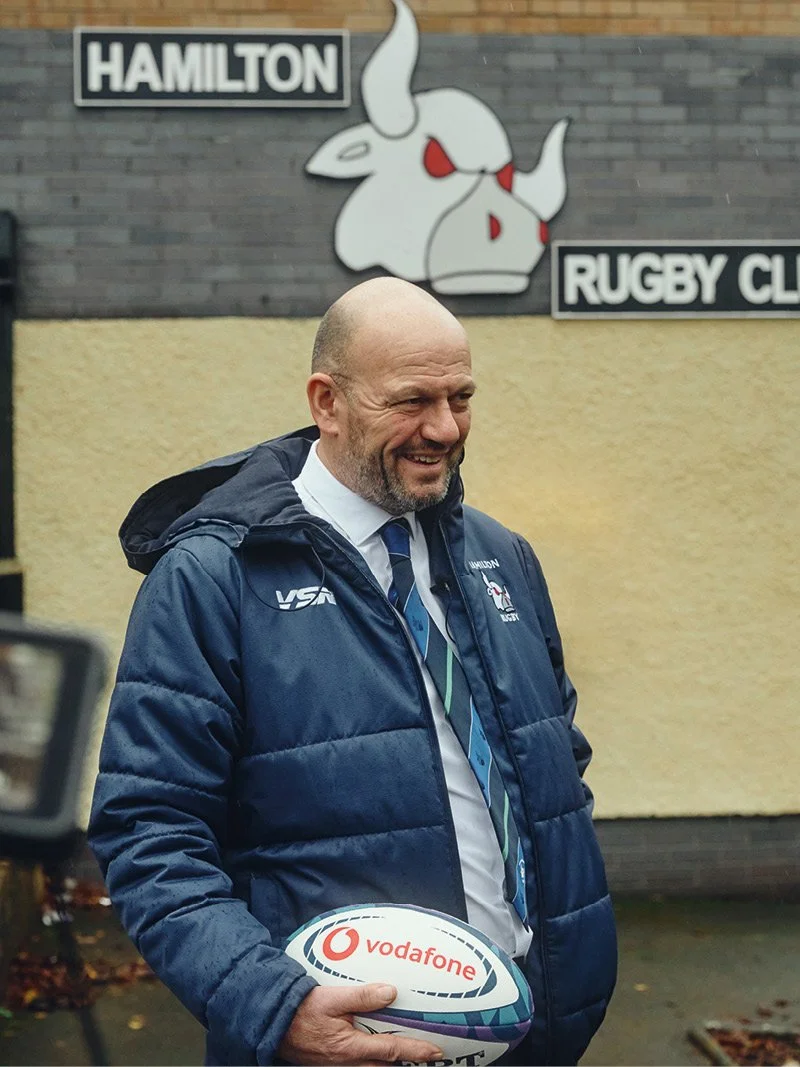
“We’re very fortunate to receive this help from Vodafone, it’s a big privilege. It’ll help this clubhouse feel more like a home, parents might drop their kids off at training and rather than disappearing for an hour to do some work, they can do some work in the clubhouse with the good Wi-Fi coverage.”
Connection with the local community is a priority for David and others associated with Hamilton, as they view it as the one thing that will sustain the club both financially and on the pitch. “We feel like we’re very well connected to the local community,” he continues, “we have a nice facility here where we host lots of functions, we’re talking 21st birthdays, weddings, funerals, our annual fireworks event where we get a couple thousand people through the door.
“But our presence in the local schools has been the main thing for us. We run sessions for Primary school kids which helps us grow our members and helps the local kids stay active, it’s the most important thing really. I think that’s the thing that will keep us going for years.”
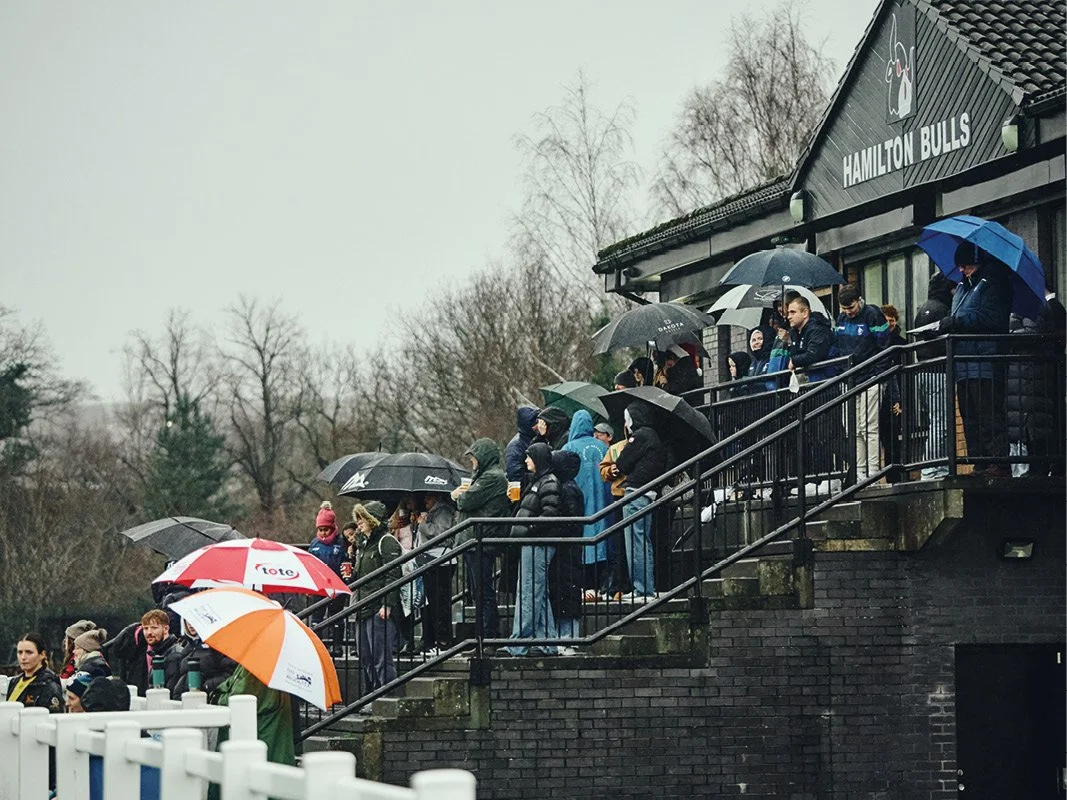
Away from the schools, Hamilton’s connection to its community plays out on matchdays, in spaces like the women’s supporters’ club lunch we find ourselves attending. With kick-off imminent, plates are still being cleared of salmon, chicken, rice, broccoli and assorted cheeses.
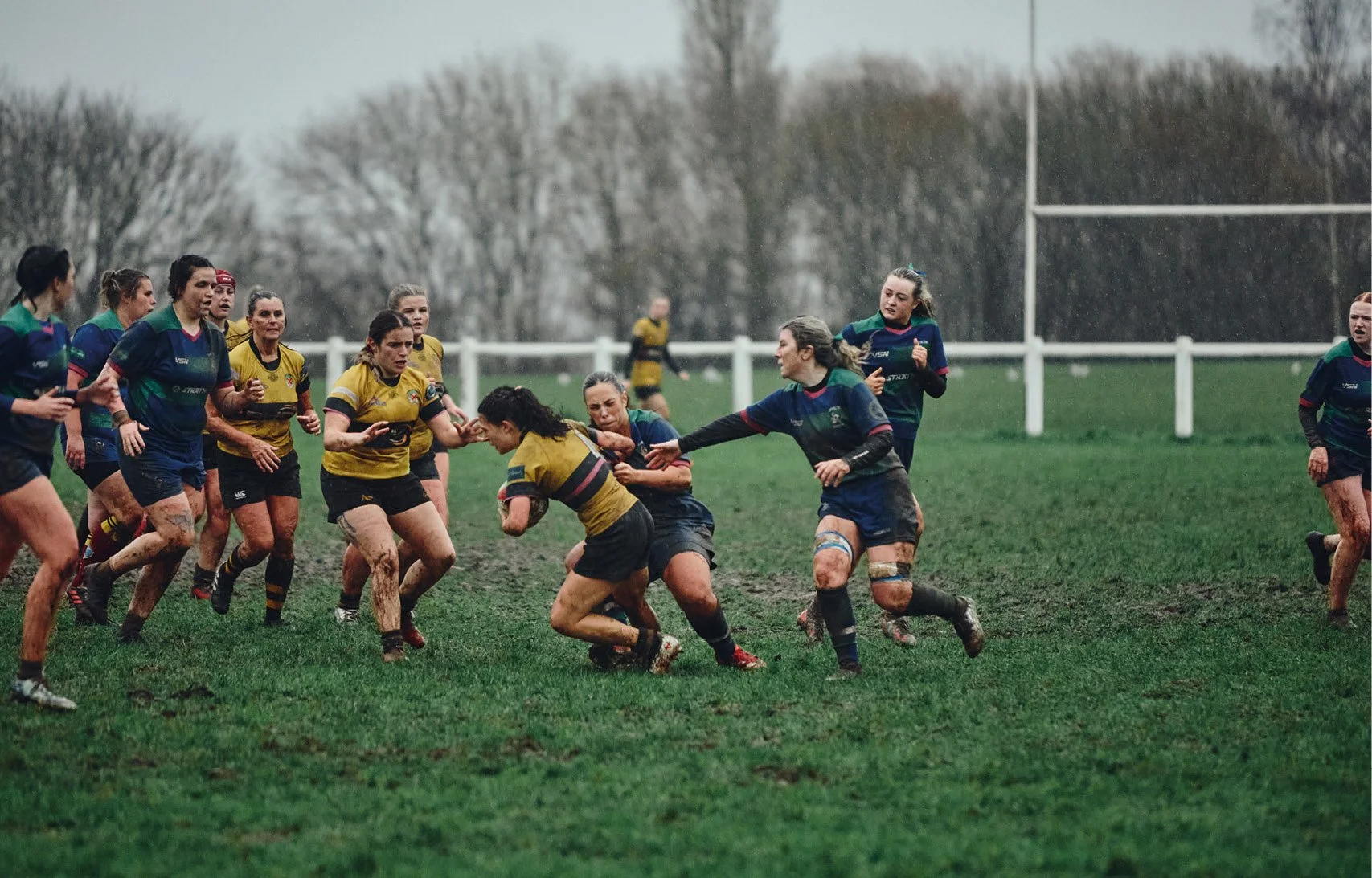
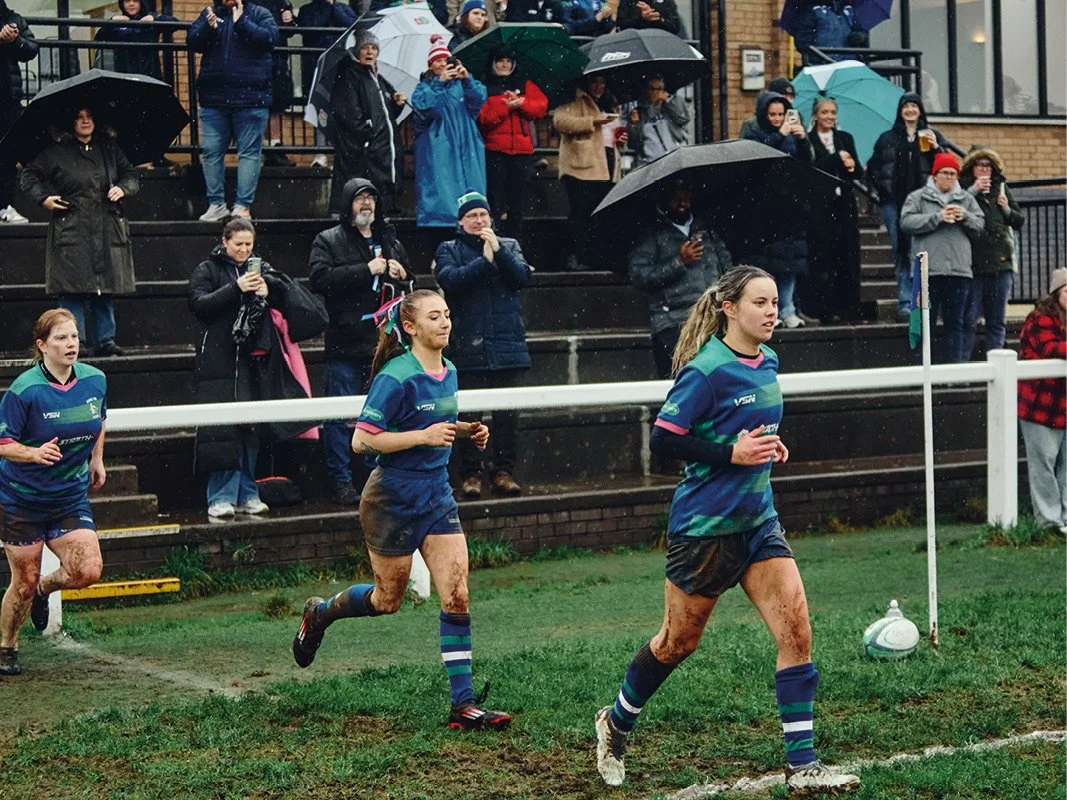
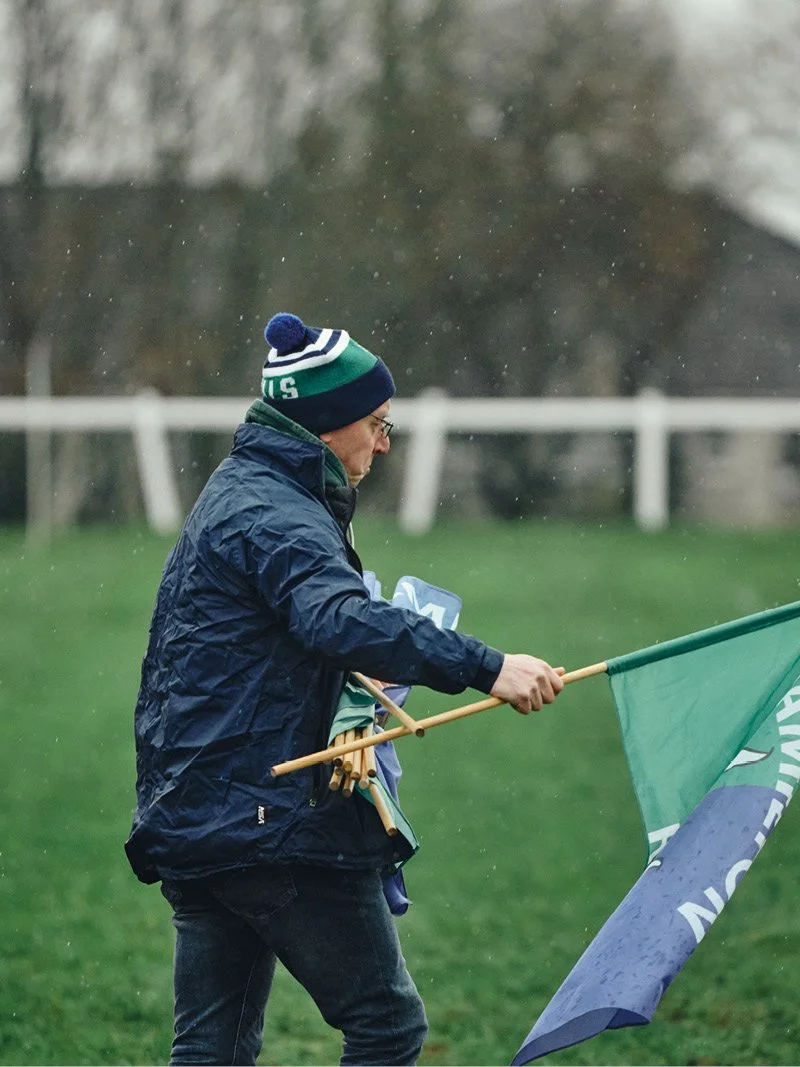
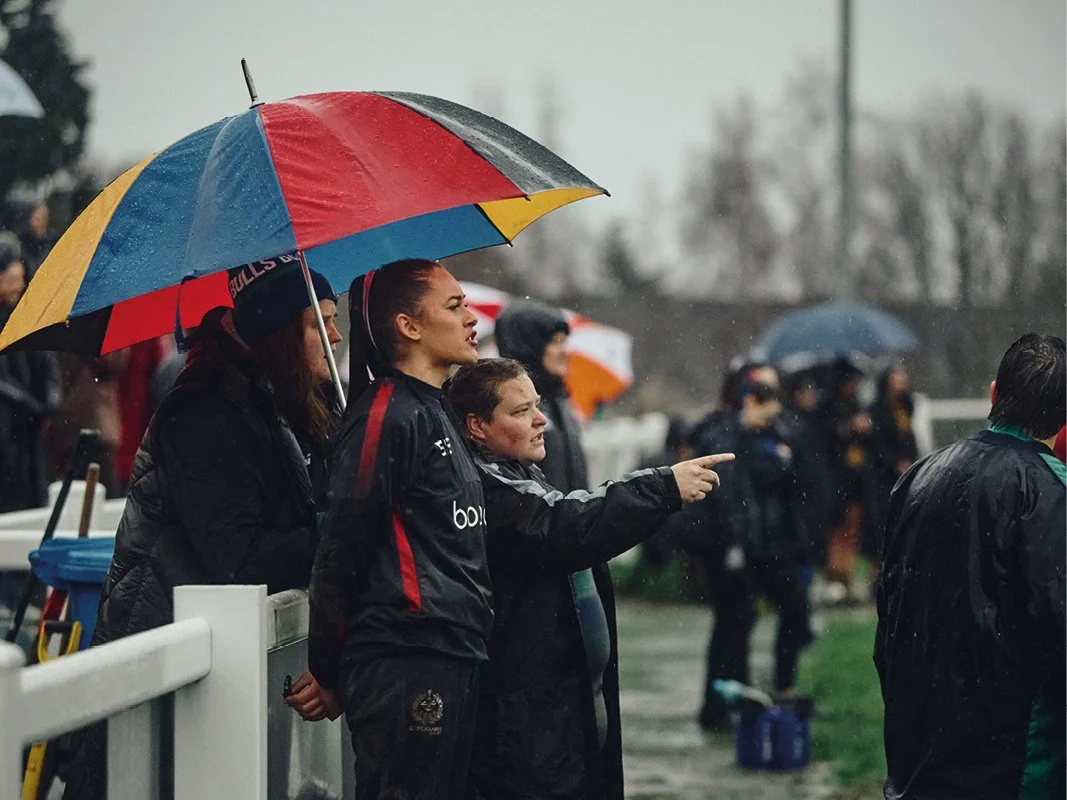
One by one, people drift outside to the concrete terrace, umbrellas raised with near-ritual care. The rain, exactly as forecast, has begun to fall in sheets, and the pitch is already yielding to its fate as a mudbath. Unmoved by any of it are the young girls waving flags as Hamilton and Annan emerge, faces set with a seriousness that feels learned, as if this is a place where poor weather is simply part of the education.
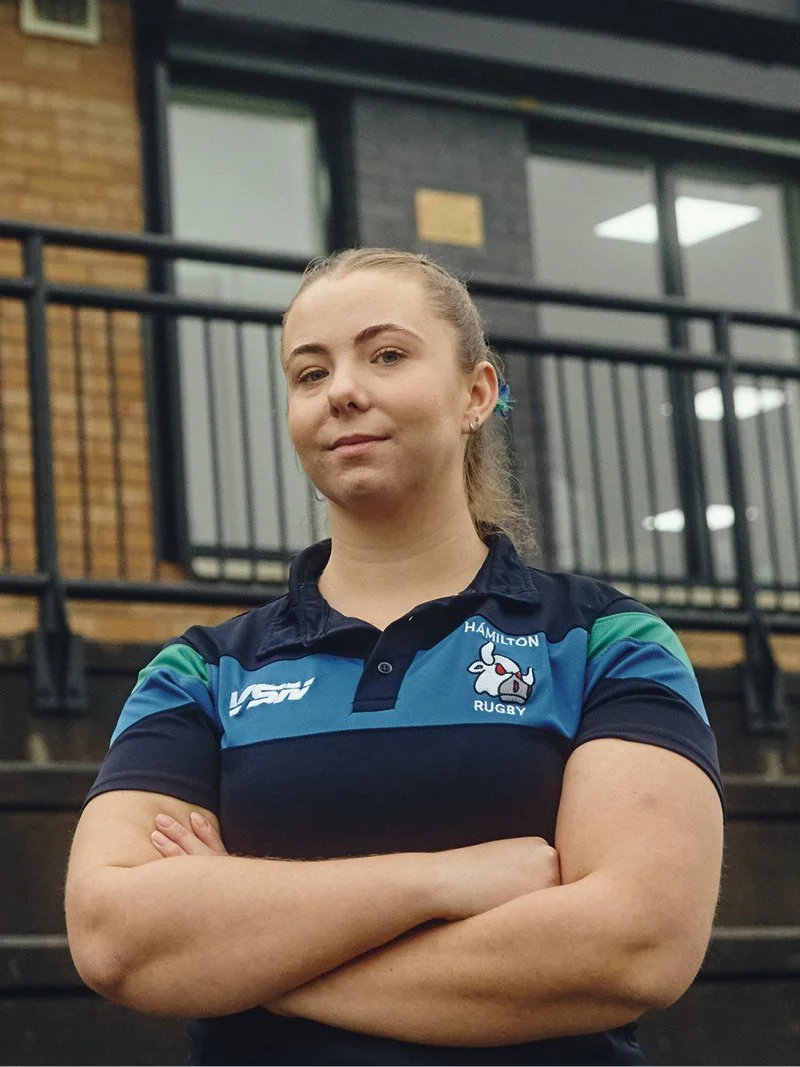
Watching on is Hamilton captain Laura Cunningham, already thinking beyond the afternoon. Earlier, she had moved from table to table at the lunch, crouching to talk to all guests. Now, as Annan send the ball high into the wet grey sky, Laura is aware of the steady gaze of coach David on the touchline, his bucket hat pulled low, repurposed for the day as rain protection. “We were very lucky that David decided to come and coach us to be fair,” begins Laura, “because he brought with him a wealth of knowledge and a bit of weight as a club legend, so I feel like he gave the women’s side a better standing within the club.
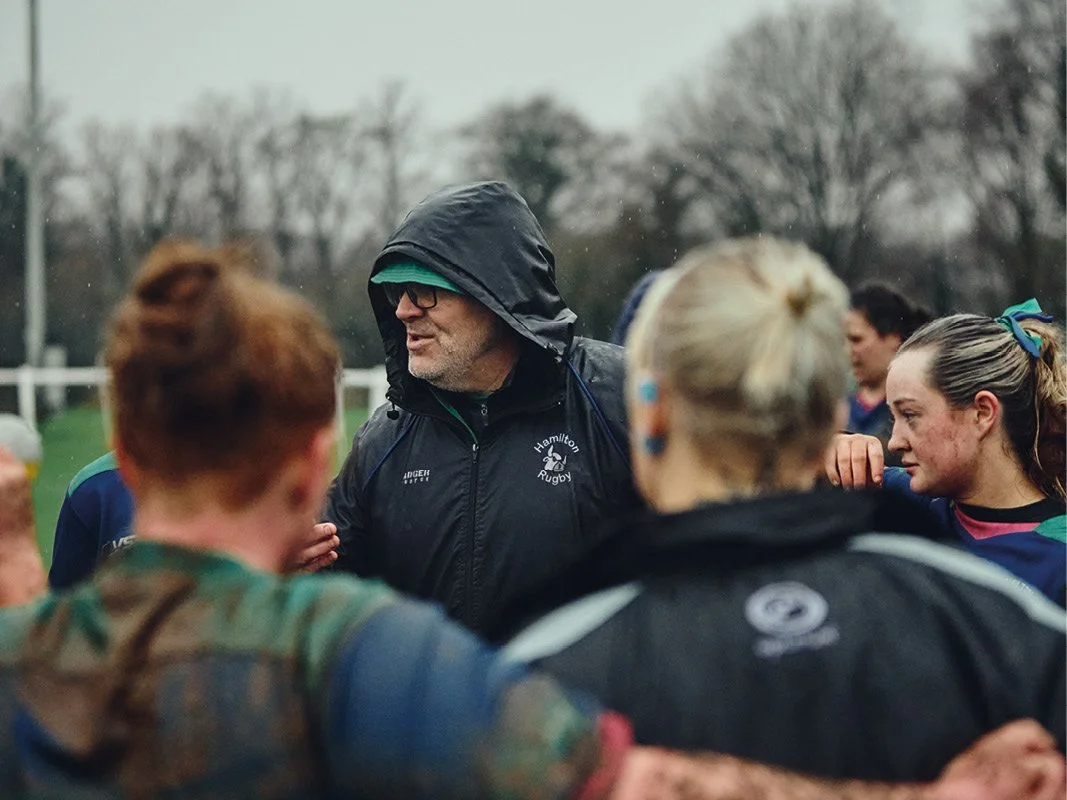
“I think, oh, he might not like this, we’ve softened him a little bit. I think it was a bit of an adjustment for him, going from coaching men to coaching women.
“You need to start thinking about how people are going to react to what you’re saying. A lot of guys might take it on the chin, but there’s a whole lot of emotions going around the women’s team.
“But that can be a good thing, and another thing that makes women more coachable is that they’ve not played all their lives, so we are more open to learning.”
Laura is one of those players who learned the game the long way, starting from scratch as an adult. She had played netball throughout school and even earned two caps for Scotland’s under-25 bowls side, but once she was introduced to rugby at university, the pull was immediate. When she returned home, she knew she needed a club. Hamilton, whose women’s side was formed in 2016 from a group of parents playing friendly touch rugby, was the obvious choice.
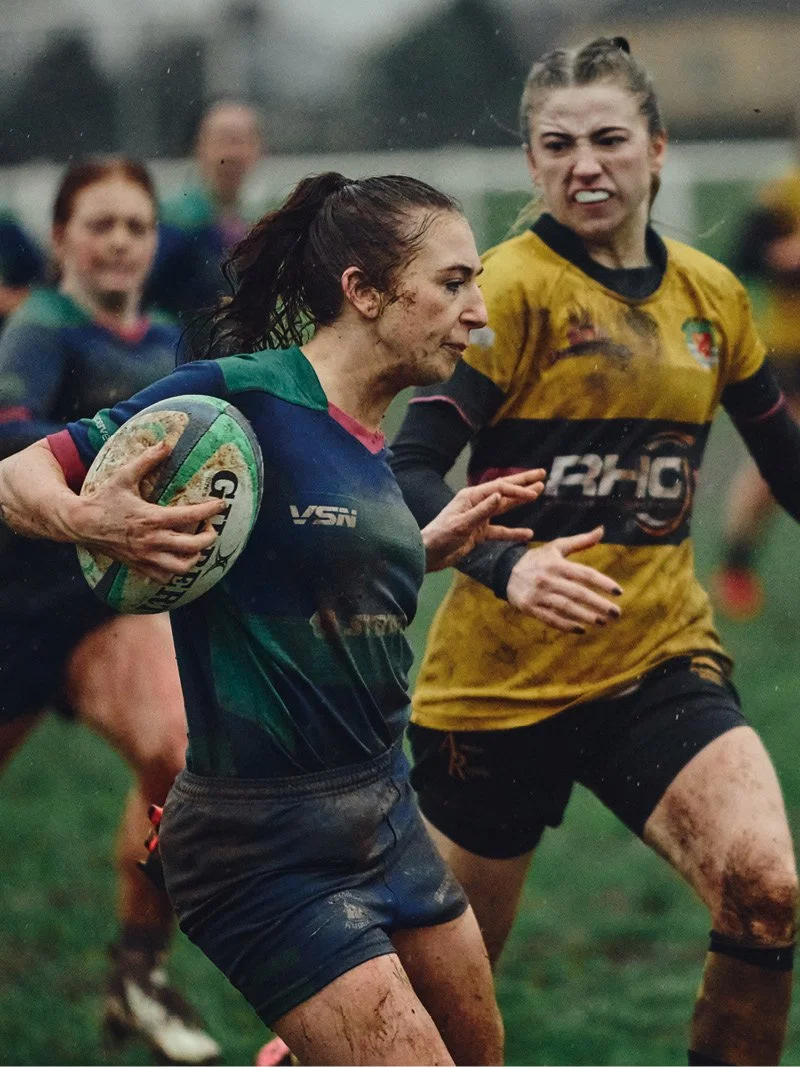
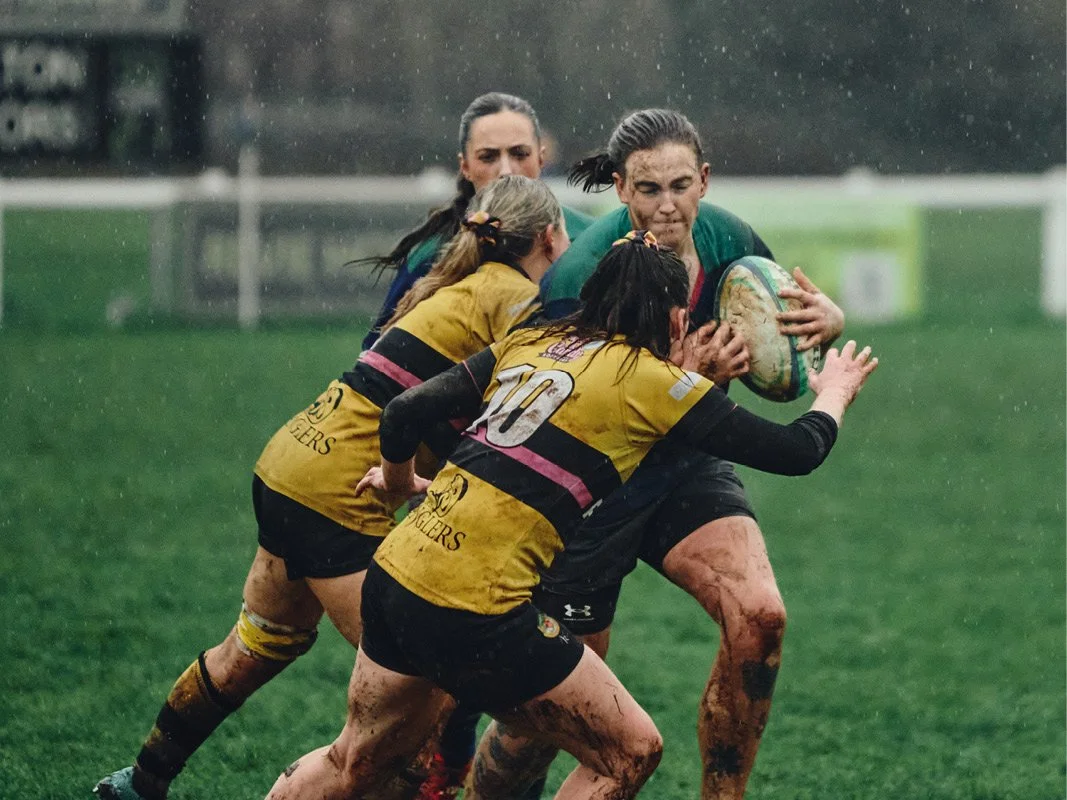
Any sense of friendliness is absent this afternoon. Tackles fly in from both sides, swallowed by mud and rain, as voices rise from the touchlines calling for penalties. In the conditions, they come frequently: knock-ons halt the game in regular bursts, the ball growing so slick it seems almost sentient, springing free from Hamilton and Annan hands.
It is Annan who settle first. Two early tries follow, one from a sharp break by their full-back, another bundled over after a series of probing kicks along the ground. This is not a day for intricate rugby. Both sides look to kick for territory, but when Hamilton do manage to get on the board, Annan respond with three more tries of their own, stretching the score to 33-5 by half-time.
The imbalance is obvious, and it is something Laura feels acutely, not just as a player in the contest, but as someone trying to build the women’s side’s standing, in the local game and within the wider life of the club. “We’ve had a mixed bag of results,” admits Laura. “We’ve got teams that have come down to our league that are pretty good. It’s hard when you’re trying to encourage new women to play rugby and the standard varies so much, because a lot of girls haven’t played before and should be playing at a level that suits them.”
“I feel as though that’s one of the differences between the men’s game,” reckons Laura. “If you’ve got new boys joining the team, then chances are they’ve played rugby growing up, they’ve not just come to the sport afresh, and it’s easier to figure out the level they should be playing at.
“Whereas ninety per cent of the time, if you’re an adult woman looking to start playing in 2026, you’ve never touched the ball before or watched the game before. I know I had never watched or played rugby before I went on at my first training session.
“A benefit is that it creates a great social scene, because it was such a mixed group of people. In most social settings when you’re my age, you’re with people almost exactly your own age.
“You can get some real perspective on life from people older and younger than you,” Laura says thoughtfully, “which has meant I’ve learned a lot about life and gotten lots of advice in my time.”
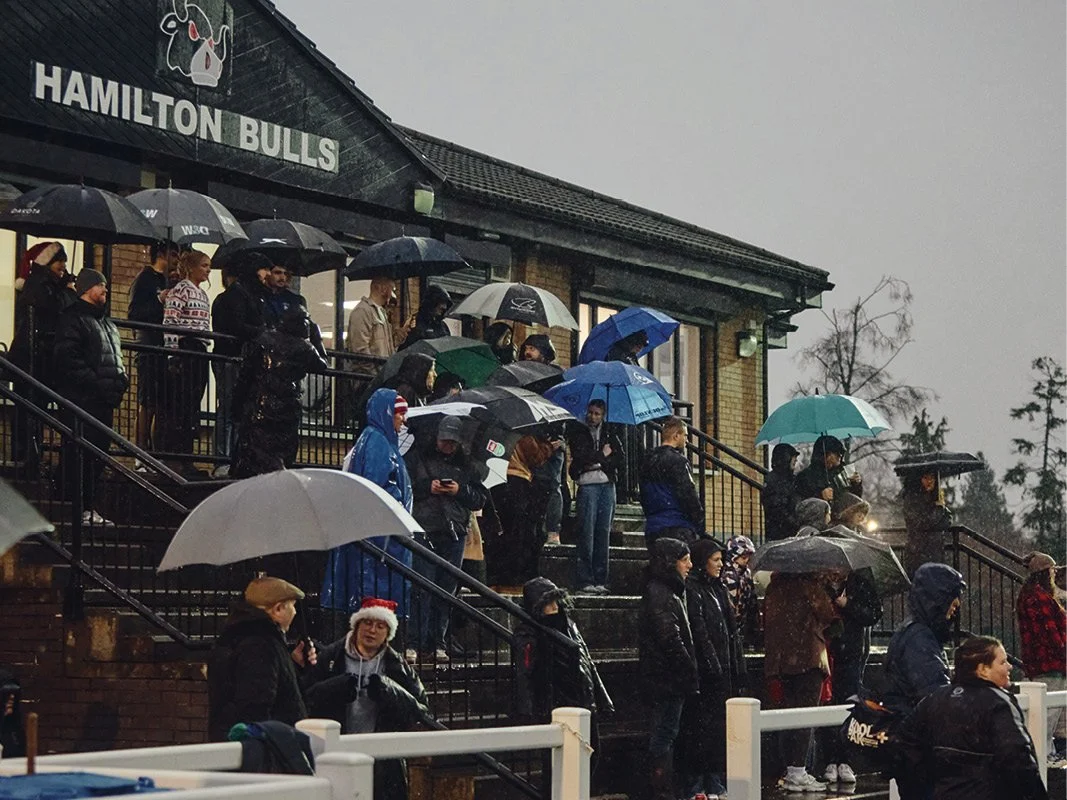
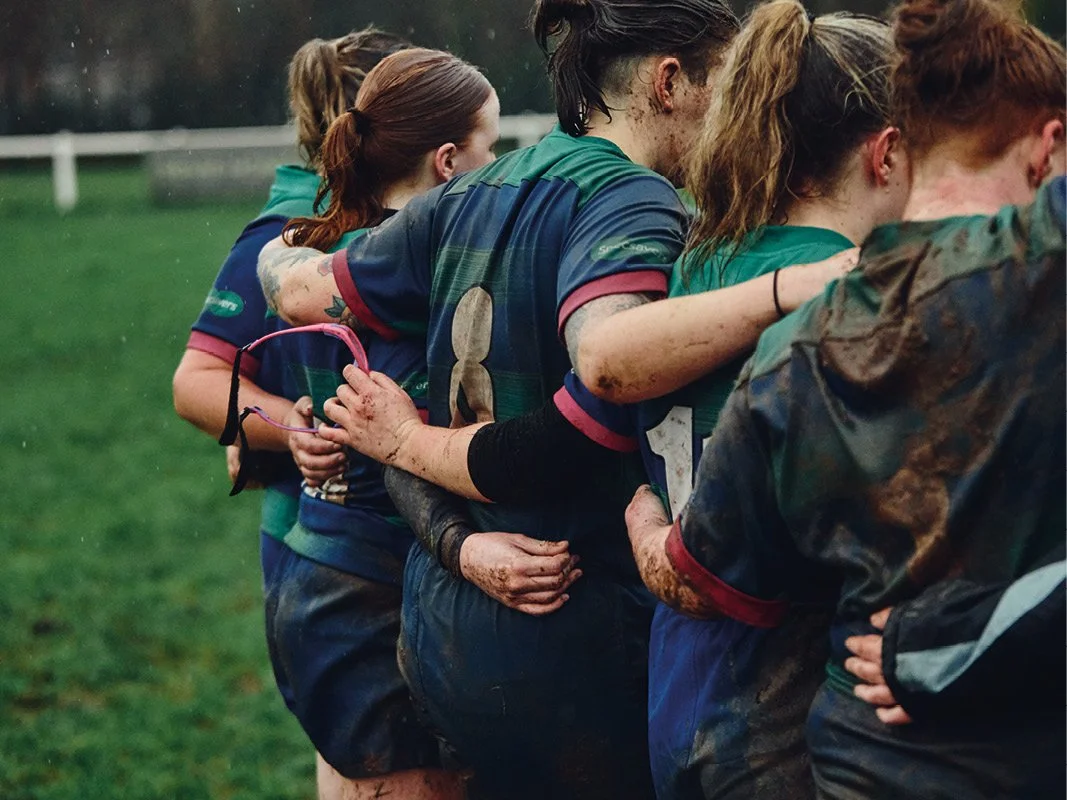
As the rain intensifies, the players bypass the changing rooms at half-time, David choosing instead to deliver his instructions out on the pitch, Phil Brown-style. The women huddle around him, while spectators retreat to the clubhouse, hands wrapped around plastic cups of tea.
The break is mercifully brief. Hamilton begin the second half with a renewed grit, piecing together two sustained attacks and finally forcing the ball over the line, a moment of collective release for players and onlookers alike. What follows is a grim, attritional contest, mud and fatigue setting the terms. Annan add a final try at the death, but the scoreline tells only part of the story. The greater achievement is that the game was played at all.
Hamilton’s players stumble from the pitch, caked in mud, stopping beneath umbrellas to talk with supporters. Laura pulls team-mates aside to offer advice, gesticulating to indicate a tactical manoeuvre. “What I would like to see going forward,” Laura says afterwards, “is building on our current foundation. Okay, we’ve had mixed results, but now we’ve got a core of dedicated, competitive girls. There are so many players from different backgrounds and they all take an interest in you. We’ve got women playing in their 40s and girls coming up who are 18 and a whole team of dedicated volunteers who made the women’s side happen in the first place. If we can stick together and keep it working the way it’s going just now, we can be a great team. It’s not necessarily about the wins on the pitch.”
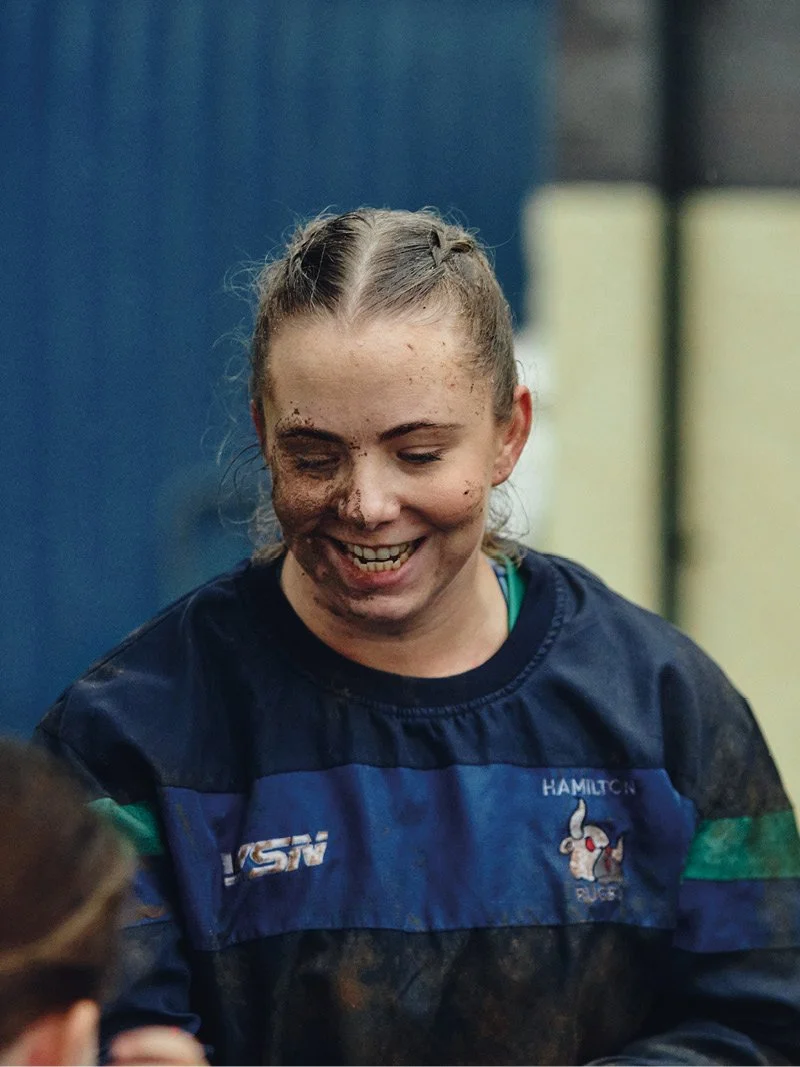
The result, as players from both sides attempt audacious mudslides and dance in the rain before gathering for a group photo, does little to define Hamilton’s women. Laura knows that, in Scotland, the future of clubs increasingly depends on how well they connect with their communities, something Vodafone and Scottish Rugby are looking to help them achieve. The clubs.connected scheme, with its free of charge connectivity, referral codes and engagement packages, gives clubs the tools to strengthen their connection with the local community. The next frontier lies in better reaching women who have never played the game at all, and easing their transition into full-time rugby.
There is still work to be done before that vision fully takes shape. But for now, as David shakes his head beneath his bucket hat and smiles while his players fling mud at one another, it is hard to miss the sense that, as in the days of Ian Morrison, something special could be building at Hamilton.
This article was brought to you in partnership with Vodafone clubs.connected. Get your club connected now, for more information visit scottishrugby.org/vodafone-clubs-connected
Story by Scott Duke-Giles
Pictures by André Silva
This extract was taken from issue 33 of Rugby Journal.
To order the print journal, click here.