Dan Carter
Christchurch High School was famed for producing All Blacks, and when Dan Carter arrived as a teenager he was overwhelmed by what he saw. So much so, he lost his love for the game, opting to avoid senior rugby and instead play with his mates. It could have meant the end of his rugby dreams, but instead it was the beginning.
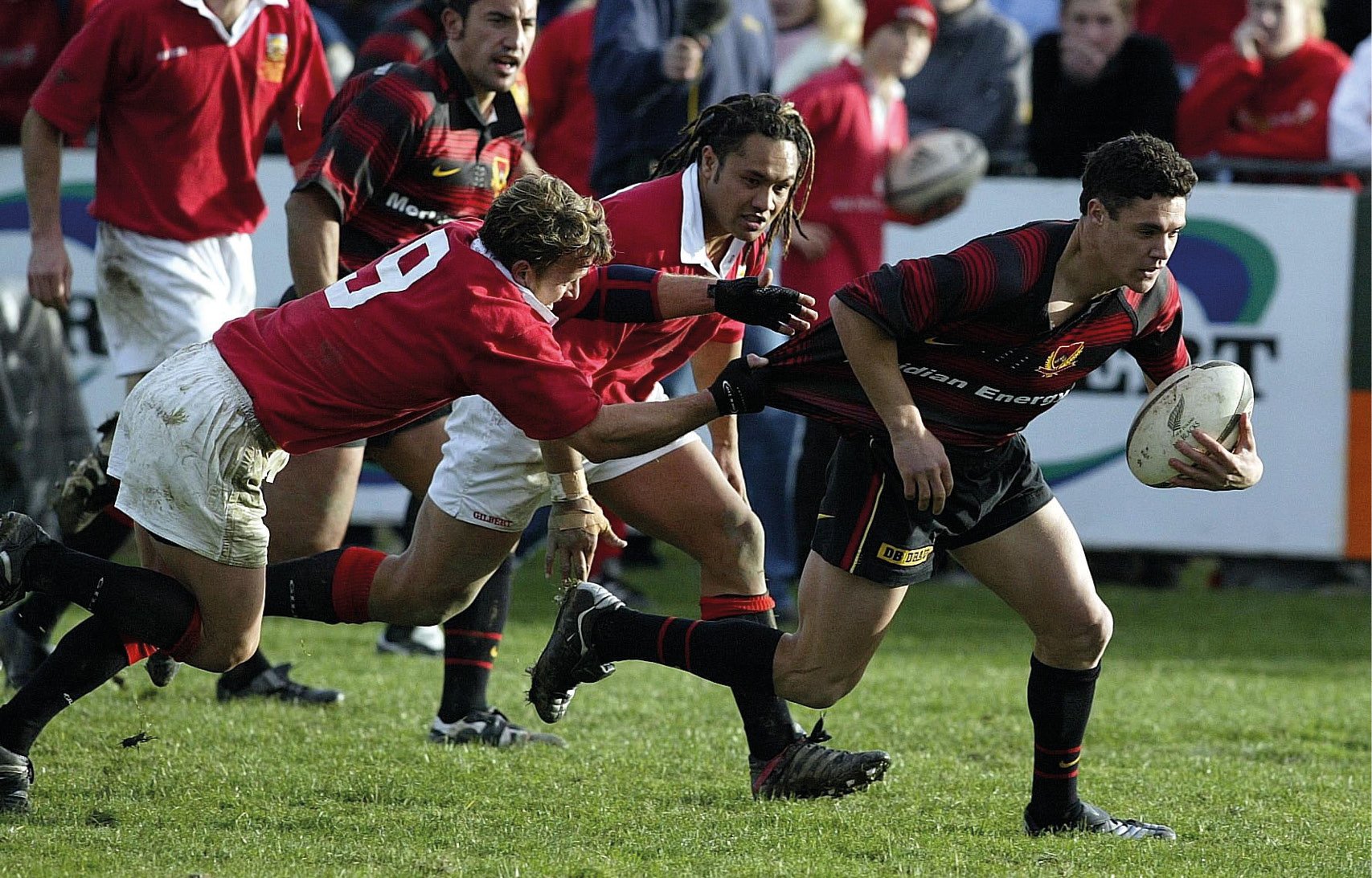
Getty Images
It’s almost disconcerting when you get asked a question by Dan Carter. Such is the gravitas of the former All Black, you just don’t expect it, especially when he seems genuinely interested in your response and there’s even a follow-up question too. This is the man who delivered the perfect rugby performance against the British & Irish Lions, who was a key part of the most dominant All Blacks side of the modern era, who has been named best male player on the planet three times, and who still has the kind of chiselled good looks normally reserved for superheroes, and Brad Pitt. But, here we are, taking a taxi across town with Dan Carter, answering his questions, which mostly centre around the Rugby Journal, which he favourably compares to a French sports fashion magazine. He surmises, the journal was ‘kind of like a book that you sit on a coffee table, and it can stay there for a couple of years’, which we definitely take as a compliment.
He’s in town for the women’s Rugby World Cup final, which he correctly predicts is going to go England’s way. “No team has beaten the All Blacks at a World Cup and then won their next game [since 1991],” he says, using the men’s example to explain why he reckons Canada may struggle to repeat the heights they achieved in their win over the Black Ferns. “England and the Black Ferns have
a great rivalry there, so I did think they [New Zealand] could upset them but, anyway, good for England because they’ve been so dominant for so long, and it’s been too long since they won a World Cup.”
We’ve got an hour with Dan, and for the shoot we’re taking him to Mountain, a Soho restaurant owned by a Welsh rugby fan [Tomos Parry]. No sooner have we arrived, than Dan is sharing rugby stories of Wales with Tomos, who’s perhaps also taken aback by the authenticity of this rugby icon. In return, Tomas quickly serves him up bellota (the really good jamon, from acorn-fed piggies), langoustines, and beef short rib, just enough to hopefully keep Dan chatting for a bit longer. Not that he needs much encouragement, but we’ve got quite the rugby life to cover, one that began around the late-80s in the minis of Southbridge (thirty miles south-west of Canterbury) and ended over thirty years later at the same club, where he completed his final rugby season with a Coleman Shield final
win over rivals Waihora [40-32].
Before we get to that though, we start in the now. “I’m just looking after my four children,” he says of his current main role. “They’re four, six, ten and twelve, and actually I’m just loving having the weekends back again.
“You kind of forget what it’s like,” he continues, “because when you play, your weekends are just dictated by rugby, even on a Sunday you’re tired, beaten up from a game, so it’s actually nice to have your weekend to just chill with the family and play the role of Uber driver for their sports.
“Now you’re on the sidelines of junior rugby,” continues Dan. “I do a little bit of coaching, I’m not the head coach, I just kind of fill in wherever I can.
“I refereed a few games, you know, like under-8s; some of the sideline parenting is horrible at times. But yeah, if I had whistle in hand, I felt like I knew a little bit more about rugby, so they tended to shut up when I was reffing.”
Naturally, being one of the most famous rugby players of all time, his kids must hang on his every rugby word? “It’s funny because, for my kids, I’m just their father, so I might tell them something, and then their coach will say the exact same thing, and then they’ll listen to the coach more than they’ll listen to me.
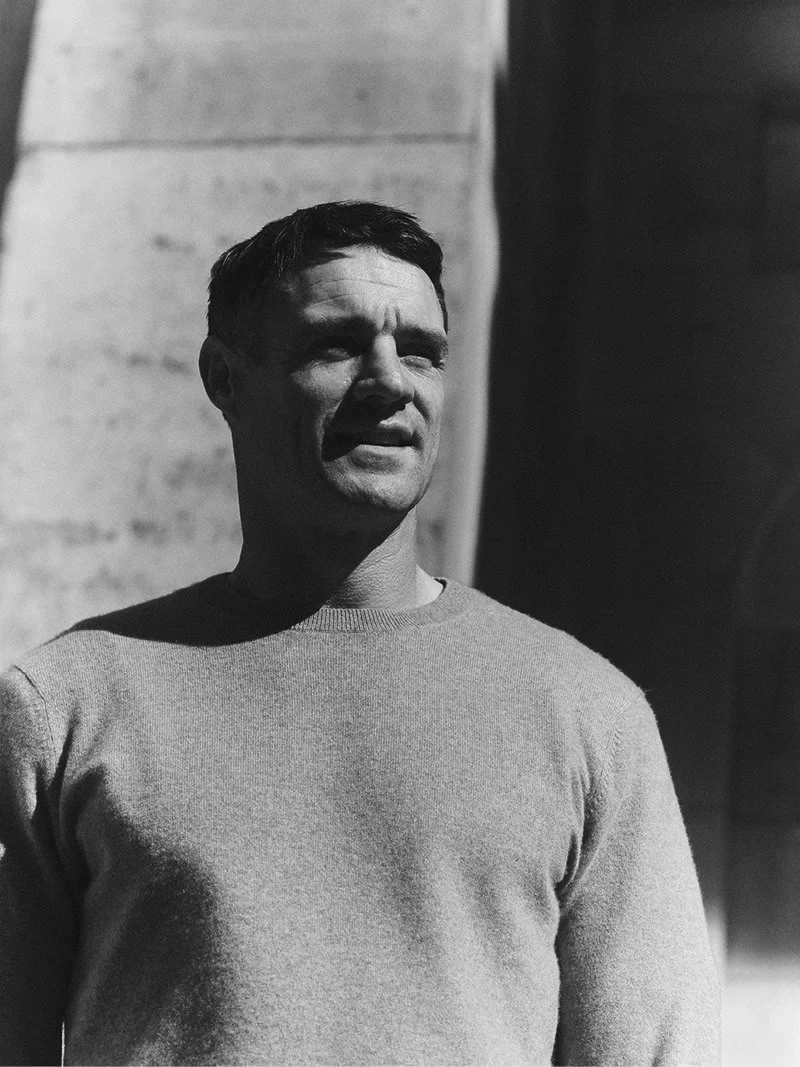
“A year or so ago,” he continues, “my now twelve-year-old son asked if I could find him a kicking coach, maybe Richie Mo’unga or Beauden Barrett to help with his kicking. My wife just burst out laughing.
"That’s the beauty of being a parent," he says. "After about thirty seconds, he did say, ‘actually, you know something about kicking, don’t you?’. I can try to help, but they don’t really want to listen and I kind of enjoy that.”
It was his kids that made him realise it was time to bring to an end a career that saw him whitewash the Lions, win two Rugby World Cups, earn 112 caps, score 1,598 points at international level, and win three Super Rugby titles with Crusaders, while also taking Pro14 titles with Perpignan and Racing 92, and even a Top League championship with Kobelco Steelers in Japan. “I went back to New Zealand after they cancelled the Japanese season [due to covid], that was going to be my last contract,” says Dan. “and I started thinking about chasing other contracts and wondering if I should keep going. It wasn’t until my son actually asked if I was going back to Japan or not. I said, ‘no’, and he said, ‘that’s the best news I’ve ever heard’ and I realised, ‘oh my God, I’m playing for the wrong reasons’. I’m providing for my family, but to be honest, the kids couldn’t give a shit if I was playing rugby, they just want me to be home more. That just put everything into perspective, it was the right time.”
Southbridge might not be familiar to everyone, but it’s a long-time stomping ground for the Carter family. “It’s a small town, probably no more than a thousand people,” explains Dan. “Dad’s lived on the same street his whole life. He actually built a house about five blocks down from the same street from where he grew up. And it’s probably about five hundred metres from the rugby club, and that’s where I played ever since I first started playing, for Southbridge rugby club as a six year old.”
Rugby and cricket were Dan Carter’s first loves, one in the winter, one in the summer, with one just nudging the other into second place. “It was my dream to be an All Black, although I never actually thought it would happen,” he says. “I was always doing it just for fun, but when that dream became a reality, I never wanted that feeling to leave. I didn’t want to be just an All Black, I wanted to be an All Black great, that’s what was driving me each and every day.”
There were a few bumps in the road before then. Opting to go to Christchurch High School, instead of accepting the scholarships on offer at private schools, Dan put himself on a pathway that had been trodden by an awful lot of All Blacks before him. “Going to this big historical rugby school, I just felt this weight of pressure,” he says. “You walk down the hallway, and you’ve got photos of all these past students that have gone on to represent the All Blacks, there’s all these trophies, and then, all of a sudden, you’re playing in front of thousands of people.
“And in that first year, I had one of the worst years of my life,” he admits.
“I was seventeen and I thought, ‘right, this is my pathway to be a professional rugby player’, but we had a really unsuccessful year, I didn’t play that well, and I lost the love for the game.”
As a result, he opted not to play senior rugby. “I went to social rugby with my mates [with the colts], it was a really nice reminder of why I played the game.
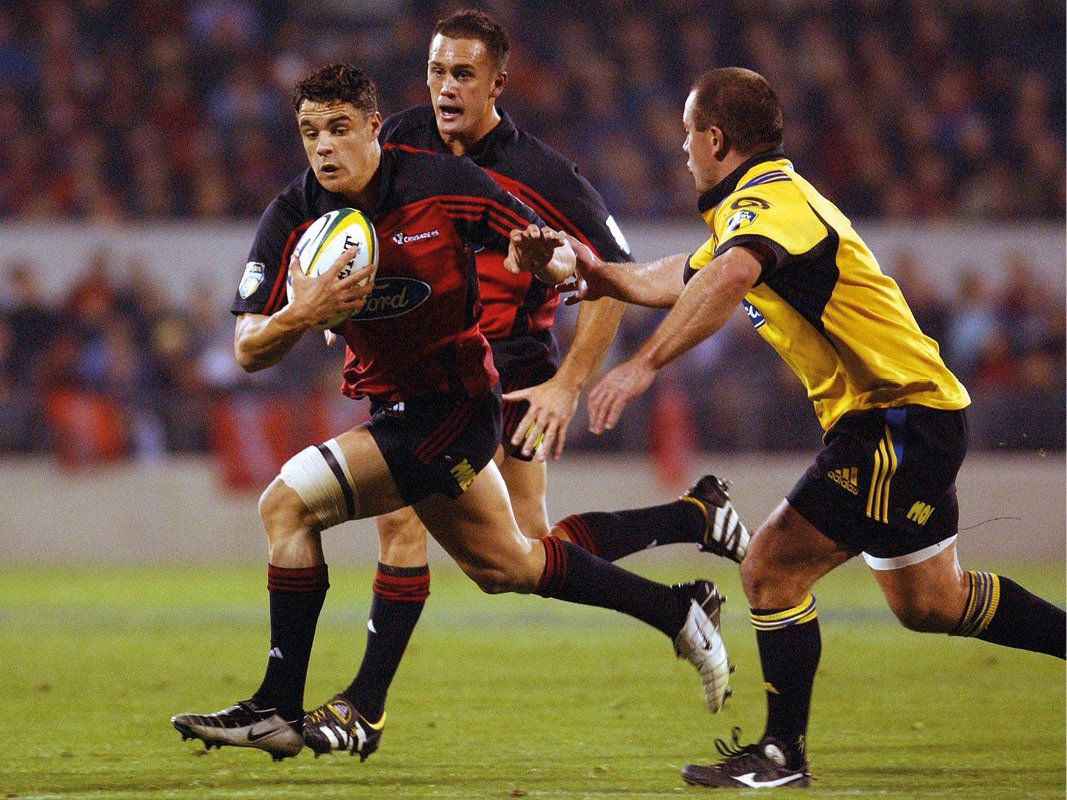
“I was playing for the wrong reasons,” he admits. “When I was playing it was all about me, it was all about ‘this is my path to being a professional, right?’. I was far too serious, I wasn’t enjoying the game, enjoying the moments, and that’s why you should do what you do, because you love it.
“I had an amazing year playing with my friends and someone must have noticed I was playing some good rugby…”
On the side, he was earning money the more traditional way. “I was doing a bit of building; my father’s a builder, so I worked for him for half a year, and I did a few other various jobs, just trying to get by. I was a horrible builder though.
“So that didn’t last long," he adds, “but through playing social rugby, I ended up realising I loved sport, I loved health, so I signed up for the local polytech to train to be a personal trainer.”
Dan did play for his school’s ‘old boys’ team, but he then found himself replaced by some serious quality. “We got to the final [with Christchurch High School Old Boys] and I got put on the bench because a whole lot of All Blacks came back.
“This was back in the days when the internationals would play club rugby, so our backline had the two Mauger brothers, Aaron and Nathan, and Daryl Gibson, Reuben Thorne came back too.”
Before his career as a PT came to fruition, his rugby one took off. Canterbury’s selectors noticed him in 2001, and he made it into a New Zealand colts team featuring the likes of Luke McAlister and Jerome Kaino. “I came back from the [junior] World Cup and got selected in the Canterbury team,” says Dan, picking up the story. “All of a sudden, I was in the same changing room as my childhood heroes, Andrew Mehrtens and Justin Marshall. I was just thinking, ‘what the hell am I doing here? I was only playing social rugby last year, and now I’m playing with all these professional All Blacks.’
“I got my first contract as a Crusader later that year then," he continues, “fast forward ten months, and I’m playing at my first Rugby World Cup [2003], it all happened so fast it’s ridiculous…”
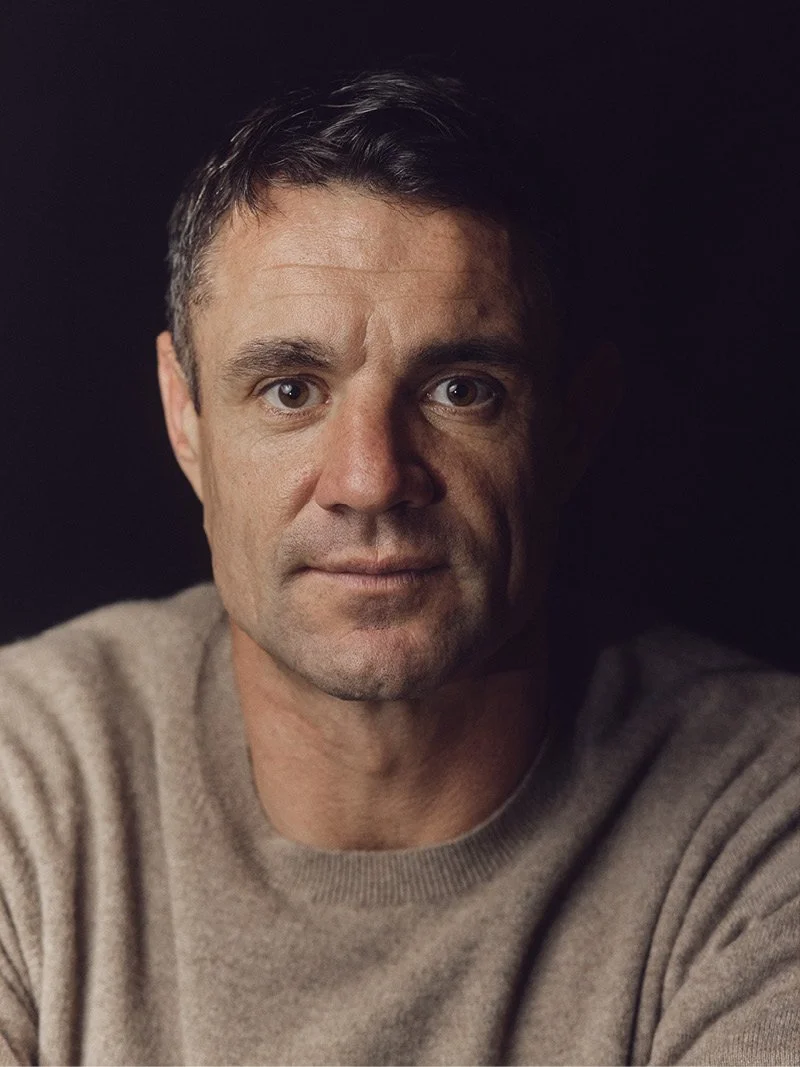
Dan learnt quickly: even at academy level, he was a complete novice. “I’d never been to a gym at this stage,” says Dan. “I’m nineteen years old, and never touched a weight, but with the academy I trained through the summer for the first time ever. Normally, I just played cricket, I wouldn’t be doing any gym work or running, but I loved it. That’s what set me up and put me on the steps to professional sport, even though I wasn’t really getting paid. I think my contract in the academy was about NZ$2,000 [£860].
“Even then from the academy when I started playing for the NPC team Canterbury, I signed a three-year contract, and it was NZ$10,000
[£4,300] a year.
“Then in 2004,” he continues. “I’d been in the All Blacks for two years, been to the Rugby World Cup, but my provincial contract was still only NZ$10,000.
“It was a bit of a jump from that contract to my next one.”
Once he’d navigated the age-grade system, Dan’s trajectory was rapid. “I just felt like every time that there was a step up, whether it was from club rugby to provincial rugby, to Super Rugby, to the All Blacks, it sounds weird, but it became easier. The quality of people that you’re playing with is so much better, which means you just have to focus on your job.
"And there’s the professionalism, in terms of specialist coaching you’re getting, the resources are better. It just felt the transition was really easy for me, in every level that I took a step up. I sort of really enjoyed pressure, I just wanted to prove to the people that had given me a chance, that I wasn’t going to let them down.
"The fact that Robbie Deans [then Crusaders coach] had showed faith in me for my first professional contract, meant I was going to train harder than anyone else to prove to him that I belonged there.”
Andrew Mehrtens was the incumbent in the number ten jersey, one of Dan’s heroes, and while he expected to wait for his turn, it didn’t take long. “So in my very first professional game of rugby for the Crusaders, I got named in the number ten jersey ahead of Mehrts,” recalls Dan. “As soon as the team was named, and he was on the bench, Merhts was the first one to come up to me and say, ‘Congratulations, if there’s anything you need this week, I’m here to help’. I mean, this guy would be hurting, and I think the fact he did that was a real reflection on him as a person, but also the environment of the Crusaders.”
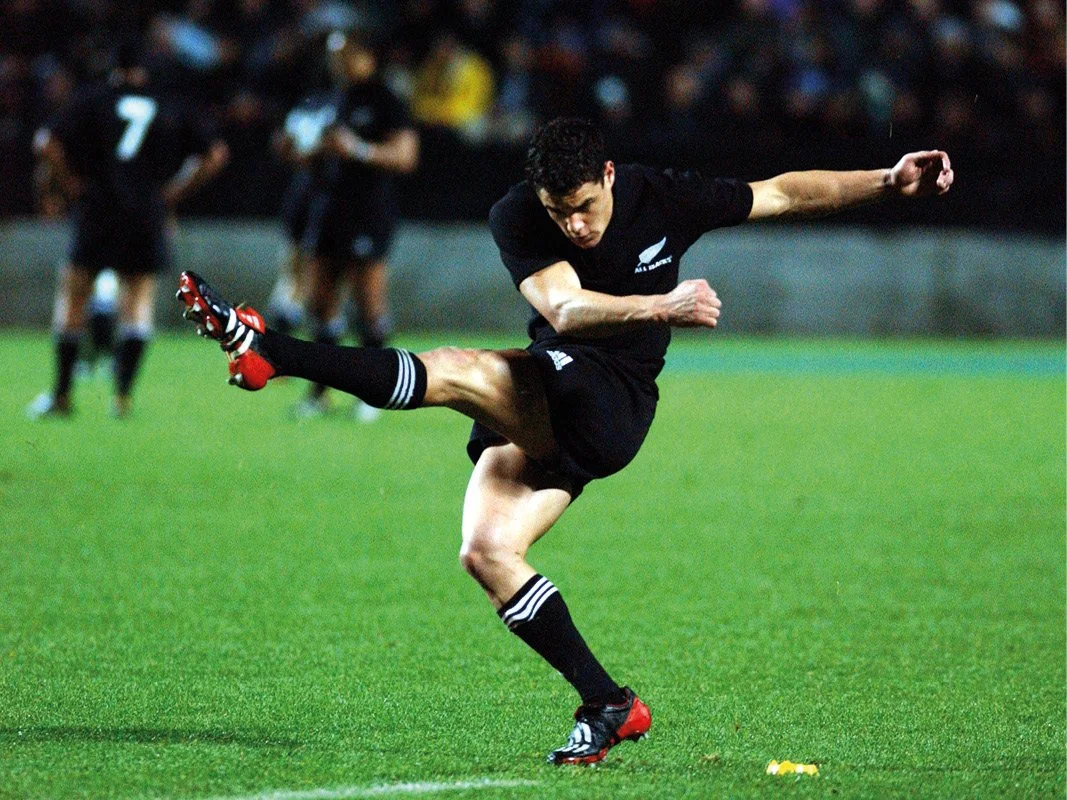
The debut, in 2003 for the reigning Super Rugby champions against Hurricanes saw Dan thrust into the spotlight for the first time. “All week, the fans were, ‘who’s this guy starting ahead of Mehrts?’. And I was so nervous.”
In front of 30,000 at Jade Stadium, the pressure was on. “So, the game starts, I miss a kick from in front of the posts, and I’m already looking to the bench. I get another penalty from a similar position, miss that as well. I could just hear the whole crowd go, ‘okay, get this guy off’.
“Unfortunately for Aaron Mauger, he got injured, so I moved to twelve, Mehrts came on, and says, ‘keep kicking’, and I’m, ‘nah, mate, I’m done’. So, he kicked but then I end up scoring a couple of tries, and had a great debut [37-21] after that.”
The rest of the campaign saw Dan retain the number twelve jersey, a role he also took on for the All Blacks, playing next to both Merhtens and Carlos Spencer. “I’m just learning from these two different styles,” says Dan. “I just wanted to learn. On one side, it was backing your instincts and the flamboyant play of Carlos, then there was the real strategy vision of Mehrts, and I’m feeding off both of them.”
Learning first-hand, literally alongside, two great All Black fly-halves helped him ultimately to leapfrog both after the 2003 World Cup, during which he managed to nail nine conversions against Canada [in a 68-6 win], in his only start, with Spencer the first-choice.
For the autumn series the following year, the All Blacks left both Mehrtens and Spencer at home, with Dan stepping in as the starting ten. Wins over Italy (10-59, a 19-point haul), Wales (25-26, 10 points), and France (6-45, 29 points) representing a decent start for Dan, and he was up and running. His emergence was timed to perfection. “Throughout that autumn series, after every game, I was doing media and all everyone was talking about, was the Lion series.
“You can’t really compare it to anything else,” he says. “The Rugby World Cup is the pinnacle, that’s what you want to win more than anything, but to have a Lions series during your time in the black jersey is so unique.
“You could have a ten-year All Black career and be one of the greats, like Jonah Lomu for example, and never get to play against the Lions. To get that early in my career, I just wanted to be a part of this.”

Dan Carter destroyed the Lions, never more so than in the second Test when his 33-point-haul – two tries, four conversions and five penalties – in a 48-18 win not only secured the series win, but marked him out as one of the greats, producing one of the all-time performances. He was still only 23. “People may have known of me, fans in New Zealand, it was my third year playing for the
All Blacks, but I guess it kind of stamped me on the world stage,” he admits. “It showed what I could do on the biggest stage, I was just constantly trying to strive for the perfect game, and that’s probably the closest I got to it.
“It just grew the expectations of what I wanted to do every time I played,” he says. “And I didn’t want it to just be a one-off game, I wanted to have such high standards every time I played.
“But, obviously, it was a special game,” he admits.
Rugby World Cups were next on his list. He’d been part of the 2003 squadthat was expected to end New Zealand’s World Cup wait, since the inaugural 1987 win, but that ended in defeat to Australia in the semi-final. “I could see it hurt more experienced players a lot more than it was hurting me,” he says. “These guys that might never go to another World Cup, this was their one chance or their last chance.
“That was was ingrained in me from then on, I want to be a part of the next World Cup, I needed to be there in 2007 to right the wrongs of 2003. I played some of my best rugby from 2003 to 2007 and I was in my prime in 2007…”
But again, the All Blacks failed, this time it was even worse. “We lost a quarter final [18-20 to France in Cardiff]. We were one of the best teams in the world, but we just couldn’t perform at Rugby World Cups.
“It was hard in 2007, we were red-hot favourites, and there was even a sense within the environment that we were going to win, but we didn’t, we were the most underperforming All Blacks side in the history of the Rugby World Cup.
“There was a lot of criticism, there was a lot of scrutiny, rightfully so; we didn’t perform when it when it mattered most and the country goes into a little minor state of depression, so it was hard, but you just have to bounce back.”

The All Blacks, says Dan, were in a cycle. Every four years new coaches would rebuild, right the wrongs, then when it didn’t work out, they were replaced and so it continued. “It’s only a failed campaign if you don’t learn from it,” says Dan. “At the time, it was really hard to deal with but that was the foundation to set us up for being a dominant team for the next ten years or so. That was the reason that we were able to win back-to-back World Cups, by taking the lessons of 2007 and growing.”
And also keeping the same coaches. “Credit to New Zealand Rugby, they broke the cycle, they reappointed the coaching group that lost the 2007 World Cup: Graham Henry, Steve Hansen and Wayne Smith.
“Between the coaching group and the leadership team we realised that we didn’t deal with pressure that well. Yeah, we love beating teams by forty or fifty points. But we had to work on our mental strength to be able to win in really big moments when everything’s going against us.
“We just spent the next four years really working on our mental strength. In 2007 we were the fittest team, we were the strongest we’d ever been, the fastest we’d ever been. We were doing PBs in the gym, amazing athletes, but we weren’t spending any time on our mental strength.”
Having a team that had tasted defeat helped too. “They had the hurt of losing a World Cup and that can drive as a great motivation. That’s something that the All Blacks didn’t have in 2019, there were no players in that team that had lost a World Cup.”
In 2011, they won. Albeit showing every ounce of resilience by edging thescrappiest of finals to beat France 8-7, the winning kick ultimately coming from the boot of Stephen Donald, the famously fourth-choice fly-half, who came in after injuries not only to Dan, but also Colin Slade and Aaron Cruden. Watching from the sidelines was far from easy.
“It sucked,” he says. “The nerves, it’s almost easier playing. You’re in control, you can dictate play, keep things cool and influence the game, but when you’re on the sideline, you’re a nervous wreck.”
Was it hard not being on the pitch when they broke the World Cup hoodoo. “Mixed emotions,” he admits. “You’re proud that finally it’s happened, as you’re thinking ‘when will it come?’ after 24 years. But you want, selfishly, to be in that moment. You want to be on that field, but at the same time, things happen for a reason, and that grew motivation inside of me to want to be there in four years’ time.”
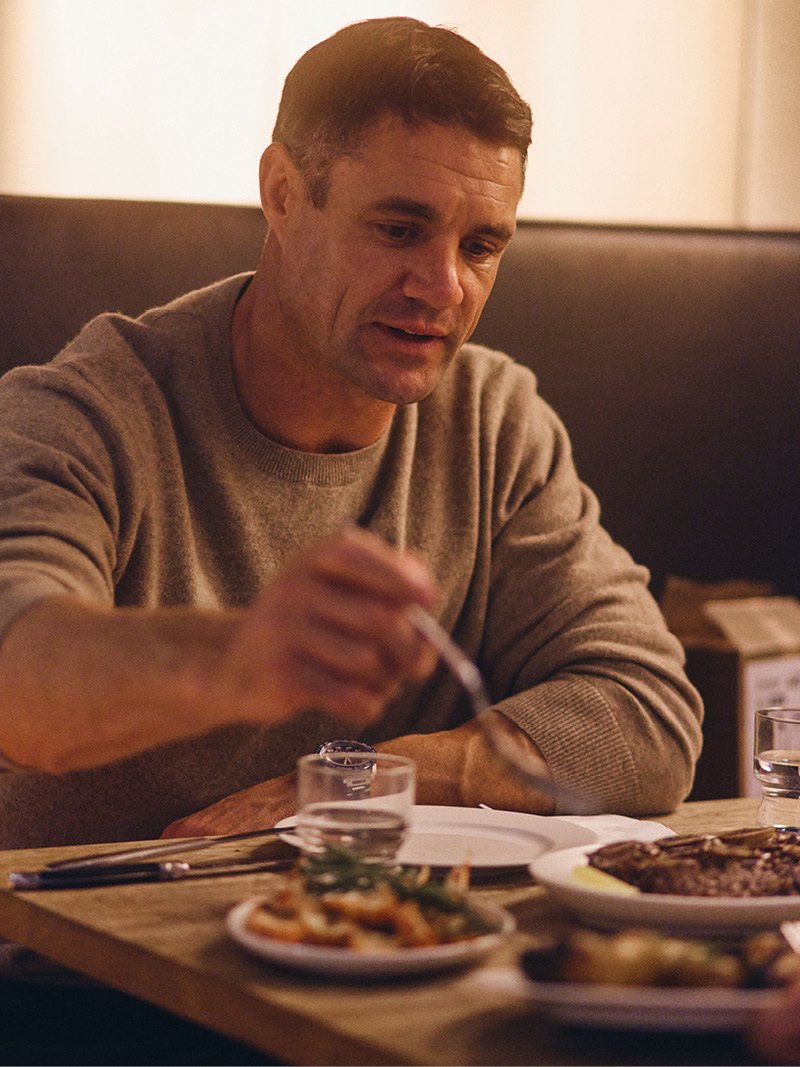
Four years on, they were facing Australia in the final at Twickenham. This time, there was no doubt. A 34-17 scoreline a reflection of New Zealand dominance, Dan completing the triumvirate of kicks (two conversions, four penalties and a drop-goal) to notch 23 points. “I felt like everything in my career was building up for that moment,” he says. “The quarter-final losses, the injuries, I just felt we were in complete control in that tournament. It was a strange feeling, it was like everything had been working towards it.
“And the way it just all panned out, we were able to be the first team to win back-to-back World Cups, to win a World Cup outside of New Zealand, to have a great performance, and to finish playing in the black jersey with a victory alongside some of my best mates that were also finishing.
“Seven of us players that had all played around one hundred Test matches were playing their last game in the black jersey that day,” says Dan. “So yeah, such a special period to share that moment with them.”
Relief had been the main theme of the 2011 win, but in 2015, it was celebration. “We could actually enjoy it a bit more. When you’ve been working so hard for something and to achieve a goal you set up to achieve, it was such a special feeling.
“It was the greatest moment,” he says. “I mean, my first and last games in rugby, are my most special moments.”
Then 33, Dan returned to France for his rugby, where he’d previously enjoyed success with Perpignan, helping the unfancied club to the Top14 title in 2009. This time, it was Paris and Racing 92, another title followed, and he’d leave to join Japanese club Kobelco, in what was his last international stop. “I never wanted to retire, but I knew I had to at some stage; you had to finish playing at some stage, but I dragged it out as long as I could.”
Even after his kids stepped in to force the issue, he couldn’t resist one final season where it all began. “I went to play club rugby in Southbridge, a season for them to end my career,” he says. “It was back to being just amateur players playing for the right reasons, to play with their friends, for a beer afterwards.”
Naturally, having one of rugby’s true global stars rock up on your local pitch was too good an opportunity for some players to miss. “I can’t remember if it was a semi-final or final, but as I was kicking the ball, I got absolutely smashed. And on the anniversary of that hit, the guy that hit me puts something on social media every year: three years since I smashed Dan, four years since I smashed Dan…
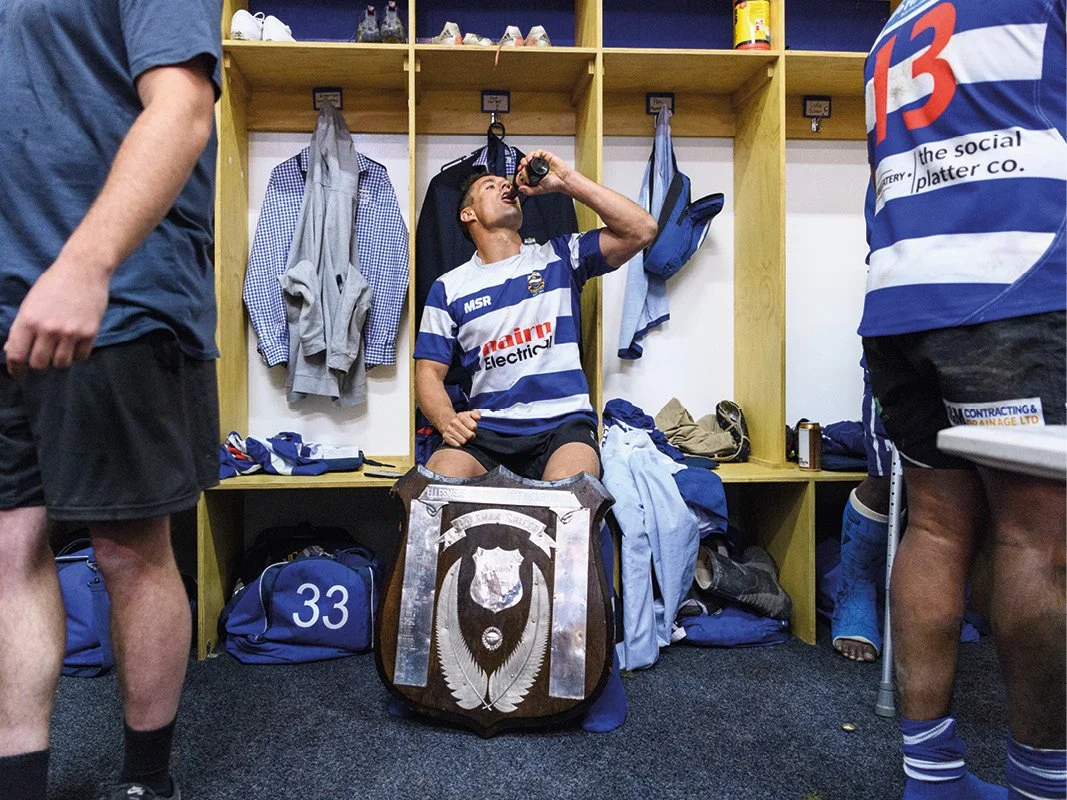
“You’d pass the ball, and then you’re trying to sidestep the next two guys that are trying to hit you, it was a lot of fun and we went on to win the Coleman Shield.”
He was playing alongside a cousin, with old mates, he even had mates on the opposition and even the performance was perfect. “We were down by twenty points at half-time, and then we came back to win [40-32], it was incredible.”
Dan has now polished off the langoustines, the bellota, and had his fill of the short rib, he’s given us more time than he had to spare, and yet is still effusive in his apologies that he has to go, albeit still willing to answer a few more questions.
Some things you just can’t not ask, such as ‘who is the best he’s seen?’ “Richie McCaw, such an amazing leader,” he says. “There’s nothing that he would ask of his team-mates that he wouldn’t do, and he’d often still do more. Just to see how he put his body on the line, week in, week out...
“I would also have loved to have played with Jonah Lumu,” he adds. “His career finished the same year I started, but it would have been pretty special to have him playing outside me.”
Best team? “I played with really special teams, but 2015 was a special one, it was quite a dominant era. Yeah, so many players playing that, in their positions, were probably the best players in the world.
“And we just worked so hard,” he continues, “and we had this underlying confidence around us to create history.”
Aside from tending to the Carter flock, and trying to give his kids advice, Dan is wearing multiple hats these days. Like many, he struggled after rugby, eventually going through what he calls a ‘repurposing’ of his life. “I dragged out my career so long just because I wanted to block it [the future] out and thought it was a distraction to my focus on being the best player in the world,” he says. “And who knows, it might have been. It might not have been.
“I was investing, and financially I was sound, but it was more ‘what’s going to drive me every morning to get out of bed?’, and that was the hardest thingthat I had to deal with.”
He wrote a book, The Art of Winning, he sought the counsel of other professionals who had been through the same thing, including Jonny Wilkinson, and he met with a former ad agency boss whose specialised in helping people find their purpose. “I was a little bit lost and it actually made me look inward for the first time. The whole ‘who am I now that I’m not a rugby player’.”
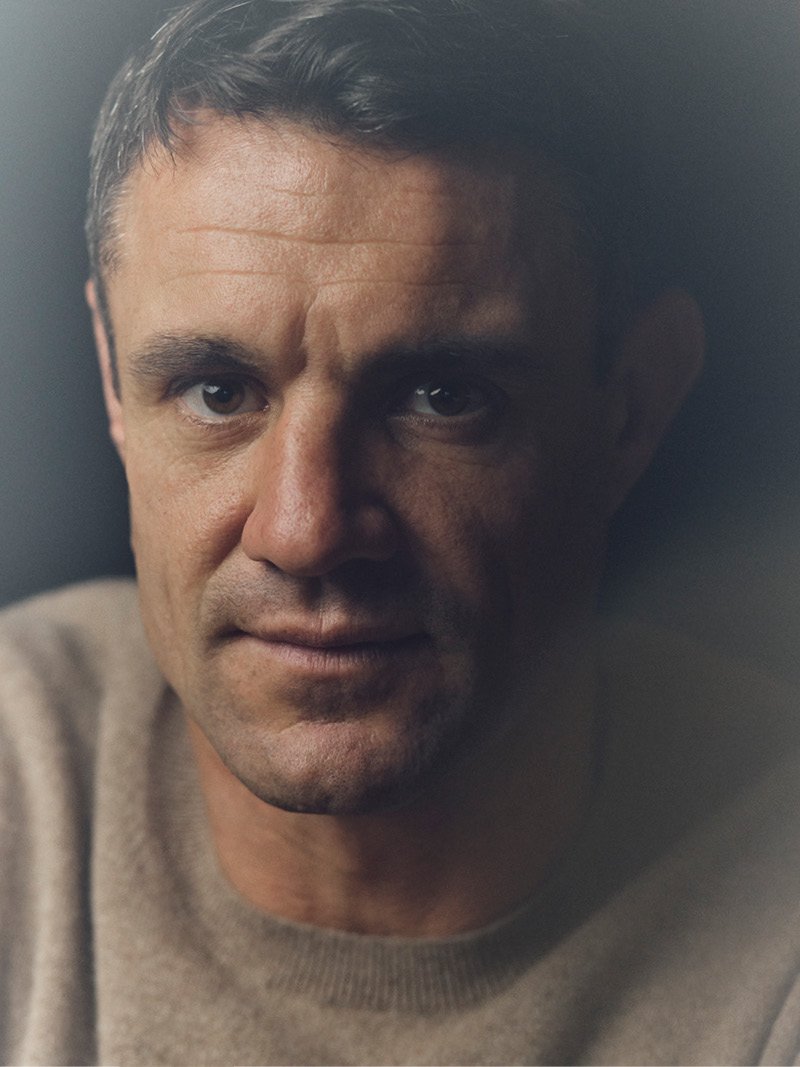
And what he discovered was a passion for ‘social impact’. And while the phrase is without doubt massively over-used by Linkedin warriors who have no intention to create any change beyond their follower count, in the hands of Dan Carter it means something. He’s not just talking the talk, he’s set up the DC10 fund, which works with UNICEF to help, among others, impoverished communities in the Pacific Islands; and he’s got a high school foundation with Richie McCaw that gives grants to teenagers to pay for everything from their boots and equipment to training fees; and he was instrumental in setting up the Global Rugby Players Foundation, alongside the likes of McCaw and Wilkinson. “We all achieved a lot in the game, and we had our challenges,” he says. “But imagine the players that get the dreaded tap on the shoulder from the coach and they are no longer wanted or had a career-ending injury and they have nowhere to go.
“There’s a lot of people like that, so that was the start of forming a support network for professional rugby players, men, women, sevens, fifteens, to help professional players navigate change as they transition out of the game.”
Before he heads off, the conversation turns to grassroots rugby, the one place where the far-too-often maligned concept of ‘rugby values’ is still alive and well. Now as a rugby dad, he appreciates those values more than anything. “I went to a rugby tournament for under-10s to under-13s, and my two kids were playing.
“And there were over one hundred teams, tents everywhere, barbecues, communities. Once you get out of Auckland and you look at the rural parts of New Zealand, rugby is thriving, that’s the heartbeat of rugby. It’s like where I grew up, my little country town, that gave me so much energy.
“People are still going to the club rooms on the Saturday, forgetting the stresses of life on the farm or shit that went wrong during the week, and just coming together; everything is still centred towards the rugby club and the Saturday watching rugby, kids playing, adults playing, a beer afterwards, hot chips for the kids.
“That’s the values of rugby,” he enthuses. “We don’t focus enough on those values. It’s all around safety and parents second-guessing whether their kid should play rugby or not, maybe they’re better if they play soccer or basketball…
“Those values of rugby, they’re still there in the amateur game, and that’s what we need to double down on, because what this incredible sport does is teach you life lessons, it’s not just about the rugby.”
And, yet when the rugby is as good as when Dan Carter plays it, it’s easy to see why so many of us often think otherwise.
Story by Alex Mead
Pictures by Richard Johnson
This extract was taken from issue 31 of Rugby.
To order the print journal, click here.