In 1987, Zimbabwe joined the best sides on the planet in the inaugural World Cup. In that same year, Robert Mugabe became president, sparking a turbulent four decades. Now, as the country looks forward on all fronts, rugby is a sense of national pride once more, with qualification for the next Rugby World Cup secured.
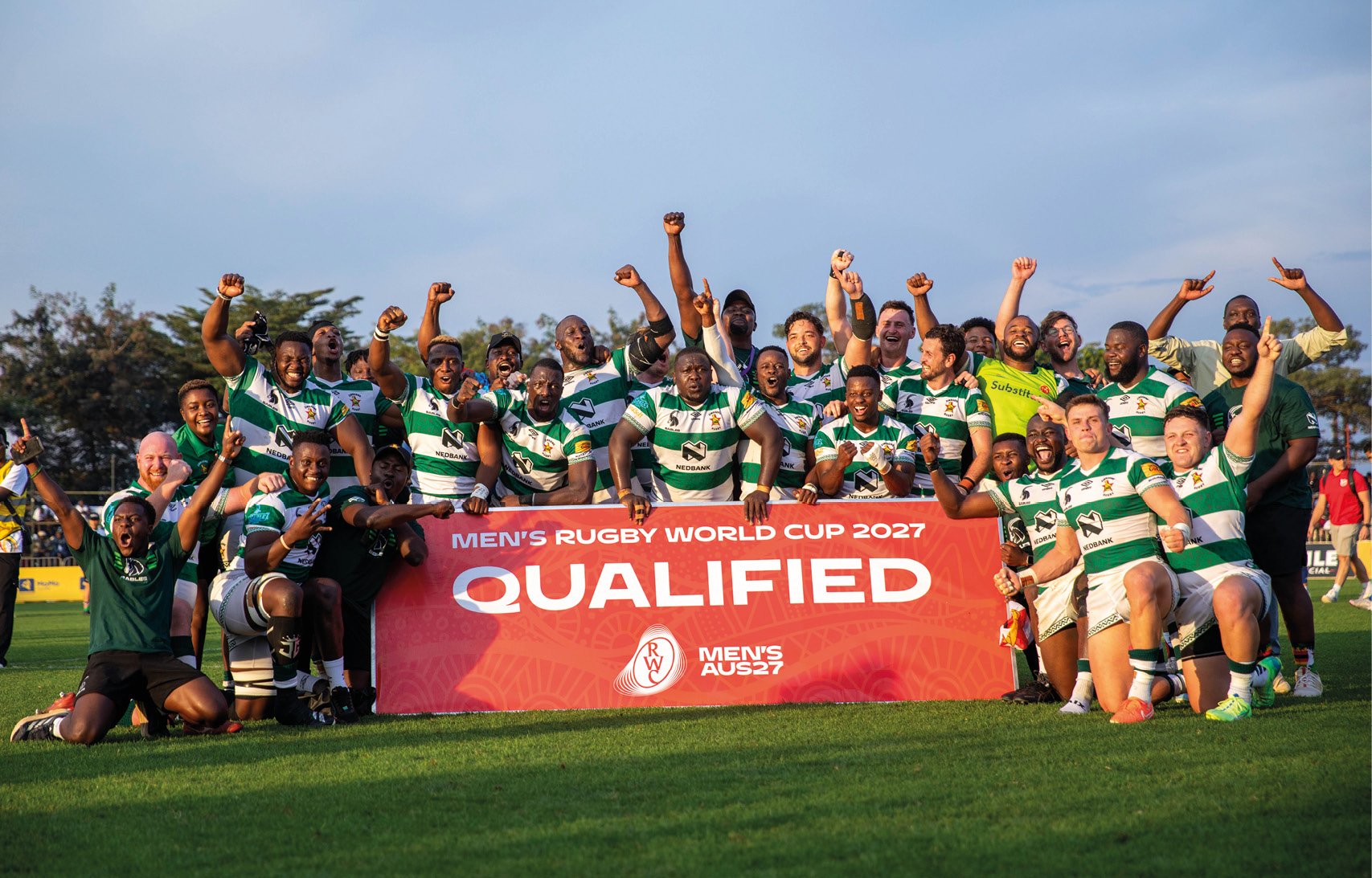
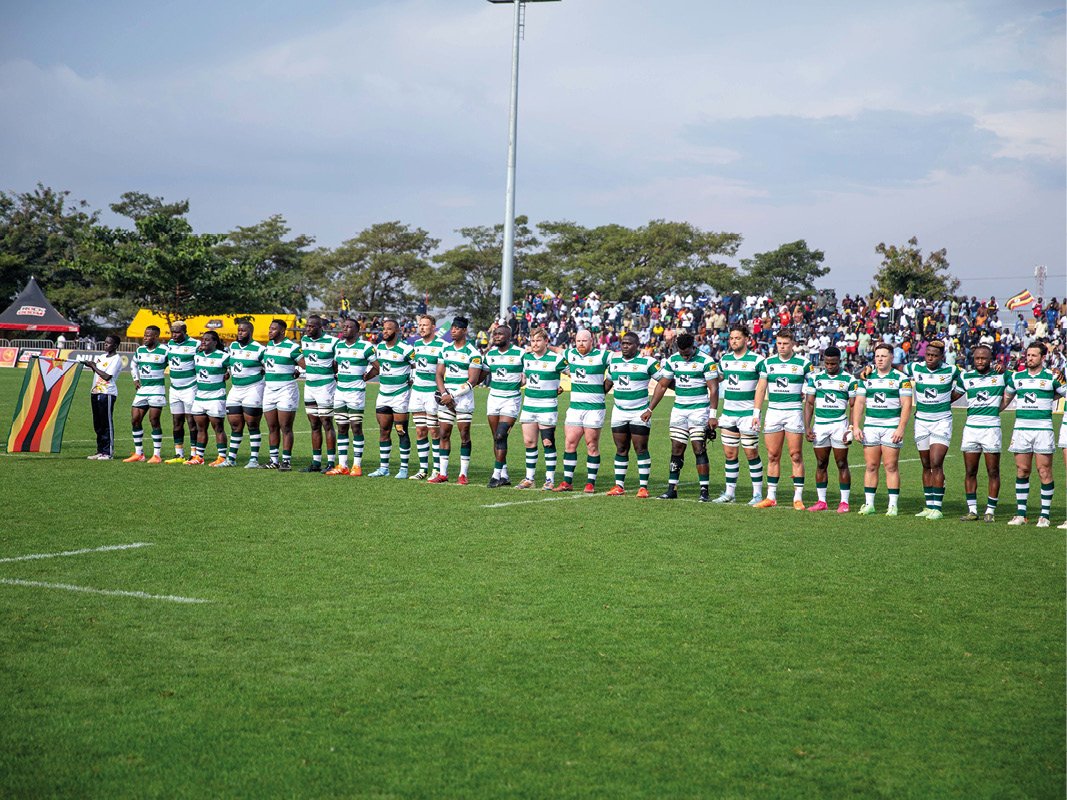
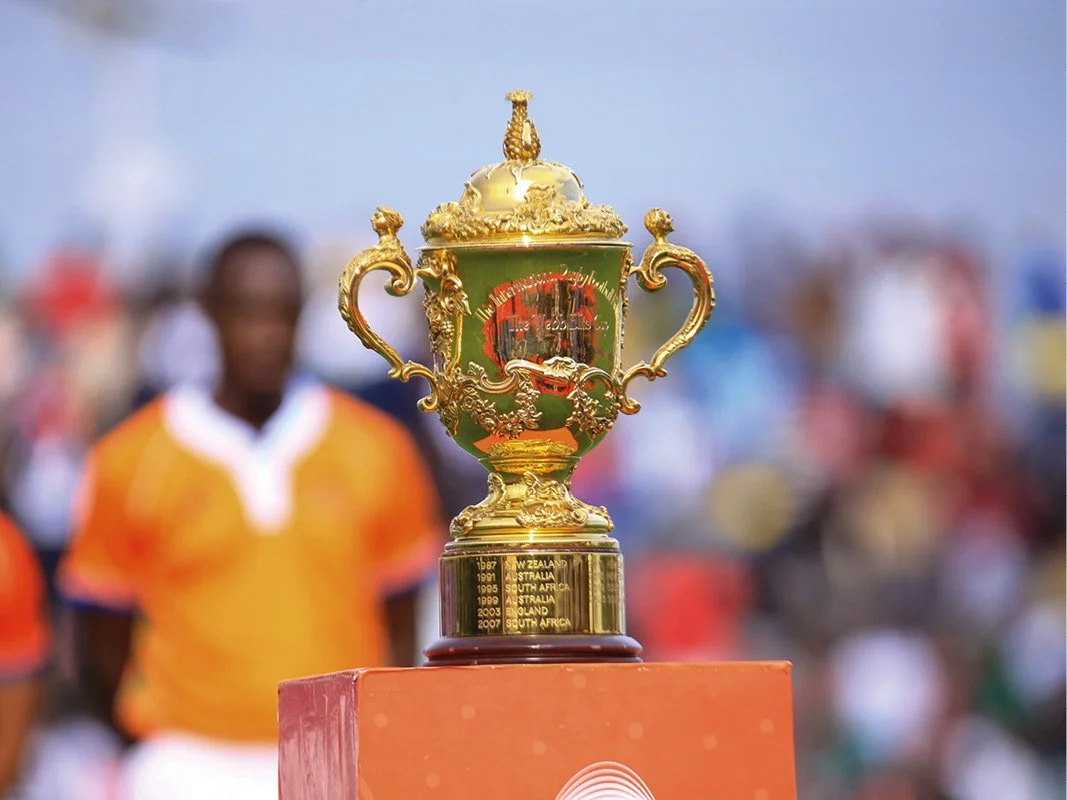
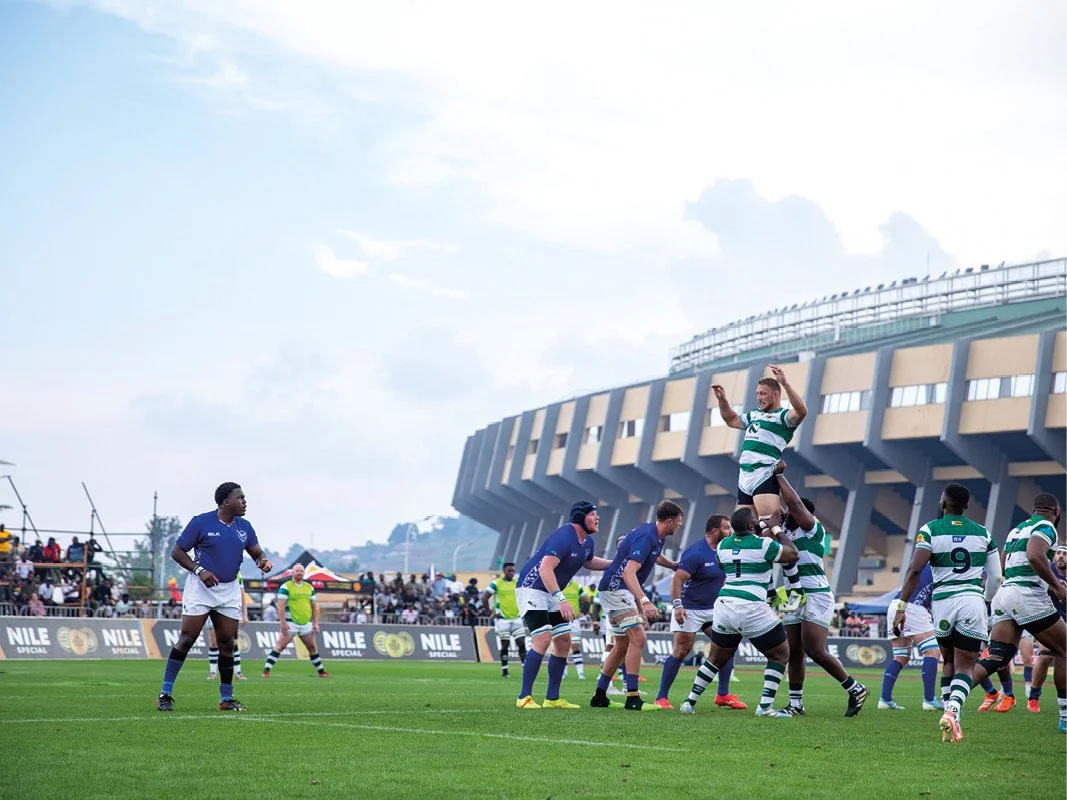
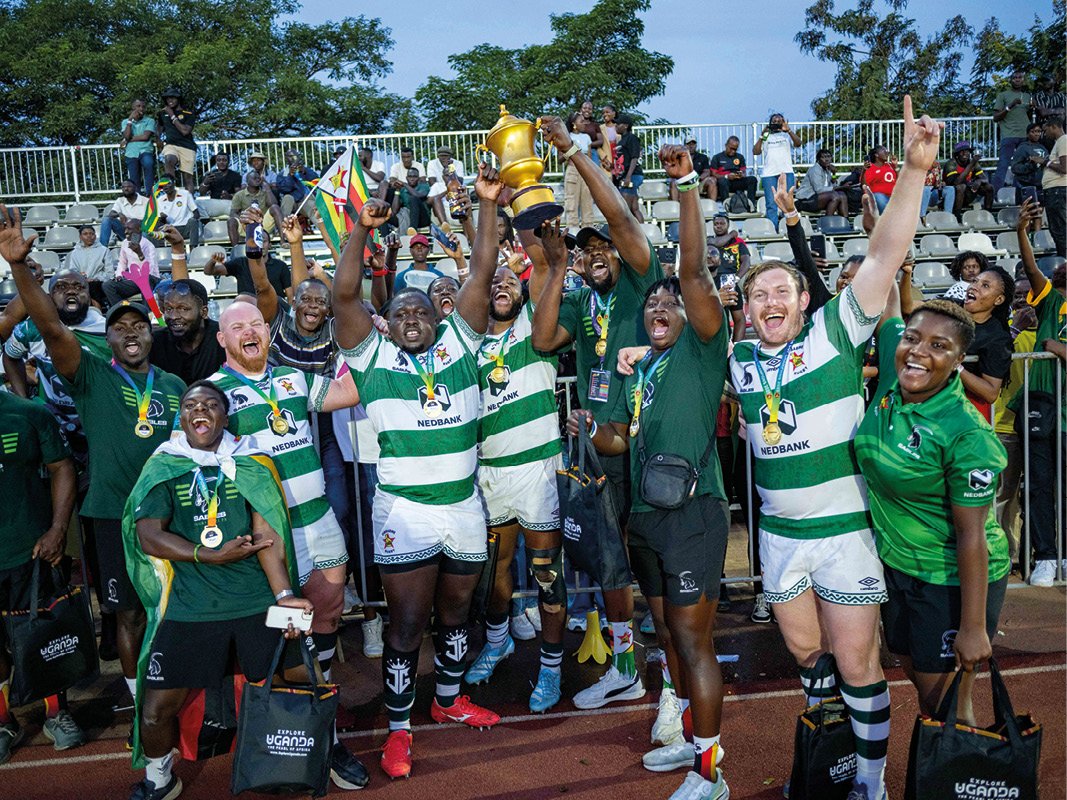
The crowd inside Uganda’s Mandela National Stadium fell silent as Namibian fly-half Tiaan Swanepeol stepped up to take a penalty in the final minute of this year’s Rugby Africa Cup Final. The score stood at Zimbabwe 30 Namibia 28, but there was a much bigger prize at stake as the winners would be guaranteed a place at the Rugby World Cup, something that had eluded Zimbabwe since 1991.
Even though the penalty was just inside Namibia’s half, it was no exaggeration to say that Tiann was the last person in the world Zimbabwe wanted to be taking it, as he is no stranger to converting penalties from well over sixty metres.
Sitting on the touchline, directly in line with the penalty, was Jeffrey Murimbechi, who has been Zimbabwe rugby’s media manager and photographer since 2009. “It was so intense,” he says. “I could see people praying. Others simply couldn’t bear to watch. You know, in Africa, people are very superstitious. Well, there was this sudden breeze which meant that around ten to twenty metres before the posts the ball seemed to lose all its momentum.”
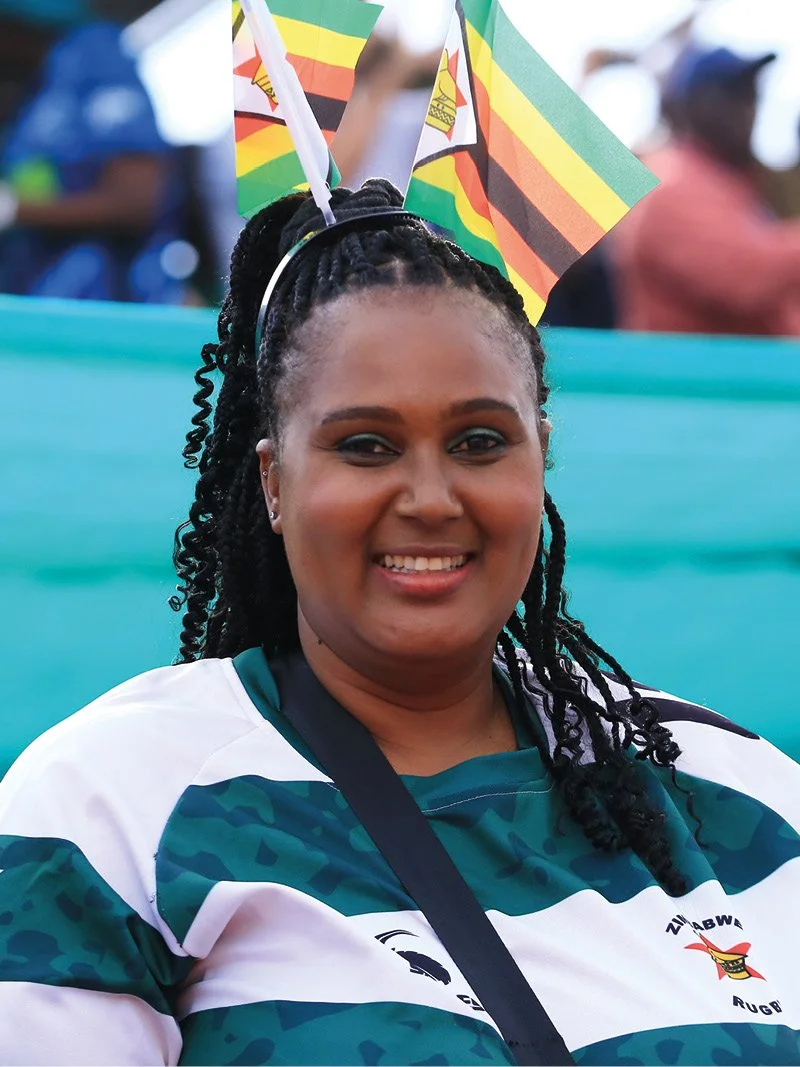
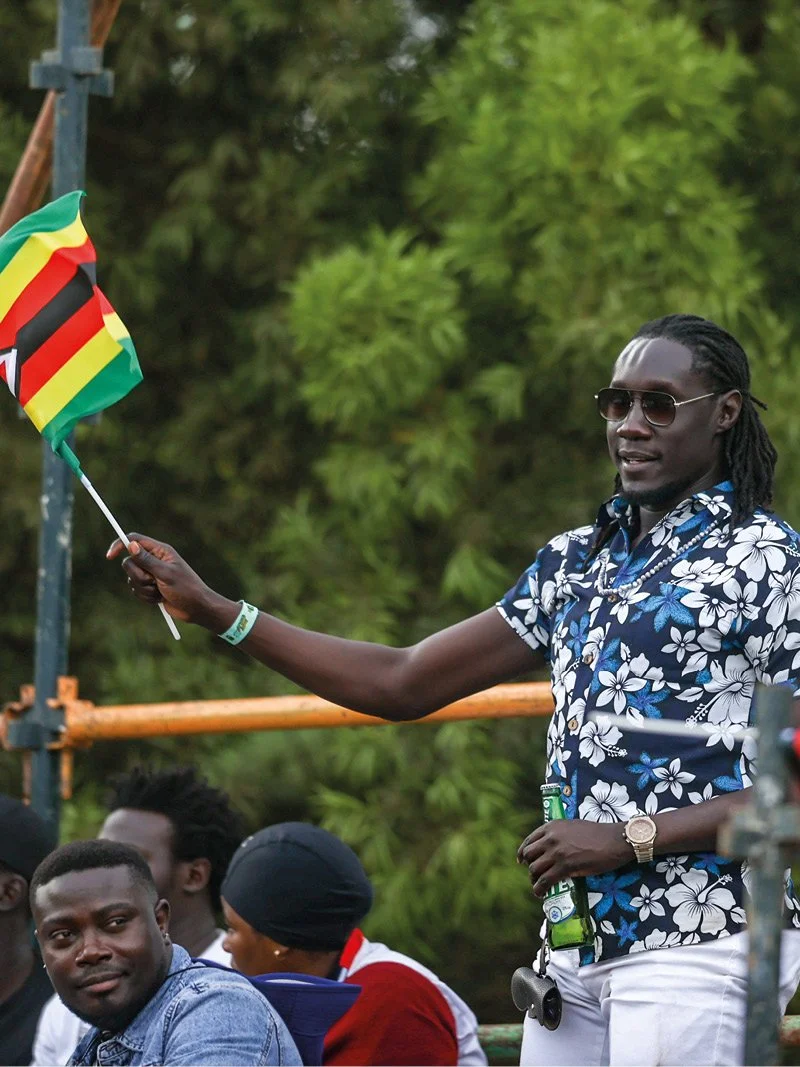
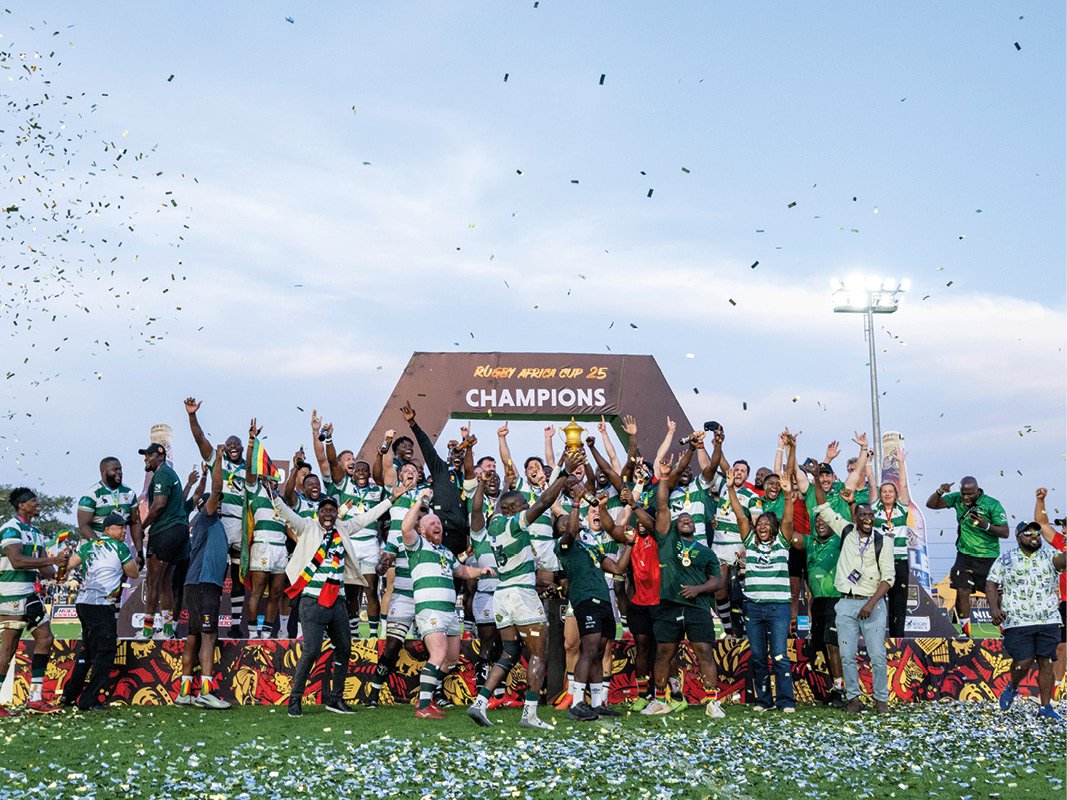
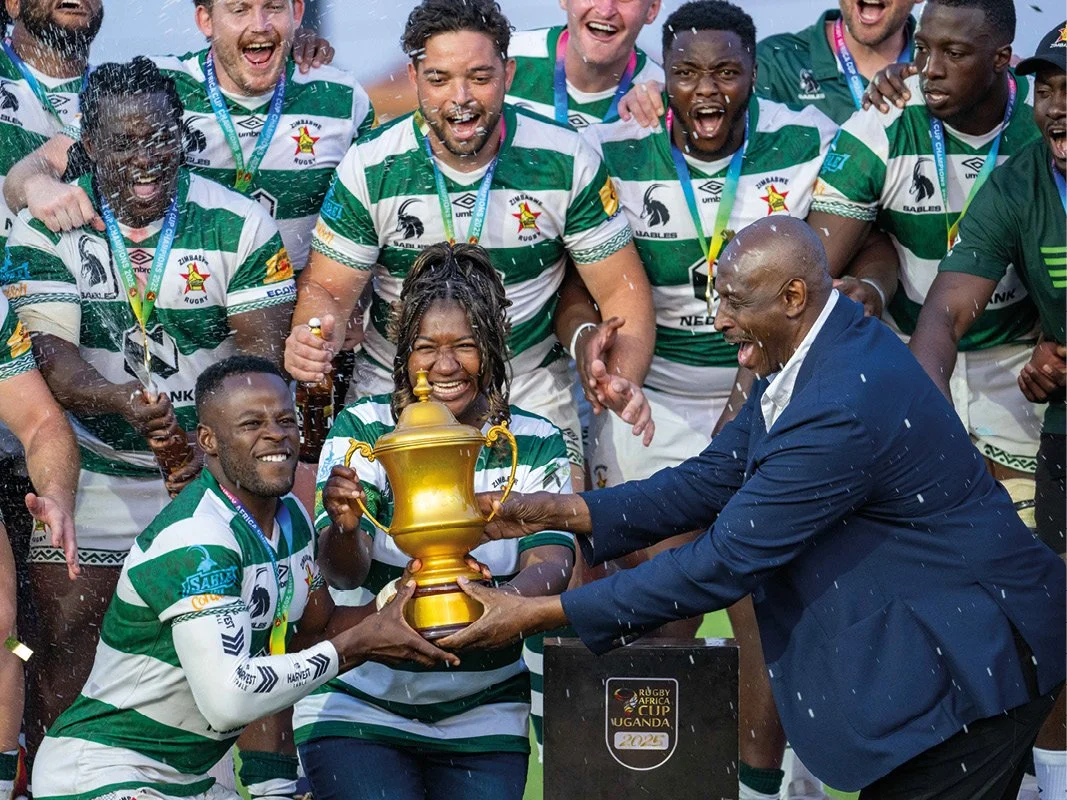
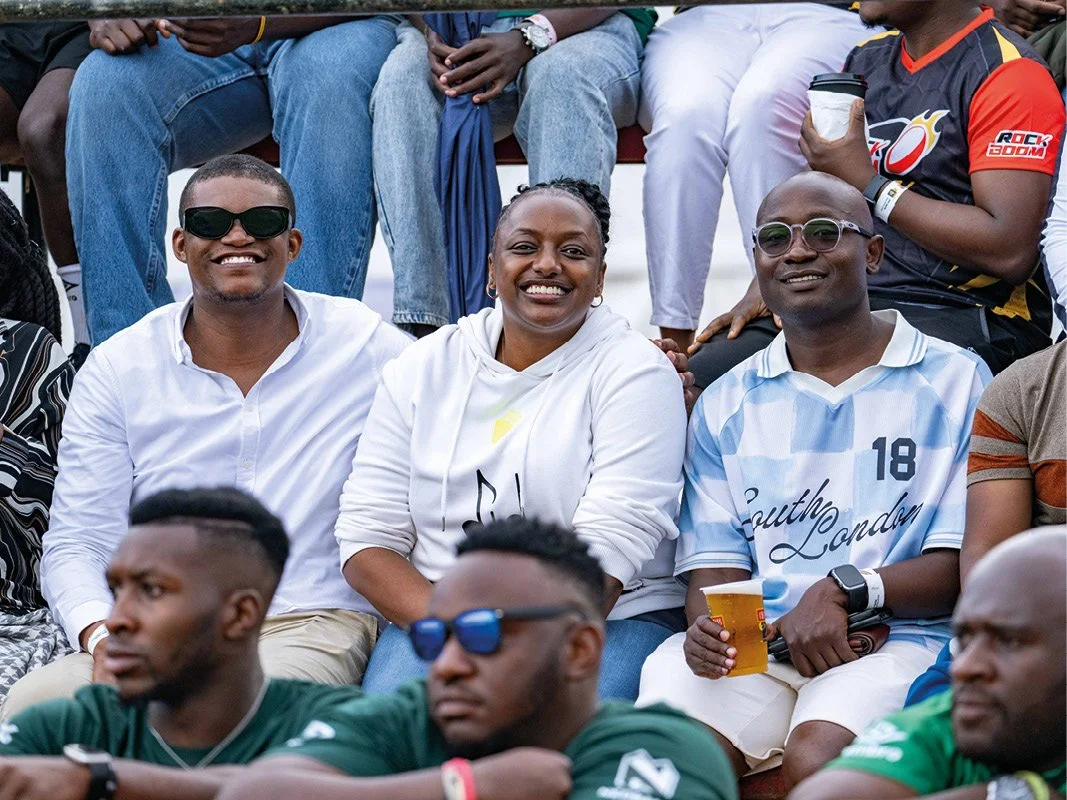
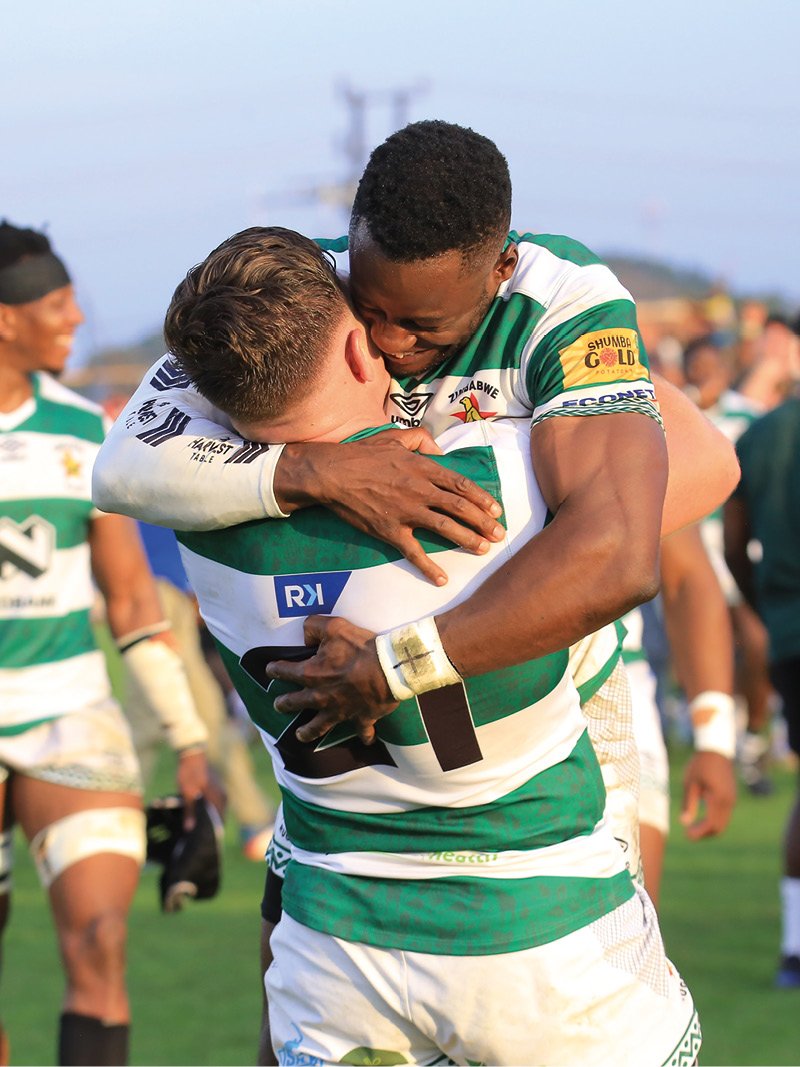
Whether it was a higher power, a force of the unknown, or simply a weather system, the score remained at 30-28, and seconds later the final whistle was met with outbreaks of unbridled emotion among the Zimbabweans. It was captured by a television cameraman who focused on two women in the stands as they hugged each other before one of them wiped tears from her eyes.
Every so often rugby produces a result that transcends the match. Zimbabwe qualifying for the World Cup was one of those moments. When they line up in Australia for their first World Cup match in 36 years, they will do so as many people’s second team. This is largely because we love an underdog story. Through the nineties and noughties while the team slipped down the rankings of African rugby, Zimbabwe was being ripped apart by the political and economic turmoil caused by Robert Mugabe’s regime, which means many Zimbabweans still live in abject poverty seven years after he was ousted. “We’ve been through a lot in this country,” says Zimbabwe coach Pieter Benade. “And there’s a bit of a self-deprecating humour that develops after a while when your infrastructure is bad, your roads are bad and the economy is bad. For us, qualifying for the World Cup is about showing that we can be excellent at something.”
To do any sort of justice to the story of their return to sport’s biggest stage, it is worth starting with a brief history of Zimbabwe and rugby.
In 1980, Zimbabwe became an independent state, ending years of white minority rule when it was known as Rhodesia. Some ninety years earlier, Cecil Rhodes’ army, known as the Pioneer Column, annexed and colonised Mashonaland and Britain’s most controversial imperialist renamed the territory in his own honour.
The Pioneer Column also introduced rugby to the country and established the Rhodesian RFU in 1895. A match against Rhodesia became a fixture on any itinerary for a test series against South Africa. The Sables, as they became known, took on the British & Irish Lions nine times between 1910 and 1974.
Most famously, in 1949, Rhodesia became the only nation to date outside of Tier 1 to beat New Zealand, winning 10-8 in Bulawayo – an achievement that, in all probability, will never be equalled. Purely in rugby terms, Rhodesia was effectively a province of South Africa and therefore followed the same rules on apartheid, which meant that the All Blacks couldn’t field any Maoris.
Indeed, the Rhodesian team was always exclusively made up of white players and in 1965, Prime Minister Ian Smith illegally declared a Unilateral Declaration of Independence from Britain (it had been a British colony since 1923), to maintain a white minority grip on power.
In 1979, pressure from the international community resulted in the 1979 Lancaster House Agreement. This paved the way for black majority rule and for Rhodesia to become Zimbabwe. Yet, what could have been a moment of liberation would see the country ruled by a dictatorship, and the economy collapse.
Mugabe’s guerrilla forces had been fighting the War of Independence against Smith and the Rhodesian army for fifteen years, and he was voted in as Zimbabwe’s first Prime Minister in 1980. Initially, he was viewed as a positive force, and a leader who sought to improve the lives of black Zimbabweans.
So, when it came to the first Rugby World Cup in 1987, the International Rugby Board invited Zimbabwe to represent the continent instead of South Africa while it continued to enforce apartheid.
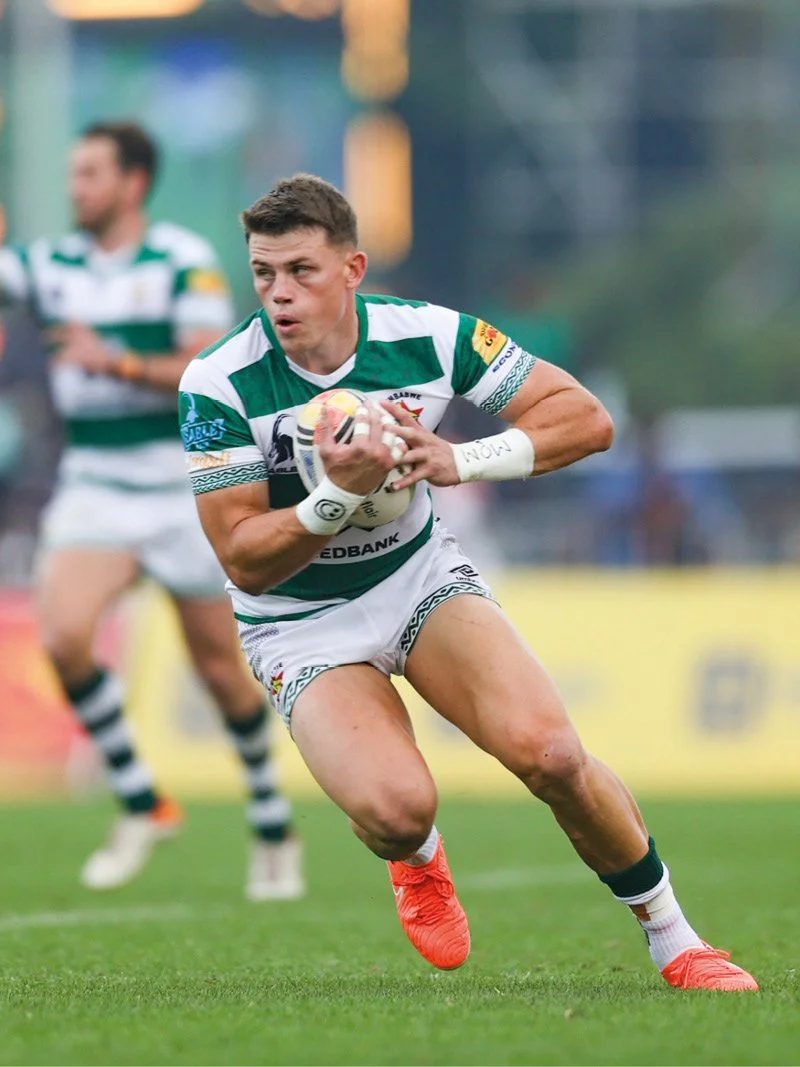
That inaugural tournament provided the stage for Richard Tsimba to make history as the first black rugby player to not only represent Zimbabwe but also to take part in a World Cup match. He was the star of the show in their opening fixture, scoring two tries as the Sables agonisingly lost 20-21 to Romania at Eden Park. Watching that match on TV back at the Tsimba family home was Richard’s younger brother, Kennedy. “As kids, me and our other brother just wanted to watch cartoons,” recalls Kennedy. “But Richard would say to us, ‘No, no, come outside. You stand there and you stand here. And if I run here, you must do this and this’. So, we did it, and it became fun and games to us, not knowing that he was practising side-steps and we were helping him to prepare for the World Cup. He was always trying to visualise moments in a game.
“To then see that played out on TV in a World Cup,” continues Kennedy, “and for Richard to score one of the most iconic rugby tries, which has been played over and over again … yeah, it was quite something.”
There were four black players in the 1991 World Cup squad – the quartet included Richard as well as Honeywell Nguruve who both scored tries against Japan, in what would be Zimbabwe’s last World Cup match for 36 years.
Sevens rugby kept the nation on the international stage, which is how Kennedy first made his name at the 1997 IRB World Sevens before becoming his country’s first black captain the following year. He then pursued a rugby career abroad, initially joining Blackheath before being signed by Bath, where he played as understudy to Mike Catt.
Kennedy would go on to shatter multiple club rugby records in South Africa with the Free State Cheetahs and ranks as one of the best players never to appear in a World Cup. As Kennedy was becoming a star in South Africa, Richard tragically died following a car crash in 2000. Twelve years later, the brothers were both inducted into the World Rugby Hall of Fame and remain the only Zimbabweans to achieve that status. “I always wanted to play with Richard, but the timelines never matched up,” says Kennedy. “So it was a very emotional experience to be able to unite with him in that way and be inducted together.
“But also, my older sister was a secretary of Chaminuka, the first black rugby club in Zimbabwe, which created a culture that allowed Richard to play the game. And my other sister (who died of coronavirus in 2020) served as President of Zimbabwe Rugby Union. So, when you put all those things together it was an accolade for all the family, including my mother who did so much for both me and Richard.”
The Tsimba family continues to do sterling work, especially at grassroots level. Kennedy is a coach with the Blue Bulls, and wherever he goes, he collects any spare equipment, which is then distributed to clubs across his homeland. “I’ve currently got a house full of rugby balls!” he laughs.
Meanwhile, a host of other world-class players born in Zimbabwe left without ever representing their country. It is a roster that includes Bobby Skinstad, Gary Teichmann, Ross Cronje, David Curtis, Sebastian Negri, Thom Evans, David Denton, Mike Williams, Don Armand, and David Pocock.
Some simply moved of their own choice or were raised in another country. Others, were forced out by gunpoint. Sebastian, Don and David grew up on family-owned farms but had to flee when the government introduced the ruinous Land Reform Act in 2000 to reclaim territory from four thousand, mostly white, farmers, and redistribute that land to black Zimbabweans.
Often the properties were given to Mugabe loyalists who had little or no experience in running a farm. This coincided with several severe droughts, which accelerated the country’s economic meltdown.
Groups of armed government supporters would simply turn up at a farm and demand that the owners leave or risk being shot dead.
Not long after the Negri family had fled from their farm, Sebastian’s mother returned to gather up the family possessions. Instead, she was held hostage for twelve hours and it required an intervention from the Italian Embassy to secure her release.
David has spoken of hearing gunfire, of neighbours who were murdered, and of being a fourteen-year-old poking his fingers through bullet holes in cars parked in their farming district. The Pococks relocated to Australia and playing rugby provided him with a vital outlet to cope with what he’d experienced.
Then there’s the current Sables coach Pieter Benade. “My parents had a farm but we knew the writing was on the wall from 2000 onwards,” says Pieter. “They held on for eight years but Dad had been preparing to move because we could see what was happening and leaving was inevitable. So, they emigrated to Zambia.
“For a lot of the white people that had to leave, you know there’s still a lot of resentment and hurtful emotions. I was able to avoid that because I wasn’t living on the farm and didn’t want to become a farmer.
“At the point when my parents left, I was playing rugby in South Africa. But I never lost touch with Zimbabwe and played XVs and Sevens for the national team. So even if I wasn’t present in the country I was still connected through sport as well as other members of my family who stayed including my first cousin (former Zimbabwean cricket captain George Cremer).”
Injury brought Pieter’s playing career to an end in 2012. He then spent the next decade slowly but surely learning his trade as a coach in South Africa at school and regional level. During that period, Zimbabwe had brief moments of success, which included winning the Rugby Africa Cup in 2012. One of lowest points came in 2015 when the Sables were walloped 80-6 by Namibia.
The turning point was the formation of The Sables Trust in 2017 which is chaired by Lindsay Earls, a businesswoman and boxing promoter. Jeffrey Murimbechi describes it as a transformative moment as the ZRU was struggling to manage and finance the sport at every level. And so the Trust is focused on generating funds and bringing commercial nous to the national team.
By the time Pieter joined the Sables set-up as an assistant coach in 2022, the revival was starting to gather pace, initially under coach Peter De Villiers and then by Brendon Dawson who Pieter succeeded in 2023.
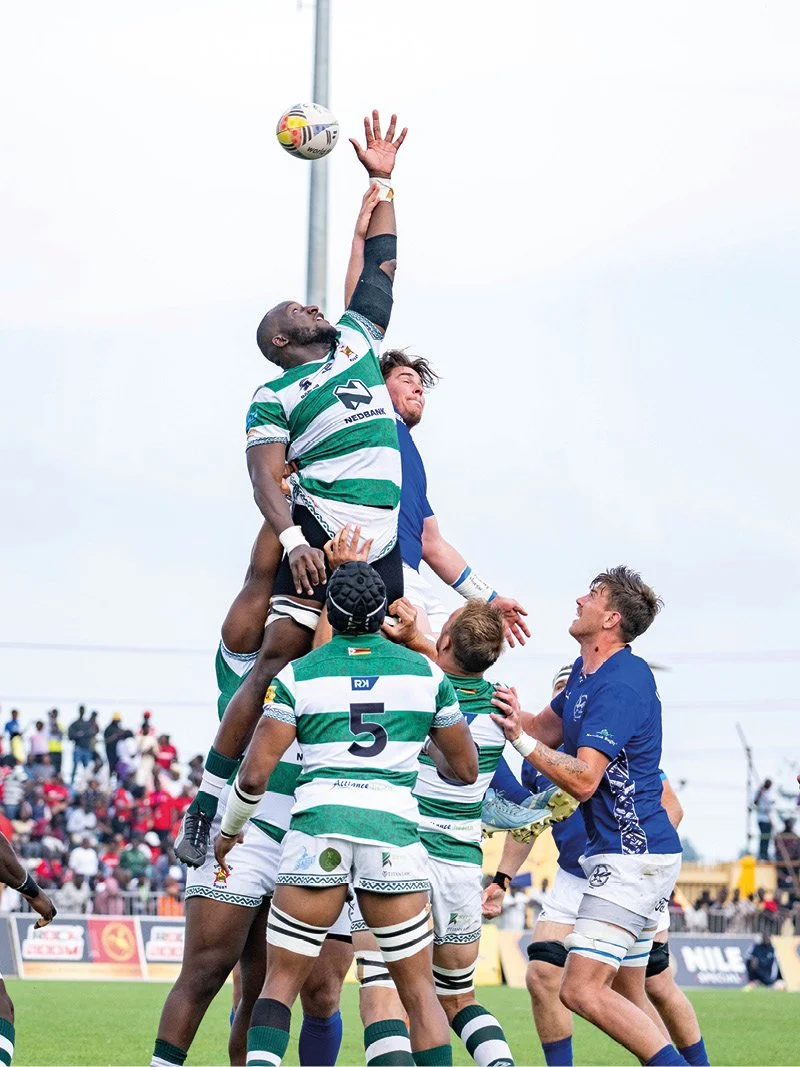
Pieter subsequently brought in specialist, experienced coaches to address weaknesses on the pitch. “Joel Carew was somebody that I worked with in Cape Town as a scrum and a forwards guy,” explains Pieter. “It’s very unusual for Zimbabwe to win a match with a scrum penalty, which is what happened against Namibia. So, that’s a testament to his work. We were also very lucky to get Gert Smal. He’s a former Springbok coach, he’s a World Cup winner, he was assistant coach with Ireland when they won two Grand Slams. He’s still got one of the greatest minds when it comes to lineouts.”
Structural issues at club level are also being tackled. “The Trust has been able to raise funds to develop a local rugby programme which had never been done. In all honesty, our local programme was barely functional,” he explains. “We’ve got two clubs that provide eighty to ninety per cent of the local [homegrown] players. It’s not necessarily a terrible model, because these guys get to play together regularly for their clubs. In that respect, it’s not so different to Ireland.
“We do have a good schoolboy system which produces the players for Zimbabwe’s Under 20s,” continues Pieter, “and when St John’s College plays St George’s College there will a crowd of ten thousand turning up to watch.
“Some of those players may carry on for a couple of years after that but others will stop because we don’t have a club tournament where these guys can play.”
The pathway remains challenging, as Jeffrey points out. “Zimbabwe’s captain doesn’t even have a contract because we don’t have professional clubs,” he says. “We have mostly social clubs, or clubs that guys from high schools put together, or provincial sides. These guys are playing for the love of rugby.”
Yet what the youngest members of that squad were able to bring was a different mindset. “Zimbabwe rugby union had had its troubles with the administration, along with the general frustration and infighting that usually happens when results aren’t good. And so often it was Namibia who were the thorn in Zimbabwe’s side,” says Jeffrey. “This group of young players didn’t have the fear or history of losing to Namibia. They had won the Under 20s African Cup twice and almost qualified for the U20 World Cup.”
The Sables Trust also generated enough funds to bring in experienced club professionals, albeit at the last possible moment, to play in this year’s Rugby Africa Cup. They included Matthew McNab (Doncaster Knights), Cleopas Kundiona (Northampton Saints) and Jason Fraser (Nevers).
Former Harlequins and Western Force utility back Ian Prior had retired from professional rugby but couldn’t resist the opportunity to have one last hurrah and to help Zimbabwe qualify for the World Cup. Just to add the romance of his return, Ian was voted man of the tournament and kicked fifteen points in the final.
For now, rugby is taking centre stage in a country where football and cricket typically dominate – Pieter speaks about one club where 150 people turned up for training when they would have normally expected around twenty. “What we’re looking forward to now is making sure that it’s not a one-off,” says Pieter. “We need to solidify our position as the second strongest team in Africa because qualifying means we can attract more funding. Although we do receive help from World Rugby, around 80% of our funds come from corporates.
“Also, we’ve got this group of young and fresh players. We want to keep them playing rugby for the next five or six years, so they will have 40 or 50 test matches and all the experience that comes with it.”
It is important to stress that Zimbabwean rugby has a multitude of challenges. To give one example, in May it was announced that ZRU President Losson Mtongwiza was suspended along with women’s rugby chairperson Regina Mwanandiwa. A leaked audio recording revealed that Losson threatened players with a life ban if they were critical of the ZRU, which had insisted they had to return the kits after a match. Losson’s replacement, Tapfuma Parirenyatwa, resigned at the beginning of August, only to reverse his own decision a week later, prompting Zimbabwe’s Sports and Recreation Commission to order the resignation of the ZRU’s national executive board and committee.
The immediate challenge is to ensure that the squad that travels to Australia has enough games against a standard of opposition that will leave them better equipped for the huge gulf in class that comes with playing at a World Cup. “I remember when Richard talked about going to New Zealand in 1987 and that after the first ten minutes the players were in shock,” says Kennedy. “We’ve seen Fiji and Samoa and Tonga perform well because they are regularly playing good opponents and taking part in strong competitions.”
Winning the Rugby Africa Cup also secured Zimbabwe a place in next year’s inaugural Nations Cup. This will give the Sables a much clearer idea of where they stand within the sport’s international pecking order, but Kennedy sees other opportunities much closer to home. “I would suggest,” contines Kennedy, “coming to South Africa and playing in the Currie Cup or another club rugby tournament because it’s cost-effective and will be a good experience.”
He also believes that qualification for 2027 should serve as a rallying cry for Zimbabweans around the world. “We’ve got analysts and physios who work with some of the top clubs. There are players out there who weren’t part of the squad that qualified, but knowing that we’re going to be in Australia changes the mindset. Obviously, priority should go to the players who got us there, but we need a deep squad for the World Cup.
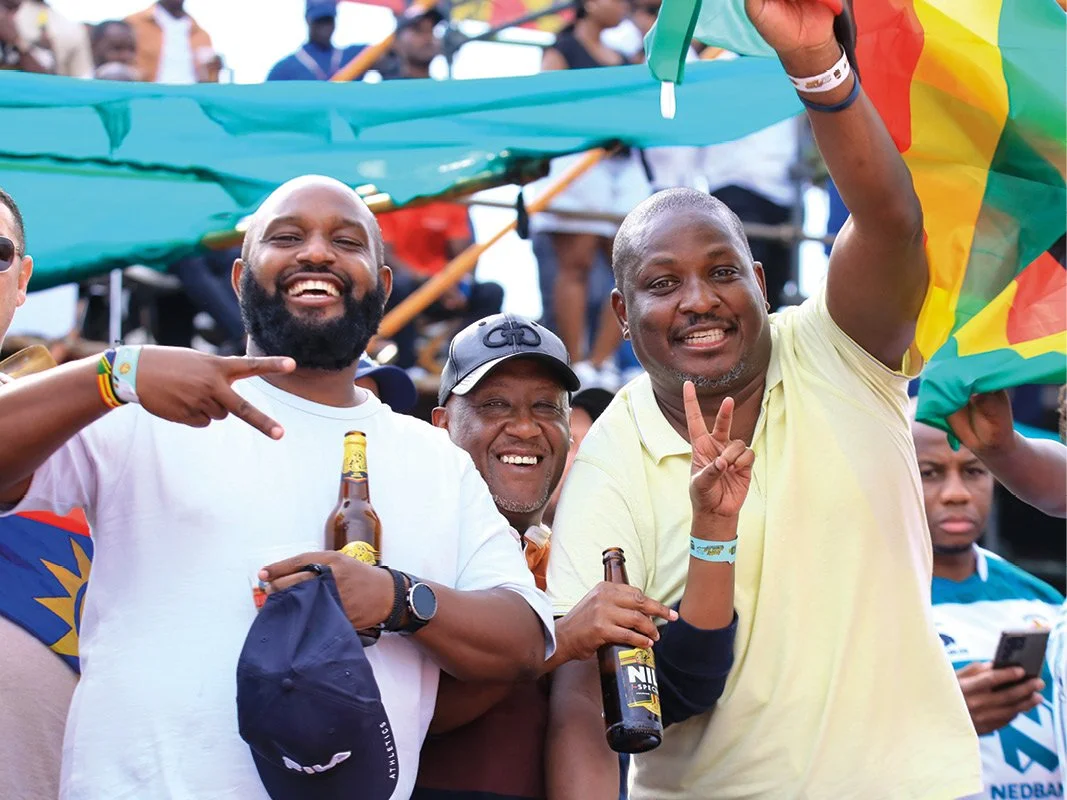
“The dream for me would be that every Zimbabwean involved in rugby comes together and understands this is a moment where you can do something for your country.”
Although Pieter is very down-to-earth and straight-talking, at the point when we speak he is still coming to terms with what happened at the Mandela National Stadium. “I don’t know if it’s really set in, you know? Once the draw happens, it will really hit home, Then I’ll properly realise where we’ve come from, what we’ve achieved, and what lies ahead. And we’ll be happy going to the World Cup as somebody’s second team. We just want to make people happy.”
Story by Ryan Herman
Pictures by Jeffrey Murimbechi and World Rugby
This extract was taken from issue 32 of Rugby Journal.
To order the print journal, click here.