As she administered the drugs for the third time that day, through a tube running 45 centimetres along a vein in her arm, Sophie de Goede knew she was in a race against her own body to make the Rugby World Cup. What followed was a comeback few could have expected, and one that only the best rugby player in the world could pull off.
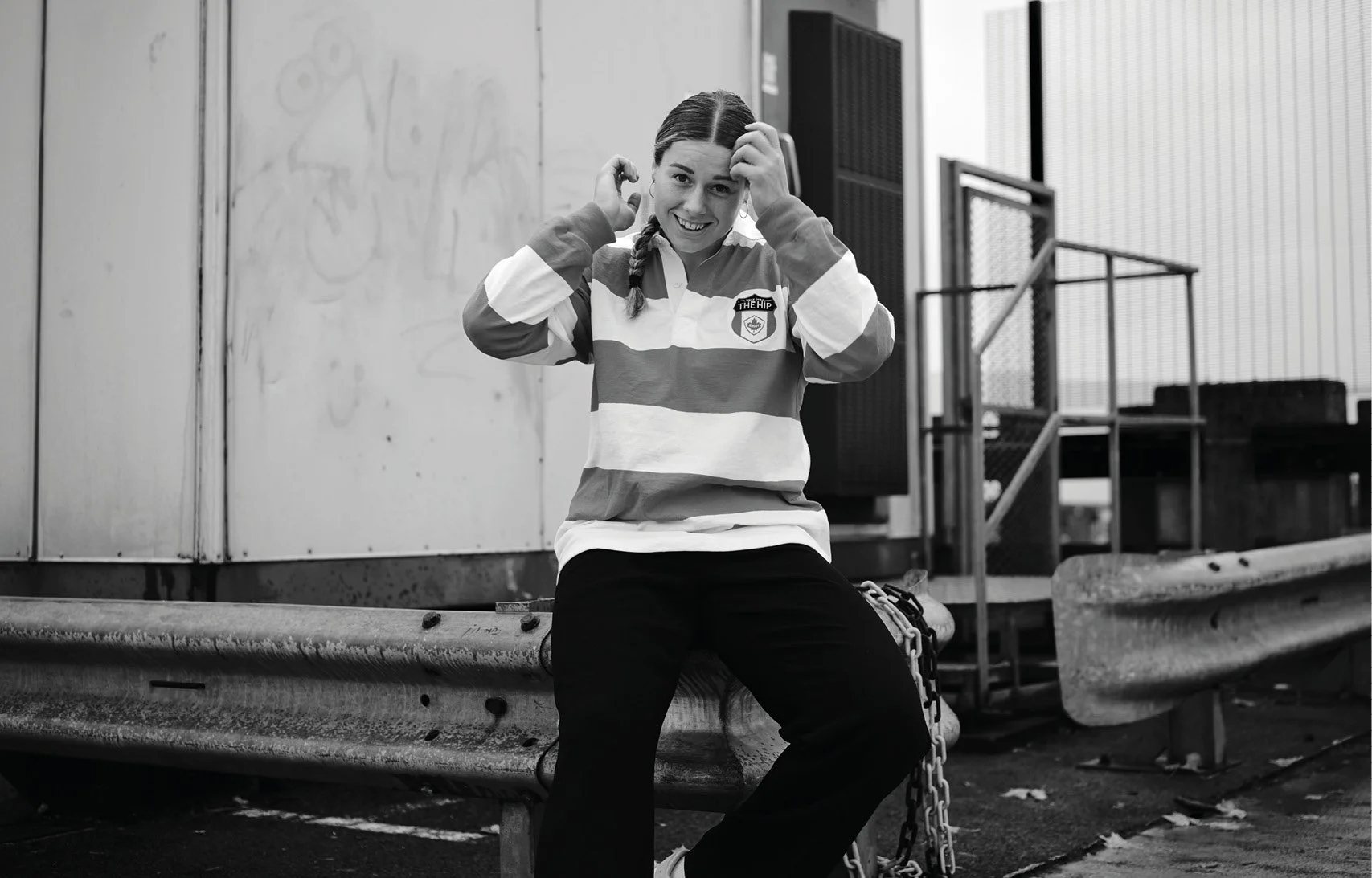
When the shortlist for the world’s best player of 2025 was released ahead of the World Cup final between England and Canada, pretty much everyone knew who would be claiming the individual award – and it wasn’t an English player. The Red Roses were tipped as hot favourites to claim their first title in eleven years, and their hopeful Meg Jones had dominated on the field in a stellar season for club and country, but talk to anyone who had watched the tournament closely, and it was always going to be Sophie de Goede.
To earn that kind of acclaim, you have to be something special, especially when you haven’t played for almost the entire year – the World Cup final was to be just Sophie’s ninth game following a thirteen-month absence with torn anterior cruciate and medial collateral ligaments. She had returned to the field just 42 days before Canada’s tournament opener against Fiji.
However, when you turn up on the world stage after more than a year out of the game and record the most carries (106), the most offloads (12), the most lineout takes (26), the fourth-most tackles (82), as well as the third-most points (61) in a World Cup as a forward – a John Eales-like ability for goal-kicking being one of the many tricks up her sleeve – the title of world’s best player can only be yours.
And that’s before you talk about how she has become the figurehead of Canadian rugby since first being made captain at the tender age of 22.
It comes as no surprise that Sophie comes from the richest of rugby stock. We’re not just talking about a father, Hans, who played for Canada, but a mother, Stephanie, who played for her country too, and more than that, both were captains. Hans led Canada into the inaugural 1987 Rugby World Cup, while Stephanie was captain of the first ever Canadian women’s side in the same year, and at the 1991 and 1994 World Cups. “They’re very driven people and competitive, we always have crib games at home and that can get pretty competitive,” says Sophie, or to use her full title, 2025 World Rugby player of the year Sophie de Goede. “But also, I would say they’re good listeners. They put pressure on me to be invested and to put my whole effort into whatever I chose to do, but they didn’t put pressure on me to choose to do one thing or another, which is why I played so many sports for so long: basketball, soccer, volleyball, track, cross country, rowing, swimming.”
Rugby was inevitably ever-present in her childhood – she’d get taken along to training sessions with her parents and played around with a ball on the sidelines, but it took a while for the love to set in. “When I was really young, soccer was my favourite, I played centre back or centre mid,” she explains. “And then probably when I was like ten or eleven, it switched to basketball and rugby, and basketball and rugby went back and forth, back and forth.
“When I was not playing well in rugby,” she continues, “I just wanted to go shoot hoops, it’s kind of cathartic to just hear the ball going through the net. And then when basketball was going wrong, I just wanted to go hit someone. Ultimately, the need for physicality and the desire for that won out, and I was also just a better rugby player than I was a basketball player.”
Starting out at Castaway Wanderers, in 2016 she was named Canada’s young female player of the year before getting set to join Queen’s University in Ontario, where she had committed to play both basketball and rugby for her full four years. But the opportunities to take rugby more seriously had already started rolling in.
“I played under-18s Canada and we came over to the UK, I would have been sixteen at the time. We were playing their development under-18s side, and Alex [Austerberry, head coach of Saracens] was coaching them. I think he had just taken the job with Saracens, and after playing there, I got an email from this Alex Austerberry guy saying, ‘if you’re interested in playing for Saracens, let’s chat’.
“I said, ‘I still have a year left of high school, and I’ve just committed to go to university, so I will be there for the next four years, and then I would love to explore this after that’. But when Covid hit, our school [Queen’s] went online, so I got in touch and I came over [in 2020] and ended up living with Alex for that year. He lives in Broadstairs, it’s like a two-hour drive into training, so it would be just
him and me in the car chatting.”
After a year back in Canada finishing her degree, it was only at 22, the same age she became captain of her national team, that she fully committed to rugby. “At the time I felt able to develop my own identity in rugby,” explains Sophie. “When I was younger, I think if I had just focused on rugby, it would have been an overwhelming pressure to be successful in that.”
Fast forward to 2025 and the biggest-ever women’s Rugby World Cup is about to take place. Sophie is now 26 years old, reaching her prime, and Canada are riding a wave of success, sitting second in the world rankings. It is all set to be her hour, her moment, but in reality, Sophie is just happy to be on the pitch at all.
The trouble all started with an ill-fated training match for Canada sevens just over a year before. Sophie had just been named in the squad preparing to chase gold at the 2024 Paris Olympics, when she tore her ACL in a non-contact training game against the USA. With the Games just a month away, that dream was out of the question, and with the World Cup the following year, the timing was cruel.
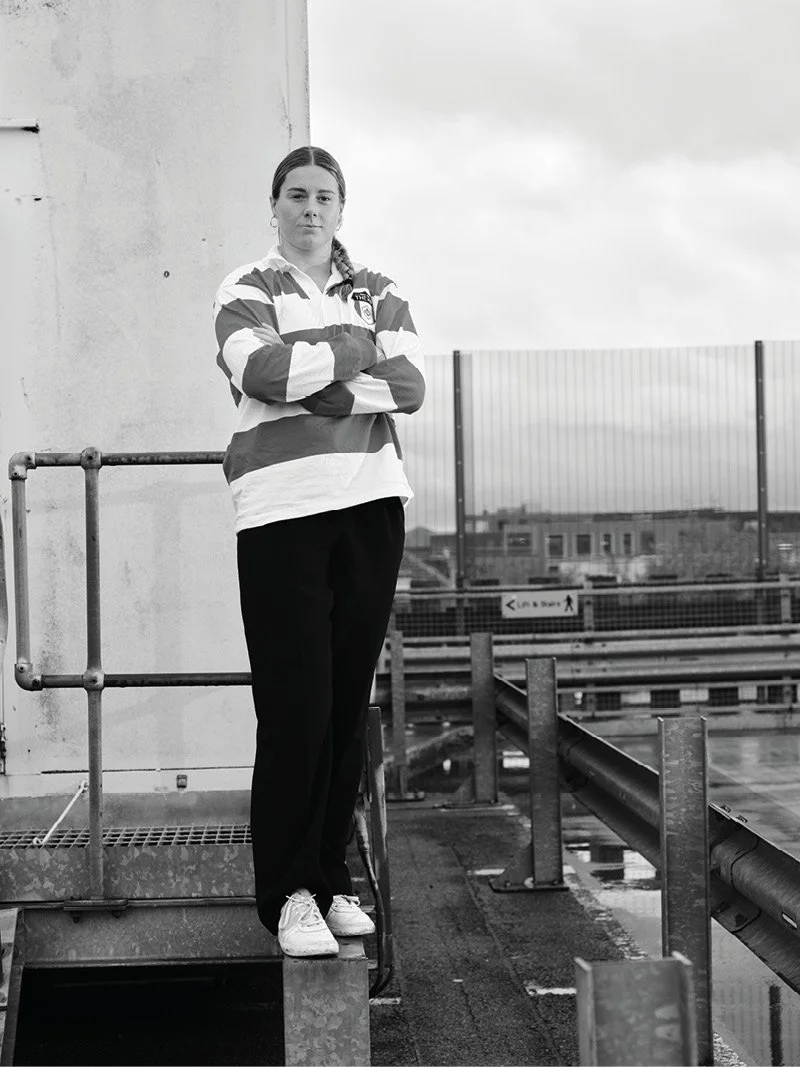
But with over twelve months to go until the tournament kicked off in England, the race to fitness was tight, but doable. Based out of her family home in Victoria, on the south-eastern tip of Vancouver Island, she had support around her as she began to traverse the ups and downs of her road to recovery.
And eight months in, things were going to plan – her knee was physically strong, although she was dealing with some swelling that the medics weren’t able to explain. That’s when they discovered the problem: a staph infection that had penetrated her knee. “We went on a super heavy course of antibiotics, I was in hospital for five days,” says Sophie. “We had to go in for another surgery to do a debridement and try to scrape out some of the infected tissue, and that’s when they put in the PICC line [an IV line]. It’s in your vein, so that’s the weirdest feeling, and there’s a syringe you attach to the end and slowly push the antibiotics in.
“I did a home IV programme, so I was administering the drugs myself three times a day for two weeks. That was in May, so only a couple months out [from the World Cup]. I guess my World Cup was kind of on the line regardless, but we just didn’t know how my body was going to respond, whether my knee would be better with antibiotics. We were just taking it day by day.”
It was a setback in the true sense of the word, interrupting her rehab for almost a month and delaying her return to the field. “Training wise, I couldn’t sweat with the line in, because the bandage could fall off, so you could do really light stuff but nothing with my right arm. I was on month eight or nine of my ACL recovery, so it was the final pushes, but my knee improved a lot once we did the debridement surgery, because I lost a lot of the swelling so then my knee function was a lot better.”
Thirteen months after her original injury, Sophie made her comeback in a warm-up game against South Africa, but things were very much still at the touch-and-go stage. “I was still on oral antibiotics – I was on them basically all through World Cup until the week of the semi-final against New Zealand – and I still wasn’t ready to play a full eighty,” says Sophie. “I hadn’t played any club games, there weren’t any to play, so it was straight into Test matches. We did like twenty minutes in South Africa, then fifty minutes in the USA game we had.
I think I did like seventy minutes against Ireland in that final warm-up game.”
A seventeen-point haul consisting of a try and six conversions proved, if proof was needed, that Sophie was still the same Sophie. “I wish I had had more of a preparatory year,” she admits, “but I also felt like the year prepared me in different ways, like in the emotional ups and downs, the ability to weather a storm, and like the passion and excitement to get back to playing. There were different ways I could try and pull value from it, and then I guess I just had to trust my twenty years of playing beforehand.
“The team helped me feel comfortable to make mistakes,” she continues. “I would be making uncharacteristic mistakes and get really frustrated at myself, but it was like a fast-tracked re-learning of playing. When I hit World Cup and then I started well against Fiji, I was like, okay, yeah, we’re back.”
Crossing the line inside seven minutes as her side charged to a 65-7 win, Sophie was well and truly back. But for her, the journey was never just about returning to the field, it was about returning as the best player in the world.
In the first week of her rehab, Sophie had written herself a note on the first page of her training journal: ‘Even if ppl forget that you’re the best in the world, by the time you come back, there will be NO DOUBT’. Fourteen months later, and she was proved right. “I think that belief comes from people I’ve always admired, Kobe [Bryant], [Michael] Jordan, [Tom] Brady, [Richie] McCaw, Christine Sinclair,” she says. “Especially the basketball players, because I’m really into the NBA; Jordan and Kobe wouldn’t be afraid to set goals like that for themselves. When I wrote that, it was just an internal thing, and the only reason that I ended up posting it [on her Instagram] was because I was looking back through my training journal, and I was like, this is kind of crazy. You have to try to speak that into existence for yourself. Because, like, if I don’t think I can do that, then I’ll never do it.”
Winning the highest individual honour in the game moments after losing a World Cup final is, inevitably, a case of mixed emotions, the completion of an all-time remontada combined with crushing devastation. But Sophie has had time to recognise the magnitude of her achievement. “I think what I am proud of is it’s a representation of a really hard year, probably the hardest year I’ve ever had to go through,” she says. “There was the rugby and the injury, and then there was some stuff in my personal life too, and it was just a lot of ups and downs. I’m proud of myself for getting through that and reaching the pinnacle.”
The final itself, which Canada lost 33-13, started brightly for the visitors, with winger Asia Hogan-Rochester going over for the first score of the game inside five minutes thanks to a wide pass from Sophie – glimpses of the player that grew up as a fly-half – and a perfect offload from Fabiola Forteza.
However, just two minutes later, England fullback Ellie Kildunne broke through the Canadian defensive line, ghosting around one defender, and then another, and then another. England were 7-5 ahead, a lead they never relinquished.
Two more scores before the break put England 21-8 up, and while Canada got a try early in the second half, again through Hogan-Rochester, a final Alex Matthews touchdown secured the Red Rose victory. “I felt really positive with the way we started the game with Asia’s try, because I felt like that would help our momentum with the crowd,” says Sophie, looking back on the final. “We let away a soft try when Ellie went in, and then I felt like the crowd was back in the game. And then that was a bit difficult to try and stymie the momentum.
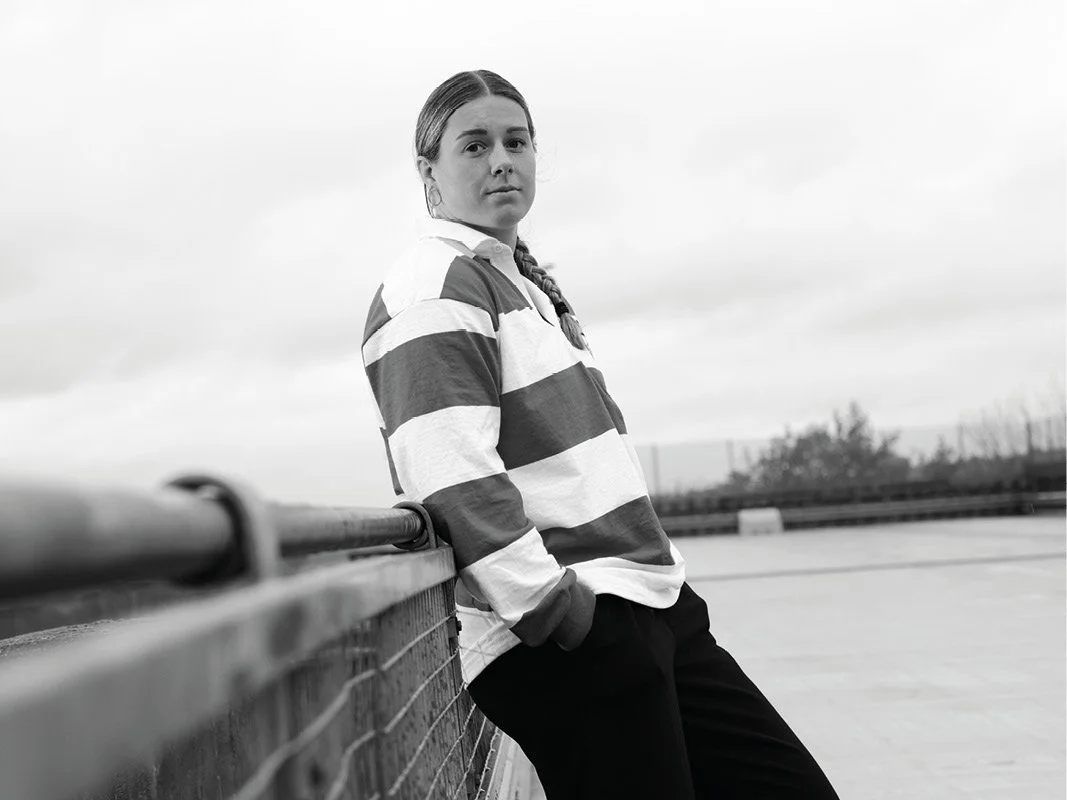
“We were within two scores for a while. We had some entries into their 22 that we really needed to convert into points – I think that was one of the things that we’d done well throughout the rest of the tournament – and we just didn’t. We weren’t clinical enough when we entered those areas.
“If we could have brought it down to a one-score game again, that would have given us some more momentum to go chase the game. But it felt like we couldn’t close that gap for such a long period of time. And then they scored again, and then it was a three-score game, and then at that point, it’s becoming pretty tough as the time is winding down.”
Surrounded by 80,000 fans, almost all of whom are there to support the other team, as your ultimate dream slips away, is not an easy place to be. “There’s definitely a moment where you’re like, ‘I can’t believe this is happening’,” says Sophie. “You know, it feels a bit like you’re in a nightmare. It’s not what you’re thinking of the night before, or when you’re leading up to the game, you’re only picturing it going one way. When it goes the other way it’s like having cold water poured on you and you’re like, ‘oh shit, I have to wake up’.”
In the case of Canada versus England, however, perspective is important. The nature of rugby’s status in Canada compared to the other top nations means that Rugby Canada’s budget could only stretch to C$2.6 million to fund the women’s fifteens side for the year of 2025, a far cry from the £26 million that England had at their disposal. An extra million dollars was also crowdfunded to help the Canadians prepare as best they could for the tournament, but the disparity ultimately told out.
“Financially we’ll always be underdogs,” admits Sophie, “but it’s separating that out from the rugby side, and I think our team did that; we didn’t feel like underdogs going into that from a rugby perspective. For those two hours on the field, no amount of money can swing the result.
“We just didn’t turn up on the day, and that’s frustrating because it fuels the underdog narrative that everyone else had, they’re like ‘oh, you guys fought so well to even get there’, but as a competitive athlete and a team, we genuinely felt like we had a very good chance of winning, we just didn’t show up.”
The return to reality happened quickly. “Some of our squad had to go back to Canada and back to work right away,” says Sophie. “Myself, Paige Farries, Claire Gallagher, DaLeaka Menin, we went to Portugal for a week, and then came to England to settle in [at Saracens]. We live in a player house, and there were academy boys in it all summer, so we had to make sure it was clean.
“Both Paige and I played at Sarries two years ago, and we left all of our stuff in the player house,” she continues, “both of us were expecting to come back right after that summer of 2024, but we ended up not coming back for almost a year and a half [because of injuries]. There’s a lot of stuff in there that, like, if you didn’t use it for a year and a half, is it really necessary? So there was a lot of charity shop drop-offs and just trying to clean out your life.
“You’re kind of in this tunnel, this vacuum of rehab, and then the World Cup, so I felt like I was coming out of hibernation a bit after fourteen months of narrow focus.”
With the World Cup in the rearview mirror, what’s motivating Sophie now is clear. “You have to re-find something, or you lose your sense of direction; I’m not sure it’s been announced yet but we’ll be playing England a few times this season with Canada, and I would really, really like to beat England.”
Canada’s long battle to establish themselves as the very best women’s rugby nation in the world is something Sophie is now at the centre of, and it’s still very much an uphill battle. “Rugby is really a passion of mine, it’s not a career,” she reminds us. “It’s an athletic career – I work at it like it’s a profession, but I don’t get paid at it like it’s a profession. What’s gratifying for me is the winning and pushing myself to be the best I can be, versus trying to get a win bonus or something like that, because we don’t get win bonuses – we would have at the World Cup if we’d won, but we don’t get anything for getting to the semis. I don’t get a bonus for getting player of the year.”
It’s an important reality check that the number of women who can call themselves full-time rugby professionals is still vanishingly small – not even the best player in the world can. For Sophie, it’s down to the lottery of birth, born in a nation where ice hockey is king, and where financial and geographical constraints significantly inhibit the growth of the game. That said, Sophie does see a way forward.
“Rugby Canada has shifted really well in increasing the amount of fixtures that we play – since the last World Cup we had a huge game at home against New Zealand [July 2023], it was the biggest turnout in Canadian history, and then the next year we got to play them again [May 2024], in New Zealand, and we won. Three years ago, we played at home against Italy leading into the 2022 World Cup, but prior to that, we hadn’t played a home game in eight years.
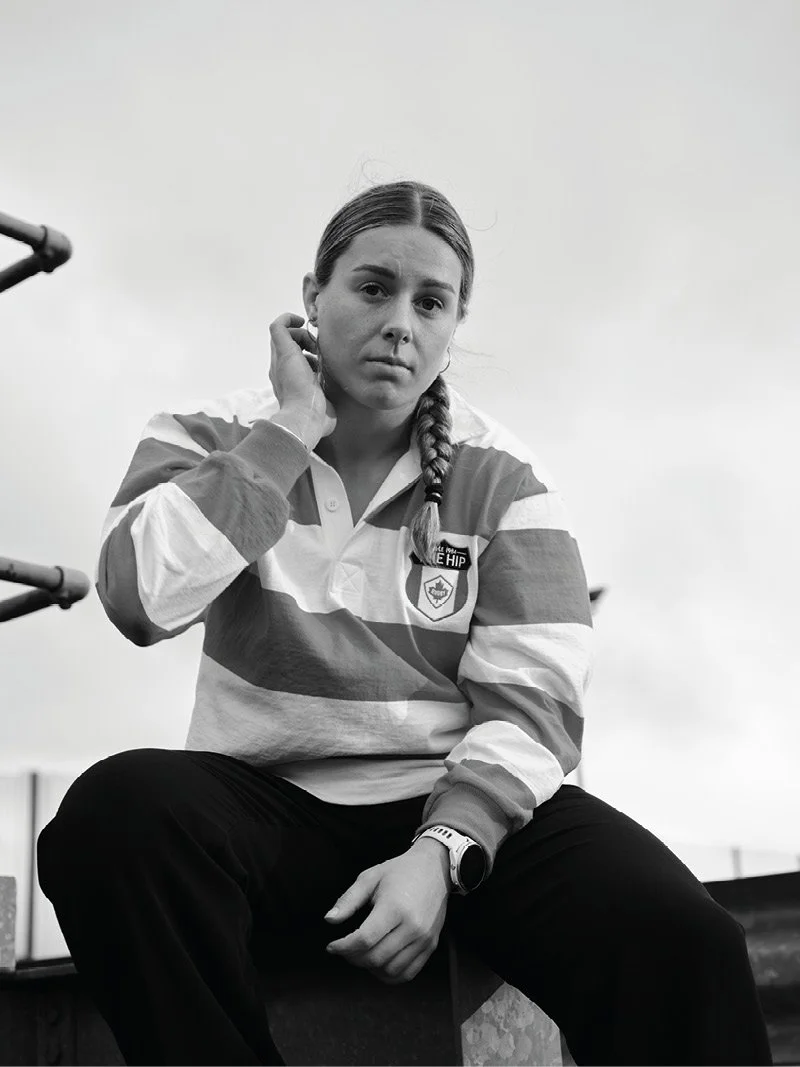
“But I think we also need to convert the energy from back home into investments,” she says. “With our government funding from Sport Canada, it’s hard to move the needle with just that, but if you can get more corporate partnerships investments, then you can that can help financially.
“There is a way to do a domestic league, but it’s kind of split out geographically, east and west, then maybe you have them meet at some point. It would not look the way the PWR looks, it might just be seven games in the west, seven games in the east, but at least you end up with some sort of bridge competition. Because for us right now in Canada, we have the university competition, which is a strong pathway for us, but it’s only a three, four-month season.”
You can’t help but notice Sophie’s natural leadership and ease of communication as she continues to rattle through the challenges facing Canadian rugby. “If you’re 20, 21, and you graduate from university, and you’re not yet good enough to be on the senior national team, you kind of get lost. If you go play club rugby, it’s not a super high calibre, but you don’t have the name, and you don’t have the credibility or the national team cap you need to go play in the PWR. Some go to France, but it’s a real upheaval of your life. If we could have a bridge competition, then it would help catch those people.
“It’s tough, because it might be feasible on the west coast, but on the eastern side of the province, the months when you would want to have that league it’s snowy, so you have to rent domes, indoor turf spaces, which is expensive. But where there’s a will there’s a way, it just requires investment from a sponsor.
“But,” she adds, “you have to build up enough of a profile for a sponsor to want to do that, and that’s our job as a senior national team, continuing to build the profile of rugby in Canada so that sponsors want to partner not only with our national team, but want to invest in the entire sport community.
“It is a different type of responsibility than probably any other nation, where your women’s team is your flagship team. Our men’s team is rallying, and they did incredibly well to qualify for the World Cup, and that’s huge for us as a nation, but we don’t have the fallback of Six Nations money that’s always going to come in. So there’s a different type of pressure and responsibility on us to perform to keep our union in a good place.”
Few could begrudge the world’s best player for feeling that for all her efforts, the game has left her a little short-changed, but instead she’s simply determined to help make it better. Could she see herself getting into the weeds of things in rugby governance after retirement? “I could see myself getting involved at board level. I definitely want to stay involved in rugby, because we lose so many great people from the rugby community after they retire, and I’ve seen first-hand through my parents how re-investing goes a long way.
“They’ve been on our provincial rugby boards, our national rugby boards, both of them are involved in different rugby foundations, and I think I’ve benefited from their continued involvement, so hopefully I can do that for others.”
For the moment, Sophie is settling back into the rhythm of club life at Saracens, who look the side, on paper at least, best placed to finally topple the Gloucester-Hartpury PWR hegemony. Having missed out on the title-winning season of 2021 while she was back at university, lifting the league trophy with Saracens is right near the top on this season’s list of priorities.
Although, if their bruising 40-14 defeat at the hands of the champions on the opening weekend is any indication, the path to silverware isn’t going to be straightforward. “I think we have to shift our style a bit,” says Sophie. “The players that we have are athletic, read-and-react, skilled athletes, and I think sometimes we put too much emphasis on physicality in rugby, and you lose the art side of it. We tried to out-physical them and they just dominated us. But we have the athletes that are smart and dynamic enough to think more of a creative style of play versus just trying to do it physically.”
Near the top of her checklist too is the simple but important task of staying on the park. “My knee should be all healed up now,” she says, “my ACL is fine, my MCL, everything. But it’s still sensitive to loading and changes in surface. It swelled up before the game against Gloucester-Hartpury, I thought it might be the infection coming back, but we sent it off for cultures and luckily it came back negative.
“Technically, the infection could come back at any point in the next year, because it’s slow-growing bacteria, but there’s quite a small chance of that. If it did come back then we’d have to redo the whole ACL surgery, because they’d have to take the suture and hardware out, because that would be what’s infected.”
Widening her world beyond the white lines is on the list too. Already working part-time for an insurance brokerage, she’s testing future pathways for her life beyond rugby. “I really like managing teams and working in teams, so maybe something like a managerial role within an organisation, but I haven’t really found an industry that I’m super passionate about. I want to capitalise on doing all this stuff during my career, because it’s when your name carries the most weight, it helps you get your foot in the door.”
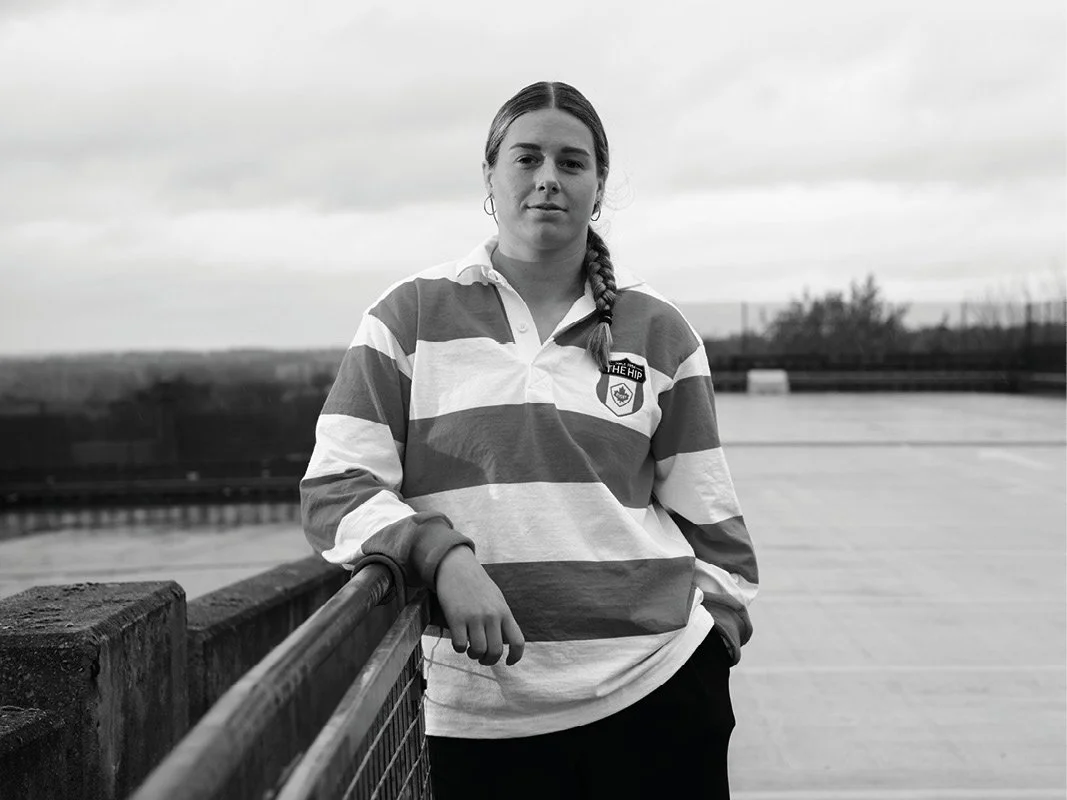
There is no shortage of spinning plates in her life, but that, she insists, is how she prefers it. “I think I would still be doing something else on the side if I was [on a full-time contract], I would still be trying to pursue something to try to build out my resume. I’m pretty sure in my athletic career, even if we do end up getting to full-time central contracts, it won’t be enough to sustain me in athletic retirement. So yeah, and it’s mentally stimulating to talk to people and make connections.”
But on the rugby pitch, the pursuit is still the same as the promise she scrawled in her journal in week one of rehab: proving, again and again, that she is the best player in the world, and leaving ‘NO DOUBT’.
“Awards are just a flashpoint,” she says, “they’re a moment in time, so I think the challenge is to continue proving that, or to try and do it again. If I think again about Kobe or Jordan: would they be happy with one or two championships? Greatness is consistent, so if I want to be great, I have to keep doing it. I think I can be a better player than I am now, so I don’t want this to be a peak, that’s what’s motivating me now.”
Story by James Price
Pictures by Michael Leckie
This extract was taken from issue 32 of Rugby Journal.
To order the print journal, click here.